How to Organize a Small Apartment Refrigerator
A small apartment refrigerator can get messy fast, especially when groceries, leftovers, drinks, condiments, produce, and meal-prep containers all have to fit into a limited amount of shelf space. In many apartments, the fridge is not very wide, the freezer is tight, and one overcrowded shelf can make it harder to find what you need before food gets forgotten or wasted. Even when the kitchen itself is fairly organized, a cluttered refrigerator can make everyday cooking feel more frustrating than it should.
The good news is that a small refrigerator usually does not need more space as much as it needs a better system. The key is to create simple food zones, use containers that fit the shelves more efficiently, and avoid letting random items pile up without a clear place. With the right setup, even a compact apartment refrigerator can feel easier to use, easier to clean, and much more functional throughout the week.
For food storage that stacks more efficiently, start with Best Stackable Food Storage Containers.
If you need better organization for nearby kitchen overflow, check out How to Organize a Small Pantry Without a Pantry.
For countertop control that supports a cleaner food-prep setup, see How to Organize Kitchen Counters in a Small Apartment.
This guide is part of our Small Kitchen & Dining Solutions collection.
Why Small Apartment Refrigerators Get Cluttered So Quickly
Small refrigerators get cluttered faster because they leave less room for error. In a larger fridge, random leftovers, oversized packaging, and half-used bottles can spread out without immediately becoming a problem. In a compact apartment refrigerator, those same items take over much faster. One crowded shelf can affect the whole system because every category is competing for a smaller amount of visible space.
Mixed food categories also make things worse. When produce gets pushed beside drinks, leftovers sit behind condiments, and dairy ends up wherever it fits, the fridge starts feeling chaotic even if it is technically full of useful food. The problem is usually not just the amount of food. It is the lack of structure.
Overcrowding also makes it harder to use what you already have. Once items start disappearing behind each other, leftovers get ignored, produce gets forgotten, and grocery shopping becomes less efficient because you are not fully aware of what is already inside. In a small apartment, better fridge organization is really about visibility as much as storage.
Start by Taking Everything Out and Sorting It by Category
The best way to organize a refrigerator is to start with a full reset. That means taking everything out and seeing what is actually inside before trying to rearrange it shelf by shelf. A lot of refrigerator clutter comes from products that have slowly built up over time rather than from one big grocery trip.
As you empty it, group similar foods together. Put produce in one category, drinks in another, condiments together, leftovers together, dairy together, meal-prep items together, and so on. This makes it much easier to see what kinds of storage pressure your refrigerator is actually dealing with.
It is also the right time to get rid of expired items, dried-out leftovers, duplicate half-used condiments, and anything else that is technically still taking up room but no longer adding value. A small refrigerator works much better when the food inside it is current, visible, and worth keeping. The fewer low-value items taking up prime shelf space, the easier the rest of the system becomes.
Create Clear Refrigerator Zones So Everything Has a Home
One of the most effective ways to organize a small refrigerator is to assign simple zones instead of letting items drift into random spots. A good zone system does not have to be complicated. It just needs to make it obvious where each category belongs.
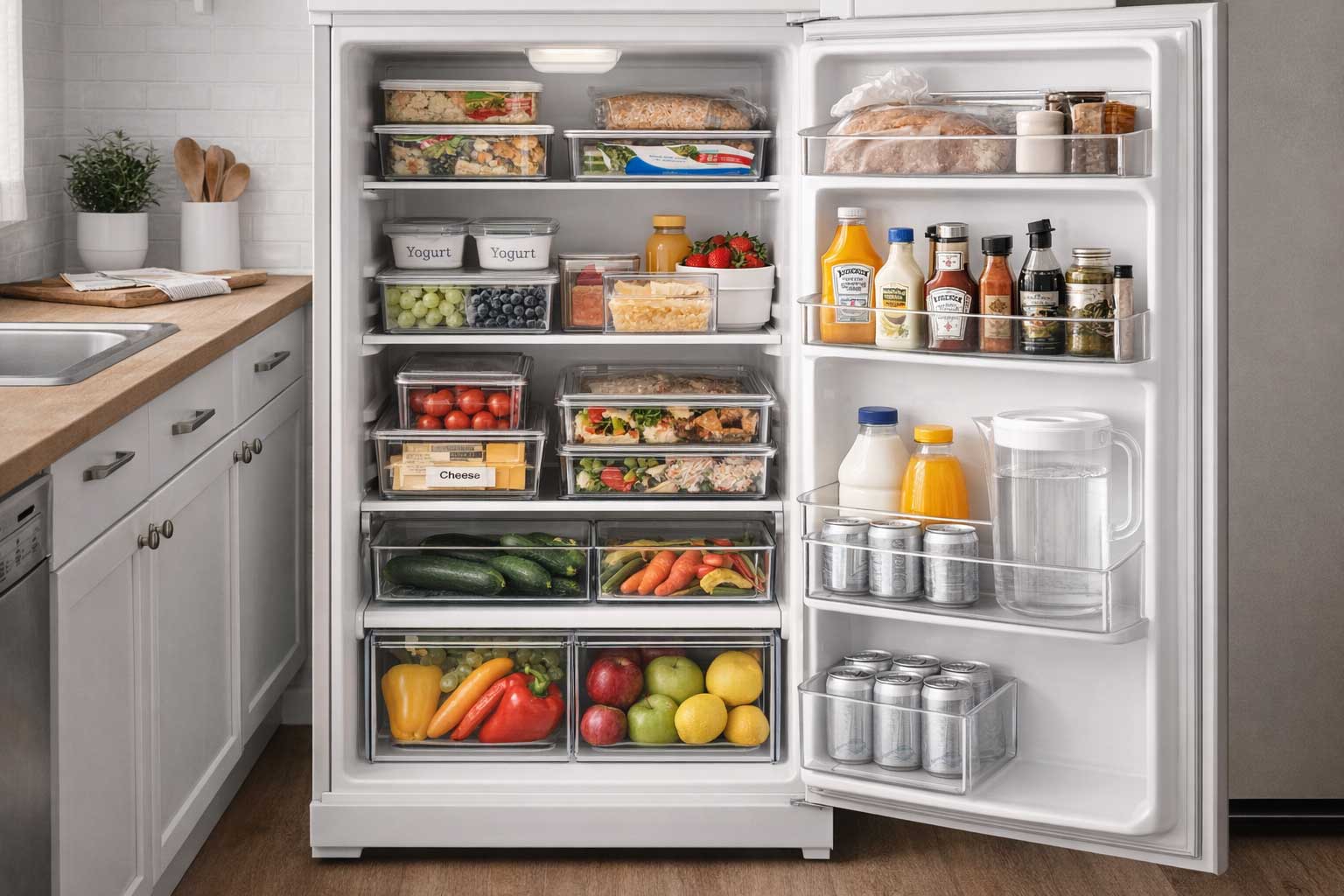
Frequently used foods should stay easiest to reach. That might mean dairy, lunch items, grab-and-go snacks, and prepared ingredients living on the most visible shelves. Produce should stay grouped instead of being split across multiple drawers and shelves. Leftovers should have their own clear area so they do not disappear behind taller bottles. If you want better support for keeping categories separated outside the fridge too, browse Best Magnetic Fridge Organizers.
Condiments are another category that can quietly take over if they are not contained. When they spread beyond the door and start filling shelf space, the whole refrigerator feels less functional. A strong zone system keeps each type of food from competing with every other type. In a small apartment fridge, that kind of clarity makes a huge difference.
Use Containers That Fit the Fridge More Efficiently
The right containers can make a small refrigerator feel much easier to use without increasing its size at all. A lot of fridge clutter comes from inconsistent packaging. Grocery store containers, takeout boxes, bulky produce bags, and random leftovers all stack poorly and waste shelf space.
Stackable shapes usually work better because they create cleaner lines and let you use vertical height more effectively. If you need containers that make small fridge storage more efficient, take a look at Best Stackable Food Storage Containers. Clear containers also help because they make it easier to see what is inside without moving everything around.
Smaller bins can also help control categories. A compact bin for yogurt, one for cheese, or one for snack items makes the shelves feel more intentional and easier to reset during the week. In a small refrigerator, better container discipline often matters more than almost anything else because it changes both visibility and space efficiency at the same time.
Keep Produce, Leftovers, and Meal Prep from Taking Over
Produce, leftovers, and meal-prep items are usually the categories that create the most refrigerator chaos. They are often larger, more temporary, and more likely to get shuffled around every time groceries come in or meals get made. Without a clear system, they quickly start taking over the shelves.
Produce needs a defined zone so it does not end up scattered between drawers and open shelves. Leftovers need to stay visible enough to actually get used, which usually means keeping them toward the front in a consistent section instead of pushing them behind drinks or condiment bottles. Meal prep also works better when the containers match and stack neatly rather than relying on a mix of random containers and wrapped bowls.
When these three categories are controlled well, the whole refrigerator feels more stable. They are the categories most likely to shift during the week, so giving them clearer homes keeps the fridge from turning chaotic every time something new is added.
Use the Refrigerator Door More Intentionally
The refrigerator door can either help the system or work against it. In many small fridges, the door becomes a random catch-all for sauces, drinks, jars, and small bottles that get shoved in wherever they fit. That quickly makes the whole refrigerator feel less controlled.
Condiments and smaller bottles usually do belong here, but only when the space is kept edited. The door should not become overflow storage for everything that does not fit on the shelves. A better setup is to group similar items together and remove low-value bottles that have overstayed their welcome. If you need more nearby support for small kitchen overflow beyond the refrigerator itself, see Best Small Kitchen Trash Cans for keeping prep and cleanup tighter around the fridge zone.
The cleaner the door storage is, the easier the whole refrigerator becomes to use. When the door stays organized, it absorbs the categories it should without stealing attention from the main shelves.
Keep Drinks and Bulkier Items Under Control
Drinks and bulky containers are often what make a small refrigerator feel full before it is actually full. A few juice bottles, a carton, a gallon container, or several canned drinks can take over an entire shelf if they do not have some kind of plan.
Drinks usually work best when they stay in one dedicated area instead of being spread across multiple levels. Bulky packaging can also be part of the problem. Oversized containers often waste space around them, which is why decanting or choosing more stack-friendly shapes can make such a difference. If your kitchen needs nearby support for overflow drinks or backup items that do not need to live inside the fridge all the time, browse Best Apartment Kitchen Carts.
A better fridge layout often starts with better container discipline. The less random the bulkier items are, the easier it becomes to keep the smaller categories visible and stable.
Make the Refrigerator Easy to Reset During the Week
The best refrigerator system is one you can maintain without much effort. In a small apartment, that usually means doing a quick reset during the week instead of waiting until the fridge feels completely out of control. A small weekly refresh goes much farther than people think.
That reset can be simple. Toss anything expired, move leftovers forward, regroup produce, wipe up anything obvious, and make sure categories have not drifted too far from their zones. The better the visibility is, the less likely food is to be forgotten or wasted.
This is where simple systems win. If your fridge is organized in a way that feels natural to put back together, it will stay more functional. If every grocery trip turns it chaotic again, the system is too complicated. A small apartment refrigerator works best when it can recover quickly from normal weekly use.
Common Mistakes That Make a Small Refrigerator Harder to Use
One common mistake is overstuffing shelves until nothing is visible. That might feel efficient in the moment, but it usually leads to forgotten food and harder cleanup. Another problem is keeping too many half-used containers, especially condiments and leftovers that no one is likely to finish.
Letting leftovers drift to the back is another major issue. Once they are out of sight, they stop being part of the plan and start becoming waste. Using too many different container shapes can also make the whole refrigerator less stable because items stop stacking cleanly and waste the limited shelf space.
The best small-fridge setups avoid these problems by favoring visibility, consistency, and category control. A refrigerator should feel easy to scan, not like a puzzle you have to unpack every time you need one item.
Best Features to Look for in Refrigerator Organizers for Small Apartments
When choosing organizers for a small apartment refrigerator, stackable design should be one of the first priorities. Containers that build upward neatly usually create the biggest improvement in small fridges. Clear visibility matters too, because organizers should help you see what you have instead of hiding it.
Compact category control is another major advantage. Smaller bins and clear zones usually work better than one giant organizer that becomes a mixed-food drawer on the shelf. Easy-to-clean materials are important as well, since refrigerator systems only stay useful when they are easy to maintain.
Fridge-friendly sizing is what pulls everything together. The best organizers are not just good in theory. They actually fit the depth, height, and width of a smaller apartment refrigerator without wasting space or making shelves harder to use.
Final Thoughts on Organizing a Small Apartment Refrigerator
A small apartment refrigerator does not need to feel chaotic. The best systems rely on simple zones, better visibility, and more efficient containers so the food inside is easier to see, easier to use, and easier to maintain throughout the week.
When produce, leftovers, drinks, condiments, and meal-prep items each have clearer homes, the whole fridge feels calmer. Add in stackable containers and a small weekly reset, and even a compact refrigerator can stay functional without much effort.
The goal is not to create a perfect fridge that never changes. It is to create one that works with normal life. In a small apartment, that kind of practical order is what keeps the kitchen feeling more manageable every day.
Our Top Refrigerator Organization Picks for Small Apartments
A small refrigerator works best when storage keeps categories visible, containers stack efficiently, and everyday foods stay easy to reach. The most useful organizers usually stay compact, clear, and simple enough to maintain every week.
Best overall choice:
Stackable food storage container set — Matching stackable containers make a small fridge feel more organized and much easier to use.
👉 Check price on Amazon
Best category-control upgrade:
Small refrigerator bin set — Clear bins help keep snacks, dairy, produce, or leftovers grouped instead of drifting around the shelves.
👉 Check price on Amazon
Best nearby overflow support:
Magnetic fridge organizer — A magnetic organizer can help move small support items out of the main kitchen clutter zone and keep the fridge area more efficient.
👉 Check price on Amazon
Best bulk-item backup:
Apartment kitchen cart — A small cart can support overflow drinks, snacks, or pantry-adjacent items so the fridge does not have to carry more than it should.
👉 Check price on Amazon
Kitchens with especially tight refrigerator space may also benefit from a better pantry or counter organization system nearby, especially when the goal is to keep groceries and meal prep flowing more smoothly.
FAQ
How do you organize a small apartment refrigerator?
The best way to organize a small apartment refrigerator is to sort foods by category, create simple zones, use stackable containers, and keep the most-used items easy to see and reach.
What should go where in a small fridge?
In a small fridge, frequently used foods should stay in the easiest-to-reach areas, condiments usually belong in the door, produce should stay grouped, and leftovers should have a dedicated visible zone.
How do you keep a refrigerator from getting cluttered?
Keep a refrigerator from getting cluttered by editing expired items regularly, grouping similar foods together, limiting half-used containers, and using a quick weekly reset to restore the zones.
What containers work best in a small refrigerator?
The best containers for a small refrigerator are usually clear, stackable, and sized to fit the shelves efficiently so they improve visibility without wasting space.