How to Organize a Shared Closet in a Small Apartment
Organizing a shared closet in a small apartment can get frustrating quickly. Two people’s clothes, shoes, bags, accessories, seasonal items, and daily essentials often end up competing for the same limited shelves, rods, drawers, and floor space. Even when the closet is not especially full, it can still feel chaotic if there is no clear system for who stores what where. The challenge is not just fitting two wardrobes into one closet. It is creating enough structure that both people can actually use the space without constant frustration.
The good news is that a shared closet can work much better with the right setup. In most small apartments, the best approach comes from dividing space intentionally, giving each person clearly defined zones, and making sure overflow items do not keep creeping back into the closet. With the right system, even a compact closet can feel more functional and easier to maintain.
For broader closet organization ideas, explore our How to Organize a Small Closet Without Built-In Shelves guide.
If you need help choosing the right products for the space, check out How to Choose the Right Closet Organizer for a Small Apartment.
For product options built for tighter setups, browse Best Closet Organizers for Small Apartments.
This guide is part of our Organization Storage collection.
Quick Answer
If you want to organize a shared closet in a small apartment, the best approach is to divide the closet into clearly assigned zones and make sure both people have dedicated space for the items they use most. In most closets, that means separating hanging space, shelves, shoes, accessories, and overflow categories so the whole closet does not turn into one mixed pile.
A good shared-closet setup usually works best when it includes:
- clearly defined space for each person
- category-based storage instead of mixed shelves
- enough room for daily-use items to stay accessible
- a plan for shoes, accessories, and overflow clothing
- a setup that is simple enough for both people to maintain
Why Shared Closets Get Messy So Fast in Small Apartments
Shared closets usually become messy because two people are trying to use one small storage system in different ways at the same time. One person may have more hanging clothes, while the other folds more items. One may have more shoes, while the other has more bags, coats, or accessories. When those differences are not accounted for, the closet stops feeling organized and starts feeling like both people are constantly working around each other.
The problem is often not just the amount of stuff. It is the lack of boundaries. When both wardrobes are mixed on the same rod, the same shelf, and the same floor area, it becomes harder to tell what belongs where. That is when shoes start drifting into random corners, folded items become unstable stacks, and one person’s daily clothes end up blocked by the other person’s overflow.
A shared closet works best when it stops functioning like one big shared pile and starts functioning like two smaller systems living inside the same footprint.
Start by Deciding What Actually Needs to Live in the Closet
One of the best ways to make a shared closet easier to manage is to stop expecting it to hold every clothing-related item in the apartment. In a small bedroom, that is often what creates the most pressure. Bulky coats, off-season clothes, extra bedding, travel bags, rarely used accessories, and other overflow items can quietly take over the same space that daily clothing actually needs.
A better setup starts by identifying what truly belongs in the closet full time. Everyday tops, pants, dresses, work clothes, shoes in rotation, and the accessories each person uses regularly usually deserve the easiest access. Bulky winter gear, special occasion items, or rarely used extras may need another home if the closet is too small to carry everything comfortably.
This matters even more in a shared closet because every low-priority item stored there reduces usable space for both people. The more tightly the closet is edited around actual daily use, the more functional it becomes.
Divide the Closet by Person Before Dividing It by Product
This is the step that usually changes everything. In a shared closet, it helps to divide the space by person first and only then start organizing by category. If you try to sort shoes, sweaters, bags, and hanging clothes without first deciding who owns which part of the closet, the system usually stays fuzzy and frustrating.
That division does not have to be perfectly equal in a mathematical sense, but it should feel clear and fair. One person may need more rod space and less shelf space. The other may need more folded storage and fewer hangers. The goal is not necessarily identical halves. The goal is that each person has obvious territory and knows what belongs inside it.
This is especially important for rods, shelves, drawers, cubbies, and floor space. When each person’s zones are clearly defined, everyday upkeep gets easier. It becomes more obvious where a shirt should go, where shoes should land, and which stack needs attention when the closet starts getting messy again.
Choose the Best Storage Type for a Shared Small Closet
The best storage tools depend on the layout you already have. If the closet has decent height but limited width, double-hang sections can make a huge difference for shorter clothing like shirts, folded pants on hangers, skirts, and jackets. If the closet has shelves but no structure, shelf dividers help keep stacks from sliding together and make it easier for each person to keep folded items inside their own section.
Bins and baskets work especially well for smaller accessories that otherwise drift around the closet. Belts, scarves, hats, socks, smaller bags, and similar categories often become much easier to manage once they are grouped into assigned containers. Shoe racks or lower storage shelves help prevent the floor from becoming the dumping ground for everything neither person knew where to put. Hooks or side-wall storage can also help for bags, robes, and everyday grab-and-go items.
Hanging organizers are especially useful in reach-in closets with limited built-ins. They can create shelf-like storage for sweaters, jeans, handbags, or shoes without needing a major closet system. The important thing is choosing organizers that fit the actual shape of the closet instead of filling it with random pieces that compete for the same space.
Best Shared Closet Setups for Common Small Apartment Layouts
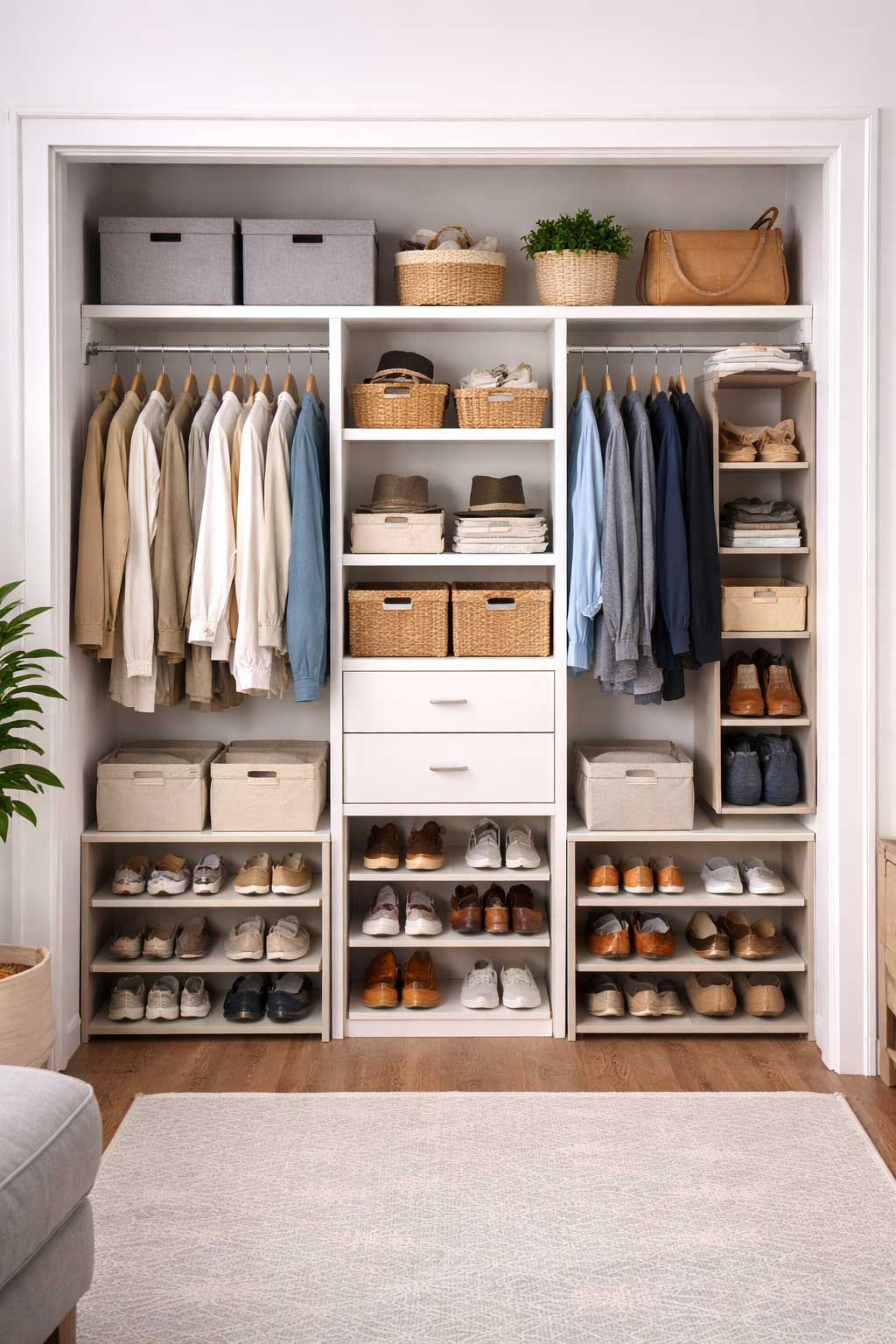
If you are sharing one standard reach-in closet, the best setup usually comes from treating the left and right sides like separate zones. One side can belong primarily to one person, the other side to the other person, with the top shelf divided into rough matching sections. That simple split often works better than trying to mix both wardrobes evenly across the entire rod.
If the closet has one rod and one top shelf, the lower area becomes even more important. In that kind of layout, one person may need the left half of the rod and left half of the top shelf, while the other uses the right side. Shoes and baskets below should follow the same division so the floor does not become shared chaos.
If the bedroom closet has almost no floor space, vertical structure matters more. Hanging organizers, double-hang sections, and shelf bins often do more than trying to squeeze in extra shoe racks that make the closet harder to move around in.
If one person has more hanging clothes and the other has more folded items, the closet should reflect that instead of forcing both people into the same storage style. Shared storage works best when it adapts to how each person dresses, not when it tries to make both wardrobes fit the exact same formula.
Keep Daily-Use Clothing Easy to Reach for Both People
One of the biggest causes of resentment in a shared closet is when one person’s everyday clothing is easy to grab and the other person’s gets buried. A good system should make daily access feel fair. That means the clothes each person wears most often should live at the easiest height and in the easiest positions to reach.
This may mean putting both people’s daily hanging clothes on the main rod and moving less-used pieces higher or lower. It may mean giving each person one most-accessible folded shelf and using upper shelves for overflow. It may also mean keeping frequently worn shoes in the easiest floor or lower-shelf positions while moving special occasion shoes elsewhere.
The closet should support the morning routine, not complicate it. When both people can get dressed without shuffling through each other’s sections or moving a pile of extra items first, the closet usually stays calmer over time.
Use Vertical Space and Shelf Structure More Efficiently
Shared closets often succeed or fail based on how well they use height. The top shelf, the lower floor area, and the vertical air space between shelves and rods all matter much more when two people are using one closet.
Shelf dividers help keep folded stacks separate. Hanging organizers create shelves where there were none. Stacked bins can turn the top shelf into more usable storage instead of one long place where everything gets shoved together. The lower area can hold a more intentional shoe setup, baskets, or one person’s extra folded items if the rest of the closet is already full.
The goal is not to jam every inch full. It is to make the closet readable. Shared closets get overwhelming fast when upper shelves become mystery piles and lower zones become random overflow. Better structure usually matters more than simply adding more stuff.
If you need more ideas for tighter closet systems overall, check out Best Small Closet Storage Solutions for Apartments.
Create a Plan for Shoes, Accessories, and Overflow Items
A shared closet often breaks down because the smaller categories are never really assigned. Shirts and dresses may have rod space, but shoes, bags, belts, scarves, hats, jewelry pouches, and other extras often end up floating around the edges of the closet with no real home.
Shoes usually need the clearest plan because they take over the floor first. A simple rule such as one shelf per person, one shoe rack side per person, or one daily-use shoe zone plus one overflow zone can make a big difference. Accessories need structure too. Small bins, hooks, and hanging organizers help these categories stay grouped instead of spreading across shelves and rods.
Overflow clothing also needs a plan. If the closet is already at capacity, extra sweaters, seasonal items, or rarely used pieces may need to move into bedroom storage outside the closet. Otherwise, every attempt to organize the closet eventually fails under the pressure of too much stuff.
If closet overflow is starting to spill into the rest of the room, revisit How to Add Storage to a Small Bedroom Without a Dresser.
If you need backup clothing storage beyond the closet itself, browse Best Compact Wardrobes for Apartments.
Mistakes to Avoid When Organizing a Shared Closet
One common mistake is treating the closet like one big shared space without giving either person clearly defined territory. Another is giving one person easy access to all the best space while the other gets the awkward shelves, crowded floor area, or hard-to-reach top sections.
Storing too many off-season or low-use items in the closet is another easy way to make a shared setup fail. So is ignoring shoes and accessories until they take over the floor and shelf edges. Many people also add organizers before defining zones, which usually creates more pieces inside the closet without actually solving the fairness or access problem.
A shared closet works best when the structure is clear first. The organizers should support the system, not replace the system.
Products That Make a Shared Closet Easier to Organize in a Small Apartment
The best products are the ones that help each person’s section stay usable without making the closet feel more crowded. Some shared closets do best with double-hang systems and shelf dividers. Others benefit more from shoe storage, hanging organizers, baskets, or hooks for accessories. In some layouts, the biggest improvement comes from adding just enough extra structure that both wardrobes stop colliding with each other.
The right setup depends on the closet’s shape and how each person uses it. In small apartments, the strongest shared-closet systems usually feel simple once they are in place. Both people know where their daily clothing goes, where their shoes belong, and where the overflow should live instead of creeping back into the main closet.
Final Thoughts on Organizing a Shared Closet in a Small Apartment
A shared closet gets much easier to manage when it stops acting like one mixed storage pile and starts functioning like two clearly defined systems inside the same space. That usually means deciding what really belongs in the closet, dividing the space by person first, and creating real homes for shoes, accessories, and overflow items.
The best setups usually come from a few practical choices: make daily-use access fair, use vertical space more intentionally, and stop low-priority clutter from crowding out the things both people need every day. When those pieces come together, even a small shared closet can feel much more workable.
The goal is not to create a perfect boutique closet. It is to create a shared system that both people can actually live with.
FAQ
How do you organize a shared closet in a small apartment?
Organize a shared closet in a small apartment by dividing the closet into clearly assigned zones for each person and then organizing each zone by category so clothes, shoes, and accessories stop mixing together.
How do two people share one small closet?
Two people share one small closet most successfully when each person has defined territory for hanging clothes, folded items, shoes, and accessories rather than treating the closet like one fully mixed space.
What is the best way to divide closet space fairly?
The best way to divide closet space fairly is to match the storage to each person’s actual wardrobe needs while still making sure both people have equally practical access to their daily-use items.
Where should shoes go in a shared small closet?
Shoes in a shared small closet usually work best on a rack, shelf, or clearly divided lower-zone system where each person has assigned space and daily-use pairs stay easiest to reach.
How do you store off-season clothes in a shared closet?
Off-season clothes in a shared closet are usually best stored outside the main daily-use area, such as on upper shelves, in bins, or in separate bedroom storage, so the closet can stay focused on what both people currently wear most.