How to Organize Laundry Supplies in a Small Apartment
Organizing laundry supplies in a small apartment can get messy fast. Detergent, dryer sheets, stain remover, mesh bags, clothespins, cleaning cloths, extra hangers, and laundry baskets often end up scattered between the bathroom, closet, bedroom, and laundry area with no real system tying them together. Even when the supplies themselves do not take up much room, they can still create a lot of clutter if they are stored in random spots. The challenge is not just finding somewhere to keep laundry supplies. It is creating a setup that keeps them easy to reach without letting them spread into the rest of the apartment.
The good news is that laundry supplies do not need a full laundry room to stay organized. In most small apartments, the best setup comes from keeping supplies grouped by function, giving them one defined home, and using compact storage that fits wherever laundry actually happens. With the right approach, even a tiny apartment can keep laundry supplies controlled and easy to manage.
For broader laundry-area storage ideas, explore our Best Laundry Room Storage Solutions for Small Apartments guide.
If your apartment needs better hidden storage overall, check out How to Create Hidden Storage in a Small Apartment.
For product options that work well in tight utility spaces, browse Best Stackable Storage Bins for Small Spaces.
This guide is part of our Organization Storage collection.
Quick Answer
If you want to organize laundry supplies in a small apartment, the best approach is to keep all core laundry items in one clearly defined zone and store them by function instead of scattering them across multiple rooms. In most apartments, that means using a bin, shelf, cart, cabinet section, or compact basket system for detergent, stain treatments, dryer supplies, and accessories so laundry day stays easier and the rest of the apartment stays less cluttered.
A good laundry-supply setup usually works best when it includes:
- one clearly defined storage zone for laundry essentials
- grouped categories for washing, drying, and stain treatment
- compact storage that fits where laundry actually happens
- enough structure that small items do not scatter
- a setup that is easy to restock and maintain
Why Laundry Supplies Create Clutter So Fast in Small Apartments
Laundry supplies tend to spread because laundry itself is rarely just one step. You may sort clothes in the bedroom, pre-treat stains in the bathroom, grab detergent from a hallway closet, and fold clean clothes in the living room. When the routine happens across several spots, the supplies start drifting there too.
This gets worse in small apartments because there often is not one obvious laundry zone. If there is no dedicated shelf, cabinet, or closet section for these items, detergent ends up under one sink, dryer sheets in a random drawer, and spare hangers leaning in a corner somewhere else. Small categories like stain pens and mesh bags make the clutter feel even worse because they disappear and reappear constantly.
That is why a good system matters. Laundry supplies are not usually large, but they are frequent-use items. When they are grouped well, laundry day feels simpler. When they are scattered, the apartment feels more cluttered than it should.
Start by Deciding Where Laundry Actually Happens
The best place to store laundry supplies depends on where your real laundry routine begins and ends. If you have a stacked washer and dryer in a closet, that area should probably become the main supply zone. If you use a shared laundry room in your building, your laundry basket, tote, or hallway closet may be the better home. If most stain treatment and sorting happens in the bathroom or bedroom, the storage may need to start there instead.
This matters because the most organized-looking setup is not always the most useful one. If detergent is stored in a cabinet far from where you actually sort and wash clothes, the system will feel annoying and it probably will not last. The easier it is to reach your supplies in the moment you need them, the more likely the setup will keep working.
A small apartment laundry system works best when it follows your routine instead of fighting it. Once you know where laundry really happens, it becomes much easier to choose where the supplies should live.
Keep Laundry Supplies Grouped by Function Instead of Scattered Randomly
Laundry storage works much better when it is grouped by what the items do. Washing products should stay together. Drying products should stay together. Stain treatment items should stay together. Smaller extras should have their own contained zone too.
When everything is split across multiple rooms, laundry becomes more annoying than it needs to be. You end up hunting for stain remover, running back for dryer sheets, or forgetting whether you even have extra mesh bags or not. Grouping the supplies by function makes the whole system easier to understand and easier to reset.
This does not mean every item has to fit in one tiny bin. It means the storage should feel like one system instead of several unrelated stashes. In a small apartment, that kind of clarity makes a big difference because it keeps laundry supplies from slowly spreading through the rest of the home.
Choose the Best Storage Type for Laundry Supplies in a Small Apartment
The best storage type depends on how visible the laundry area is and how much room you actually have.
Bins or baskets work well when you need a simple grouped system for detergent, dryer sheets, stain remover, and smaller accessories. They are especially useful in closet shelves or hallway storage because they turn several small items into one grab-and-go category.
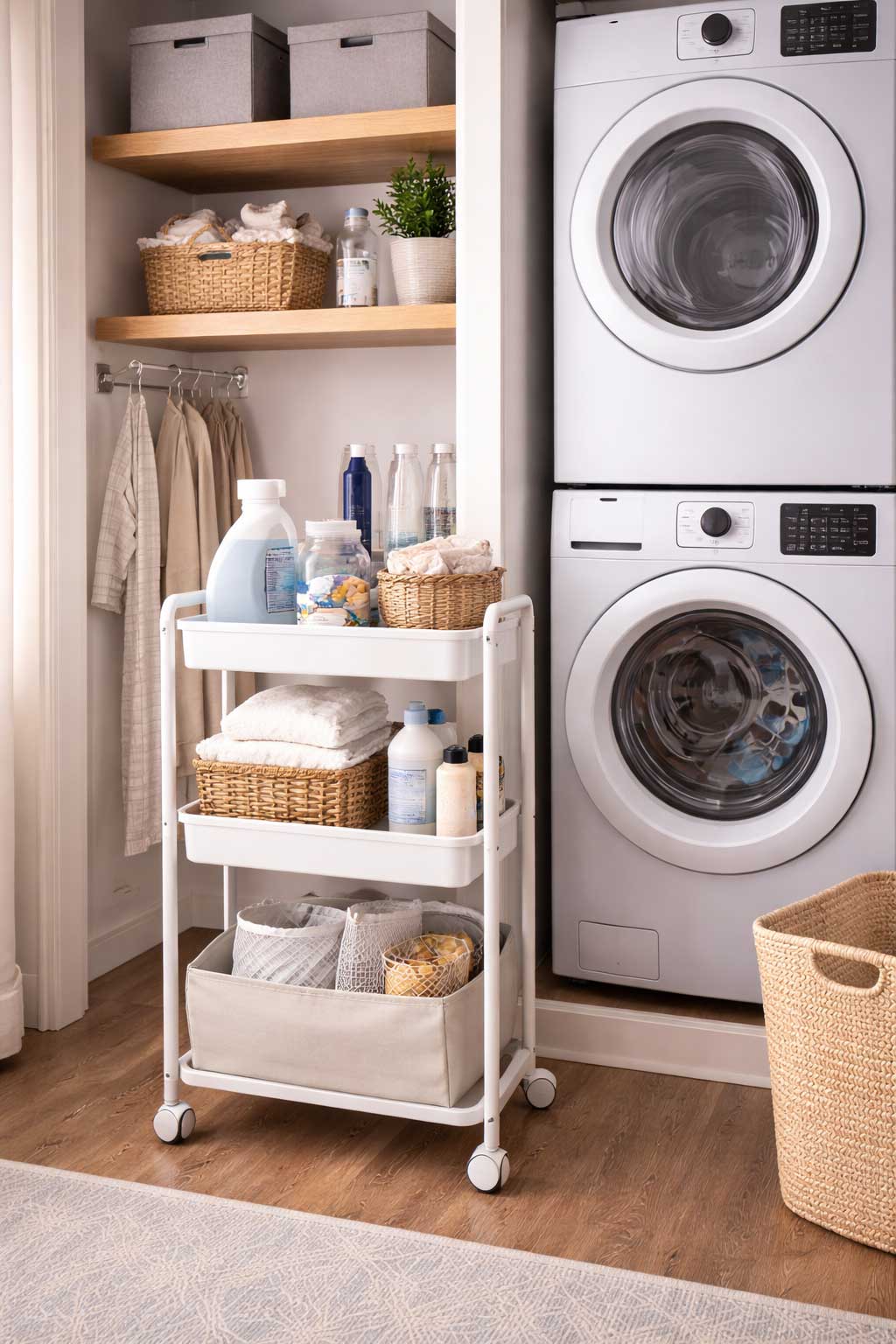
Rolling carts are one of the best options for apartments with no built-in laundry storage. They can slide beside a washer, in a bathroom corner, or into a closet and give you multiple levels of organized access without taking up much floor space.
Shelf organizers work well in laundry closets or hallway cabinets where the supplies already have a storage area but need more structure. Narrow cabinets are helpful when you want the supplies hidden and the apartment does not have a dedicated utility space.
Hanging organizers can also be useful in tighter vertical spots, especially if you need a place for small categories like mesh bags, dryer sheets, stain pens, and cleaning cloths. Lidded containers work especially well for pods, smaller accessories, and items that otherwise look messy or spill easily.
The best setup is the one that fits the space where laundry actually happens and makes the supplies easy enough to use that you keep putting them back.
Best Laundry Supply Setups for Common Small Apartment Layouts
If your apartment has a stacked washer and dryer in a closet, the best setup usually comes from using the vertical space around it well. A shelf above the machines, narrow bins, or a slim side cart can keep supplies close without crowding the area.
If you have in-unit laundry but no built-in shelf, a rolling cart or one nearby cabinet section usually works best. That keeps the supplies close enough to be practical without letting them sit loose on top of the machines or on the floor.
If you use a shared laundry room, portability matters more. In that kind of setup, one basket, tote, or handled bin for the main supplies often works better than trying to create a permanent laundry station inside the apartment.
If your laundry storage has to live in a bathroom, the best system usually comes from keeping the supply collection tighter and more concealed. In that layout, a cabinet section, lidded bin, or narrow shelf system often works better than open storage.
If the apartment needs to hide laundry supplies in a bedroom or hallway zone, cleaner-looking bins and compact concealed storage usually make the biggest difference because the supplies are living in a more visible part of the home.
Keep Everyday Laundry Items Easy to Grab Without Letting Them Spill Everywhere
The items you use every single wash day should be the easiest to reach. In most apartments, that means detergent, dryer sheets or dryer balls, and stain remover. If these are hard to access, they usually end up left out on a shelf, on top of the machine, or beside the hamper.
A better setup keeps daily-use products near the front of the system while pushing backup bottles and low-use extras farther back. This makes the storage more efficient and helps keep the visible parts of the apartment calmer.
That balance matters in a small home. Laundry supplies should be easy to grab, but they should not live loose on every available surface. When the daily essentials have a clear spot, the rest of the category usually stays under control more easily too.
Use Vertical and Hidden Storage So Laundry Supplies Take Up Less Room
Small apartments usually do not have much spare floor space, which is why vertical and hidden storage matter so much for laundry supplies. A shelf above a washer, stacked bins in a closet, a hanging organizer, or a narrow cabinet can hold much more than people expect without making the apartment feel crowded.
Hidden storage is especially helpful when the laundry area shares space with a bathroom, hallway, or bedroom. Keeping supplies behind a door, inside a lidded bin, or inside a cabinet section usually makes the apartment feel more polished than leaving detergent bottles and dryer products out in the open all the time.
Vertical storage also helps because it turns awkward height into useful storage instead of wasted air. In small apartments, that often matters more than trying to squeeze more bins onto the floor.
If you need stronger overall hidden-storage ideas, revisit Best Storage Solutions for Small Apartments.
If the layout could benefit from more flexible vertical storage, browse Best Over-the-Door Storage Solutions for Small Apartments.
Create a Place for Smaller Laundry Extras So They Stop Floating Around
Small extras are often what make laundry supplies feel messy. Mesh bags, clothespins, lint rollers, stain pens, sewing kits, spare buttons, cleaning cloths, and extra hangers all seem easy to tuck anywhere, which is exactly why they end up everywhere.
These items need just as much structure as the detergent does. A small bin, pouch, basket, or drawer section can make a huge difference here. Once the extras have one assigned home, the larger laundry system usually feels much more finished.
This is also one of the easiest ways to reduce visual clutter. The detergent bottle may be obvious, but it is often the little floating categories that make the area feel chaotic. Giving those items a real place helps the whole setup feel calmer and easier to maintain.
If you need more vertical support for grouped items like these, check out Best Storage Shelves for Small Spaces.
Mistakes to Avoid When Organizing Laundry Supplies in a Small Apartment
One common mistake is storing supplies in too many different rooms. Even if each spot feels convenient in the moment, the overall system becomes harder to use and harder to maintain. Another mistake is keeping backup bottles and extra items in the most accessible space, which pushes everyday products farther back than they should be.
Oversized baskets can also backfire because they take up more room than the category really needs. Forgetting to organize the smaller accessories is another major issue, since those are often what create the feeling of constant laundry clutter. A final mistake is building a setup that looks neat but feels annoying on actual laundry day. If it is inconvenient, it will not last.
The best system is usually the one that stays simple, compact, and easy to use in real life.
Products That Make Laundry Supplies Easier to Organize in a Small Apartment
The best products are the ones that support the way your apartment actually handles laundry. Some apartments do best with one strong bin system and a shelf. Others need a rolling cart because there is no built-in utility storage at all. Some benefit more from hanging organizers, narrow cabinets, or stackable bins that make an awkward closet or bathroom corner work harder.
The right solution depends on where laundry happens, how visible the supplies are, and how many smaller categories need containment. In a small apartment, the strongest setup is usually the one that looks simple because everything is grouped, easy to reach, and easy to put away again.
Final Thoughts on Organizing Laundry Supplies in a Small Apartment
Laundry supplies are easier to manage when they stop acting like random utility clutter and start functioning like one defined storage category. That usually means storing them close to where laundry happens, grouping them by function, and using compact storage that keeps both the main products and the smaller extras under control.
The best systems usually come from a few practical choices: keep the daily-use items easiest to reach, use hidden and vertical storage where you can, and stop small accessories from drifting through the apartment. When those pieces come together, laundry day feels easier and the apartment feels less cluttered overall.
The goal is not to create a full laundry room in a tiny apartment. It is to create one organized laundry-supply zone that actually works.
FAQ
How do you organize laundry supplies in a small apartment?
Organize laundry supplies in a small apartment by keeping all core items in one defined zone and grouping them by function so detergent, dryer supplies, stain treatments, and smaller accessories stop spreading across multiple rooms.
Where should you store detergent if you do not have a laundry room?
If you do not have a laundry room, detergent usually works best in the place where laundry actually happens most often, such as a bathroom cabinet, hallway closet, laundry closet shelf, rolling cart, or portable laundry tote.
What is the best way to store laundry pods, dryer sheets, and stain remover?
The best way to store laundry pods, dryer sheets, and stain remover is in grouped bins, baskets, or lidded containers that keep them together and easy to reach without leaving them loose on open surfaces.
How do you keep laundry supplies hidden in a small apartment?
Keep laundry supplies hidden in a small apartment by using cabinets, lidded bins, closet shelves, narrow storage pieces, or other concealed zones that keep products nearby without leaving them fully visible.
What storage works best for apartments with shared laundry rooms?
For apartments with shared laundry rooms, portable storage usually works best, such as one handled basket, tote, or compact bin system that keeps detergent, dryer products, and smaller supplies together and easy to carry.