How to Create Privacy in a Studio Apartment Without Permanent Changes
Creating privacy in a studio apartment can feel difficult when everything happens in one open room. Sleeping, relaxing, working, changing clothes, and having guests over all happen in the same shared space, and that can make a studio feel more exposed than comfortable. The challenge is not just adding privacy. It is doing it in a way that still feels flexible, renter-friendly, and light enough for a small apartment.
The good news is that a studio can feel much more private without permanent construction or heavy built-ins. In most studios, the best setup comes from using flexible dividers, curtains, shelving, furniture placement, and visual boundaries that create separation without closing off the whole apartment. With the right approach, you can make the space feel more personal and more functional without making it feel smaller.
For product ideas that help define zones without permanent walls, explore our Best Small Living Room Room Dividers for Apartments guide.
If you want broader layout help for one-room living, check out How to Divide a Studio Apartment Without Making It Feel Smaller.
For furniture that helps one area serve multiple purposes, browse How to Use Multi-Functional Furniture in Small Apartments.
This guide is part of our Small Apartment Living Room Solutions collection.
Quick Answer
If you want to create privacy in a studio apartment without permanent changes, the best approach is to use flexible separation methods that define personal zones without blocking too much light or making the space feel boxed in. In most studios, that means using curtains, open shelving, screens, furniture placement, rugs, or storage pieces to create more privacy around the bed, work area, or changing zone while keeping the apartment adaptable.
A good privacy setup usually works best when it includes:
- flexible separation instead of permanent barriers
- enough privacy around the bed or personal zone
- light-friendly divider choices
- renter-friendly pieces that can move or change later
- a layout that still keeps the studio open and usable
Why Privacy Feels Hard to Create in a Studio Apartment
Privacy feels harder in a studio because the apartment usually has very few built-in boundaries. The same room may need to function as a bedroom, living room, office, dining area, and entry space all at once. When there is no real separation, even simple daily routines can feel more exposed than they should.
This becomes especially noticeable when guests come over or when your bed is visible from the front door. It can also show up in smaller ways, like feeling like you never fully leave your sleeping area, or having no good place to change clothes without the whole room feeling like one open stage.
That is why privacy matters even in a very small apartment. It is not only about hiding parts of the room. It is about making the apartment feel calmer, more intentional, and more comfortable to live in every day.
Start by Deciding What Kind of Privacy You Actually Need
Before choosing a divider, it helps to get very specific about what kind of privacy you want. Some people mainly want the bed to feel less exposed. Others want a clearer work zone so the apartment does not feel like one giant mixed-use room. Some need a more private changing area. Others mostly want guests to see a living area first instead of the sleeping space.
This matters because different privacy problems need different solutions. If the main goal is soft visual privacy around the bed, curtains may be enough. If the goal is creating a stronger room-like separation, shelving or a taller divider may make more sense. If the apartment still needs to stay very flexible, lighter furniture placement may work better than adding another object.
A studio usually feels best when the privacy solution matches real daily life. The clearer the problem is, the easier it becomes to solve it without adding unnecessary bulk.
Choose the Best Non-Permanent Privacy Solution for Your Layout
The best privacy solution depends on how much separation you want and how open the studio still needs to feel.
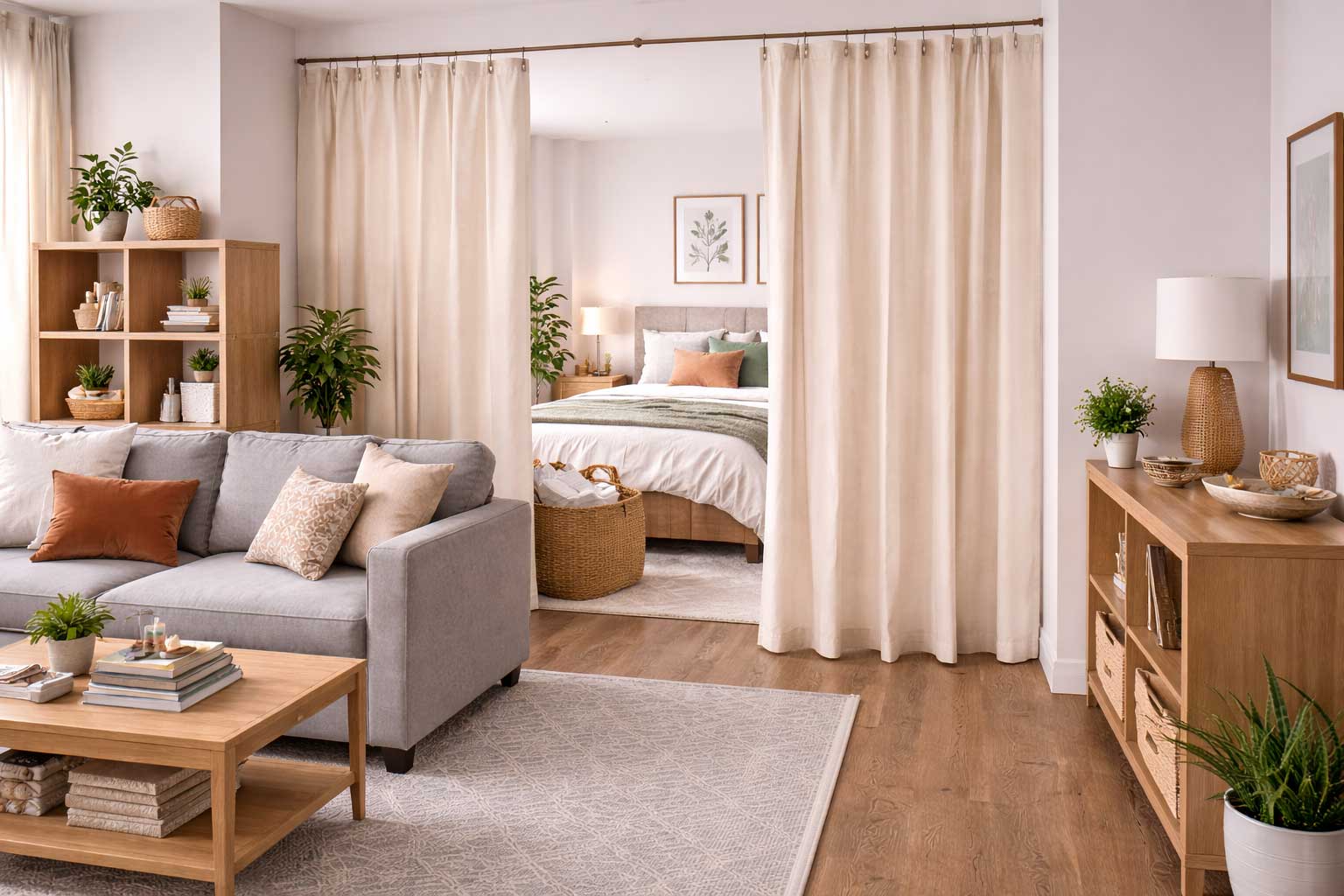
Curtains are one of the most flexible options. They can create soft visual privacy around a bed or dressing area and can be opened when you want the apartment to feel brighter and more open. They work especially well when flexibility matters more than complete visual blockage.
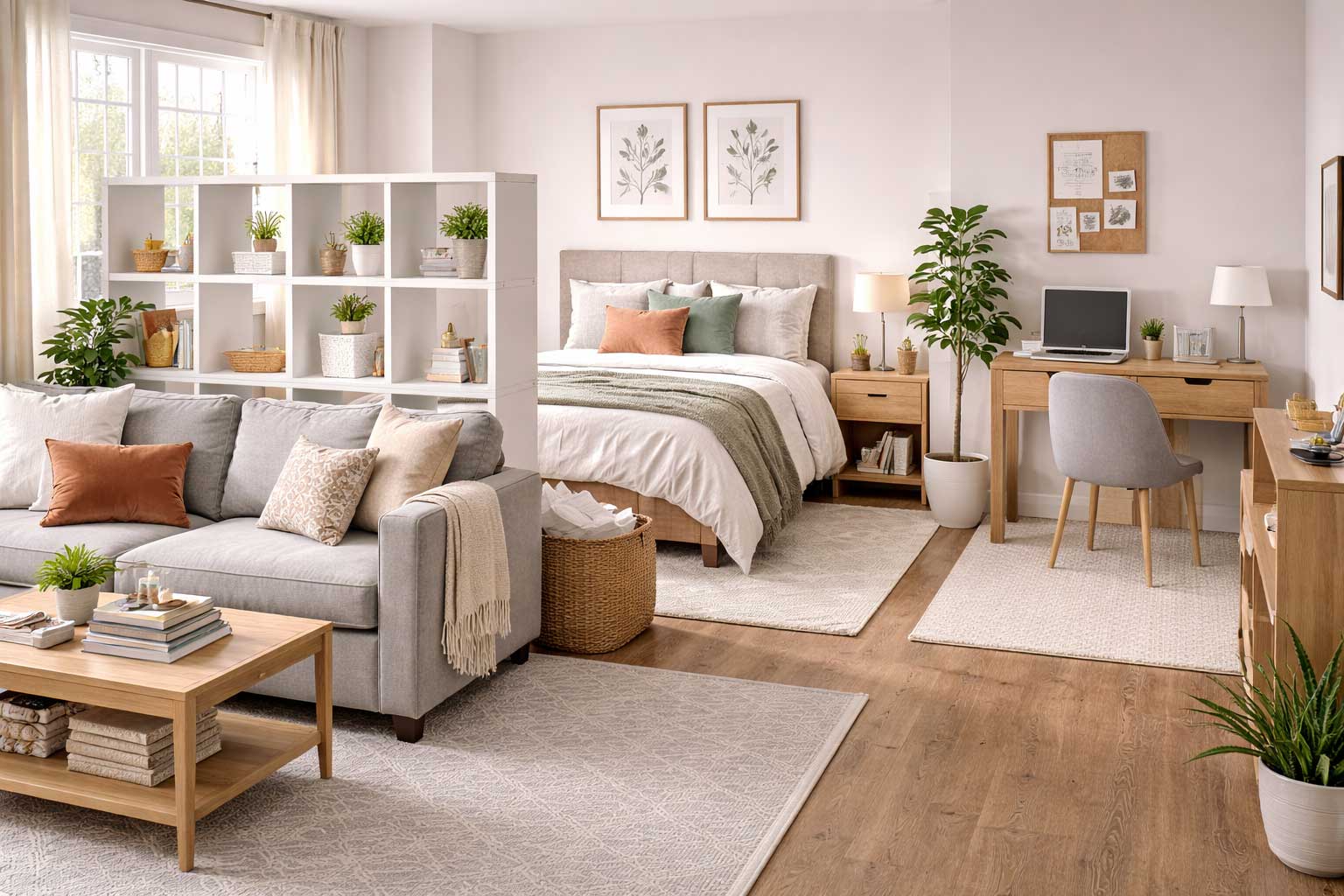
Open shelving can be a strong option when you want privacy and storage at the same time. It creates more structure than a curtain while still letting some light and openness pass through. This works well for separating a sleeping zone from a lounge area.
Folding screens can provide stronger temporary privacy. They are helpful when you want to block a direct sightline, but they usually work best when they are not too dark or bulky for the room.
Sofas, console tables, and other furniture can also do a surprising amount of privacy work. In many studios, the right furniture placement reduces exposure without needing a separate divider at all.
Rugs and lighting are more subtle, but they still help. They define personal zones and make different parts of the studio feel like they have their own purpose, which can add a sense of privacy without physically blocking much.
Best Ways to Create Privacy in Common Studio Apartment Layouts
If the bed is visible from the entry, privacy usually matters most there. In that setup, a curtain, open shelf, or furniture boundary can help create a softer transition so the apartment does not feel like one exposed sleeping area the moment you walk in.
If the studio has one main window wall, protecting the light source should be a priority. In that kind of layout, lower-profile dividers, open shelving, or curtains often work better than tall solid pieces that stop light from reaching the rest of the room.
If the studio also needs a work-from-home zone, privacy may be less about hiding the bed and more about separating work from personal space. In those layouts, a shelf, desk placement, or a lighter furniture boundary may do more good than a strong divider across the middle of the room.
If guests can see the whole sleeping zone from the sofa area, a partial divider can make a big difference. Even a modest boundary can help the bed feel more tucked away and keep the apartment from feeling like one undivided room.
If the studio is long and narrow, privacy usually works best when it follows the natural shape of the room. Dividing the apartment along its length often feels better than trying to cut across it with a heavy barrier.
Create Privacy Without Blocking Too Much Light
One of the biggest mistakes in studio privacy setups is creating separation that makes the apartment feel darker. A divider may help visually, but if it blocks the main window or interrupts the room’s natural brightness too much, the whole space can start feeling smaller.
That is why light-friendly privacy choices usually work best. Open shelving lets light pass through while still creating structure. Curtains can soften the view of the bed without becoming a hard wall. Partial-height pieces often create enough privacy without cutting off the room visually. Even the placement of a divider matters. A slightly shifted piece can preserve much more brightness than one placed directly in front of the main light source.
This is especially important in small studios because light is one of the main reasons the apartment feels open at all. A good privacy setup should create comfort without making the room feel closed in.
If you want divider ideas that can also add useful storage, browse Best Storage Shelves for Small Spaces.
Use Furniture Placement to Build More Privacy Before Adding Extra Pieces
Many studios can create more privacy with furniture placement alone. A sofa can shield the bed from the main living area. A console table behind the sofa can reinforce that boundary. A desk can help define where the work zone starts and where it stops. Even moving the bed to a more protected wall can change the feel of the apartment.
This approach works especially well because it does not always require buying a separate divider. Instead, it asks more from the furniture you already need. A room often feels better when privacy comes from layout decisions instead of from piling in extra screens or partitions.
This also helps keep the studio lighter. The more functions your furniture can serve, the less likely the room is to feel cluttered by pieces that only do one job.
If you want the living side of the studio to feel more structured after creating privacy, check out How to Organize a Small Apartment Living Room.
Make the Sleeping Area Feel More Private and More Intentional
In many studios, the bed is the area where privacy matters most. When the bed feels too exposed, the whole apartment can feel less restful and less personal. That is why even a light amount of privacy around the sleeping zone can make a major difference.
Curtains are one of the easiest solutions here because they can soften the bed area without adding as much visual weight as a solid divider. Open shelving also works well because it creates a stronger boundary while still letting the room breathe. A rug under the bed can help the sleep zone feel more distinct, and softer lighting near the bed can make the space feel more tucked away even without full visual separation.
The goal is not necessarily to hide the bed completely. It is to make the sleeping area feel like its own zone instead of just one more exposed surface inside a single room.
Keep the Studio Flexible So the Privacy Setup Still Works Daily
Privacy should make the apartment easier to live in, not harder. A divider that blocks the easiest path through the room, makes cleaning annoying, or has to be moved constantly can become more frustrating than useful.
That is why flexibility matters so much in a studio. Curtains can open and close. Screens can be folded or repositioned. Open shelves can divide space without making it feel locked in. Furniture-based boundaries often feel easiest because they work with the room’s normal layout instead of fighting it.
A good privacy solution should support daily routines. You should still be able to move through the apartment comfortably, make the bed, work, relax, and host guests without feeling like the setup is always in the way.
If flexibility is important in your layout, revisit Best Multi-Functional Furniture for Small Apartments.
Mistakes to Avoid When Creating Privacy in a Studio Apartment
One common mistake is using dividers that are too bulky or too dark for the apartment. Even if they add privacy, they can make the studio feel much smaller than it is. Another mistake is blocking the main light source, which often hurts the overall space more than the added privacy helps.
Overfilling the apartment with too many privacy pieces is another problem. A curtain, a screen, a shelf, and multiple large furniture boundaries can quickly make the studio feel overworked. Privacy should add comfort, not crowd the layout.
Another mistake is creating privacy in a way that hurts flow. If the divider makes it harder to reach the bed, desk, or seating area, the apartment becomes less functional. Some solutions also feel temporary in the wrong way, adding clutter instead of creating real structure.
Products That Make Studio Privacy Easier Without Permanent Changes
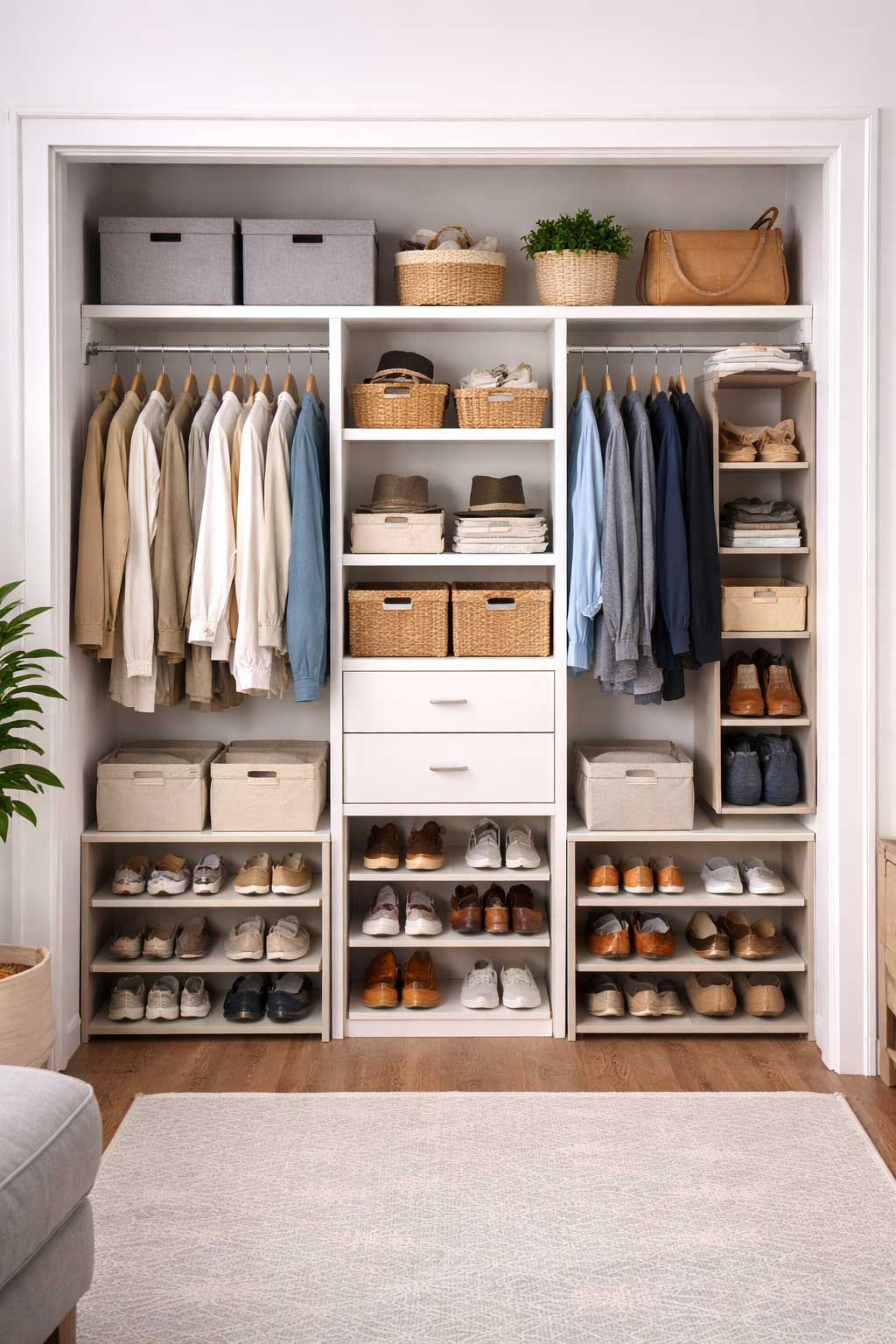
The best products are the ones that create privacy while still respecting the apartment’s light, flow, and flexibility. Some studios do best with curtains because they are soft and adaptable. Others benefit more from shelving because it adds privacy and storage at the same time. In some layouts, a simple screen or wardrobe-style piece creates the right level of visual blocking. In others, a better furniture arrangement solves most of the problem without another dedicated divider.
The right choice depends on what kind of privacy you need most and how visible the bed or personal zone feels from the rest of the apartment. In a small studio, the strongest privacy pieces are usually the ones that solve one real problem without creating three new ones.
Final Thoughts on Creating Privacy in a Studio Apartment Without Permanent Changes
A studio apartment can feel much more comfortable when it has a little more privacy around the most personal parts of the space. That usually means defining the bed area more clearly, using lighter divider choices, and building boundaries that make the apartment feel more intentional without making it feel smaller.
The best setups usually come from a few smart choices: identify the kind of privacy you actually need, protect light and openness, and use flexible solutions that still work with daily life. When those pieces come together, the studio feels more personal, more functional, and much easier to enjoy.
The goal is not to create walls where there are none. It is to create enough privacy that the apartment feels more like home.
FAQ
How do you create privacy in a studio apartment without walls?
Create privacy in a studio apartment without walls by using curtains, open shelving, folding screens, furniture placement, rugs, or storage pieces to define personal zones without permanent construction.
What is the best non-permanent divider for a studio apartment?
The best non-permanent divider for a studio apartment depends on the layout, but curtains, open shelving, and slim screens often work well because they can create privacy without fully closing off the space.
How do you hide the bed in a studio apartment?
Hide the bed in a studio apartment by using a curtain, shelf, screen, or furniture boundary that softens the direct view of the sleeping area while still letting the room feel open enough.
Can curtains work as a studio apartment divider?
Yes, curtains can work very well as a studio apartment divider because they create flexible visual privacy, are renter-friendly, and can be opened when you want the apartment to feel brighter and more open.
How do you make a studio apartment feel more private without making it smaller?
Make a studio apartment feel more private without making it smaller by choosing light-friendly dividers, using furniture placement before bulky partitions, and creating just enough separation to define personal zones without blocking sight-lines.