How to Store Baking Sheets and Cutting Boards in a Small Apartment Kitchen
Storing baking sheets and cutting boards in a small apartment kitchen can get frustrating fast. These are flat items, but they rarely store well when they are stacked randomly with pans, trays, lids, or serving pieces. One awkward pile inside a lower cabinet can make the whole kitchen feel harder to use, especially when you need to pull one piece out and everything else slides, tips, or falls over. The challenge is not just finding somewhere to put baking sheets and cutting boards. It is creating a system that keeps them upright, easy to grab, and out of the way.
The good news is that this category usually gets much easier once it has structure. In most small apartments, the best setup comes from storing baking sheets and cutting boards vertically, giving them a clearly defined zone, and using dividers or narrow organizers that stop them from collapsing into one messy stack. With the right approach, even a tight kitchen can keep these bulky flat items under control.
For broader kitchen organization ideas, explore our Best Storage Solutions for Small Kitchens Without Pantries guide.
If your cabinets need more structure overall, check out Best Cabinet Storage Solutions for Small Apartments.
For storage tools that help create better vertical organization inside kitchen cabinets, browse Best Under-Shelf Storage Baskets for Kitchens.
This guide is part of our Small Kitchen & Dining Solutions collection.
Quick Answer
If you want to store baking sheets and cutting boards in a small apartment kitchen, the best approach is to keep them upright in one defined storage zone instead of stacking them flat in a pile. In most kitchens, that means using dividers, vertical organizers, narrow cabinet sections, or repurposed rack-style storage that keeps each piece easier to reach.
A good baking-sheet-and-cutting-board storage setup usually works best when it includes:
- one clearly defined vertical storage zone
- separators that keep flat items from sliding together
- easy access to the pieces you use most often
- storage that fits the cabinet or counter footprint closely
- a setup that keeps larger flat items from taking over the kitchen
Why Baking Sheets and Cutting Boards Get So Hard to Store
Flat kitchen items are deceptively difficult to organize. They do not look bulky when you are using them, but they create storage problems because they are wide, rigid, and awkward to stack. A few sheet pans, cooling racks, cutting boards, and trays can take over an entire cabinet shelf if they are just laid on top of each other.
This is especially frustrating in a small apartment kitchen because cabinet space is already tight. Once baking sheets and boards are mixed in with skillets, pot lids, muffin tins, or serving trays, the cabinet stops functioning well. Every time you need one piece, you end up shifting several others just to get to it.
That is why this category tends to feel more annoying than its actual size would suggest. It is not just about storage volume. It is about how much friction a bad setup creates every time you cook, prep, or clean up.
Start by Deciding Which Flat Kitchen Items Actually Belong in the Same Zone
Before organizing anything, it helps to decide which flat items should realistically live together. In a lot of kitchens, baking sheets, cutting boards, cooling racks, muffin tins, serving trays, splatter screens, and pan lids all get stuffed into the same cabinet without much thought. That usually creates a category that is too broad and too messy to work well.
A better system starts by separating the items you use for similar tasks. Baking sheets, cooling racks, and similar oven-related pieces often make sense together. Cutting boards may work better in the same zone if that is the most practical place, but in some kitchens they are easier to access closer to the prep area. Serving trays or rarely used specialty pieces may need to live somewhere else entirely.
This matters because the more tightly you define the category, the easier it is to make the storage work. A small kitchen usually benefits more from one clean, well-edited zone than from one giant vertical slot stuffed with every flat item you own.
Store Flat Items Vertically Instead of in Unstable Stacks
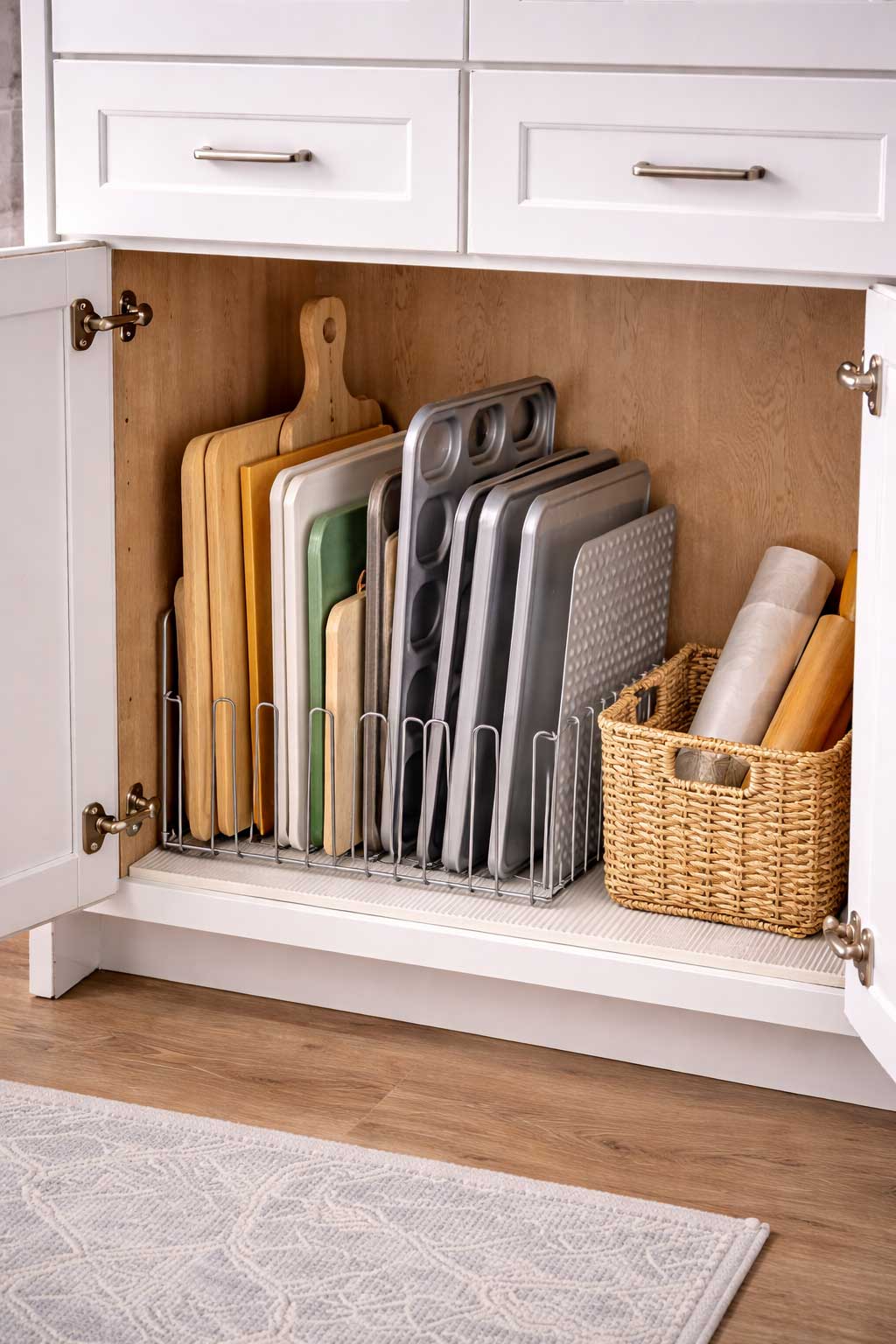
Vertical storage is usually the biggest improvement you can make for this category. When baking sheets and cutting boards stand upright with some separation between them, they become much easier to pull out one at a time. You stop lifting a whole pile just to reach the one piece you actually need.
Stacking flat items horizontally often looks fine at first, but it tends to fail quickly in daily use. The bottom piece becomes hard to reach. The stack gets unstable. Smaller items slip sideways. The whole thing turns into a cabinet shuffle every time you cook.
Vertical storage solves most of that. With upright organization, each pan or board has a clearer lane, and the cabinet becomes more readable. In a small apartment kitchen, that kind of visibility matters because storage has to work hard without wasting motion.
Choose the Best Storage Type for Baking Sheets and Cutting Boards
The best storage type depends on your cabinet shape, how many pieces you own, and whether you need the setup hidden or partially visible.
Cabinet dividers are often the easiest and cleanest fix. They work especially well in lower cabinets where there is enough height to stand baking sheets and cutting boards upright without crowding the shelf above.
Narrow pull-out zones are ideal in kitchens that happen to have a slim cabinet section or filler area that can be repurposed. These can make excellent tray and board storage because the pieces stay vertical and easy to see.
Rack-style organizers are great when you need more structure inside an awkward cabinet. These help create individual slots and keep pans or boards from leaning too heavily into each other.
Countertop crocks or stands can work for one or two cutting boards if you use them constantly and want them close to the prep zone. These work best when the kitchen can handle a small amount of intentional countertop storage without starting to look cluttered.
Over-cabinet or shelf-supported dividers can also help in cabinets where the flat items need more separation but the existing shelf is too open to keep them stable.
The best option is usually the one that uses the exact width and depth of the cabinet well instead of forcing oversized organizers into a space they were not made for.
Best Baking Sheet and Cutting Board Setups for Common Small Apartment Kitchen Layouts
If you have a tiny kitchen with only a few lower cabinets, the best setup usually comes from dedicating one side of one cabinet to vertical flat-item storage instead of scattering these pieces through several cabinets. Keeping them together makes the whole kitchen easier to use.
If your apartment kitchen has one deep, awkward cabinet, that cabinet can actually become a strong tray-and-board zone once it has dividers. Without structure, a deep cabinet usually becomes a frustrating black hole. With vertical separation, it can become one of the more useful storage areas in the kitchen.
If your kitchen has limited drawer space and no built-in tray slot, lower-cabinet vertical storage is usually the best answer. In that layout, the goal is to create a file-style section inside a cabinet rather than trying to make these pieces fit in a shallow drawer that was never meant for them.
If you live in a studio apartment where kitchen clutter stays visible, visual control matters more. In that kind of layout, a cleaner, more minimal flat-item setup helps the whole kitchen look calmer. One tightly edited vertical zone usually works better than several overstuffed storage spots.
Keep Your Most-Used Boards and Trays Easy to Reach
The sheet pan you use every week and the cutting board you grab every day should not be buried behind the bulky roasting pan you touch twice a year. This is one of the biggest reasons flat-item storage feels annoying in real life. The daily-use pieces end up trapped behind low-use items just because they happen to fit in the same area.
A better setup puts your most-used pieces nearest the front or in the easiest slot to grab. Specialty pans, extra boards, or low-use trays can go farther back or into the less convenient sections. This sounds small, but it changes the whole feel of the storage zone.
In a small kitchen, access order matters almost as much as storage type. When the right pieces are easiest to reach, you use the cabinet more naturally and you are less likely to leave boards or trays sitting out on the counter after cooking.
Use Cabinet Space More Efficiently Without Wasting Width
Flat-item storage often wastes space because people either lay everything across one shelf or leave too much dead space between pieces. A better system usually comes from turning a narrow slice of cabinet width into a dedicated vertical zone.
This is one reason dividers work so well. They let you use side edges, awkward gaps, and cabinet corners more intentionally. Instead of letting sheet pans sprawl across a whole shelf, you can create a tight, functional section that holds them upright and leaves the rest of the cabinet available for other categories.
This also helps reduce the feeling that baking sheets and boards are taking over the kitchen. In many apartments, the issue is not that there is nowhere to put them. It is that they are using storage space inefficiently because they are not given a shape-specific solution.
If cabinet pressure is part of a broader kitchen-storage issue, revisit How to Organize Food Storage in a Small Apartment With No Pantry.
Prevent Flat Items From Sliding, Scraping, or Falling Over
A good system should not only hold these items. It should keep them stable. When flat items lean too loosely, they slide into each other, scrape surfaces, and turn the cabinet into a noisy, frustrating mess. The more unstable the storage feels, the less likely you are to keep using it properly.
This is why support matters. Dividers need to be spaced well enough that items can stand without collapsing. The section should not be so tight that you have to force each tray in and out, but it should not be so loose that everything falls sideways. Cutting boards especially benefit from a defined slot that keeps them upright without crowding.
Stability is what makes vertical storage actually work. In a small apartment kitchen, the best systems are not just space-saving. They are smooth enough to use every day without irritation.
Mistakes to Avoid When Storing Baking Sheets and Cutting Boards
One common mistake is stacking everything flat in one pile. That almost always creates more frustration than it saves. Another is mixing daily-use boards with rarely used trays and specialty pieces so the cabinet never feels intuitive.
Giving bulky low-use pieces the best access is another easy mistake. In a small kitchen, prime space should go to the things you use most often. Using dividers that do not fit the cabinet height or depth well can also make the system feel awkward instead of helpful.
Another problem is storing flat items so tightly that nothing pulls out easily. Good storage should reduce friction, not add it. If you have to wrestle a cutting board out every time, the setup still needs work.
Products That Make Baking Sheet and Cutting Board Storage Easier in a Small Apartment Kitchen
The best products are the ones that create separation without wasting valuable cabinet space. Some kitchens do best with simple cabinet dividers that carve out a vertical zone. Others need a more structured rack-style organizer because the items keep tipping into each other. In tighter kitchens, even one well-placed organizer can make a cabinet much more usable.
The right solution depends on how many flat items you actually use, how awkward the cabinet is, and whether the bigger problem is access, stability, or wasted space. In small apartment kitchens, the best systems usually feel simple because each tray or board has a more obvious place to go.
Final Thoughts on Storing Baking Sheets and Cutting Boards in a Small Apartment Kitchen
Baking sheets and cutting boards are much easier to manage when they stop living in one unstable horizontal stack and start living in one defined vertical storage zone. That usually means creating separation, prioritizing the pieces you use most, and making sure the cabinet supports daily use instead of fighting it.
The strongest setups usually come from a few practical choices: store flat items upright, keep everyday pieces easiest to reach, and make sure the storage stays stable enough that nothing slides or tips over. When those pieces come together, one of the most annoying kitchen categories becomes much easier to live with.
The goal is not just to get these items out of the way. It is to make them easier to grab, easier to put back, and less likely to take over the rest of the kitchen.
FAQ
How do you store baking sheets in a small kitchen?
Store baking sheets in a small kitchen by standing them upright in a divided cabinet section or vertical rack organizer so each sheet can be pulled out without disturbing the whole stack.
What is the best way to store cutting boards in a small apartment kitchen?
The best way to store cutting boards in a small apartment kitchen is usually upright in a dedicated slot, divider section, or compact stand that keeps them easy to reach and prevents them from sliding around.
Should baking sheets be stored vertically or flat?
Baking sheets usually store better vertically in a small kitchen because vertical storage makes them easier to access and keeps them from turning into a hard-to-manage stack.
Where do cutting boards go if you do not have much cabinet space?
If you do not have much cabinet space, cutting boards can go in a narrow cabinet divider section, a vertical rack, or a small countertop stand if you use them often enough to justify visible storage.
How do you organize flat kitchen items without them falling over?
Organize flat kitchen items without them falling over by using dividers or slot-style organizers that give each piece enough support to stand upright without leaning into one unstable pile.