How to Divide a Studio Apartment Without Making It Feel Smaller
Dividing a studio apartment can make the space feel more organized and more livable, but it can also backfire if the separation makes the layout feel darker, tighter, or more cramped. In a one-room apartment, it is natural to want more distinction between sleeping, lounging, dining, and working areas. The challenge is not just creating separate zones. It is doing it in a way that adds structure without making the studio feel boxed in.
The good news is that a studio apartment does not need full walls or bulky partitions to feel more functional. In most studios, the best setup comes from using lighter visual boundaries, smarter furniture placement, and room-defining pieces that separate functions without cutting off openness. With the right approach, you can create more privacy and better flow while still keeping the apartment airy and usable.
For product ideas that help define zones without heavy walls, explore our Best Small Living Room Room Dividers for Apartments guide.
If you want broader layout help for compact living areas, check out How to Design a Small Living Room Layout.
For furniture that helps one space do more than one job, browse How to Use Multi-Functional Furniture in Small Apartments.
This guide is part of our Small Apartment Living Room Solutions collection.
Quick Answer
If you want to divide a studio apartment without making it feel smaller, the best approach is to use light, functional separation instead of heavy barriers. In most studios, that means using furniture placement, open shelving, rugs, curtains, lighting, or slim divider-style pieces to define sleeping, living, dining, or work zones while still keeping sight-lines and natural light moving through the space.
A good studio-division setup usually works best when it includes:
- clearly defined zones without full visual blockage
- separation methods that still let light move through the space
- furniture that supports more than one function
- enough openness that the studio still feels connected
- a layout that improves privacy and flow without crowding the room
Why Dividing a Studio Apartment Can Help or Hurt the Space
A studio usually works better when the main functions of daily life are not all piled on top of each other. Sleeping feels better when the bed area has some separation from the lounge area. Relaxing feels easier when the sofa does not feel like it is sitting in the middle of the bedroom. Working from home feels more manageable when the desk has a real zone instead of floating wherever it can fit.
At the same time, the wrong type of divider can make the whole apartment feel worse. A tall solid bookshelf placed across the main light source can make the studio feel instantly darker. Oversized screens can make the room feel chopped into smaller boxes. Too many separate zones can turn one open studio into a crowded maze of mini-rooms.
That is why dividing a studio apartment works best when the separation improves function without interrupting openness. The goal is to help the apartment feel more organized, not more blocked off.
Start by Deciding Which Zones You Actually Need
One of the biggest mistakes people make is trying to divide a studio into too many separate areas. Not every apartment needs a clear sleeping zone, living zone, dining zone, work zone, reading corner, entry drop zone, and workout corner all at once. In a small space, over-dividing usually creates more visual clutter than actual comfort.
A better approach is to decide which zones really matter in your daily life. In many studios, the essential zones are sleeping and living. In others, the main need is separating a work area from the rest of the room. Some layouts also need a clearer eating area, especially if the kitchen is very open to the main room.
Once you know which functions matter most, it becomes easier to divide the studio in a way that actually helps. A studio works better when each zone has a purpose. It starts feeling smaller when the layout tries to create more zones than the apartment can realistically support.
Choose the Best Type of Divider for the Way You Live
The best divider depends on what kind of separation you need and how open the apartment needs to stay.
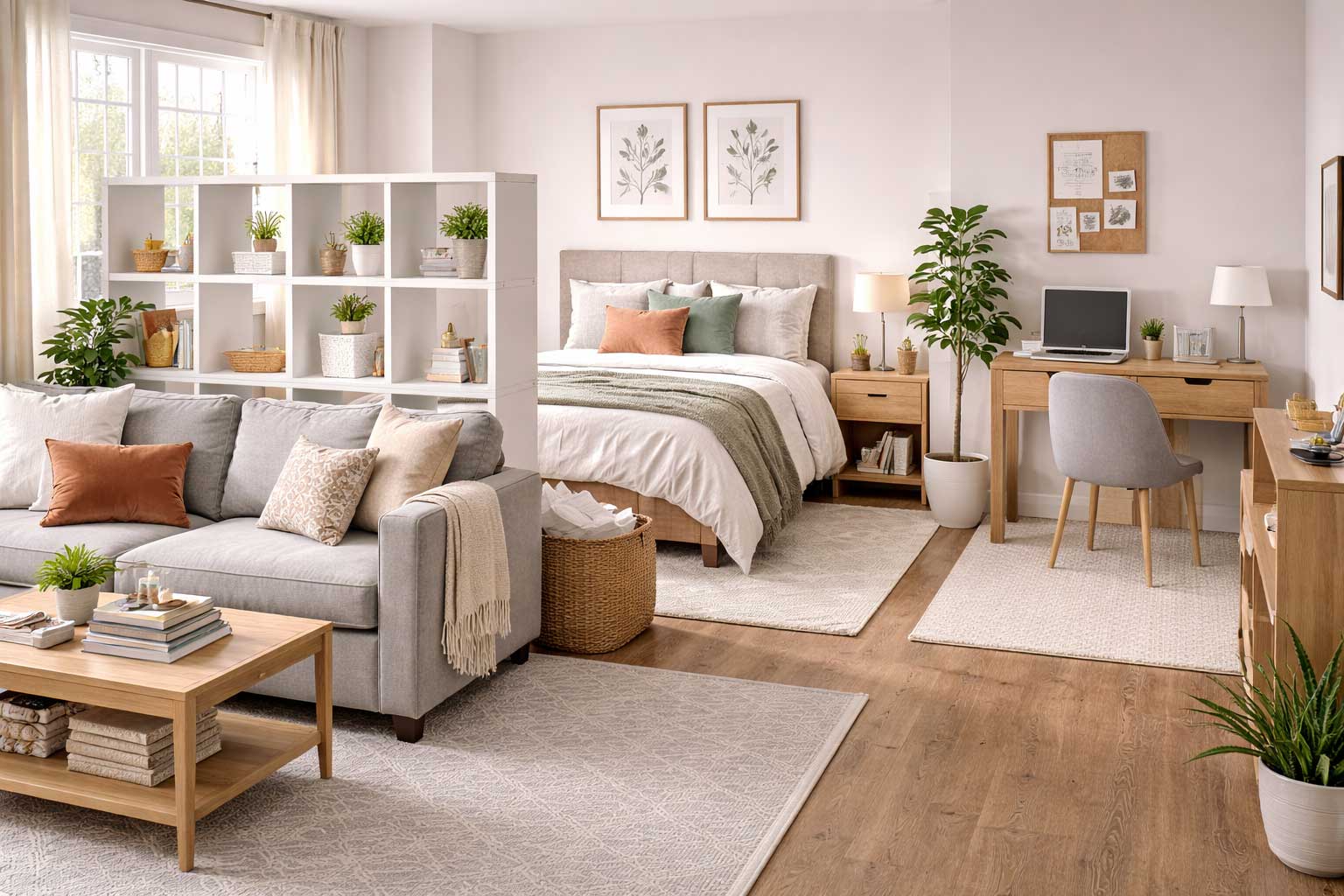
Open shelving is one of the most flexible options because it adds separation and storage at the same time without feeling as heavy as a solid wall. It works especially well when you want to define a sleeping area or work zone without blocking all the light.
Sofas and console tables can also act like natural dividers. In many studios, the back of the sofa is enough to signal where the lounge area begins and where another zone ends. This often feels more natural than adding a separate partition just for the sake of separation.
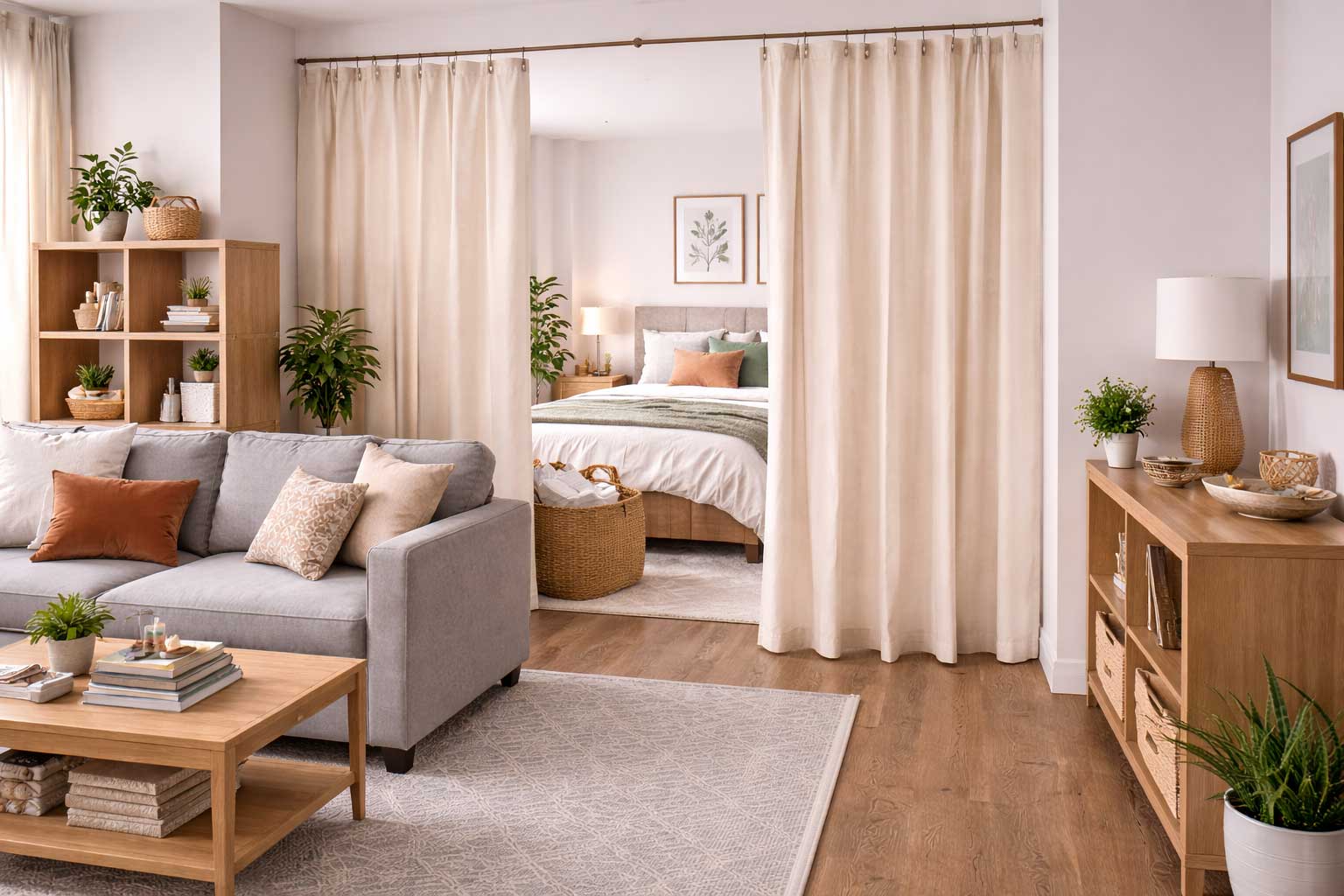
Curtains are useful when you want flexible privacy. They work especially well around a bed area because they can create a more tucked-away feel when needed without permanently blocking the room.
Rugs are another simple way to define zones without physically dividing anything. A rug under the sofa and coffee table can make the living area feel intentional, while a separate rug under a desk or bed area can reinforce a different function.
Slim screens or divider panels can help when stronger separation is needed, but they usually work best when they stay visually light. In a studio, the divider should match the openness the room can handle.
Best Ways to Divide a Studio Apartment in Common Layouts
In a long narrow studio, it often works best to create zones along the natural length of the apartment instead of fighting it. The bed may work better toward one end, the living area toward the other, and the divider can be something lighter like open shelving or a sofa boundary rather than a full barrier across the width of the room.
In a square studio with one main window wall, protecting the light source is usually the biggest priority. In this layout, lower-profile dividers, rugs, and furniture placement often work better than tall pieces placed between the window and the rest of the room.
If the bed is visible from the entry, that is often where division matters most. A slim shelf, curtain, or furniture-based boundary can help create a softer transition so the apartment does not feel like you are walking straight into the sleeping zone.
If the studio also needs a work-from-home area, the desk usually works best in its own defined zone instead of floating between the bed and sofa. Even a small workspace feels better when it has one clear boundary and does not visually compete with every other function in the room.
If the living and sleeping areas overlap heavily, lighter separation is usually more effective than trying to force a dramatic divide. In many cases, the room feels bigger when the zones are clearly suggested rather than rigidly boxed off.
Keep Sightlines Open So the Studio Still Feels Bigger
Sightlines matter a lot in a studio. The more you can visually read through the room, the larger it tends to feel. That is why solid barriers often make a studio feel smaller even when they technically improve separation.
This is where open shelving, low-profile furniture, and partial dividers work so well. They create enough structure to define a zone without making the apartment feel cut in half. A bookcase with open sides, a lower console behind the sofa, or a divider that stops short of the ceiling can all help maintain openness.
It also helps to think about what you see from the key standing points in the apartment. When you enter the room, can your eye still travel? Can natural light still move across the space? If the divider stops both of those things, it is probably too heavy for the layout.
A studio usually feels best when the room has clear zones but still reads as one connected space.
Use Furniture Placement to Divide the Room Before Adding Extra Pieces
Many studios can create better separation without buying a dedicated divider at all. Furniture placement often does more work than people expect.
A sofa can define the edge of the living area. A console table behind it can reinforce that boundary even more. A bed placed thoughtfully in relation to a wall, rug, or shelf can create a sleeping zone that feels more deliberate. A desk tucked into a corner or along one edge of the room can make the work area feel more separate without needing a second layer of partitioning.
This kind of furniture-based separation usually works especially well in small spaces because it does not add as much visual bulk. Instead of layering new pieces into the apartment, it makes the most of the pieces you already need.
If you want to improve the function of the lounge area after dividing it, check out How to Organize a Small Apartment Living Room.
Let Light and Air Flow Through the Space
A divider should help the room, not darken it. In a studio, blocking the main light source is one of the fastest ways to make the apartment feel smaller. Even a useful divider can hurt the layout if it cuts off brightness from the rest of the room.
That is why light-friendly divider choices matter so much. Open shelves allow light to pass through. Curtains can be pulled back when you want the room to feel brighter. Lower-profile furniture keeps the apartment feeling more open than a tall opaque barrier.
It also helps to keep the center of the room from becoming too congested. Heavy pieces crowded into the middle of the studio can make the layout feel stiff and closed. A good divide should still let the apartment breathe.
Make Each Zone Feel Purposeful Without Overfilling the Apartment
Dividing a studio successfully is not about giving every zone as much furniture as possible. It is about giving each zone just enough furniture to make its purpose clear.
The living area does not need every possible side table, bench, and accent chair if the apartment is already tight. The sleeping zone does not need extra storage pieces if the bed frame already handles some of that job. The work area does not need to sprawl if the desk and storage stay edited.
This is where multi-functional pieces help a lot. A storage shelf that divides and organizes. A console that creates a boundary and adds surface space. A sofa that defines the living area and anchors the room. The more each piece can do, the less the apartment needs to feel chopped up by extra furniture.
If shelving is part of your divide-and-store plan, browse Best Storage Shelves for Small Spaces.
If you need more flexible pieces that support more than one zone, revisit Best Multi-Functional Furniture for Small Apartments.
Mistakes to Avoid When Dividing a Studio Apartment
One common mistake is using a divider that is too bulky or too tall for the room. Even if it creates privacy, it can also make the studio feel darker and more crowded. Another mistake is blocking the main light source with a storage unit or screen placed in the wrong spot.
Creating too many zones is another easy way to make a studio feel smaller. So is over furnishing each section once the divisions are in place. A divided studio still needs breathing room.
Some dividers also add clutter without adding enough function. If a piece takes up space but does not improve privacy, storage, or layout flow, it may not be helping much. In a small apartment, every divider should earn its footprint.
Products That Make Studio Apartments Easier to Divide Without Feeling Smaller
The best products are the ones that define space lightly while still improving function. Some studios do best with open shelving and rugs because those keep the room visually open. Others benefit more from curtains, slim dividers, console tables, or lower-profile storage pieces that create boundaries without feeling heavy.
The right choice depends on your layout, how much privacy you want, and how visible the divided areas are from the rest of the apartment. In most studios, the best dividers are the ones that solve a real layout problem while still preserving openness and light.
Final Thoughts on Dividing a Studio Apartment Without Making It Feel Smaller
A studio apartment can feel much more livable when the main functions of the space are clearly defined. The key is creating enough separation to improve comfort and organization without losing the openness that helps the apartment feel bigger.
The strongest setups usually come from a few smart choices: decide which zones you actually need, use lighter boundaries instead of heavy barriers, and let furniture placement do as much of the work as possible before adding extra divider pieces. When those choices come together, the apartment feels more structured without feeling more cramped.
The goal is not to turn a studio into several tiny rooms. It is to create clearer zones while still letting the apartment feel open, bright, and easy to live in.
FAQ
How do you divide a studio apartment without making it look smaller?
Divide a studio apartment without making it look smaller by using lighter visual boundaries like open shelving, rugs, curtains, or furniture placement instead of bulky solid dividers that block light and sightlines.
What is the best divider for a small studio apartment?
The best divider for a small studio apartment is usually one that adds function without fully blocking the room, such as open shelving, a slim screen, a curtain, or furniture that naturally separates zones.
Should you put a divider between the bed and living area?
A divider between the bed and living area can work well if that is the zone separation you need most, but it usually works best when the divider stays visually light and does not block too much natural light.
How do you separate a work area in a studio apartment?
Separate a work area in a studio apartment by giving the desk its own defined zone using furniture placement, a rug, shelving, lighting, or another light boundary that keeps work from spreading through the whole room.
What furniture helps divide a studio apartment?
Furniture that helps divide a studio apartment usually includes sofas, console tables, open shelving, bookcases, desks, rugs, and other pieces that define zones while still fitting the room’s scale.