How to Design a Small Living Room Layout
Designing a small living room layout can be challenging, especially in apartments where square footage is limited and furniture must serve multiple purposes. Without a thoughtful layout, small living rooms can quickly feel cramped, cluttered, and difficult to navigate.
The key to creating an effective small living room layout is balancing functionality, comfort, and visual openness. This often involves selecting appropriately sized furniture, arranging seating to maximize usable space, and using storage solutions that reduce clutter without sacrificing style.
Many apartment living rooms must accommodate several daily activities, including relaxing, entertaining guests, watching television, and sometimes even working from home. Because of this, layout decisions become even more important when determining how to position sofas, chairs, tables, and storage furniture.
This guide explores practical strategies for designing a small living room layout that feels open, organized, and comfortable. By combining space-efficient furniture with smart arrangement techniques, even compact living rooms can feel functional and inviting.
Start with the Largest Furniture Piece
When planning a small living room layout, the best place to begin is with the largest furniture item in the room. In most living rooms, this will be the sofa, which typically serves as the central seating area and visual anchor of the space.
Placing the sofa first allows the rest of the layout to form naturally around it. The goal is to position the sofa in a way that provides comfortable viewing angles for the television while also maintaining clear walking paths throughout the room.
Apartment-size sofas are often ideal for compact living rooms because they provide comfortable seating without overwhelming the space. Residents looking for appropriately scaled seating can explore options featured in Best Apartment-Size Sofas Under 80 Inches, which highlights sofas designed specifically for smaller living rooms.
Another effective option is modular seating that can be rearranged depending on the needs of the room. These flexible seating systems are explored in Best Modular Sofas for Small Living Rooms, which highlights designs that adapt easily to changing layouts.
Once the primary seating piece is positioned, the remaining furniture can be arranged to support the overall flow of the room.
Create Clear Walkways Throughout the Room
One of the most common problems in small living rooms is blocked walking paths. When furniture is placed too close together or arranged without considering movement, the room can feel cramped and difficult to navigate.
Maintaining clear walkways is essential for creating a comfortable living environment. Ideally, there should be at least two to three feet of space between major furniture pieces to allow people to move freely through the room.
In smaller apartments where space is tighter, furniture with slimmer profiles can help maintain these walking paths. For example, narrow furniture pieces such as those featured in Best Narrow Console Tables for Small Living Rooms can provide storage and surface space without obstructing movement.
Floating shelves are another useful way to maintain open walkways while adding storage or decorative display areas. Residents interested in wall-mounted storage options can explore ideas in Best Floating Shelves for Small Living Rooms.
By prioritizing clear walkways during the layout process, small living rooms can feel more open and functional.
Use Multi-Functional Furniture to Save Space
Multi-functional furniture plays an important role in small living room layouts because it allows the room to serve multiple purposes without adding unnecessary furniture pieces.
Storage ottomans are one of the most popular examples of this concept. These versatile pieces can function as footrests, coffee tables, or additional seating while providing hidden storage for blankets, electronics, or living room accessories. Our guide to Best Small Apartment Ottoman Coffee Tables highlights several designs that combine seating with concealed storage.
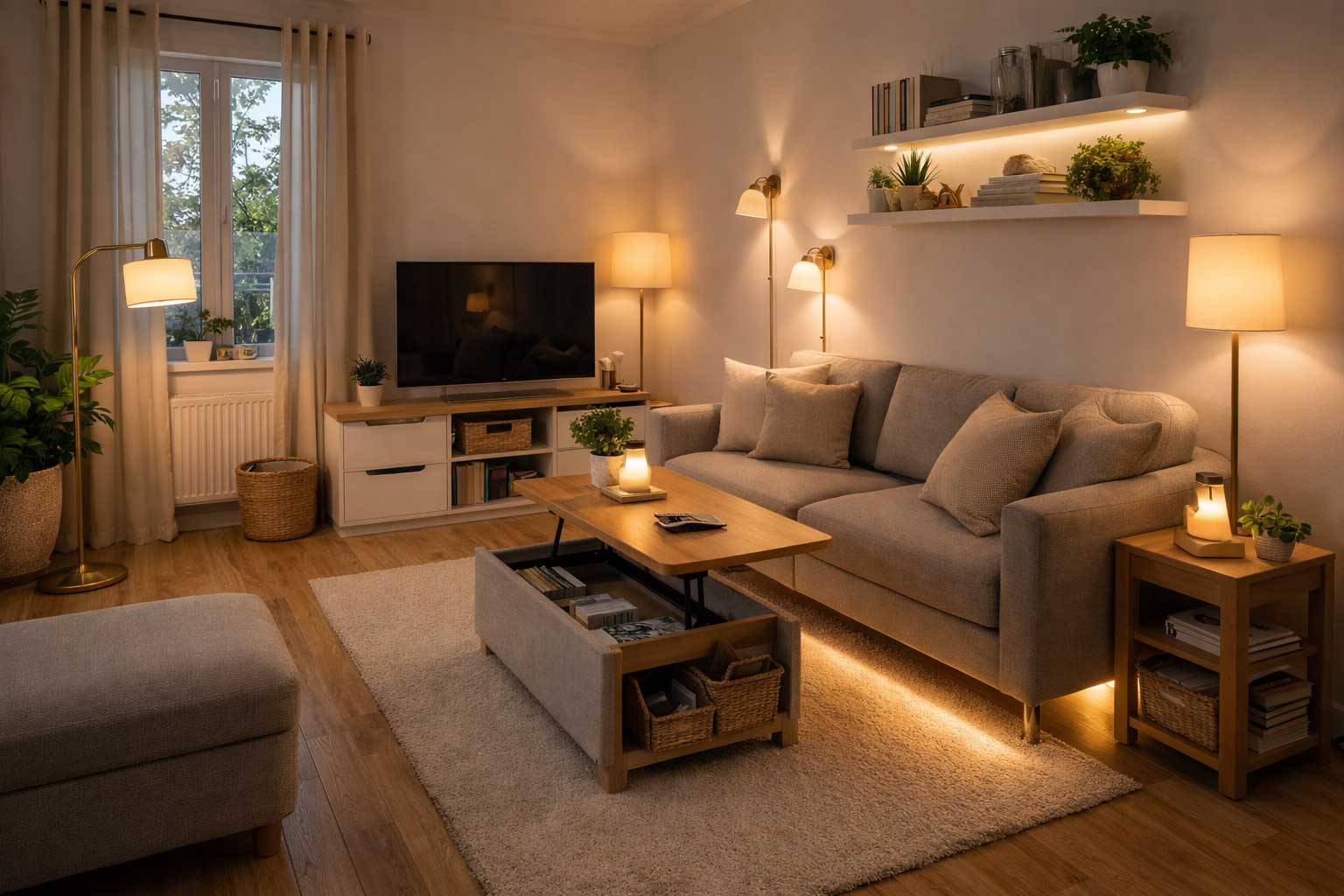
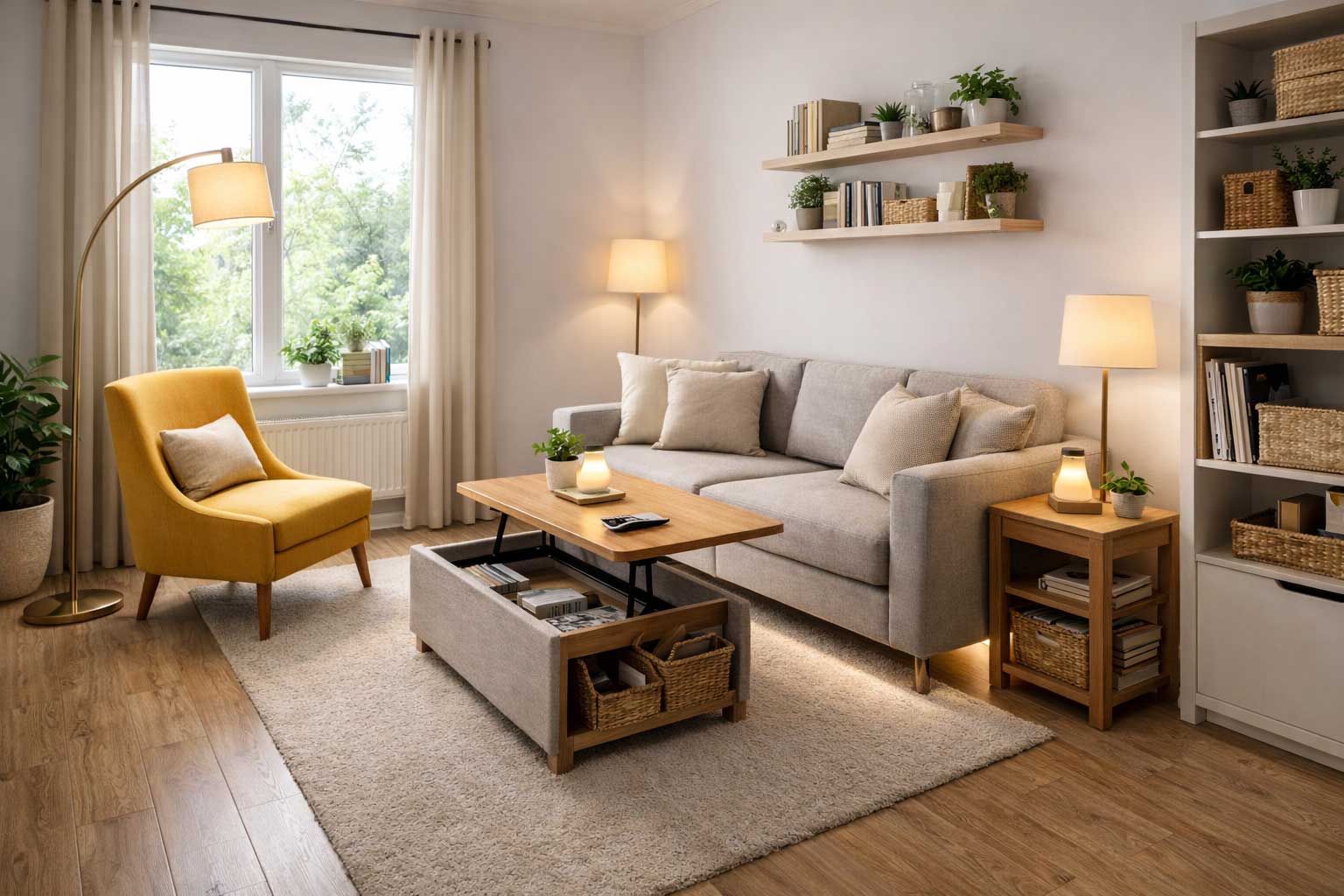
Lift-top coffee tables are another useful option for small living rooms. These tables provide hidden storage compartments and adjustable surfaces that can be used for working, dining, or casual activities. Residents looking for flexible table solutions can explore ideas in Best Lift-Top Coffee Tables for Small Living Rooms.
Side tables that slide partially under sofas are also excellent for compact layouts. These tables take up minimal floor space while still providing convenient surfaces for drinks or small items. Examples of these designs can be found in Best C-Shaped Side Tables for Small Apartments.
When furniture serves multiple functions, small living rooms can remain organized and comfortable without becoming overcrowded.
Arrange Seating to Encourage Conversation
While television viewing is often a primary activity in living rooms, it is also important to design seating arrangements that support conversation and social interaction.
In smaller living rooms, seating is often arranged around a central focal point such as a coffee table or entertainment center. This helps create a natural gathering space where residents and guests can comfortably interact.
Accent chairs can provide additional seating without requiring large furniture pieces. Residents interested in compact seating options can explore ideas in Best Accent Chairs for Small Living Rooms, which highlights chairs designed to complement smaller sofas and living room layouts.
Loveseats are another useful option when space is extremely limited. These smaller sofas provide comfortable seating while occupying less floor space than traditional couches. Our guide to Best Small Apartment Loveseats Under 70 Inches explores several models designed specifically for compact apartments.
By arranging seating around a central focal point, small living rooms can feel more welcoming and better suited for both relaxation and conversation.
Maximize Vertical Space for Storage
Storage is often a challenge in small living rooms, particularly in apartments that lack built-in shelving or cabinets. Using vertical storage solutions can help solve this problem without taking up additional floor space.
Tall bookshelves provide one of the most efficient ways to store books, décor, and household items in a compact footprint. Residents interested in space-efficient shelving can explore ideas in Best Slim Living Room Bookshelves for Apartments, which highlights narrow shelving units designed for small spaces.
Wall-mounted media shelves can also reduce clutter by storing electronics and entertainment accessories off the floor. Our guide to Best Wall-Mounted Media Shelves for Small Living Rooms explores several options designed to keep entertainment areas organized.
In addition to storage, vertical décor elements such as wall art or mirrors can help draw the eye upward, which makes ceilings appear higher and rooms feel larger.
By utilizing vertical storage, small living rooms can maintain organization while preserving valuable floor space.
Use Lighting to Improve the Layout
Lighting plays a major role in how a living room layout feels. Poor lighting can make a room feel smaller and more enclosed, while layered lighting helps create depth and visual balance.
Floor lamps are often one of the easiest ways to brighten small living rooms without requiring permanent installation. Residents interested in these lighting options can explore the ideas featured in Best Arc Floor Lamps for Small Living Rooms, which highlight designs that extend light over seating areas without occupying large amounts of floor space.
Table lamps also help distribute light more evenly throughout the room. Our guide to Best Table Lamps for Small Living Rooms features compact lighting options that fit comfortably on small side tables or consoles.
By combining ambient lighting, task lighting, and accent lighting, small living rooms can feel brighter and more visually spacious.
Final Thoughts
Designing an effective small living room layout requires thoughtful furniture placement, space-efficient storage solutions, and careful attention to room flow. When these elements are balanced properly, even compact living rooms can feel comfortable, functional, and visually open.
Starting with appropriately sized furniture, maintaining clear walkways, and using multi-functional pieces helps ensure that the living room remains easy to navigate while supporting everyday activities.
Vertical storage systems, layered lighting, and well-positioned seating arrangements further enhance the usability of the space while maintaining a clean and organized layout.
With the right combination of furniture, lighting, and layout planning, small apartment living rooms can become welcoming spaces that support relaxation, socializing, and everyday living.