How to Organize a Small Pantry Without a Pantry
A lot of small apartments do not have a true pantry, but that does not mean pantry organization is impossible. It just means pantry storage has to be created instead of inherited. In a compact kitchen, food storage often ends up scattered across upper cabinets, lower cabinets, countertops, utility carts, and random shelves. Snacks get mixed with canned goods, baking supplies disappear behind dishes, and overflow products end up tucked into places that make no sense long term.
That is where frustration starts. It is not always that the apartment lacks storage entirely. It is that food storage has no clearly defined home. When pantry items are split across too many unstructured zones, the kitchen starts to feel cramped, cluttered, and harder to maintain. Meal prep takes longer. Grocery restocking becomes confusing. Duplicates pile up. The room looks busier than it needs to.
The good news is that a small apartment can still have an effective pantry system even without a dedicated pantry cabinet or walk-in pantry. What matters most is creating a pantry strategy that fits the kitchen you actually have. That means using cabinets more intentionally, assigning food categories to specific storage zones, and making use of overlooked space like vertical shelves, wall areas, narrow gaps, or nearby furniture.
This kind of setup works best when it is part of your broader kitchen-storage plan, especially alongside How to Organize a Small Kitchen with Limited Cabinet Space, Best Storage Solutions for Small Kitchens Without Pantries, and Best Kitchen Storage Solutions for Small Apartments. In a small apartment, a pantry is often less about one single piece of furniture and more about a system that turns scattered space into organized food storage.
Why pantry storage feels so difficult in small apartments
A traditional pantry gives food its own zone. Without that kind of built-in separation, pantry items end up competing with everything else a kitchen needs to hold. Plates, glasses, cookware, appliances, cleaning supplies, food containers, and pantry goods all start fighting for the same cabinets and counters.
That is why food storage can feel so chaotic in a small apartment. The issue is not only limited square footage. It is lack of clear boundaries. When dry goods, snacks, canned foods, oils, spices, and baking ingredients are all squeezed into mixed cabinets, it becomes harder to see what you have and easier to lose track of what belongs where.
A no-pantry kitchen also creates a visibility problem. Items get pushed to the back of cabinets, forgotten on higher shelves, or stacked in ways that make access frustrating. Once that starts happening, the kitchen begins to feel too small, even if the bigger issue is really organization rather than total capacity.
This is why pantry organization matters so much. It gives your kitchen a structure it may not have come with. When food has a clear home, the whole space starts working better.
Start by defining what “pantry” means in your apartment
One of the biggest mindset shifts is understanding that in a small apartment, a pantry does not have to be a traditional pantry. It can be a collection of zones that work together.
In your apartment, pantry storage might live in:
- one upper cabinet
- part of a lower cabinet
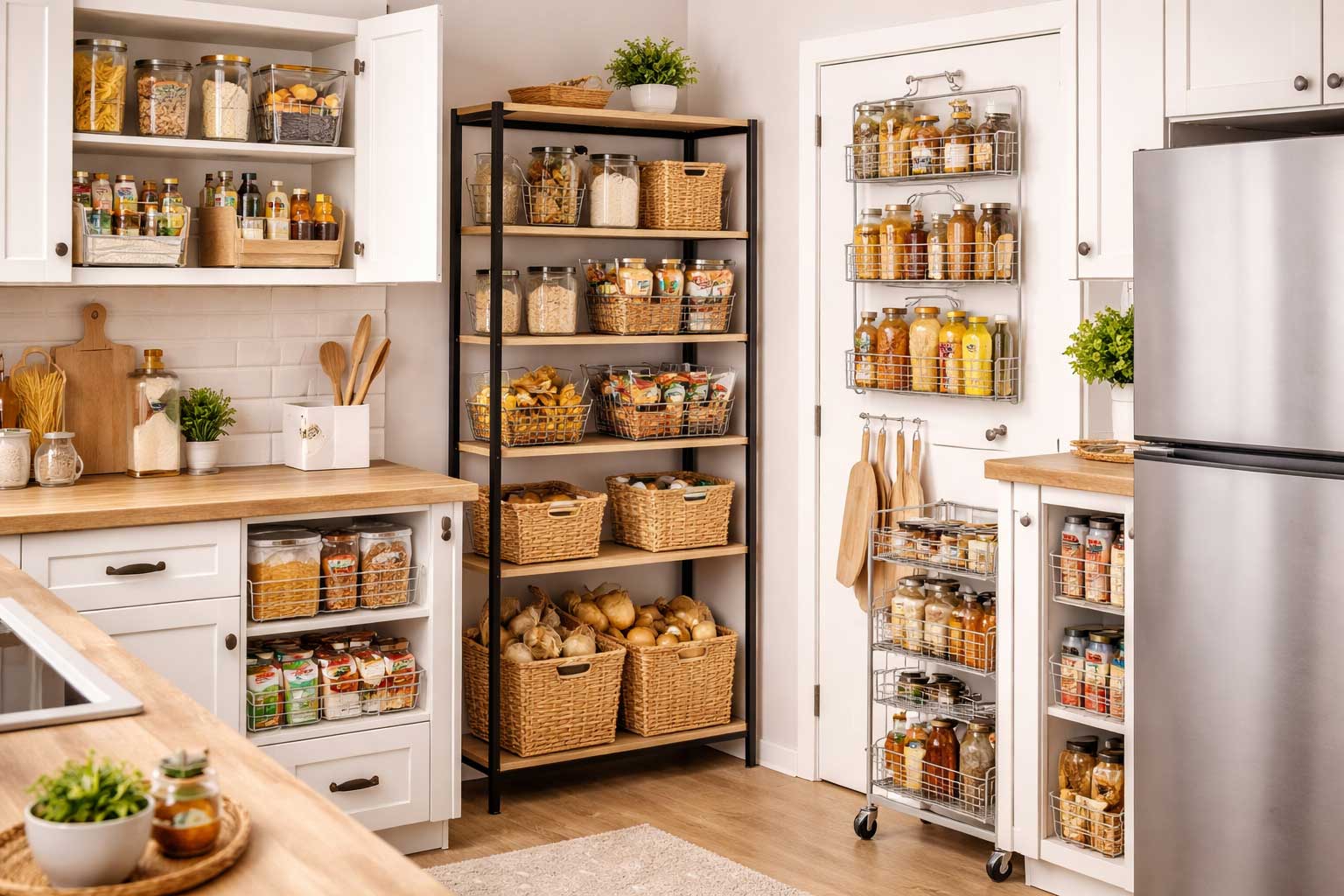
- a slim rolling cart
- wall-mounted shelves
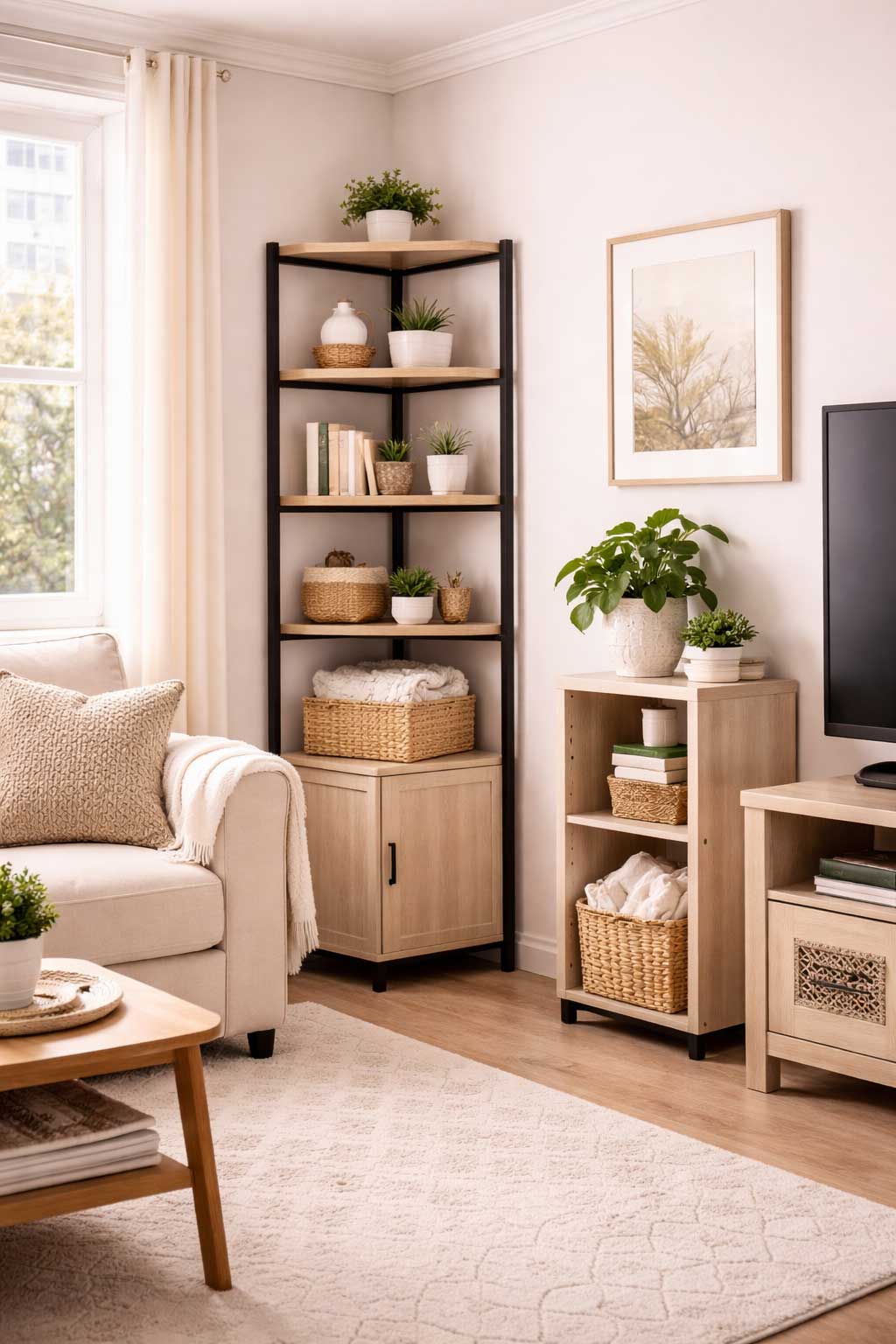
- a nearby bookshelf or cabinet
- an over-the-door organizer
- a small section of the countertop
- a mix of two or three of these
The goal is not to force all food into one unrealistic space if the kitchen cannot support that. The goal is to create one coordinated system where pantry categories are grouped logically and stored consistently.
Once you think about pantry storage this way, the problem becomes much more manageable. You are no longer searching for a nonexistent walk-in pantry. You are designing a pantry setup from the usable space you already have.
Empty the food storage areas before reorganizing
Before choosing containers or assigning zones, take stock of what you are actually storing. This step is essential because pantry clutter often comes from expired products, duplicate items, oversized packaging, and food categories that have never been grouped properly.
Pull pantry-related items out of the cabinets, shelves, and counters where they currently live. Then sort them into broad categories such as:
- canned goods
- grains and pasta
- snacks
- baking ingredients
- breakfast foods
- oils and condiments
- spices
- beverages
- back-stock or overflow items
As you sort, remove anything expired, stale, broken, or no longer used. This gives you a much more honest picture of how much pantry storage your apartment actually needs.
It also helps you see which categories deserve prime access. If you cook frequently, grains, oils, and canned goods may need the easiest reach. If you mostly need snack and breakfast storage, those categories may deserve the most accessible zone. Pantry organization works better when it reflects real habits instead of idealized ones.
This step follows the same logic as How to Maximize Storage in a Small Apartment. Organization works best after editing. If the kitchen is already overloaded, buying storage products before sorting usually just rearranges the same clutter.
Assign pantry categories to specific kitchen zones
Once everything is sorted, the next step is deciding where each category should live. This is the point where a kitchen starts feeling intentional instead of random.
A useful no-pantry kitchen usually works best when categories are divided by function and frequency of use. For example:
- everyday dry goods in the easiest-to-reach cabinet
- snacks in a basket or shelf zone
- baking supplies in a higher or lower cabinet
- canned goods in a grouped section
- overflow backstock in a secondary storage area
The most important part is consistency. A pantry system falls apart when categories drift between different cabinets every few weeks. If snacks live in one place today, then get mixed into two other cabinets next month, clutter returns fast.
Try to make each zone easy to describe. If you can say, “This cabinet is breakfast and snacks,” or “This shelf is canned goods and grains,” the system is much more likely to last.
Use cabinets more like a pantry, not just general storage
In a small apartment, standard kitchen cabinets often need to do pantry duty whether they were designed for it or not. That means it helps to treat at least one cabinet with pantry logic instead of general kitchen logic.
Pantry-style cabinet organization works best when:
- like items stay grouped together
- lower-use items go higher or farther back
- everyday items stay front-facing
- products are arranged by category, not by whatever fits
- bulky packaging is reduced when needed
This approach is especially helpful in kitchens where cabinet space is limited and mixed-use storage quickly becomes chaotic. A cabinet becomes much more functional when it has a defined purpose instead of holding a little bit of everything.
If your cabinets are already overloaded, it may help to think through the same principles from How to Organize a Small Kitchen with Limited Cabinet Space. Pantry items tend to work best when dishes, cookware, and food are not all battling inside the same poorly defined zones.
Vertical storage is one of the best no-pantry solutions
When a kitchen does not have much horizontal space, vertical storage can be the difference between constant clutter and an organized system that actually holds up.
Vertical pantry support can come from:
- narrow shelving units
- wall-mounted shelves
- tiered cabinet organizers
- stackable bins
- shelf risers
- countertop storage shelves
- tall rolling carts
The reason vertical storage works so well is that it increases capacity without demanding much more floor space. In small apartments, that is exactly what you want. A well-used vertical shelf or rack can hold food categories that would otherwise consume valuable cabinet space.
This is one reason How to Use Vertical Space in a Small Apartment connects so naturally with pantry organization. Food storage does not always need more width. It often needs better height usage.
Make use of narrow and overlooked spaces
Some of the best pantry storage opportunities in a small apartment are not obvious at first. Narrow gaps, awkward corners, empty wall sections, and nearby furniture zones can all help support food storage if used intentionally.
Look for places like:
- a narrow gap beside the refrigerator
- open wall space near the kitchen
- the end of a cabinet run
- a small section of countertop that could be more structured
- a nearby dining nook or utility corner
- the back of a door
These kinds of spaces can often support pantry overflow better than crowded kitchen cabinets can. A slim cart, compact shelf, or mounted storage piece may create enough breathing room to make the whole kitchen feel more manageable.
This is also where Best Over-the-Door Storage Solutions for Small Apartments can be relevant if you need extra room for lightweight pantry items, wraps, snacks, or small packaged foods. In a no-pantry kitchen, these overlooked surfaces matter.
Keep the most-used food items the easiest to reach
One of the simplest ways to improve a pantry system is to organize by frequency of use. Items used every day should never be the hardest to access. When frequently used foods are buried behind low-priority items, the kitchen becomes frustrating fast.
A practical setup often looks like this:
Prime-access zone
Use this for:
- daily snacks
- breakfast foods
- pasta or grains you use often
- cooking oils
- canned goods you regularly reach for
Secondary zone
Use this for:
- occasional baking supplies
- specialty ingredients
- less-used sauces
- backup staples
Backstock zone
Use this for:
- extra duplicates
- bulk purchases
- reserve snack stock
- less frequently used pantry extras
This kind of hierarchy keeps everyday cooking and meal prep from turning into a scavenger hunt. It also reduces the urge to leave items on the counter “just for convenience,” which is often how visual clutter starts.
Containers can help, but only if they solve a real problem
Containers are useful in a pantry setup, but they should not be the first solution to every storage issue. In some kitchens, containers improve visibility and containment. In others, they take up too much room or create unnecessary decanting work.
Containers tend to be most helpful for:
- open snack items
- baking supplies
- loose packets
- grains or pasta stored in awkward packaging
- small backstock categories
- visually messy food groups
They are less helpful when:
- original packaging stacks well already
- cabinet depth is too tight for bulky bins
- the container itself wastes too much space
- the system becomes too fussy to maintain
The best use of containers is selective. You want them to clarify categories, not just make the cabinet look styled for one day. This is where Best Stackable Food Storage Containers can support a more efficient setup if you need cleaner, more compact containment for food that does not store well in its original packaging.
Pantry storage should not take over the countertop
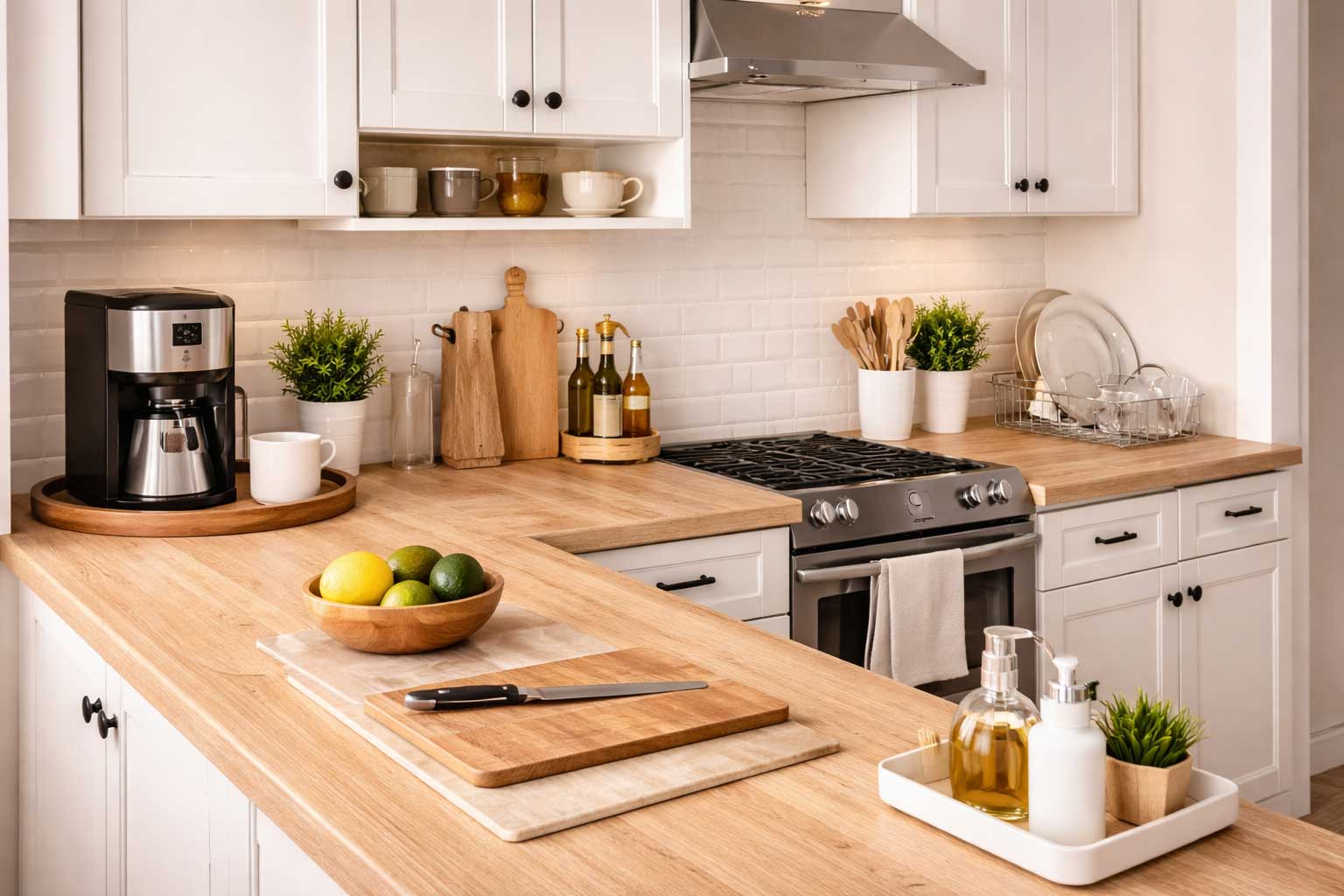
When a small kitchen lacks a pantry, it is easy to let pantry goods spill onto the counter. Sometimes that is unavoidable to a degree, but too much countertop storage makes the kitchen feel crowded and limits actual prep space.
A better goal is controlled countertop use. That means keeping only what truly belongs there, such as:
- a small coffee station
- a fruit bowl
- one compact shelf for frequently used items
- a limited number of daily staples
Once the countertop becomes a holding area for snacks, cereal, canned foods, paper goods, and pantry overflow, the kitchen starts feeling smaller than it is. It also becomes harder to clean and cook comfortably.
If your counters are already carrying too much of the pantry load, a more structured approach with Best Countertop Storage Shelves for Small Kitchens may help, but only if it is used sparingly and with clear boundaries.
Use rolling or movable storage when cabinets are not enough
In some apartments, cabinets alone will never be enough. That is where a rolling pantry solution can be especially helpful. Movable storage works well because it creates capacity without requiring a permanent built-in footprint.
A good movable pantry zone can help store:
- canned goods
- dry staples
- bottled items
- snacks
- produce
- overflow cooking supplies
This type of solution can be particularly useful for renters because it is flexible. If you move or rearrange the kitchen, the piece can usually move with you. It can also help if your apartment has one side of the kitchen that feels more open and can support a slim freestanding piece.
That is why Best Rolling Pantry Carts can be such a practical companion topic for this article. In a small apartment, movable storage is often one of the easiest ways to create a pantry where none exists.
Keep backstock limited and controlled
One of the easiest ways to overwhelm a no-pantry kitchen is to store too much backup inventory. Even a well-organized system can break down if every staple is kept in duplicate or bulk quantity.
That does not mean you can never buy extras. It means the amount of backstock should match the apartment’s actual storage capacity. A small kitchen usually does better with light reserve storage rather than full bulk habits.
A useful rule is to separate pantry goods into two levels:
- current-use items
- limited backup items
Once backup stock starts overtaking your prime-access zones, the kitchen becomes harder to use. Keep reserve items in one defined place rather than letting them spread into every cabinet.
This is especially important in apartments without true pantry cabinets, because once backup food starts drifting into dish cabinets and utility zones, the system stops feeling organized.
A simple pantry system for apartments without a pantry
If you want a straightforward way to set up pantry storage, this process works well.
Step 1: Gather all pantry-related food in one place
Take stock of everything currently spread across cabinets, shelves, and counters.
Step 2: Sort into categories
Group food by type and frequency of use.
Step 3: Remove expired or unnecessary items
Edit before organizing.
Step 4: Choose your pantry zones
Decide which cabinets, shelves, carts, or wall areas will act as your pantry system.
Step 5: Assign each category a home
Keep snacks, staples, canned goods, and baking supplies separate enough to identify quickly.
Step 6: Use vertical support where needed
Add shelving, risers, or compact freestanding help if cabinets alone are not enough.
Step 7: Keep everyday items easiest to reach
Do not bury your most-used foods.
Step 8: Limit countertop and backup overflow
The system should support the kitchen, not crowd it.
This kind of method works because it does not rely on having a perfect kitchen layout. It works with what the apartment already offers.
The best pantry is the one that fits your actual kitchen
A small apartment does not need a traditional pantry to have organized food storage. It needs a clear system. When pantry items are grouped by category, stored in intentional zones, and supported by the right mix of cabinets, shelves, vertical storage, and limited overflow space, the kitchen becomes far easier to use.
That is the real goal. Not creating a picture-perfect pantry wall. Not copying a layout that only works in a larger home. Just building a practical food-storage system that matches your apartment and your daily habits.
When done well, this kind of organization reduces counter clutter, improves visibility, makes grocery restocking easier, and helps the kitchen feel more functional overall. In a small apartment, that kind of improvement adds up quickly.