How to Organize Kitchen Counters in a Small Apartment
Kitchen counters can make a small apartment feel either functional or frustrating. When the counters stay clear enough for prep, cooking, and basic daily routines, the whole kitchen feels more manageable. When they are crowded with appliances, food items, utensils, paper towels, dish racks, and miscellaneous overflow, even a decent kitchen can start feeling cramped and chaotic.
That is why counter organization matters so much in a small apartment. It is not just about appearance. It affects how easy the kitchen is to clean, how comfortable it is to cook, and how large or small the room feels on a daily basis. Cluttered counters reduce usable workspace, create visual noise, and often signal bigger storage issues elsewhere in the kitchen. In many apartments, the countertop becomes the default landing zone for anything that does not have a proper home.
The good news is that organized counters do not require a huge kitchen or empty minimalist surfaces. The goal is not to strip the kitchen down until it looks unrealistic. The goal is to create a system where the items that stay out are intentional, frequently used, and arranged in a way that supports daily life without taking over the room.
This works best when you think about your counters as part of the broader storage system in the apartment, especially alongside How to Organize a Small Kitchen with Limited Cabinet Space, How to Organize a Small Pantry Without a Pantry, and How to Maximize Storage in a Small Apartment. In a small kitchen, cleaner counters are usually the result of better systems, not just better tidying.
Why kitchen counters get crowded so quickly in small apartments
Counter clutter usually builds gradually. A coffee maker stays out because it gets used every morning. Then a utensil crock moves in. Then snacks start sitting out because the pantry is limited. Then cooking oils stay near the stove. Then a toaster, a dish rack, a fruit bowl, a cutting board, paper towels, and a few random items join the mix. Before long, the kitchen still technically has counters, but very little actual workspace.
In small apartments, counters tend to absorb pressure from the rest of the kitchen. If cabinets are full, the counter becomes backup storage. If the pantry is limited, food ends up on the counter. If drawers are disorganized, utensils and tools migrate outward. That is why countertop clutter is often a symptom of broader kitchen-storage strain rather than just messy habits.
Another reason counters get crowded is convenience. People keep things out because they use them often or believe they might use them often. That logic makes sense up to a point. But when every item claims it is “used all the time,” the counter eventually becomes too full to function well.
That is why organizing counters starts with deciding what actually deserves that limited space and what should move elsewhere.
Start by defining what your counters need to do
Before moving anything, think about how your counters function in real life. A small apartment kitchen may not have much counter space, so every section should support a clear purpose.
Most kitchens need the counters to handle some combination of:
- meal prep
- coffee or breakfast routines
- dish drying
- cooking access near the stove
- food unloading and grocery restocking
- small appliance use
- occasional dining overflow
Once you know what your counters actually need to support, it becomes easier to decide what belongs there. If prep space is constantly tight, that function should be protected. If one corner of the kitchen naturally works as a coffee area, it makes sense to define it as a station instead of letting random items spread there.
The main goal is to stop treating the entire countertop as one open storage surface. Instead, each area should have a purpose. That single shift usually makes the kitchen feel more intentional right away.
Remove everything and sort by category first
The easiest way to reset kitchen counters is to clear them completely and sort what was there. This step matters because countertop clutter often feels permanent until you see how many categories have drifted there over time.
Take everything off the counters and sort it into groups such as:
- daily-use appliances
- cooking tools
- food or pantry items
- coffee supplies
- dishwashing items
- decorative items
- paper goods
- items that belong in cabinets or drawers
- items that do not belong in the kitchen at all
This gives you a much clearer picture of what the counters are actually being asked to hold. It also helps separate true essentials from things that have simply been left out by habit.
At this stage, it is worth editing aggressively. If something rarely gets used, duplicates another item, or only lives on the counter because no decision has been made about it, it probably does not belong there. Counter organization gets much easier once you stop asking the surface to store everything.
Decide what deserves permanent counter space
Not everything should be hidden away. In a small apartment, some items make sense to keep out because they are used constantly and moving them in and out of cabinets would be annoying. The key is being selective.
Items that may deserve permanent counter space include:
- a daily-use coffee maker
- a toaster used every day
- a compact dish rack if needed
- a utensil container with frequently used tools
- a small cutting board station
- one controlled decorative item or functional bowl
Items that often do not deserve permanent counter space include:
- bulk food items
- rarely used appliances
- duplicate tools
- unopened mail
- miscellaneous household items
- oversized decorative pieces
- backup pantry products
A useful question is: does this item actively support daily kitchen function, or is it just sitting here because I have not made space for it elsewhere?
That question keeps the counter focused on use instead of passive storage.
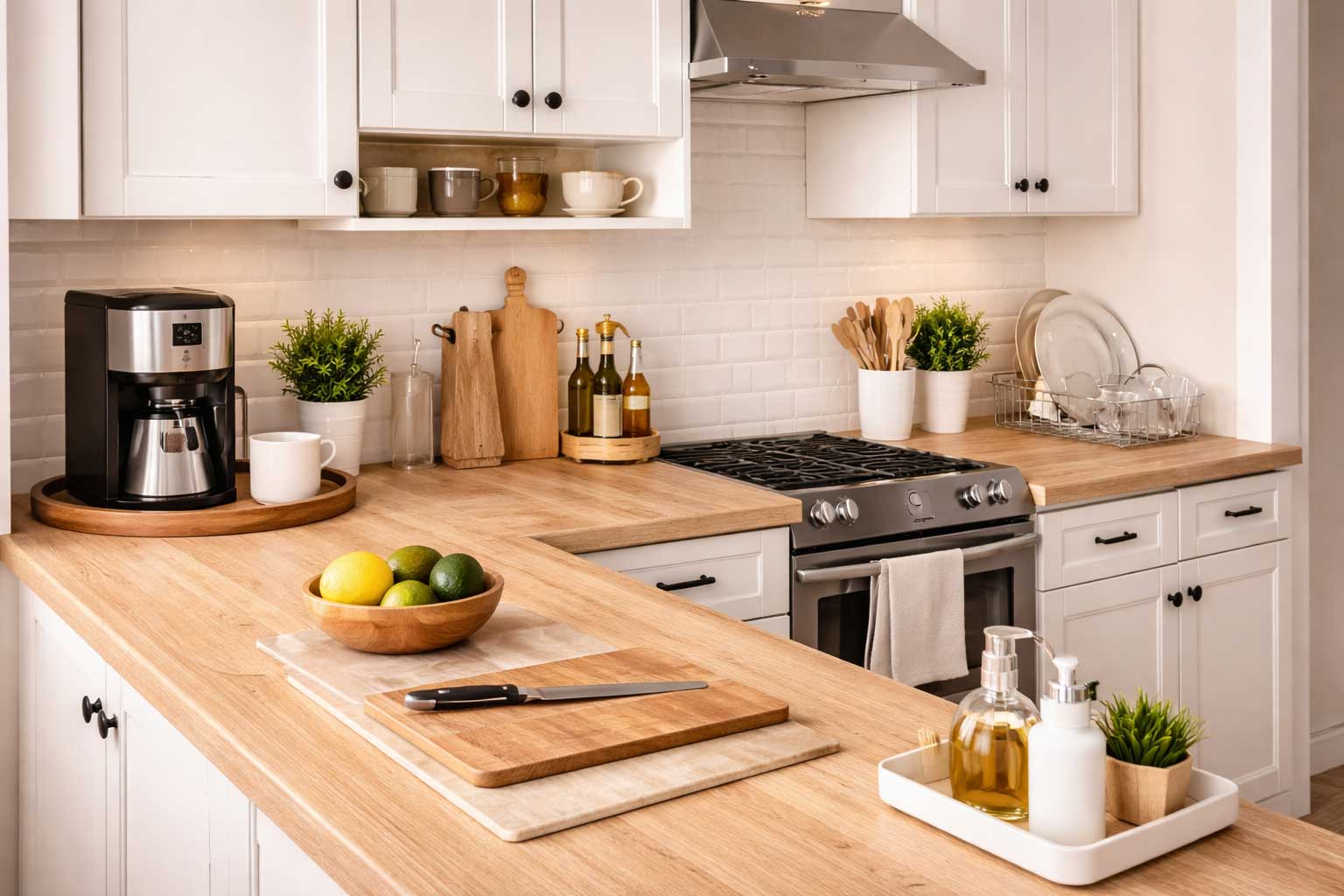
Create zones instead of letting items spread randomly
One of the best ways to organize kitchen counters is to divide them into simple zones. This makes the kitchen feel more structured and reduces the tendency for clutter to spread across every available inch.
Prep zone
This should stay as clear as possible. It is the space for chopping, setting groceries down, plating meals, or doing quick kitchen tasks. Protecting even a small prep zone can make a huge difference in how functional the kitchen feels.
Cooking-support zone
This area often sits near the stove and may hold a few cooking essentials such as oil, salt, or the tools you use most often. The key is to keep this zone compact rather than letting it turn into a full display of every ingredient and utensil you own.
Beverage or coffee zone
If you use coffee or tea supplies every day, grouping them together helps reduce scattered clutter. A dedicated setup usually works better than having mugs, pods, sugar, filters, and tools spread across multiple parts of the counter.
Cleaning zone
This area is usually near the sink and should stay controlled. Dish soap, a sponge, and perhaps a compact drying solution may belong here, but the sink area should not become a dumping ground for every cleaning item in the apartment.
Once zones are established, it becomes easier to notice when something is out of place.
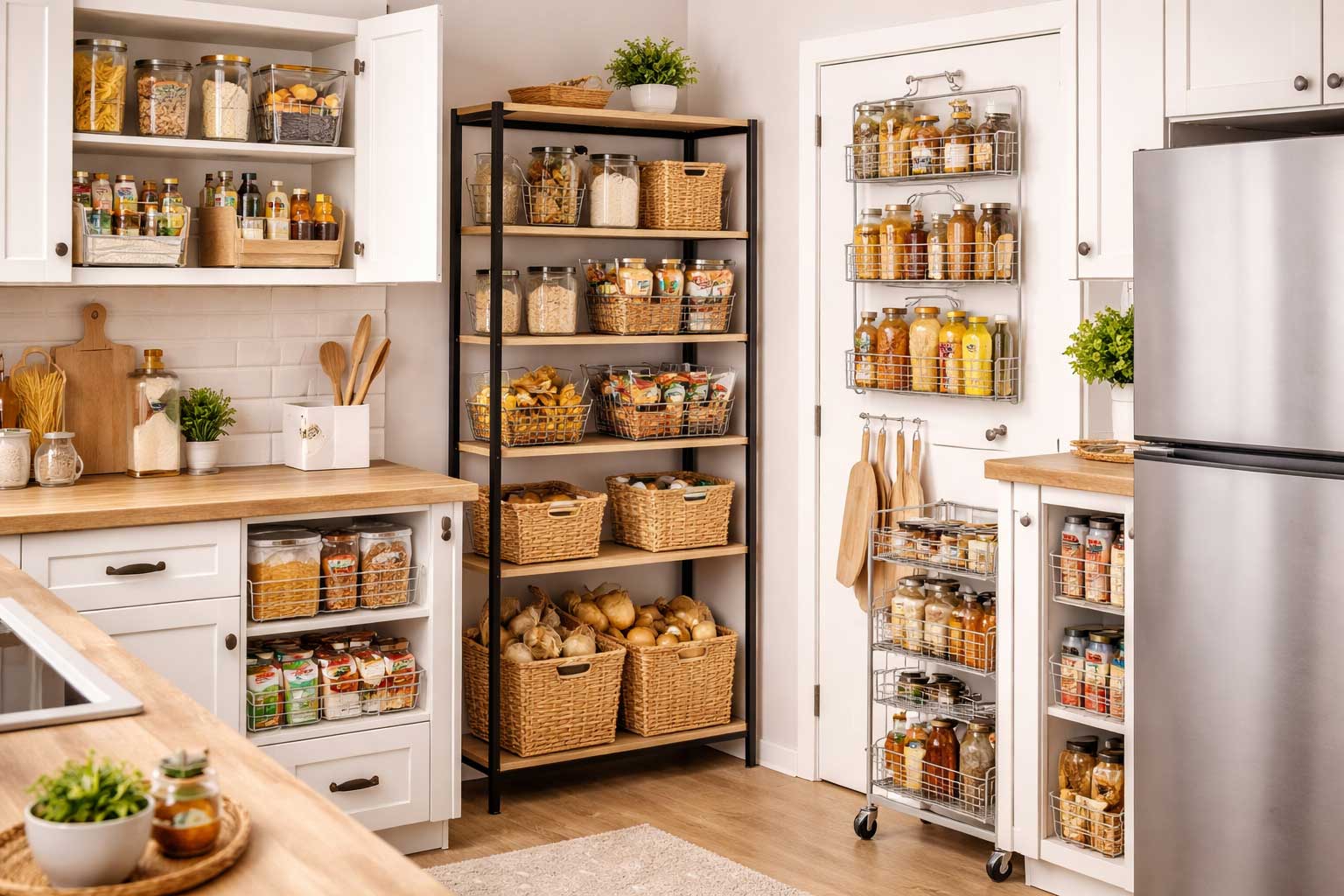
Move pantry items off the counter whenever possible
Food is one of the biggest contributors to countertop clutter in small kitchens. Cereal boxes, snacks, bread, canned goods, fruit, backup drinks, and random grocery overflow can quickly eat up valuable work surface.
That is why it is important to separate what truly needs counter access from what is only there because pantry space feels limited. In many apartments, better pantry organization is the real fix for crowded counters.
This is where How to Organize a Small Pantry Without a Pantry becomes especially important. If snacks, dry goods, or backup ingredients are living on the counter, the answer is usually to improve food zoning elsewhere rather than simply rearranging the clutter.
Even a few small changes can help:
- move dry goods into a cabinet zone
- relocate snacks to baskets or shelves
- store backstock away from daily-use food
- keep only one fruit bowl or one small daily-access food area on the counter
The less food sprawl you have on the counter, the bigger and calmer the kitchen will feel.
Use vertical support instead of spreading outward
When countertop items truly do need to stay accessible, the smartest move is often to build upward rather than outward. A small amount of vertical support can help preserve workspace while still keeping essentials close at hand.
This might include:
- a small shelf riser
- a compact two-tier counter shelf
- a narrow stand for mugs or coffee supplies
- a vertical fruit basket
- stacked trays for controlled categories
The main advantage is that vertical storage lets one small footprint do more work. Instead of covering the counter with separate items, you create a contained station that stays more compact and easier to clean around.
This is where Best Countertop Storage Shelves for Small Kitchens can support the problem well, especially if you need a cleaner way to organize daily-use items without sacrificing all your prep surface.
The key, though, is moderation. Vertical storage should reduce clutter, not become a more decorative version of clutter.
Be careful with small appliances
Small appliances often deserve the biggest scrutiny in a small-apartment kitchen. They are useful, but they also consume more counter space than almost any other category. In many kitchens, appliances are the main reason the counters feel full all the time.
Start by separating appliances into three groups:
- used daily
- used weekly
- used occasionally
Daily-use appliances may deserve a permanent home on the counter if they genuinely support your routine. Weekly-use appliances might stay accessible but not always visible. Occasional-use appliances should usually be stored elsewhere unless the kitchen has exceptional space.
If several appliances need to remain accessible, grouping them more intentionally can help. A coffee setup, for example, usually works better as one defined station than as several separate items scattered around the room.
If your kitchen lacks enough cabinet space to hide medium-use appliances, Best Small Kitchen Appliance Carts can be a strong support solution. Moving appliance overflow off the counter can instantly make the kitchen feel more open.
Use the space below and above the counters more effectively
Counter organization often improves when the storage around the counter improves. If the cabinets, drawers, and wall areas near the workspace are not functioning well, too many items end up living on the surface by default.
A few useful strategies include:
- moving tools into better drawer organization
- using the inside of cabinets more effectively
- taking advantage of under-cabinet solutions
- relocating certain categories to wall-mounted storage
- assigning better homes to cooking and prep items
For example, if spices, mugs, or utensils are crowding the counter, the problem may be less about the counter itself and more about how nearby storage is set up. In that case, Best Under-Cabinet Storage for Small Kitchens, Best Kitchen Drawer Organizers, and Best Small Apartment Spice Racks can help support a much cleaner surface.
A small kitchen works better when the counter is the workspace and the surrounding storage handles the support categories.
Keep the sink area controlled
The area around the sink can make or break how organized a kitchen feels. Even when the rest of the counters look decent, a cluttered sink zone can make the whole room feel messier.
This area usually needs only a few essentials:
- dish soap
- sponge or scrubber
- perhaps a hand towel
- a compact drying system if necessary
What it usually does not need is a buildup of random cups, half-dried items, cleaning products, or overflow dishes that sit there all day. The sink zone should be functional, but it should not constantly spill into the rest of the counter.
If dishwashing supplies are multiplying on the surface, it may be time to tighten the nearby cabinet or under-sink setup rather than allowing the sink area to keep expanding.
Limit decorative items so the kitchen still feels open
Decor can make a small kitchen feel warmer, but too much decorative styling can work against the function of limited counters. The goal is not to make the room sterile. It is to keep décor from competing with the surface space you need.
In most small-apartment kitchens, one or two controlled decorative elements are enough. That might be:
- a small plant
- a fruit bowl
- a simple tray
- a neutral canister that is actually used
Once décor starts multiplying into jars, framed signs, candles, stacked boards, and purely decorative fillers, the counter can start feeling crowded again.
In a compact kitchen, functional beauty usually works better than decorative excess.
Use a reset rule to keep clutter from returning
One of the biggest reasons kitchen counters become messy again is that there is no maintenance rule. Even a well-organized kitchen can drift back into clutter if everything is allowed to land on the counter temporarily.
A simple reset rule helps. For example:
- clear dishes before bed
- return non-kitchen items immediately
- keep the prep zone clear at the end of the day
- do a quick five-minute counter reset after grocery trips
- never allow unopened backup food to stay on the counter longer than one day
These kinds of habits matter because the counter is such a visible surface. A little drift becomes noticeable fast. A small reset routine keeps the organization system from collapsing between bigger cleanups.
A simple countertop organization process for small apartments
If you want a practical method, this is the easiest way to approach it.
Step 1: Clear every counter completely
Start fresh so you can actually see the space and its potential.
Step 2: Sort what was there
Group items into categories and remove what does not belong in the kitchen.
Step 3: Protect one prep zone
Choose at least one area that stays as open as possible.
Step 4: Decide what earns permanent space
Only daily-use essentials should stay out full time.
Step 5: Create small zones
Give coffee items, cooking support, and sink essentials defined boundaries.
Step 6: Improve nearby storage
Move food, tools, and extras into better cabinet, drawer, or vertical systems.
Step 7: Keep the counter from becoming overflow
Use a reset habit so clutter does not quietly rebuild.
This process works because it treats the counter as a functional work surface first and a storage surface second.
The best kitchen counters feel usable, not empty
That is the real goal. A well-organized kitchen counter does not have to look bare. It just has to feel usable. You should be able to prep food comfortably, clean without too much hassle, and move through your routine without constantly shifting piles of stuff from one side to another.
When counters are organized well, the whole kitchen feels larger. Cooking gets easier. Cleaning takes less time. Grocery restocking feels less stressful. The room stops looking overloaded, even if the apartment is still small.