How to Store Everyday Dishes in a Small Apartment Kitchen
Storing everyday dishes in a small apartment kitchen can be more frustrating than it sounds. Plates, bowls, mugs, and cups are used constantly, which means they need to stay easy to reach, but in many apartments the cabinets are shallow, the shelf space is limited, and the counters already have too many jobs to do. When dish storage is not set up well, even basic daily routines like unloading the dishwasher, making breakfast, or putting away clean dishes can start to feel harder than they should.
The good news is that everyday dishes do not need a huge amount of space as much as they need a better system. The best setups usually keep the most-used items close to the sink or main prep zone, use vertical shelf space more efficiently, and avoid mixing daily dishes with less-used serving pieces or kitchen overflow. With the right layout, even a compact apartment kitchen can keep everyday dishware accessible without making the room feel cluttered.
For dishware that stores more efficiently, start with Best Space-Saving Dishware Sets.
If you need better support near the sink, check out Best Compact Dish Drying Racks.
For extra vertical storage in tight kitchens, see Best Countertop Storage Shelves for Small Kitchens.
This guide is part of our Small Kitchen & Dining Solutions collection.
Why Everyday Dishes Become Hard to Store in a Small Apartment Kitchen
Everyday dishes are harder to store than many people expect because they need the most convenient storage in the kitchen. Unlike specialty serving pieces or holiday dishware, plates, bowls, mugs, and cups are part of the daily routine. That means they cannot just be shoved into any cabinet that happens to have room. They need to be easy to grab in the morning, easy to put away after washing, and easy to stack without creating frustration.
Small apartment kitchens also fill up faster than they look like they should. One cabinet may already be holding food containers, glasses, pantry overflow, and cookware, which leaves everyday dishware competing with too many other categories. Once that happens, simple kitchen tasks start taking longer because the things you use most often are harder to reach.
The problem usually is not just a lack of cabinets. It is mixed storage. When plates, mugs, bowls, serving pieces, and random kitchen items all share the same crowded space, daily access gets worse quickly. A small kitchen works better when the everyday categories are treated like priority storage, not leftovers.
Start by Separating Everyday Dishes from Everything Else
The first step is deciding which dishware actually deserves prime storage space. In many kitchens, the most convenient cabinet shelves are filled with extra platters, special mugs, serving bowls, or dishware that only gets used occasionally. That makes the daily routine harder for no good reason.
Everyday plates, bowls, mugs, and cups should usually stay in the easiest-to-reach area. The serving pieces, seasonal items, and duplicates can move into less convenient storage if needed. This one shift often makes a small apartment kitchen feel more efficient immediately because the things you use every day stop competing with categories that do not need constant access.
It also helps to think in terms of zones. A small kitchen usually functions better when daily dishware has its own defined area instead of being blended into general kitchen storage. That kind of separation reduces friction and makes everything easier to reset after meals.
Use Upper Cabinets More Intentionally for Daily Dish Storage
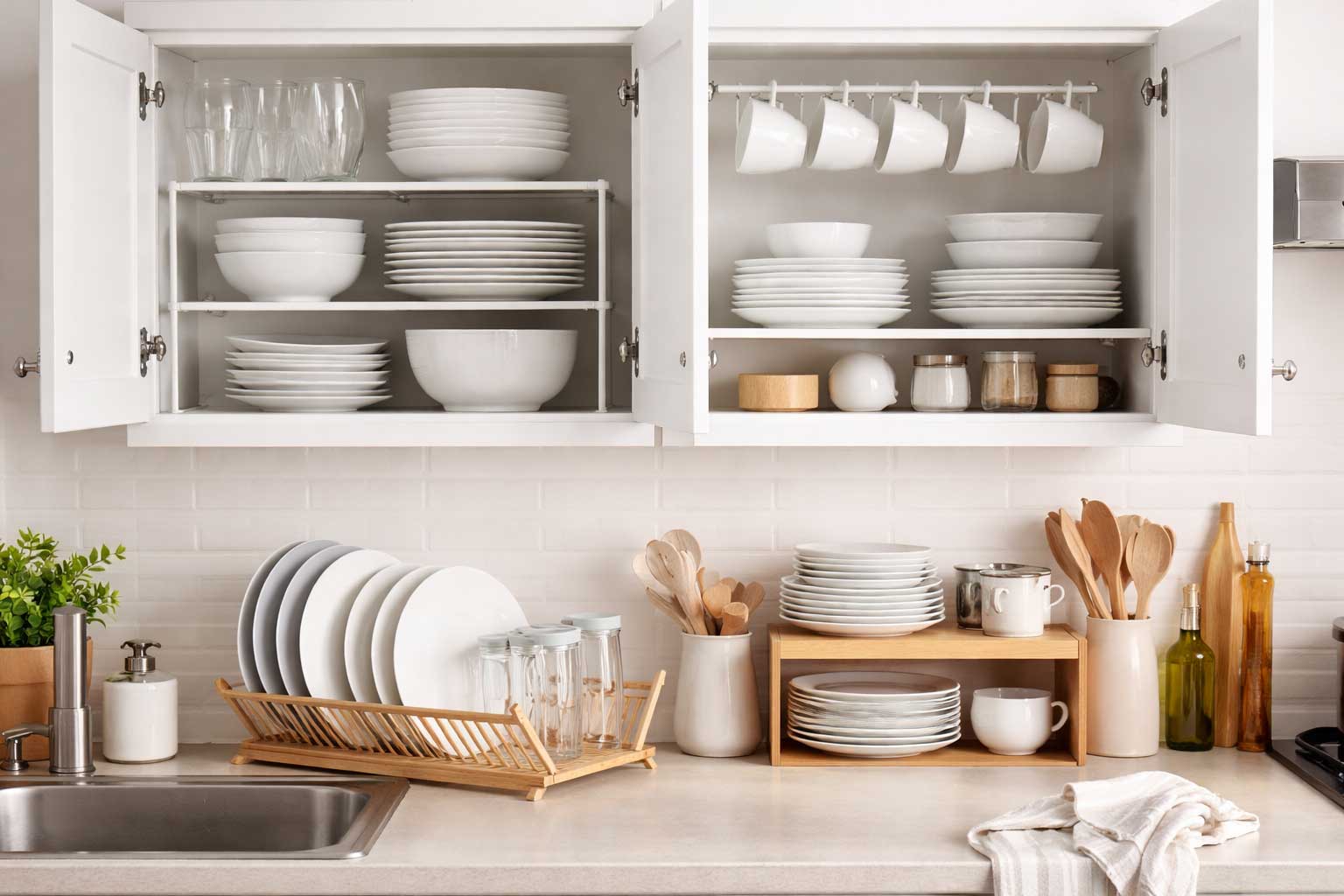
Upper cabinets are usually the best home for everyday dishes because they keep daily-use items at a natural reach height and closer to the sink or dishwasher area. But those cabinets only work well when they are laid out with intention. If one shelf is overloaded with mixed categories, the whole setup starts feeling harder to use.
The best dish storage usually stays close to the cleaning zone. Plates and bowls that come out of the dishwasher or dish rack every day should not have to be carried across the kitchen to be put away. If your current cabinet setup feels too tight or mixed, browse Best Under-Cabinet Storage for Small Kitchens for ways to create a little more support around those daily-use zones.
Stacking by category also matters. Plates should stay with plates, bowls with bowls, and mugs should not be crowding the same area unless the cabinet truly supports that combination. When too many different items are squeezed onto one shelf, unloading and resetting the kitchen start feeling much more annoying than they should.
Use Vertical Storage to Make Cabinet and Counter Space Work Harder
Small kitchens often have more vertical potential than people realize. A shelf may seem full, but there is often wasted space above stacks of plates, between bowls, or in corners that could support better layering. Vertical storage helps you use that height more effectively without expanding outward.
Countertop shelving can also help when the cabinets are limited. A small shelf above a dish zone can create extra usable room for bowls, mugs, or supporting items while keeping the lower counter area more controlled. If you need a way to build upward instead of taking over more counter width, see Best Countertop Storage Shelves for Small Kitchens.
This kind of storage works best when it stays edited. The goal is to make daily-use dishes easier to access, not to turn every empty inch into visible storage. In a small apartment kitchen, vertical organization helps most when it reduces friction without making the room feel visually crowded.
Keep Dish Storage Close to the Cleaning Zone
One of the biggest daily-efficiency upgrades in a small kitchen is improving the flow between the sink, drying area, dishwasher, and cabinet storage. If clean dishes have to travel too far to get put away, the kitchen will feel more annoying to maintain day after day.
A compact dish rack setup should work naturally with the main storage zone. If you hand-wash often, that matters even more because the dishes that dry most often should land close to the cabinet or shelf where they belong. If you want a setup that supports that routine better, take a look at Best Compact Dish Drying Racks.
Over-the-sink drying setups can also make sense in tighter kitchens because they preserve more counter space while keeping the cleaning and storage areas connected. The easier the sink-to-cabinet movement feels, the easier it becomes to keep the kitchen reset. In small apartments, that kind of flow makes a huge difference.
Use Open Storage Carefully So It Stays Functional, Not Cluttered
Open dish storage can work in a small apartment kitchen, but it needs much more restraint than people expect. A few stacked plates, matching bowls, or a neat row of mugs can look intentional. Too many visible dishes, especially if they are mismatched or mixed with random kitchen items, can quickly make the room feel busier.
Matching or stackable dishware usually looks better in open storage because it creates cleaner lines and less visual noise. If you are working with an open dish-storage setup, browse Best Space-Saving Dishware Sets for options that stack and store more cleanly. Open dish zones also work better when they stay separate from the main prep surface so the kitchen does not feel like every counter is part storage and part workspace.
The best open storage setups are the ones that still feel controlled. Open dishware should support the kitchen, not dominate it. In a compact apartment kitchen, fewer visible items almost always create a stronger result.
Make Mugs, Bowls, and Plates Easy to Grab Without Overcrowding the Kitchen
Each everyday category needs its own clear spot. Plates should not be buried under serving pieces. Mugs should not be fighting for the same shelf as mixing bowls. A small kitchen feels much easier to use when the things you reach for most often are clearly grouped and easy to access without moving three other categories out of the way.
Mugs are especially easy to mishandle because they are bulky, oddly shaped, and often end up taking over a shelf that should really belong to plates or bowls. Under-cabinet mug storage can help a lot when the cabinet space is already tight. If that area needs a better solution, check out Best Under-Cabinet Mug Holders.
This is where real daily habits matter. If you use bowls constantly and mugs only once a day, the bowls deserve a stronger location. A good dish-storage system is not about making everything look symmetrical. It is about making the categories you use most easy to reach, easy to return, and easy to live with every day.
Use Secondary Storage if the Main Cabinets Cannot Handle Everything
Some apartment kitchens simply do not have enough upper-cabinet room for every dish category to live comfortably. When that happens, a small secondary storage zone can make a big difference. The important part is keeping that extra storage close enough to still feel useful.
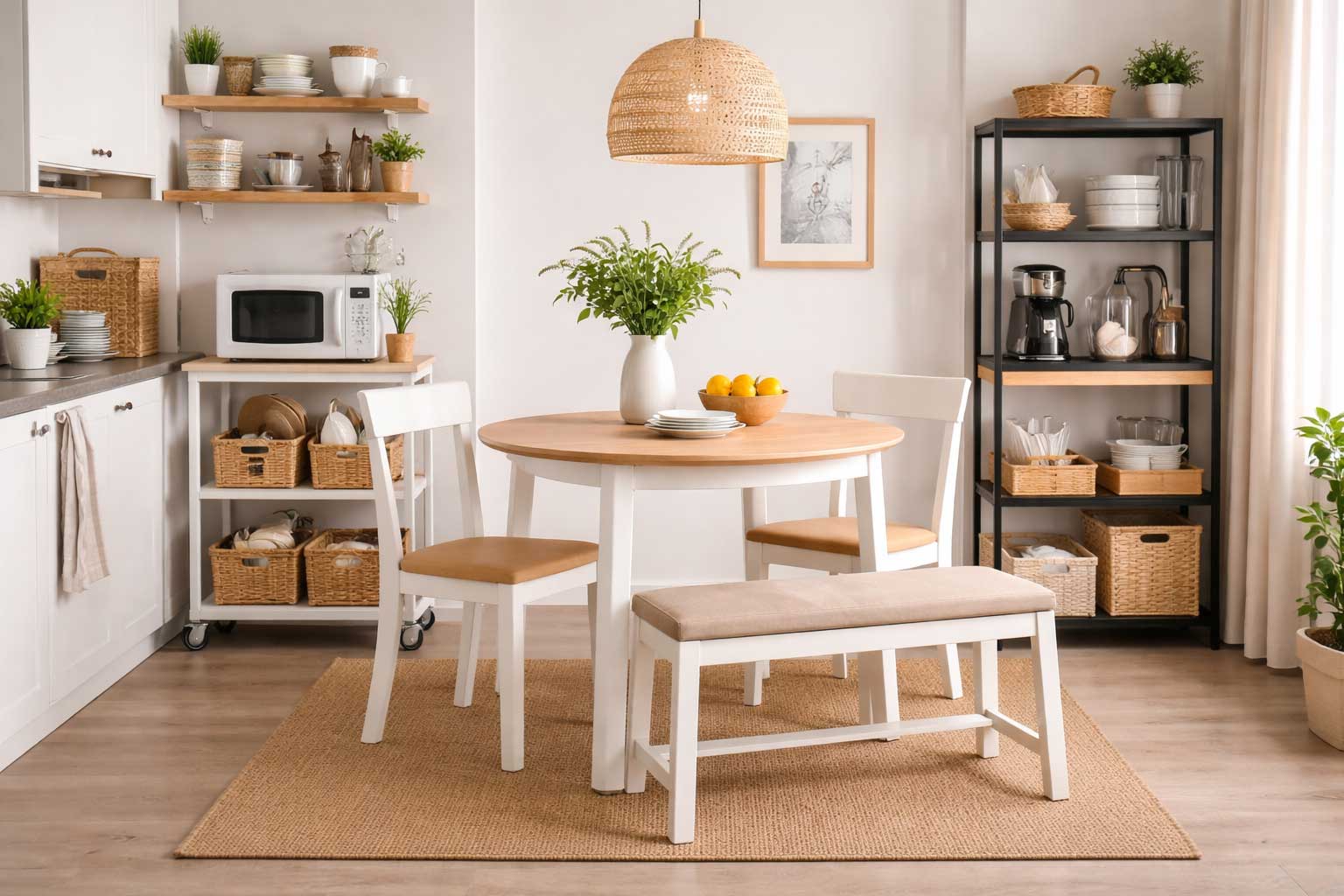
A kitchen cart or pantry-style cabinet can hold overflow dishware, extra mugs, or less-used everyday categories without forcing the main cabinets to do all the work. If you need flexible support outside the built-in cabinets, browse Best Apartment Kitchen Carts or Best Small Kitchen Pantry Cabinets.
Secondary storage should make the kitchen easier, not more complicated. That means it should support the main dish zone rather than scattering categories all over the room. In a very small apartment kitchen, one good support piece is often much more helpful than continuing to overcrowd every cabinet shelf.
Keep the Storage Easy to Reset Every Day
The best dish-storage systems make everyday cleanup easier. If plates, bowls, mugs, and cups are annoying to put away, the kitchen will start feeling cluttered much faster because clean dishes will stay on the drying rack, in the dishwasher, or on the counter longer than they should.
Every dish category should have an obvious home. You should not have to think about where a bowl goes every time you unload it. The simpler the system is, the more likely it is to stay organized. That matters in a small apartment because even a little dish-related clutter can make the kitchen feel more chaotic than it really is.
Better dish storage also affects the whole room. A kitchen that is easier to reset after meals usually feels calmer overall. In compact spaces, these small daily frictions add up. Removing them is often what makes the kitchen finally feel functional.
Common Mistakes That Make Dish Storage Harder
One common mistake is giving the best shelf space to rarely used dishes while everyday plates and bowls are stuck in less practical spots. Another is mixing too many categories together, which makes the kitchen harder to unload, harder to clean, and harder to use day to day.
Open storage can also become a problem when it turns into visual clutter. What begins as a neat shelf of dishes can quickly become an overcrowded display if too many items are visible at once. Storing everyday dishes too far from the sink or dishwasher is another issue that people often do not notice until the daily routine starts feeling irritating.
The best systems usually avoid overcomplication. They keep the most-used items close, separate categories clearly, and make the kitchen easier to reset instead of harder.
Best Features to Look for in Everyday Dish Storage for Small Kitchens
When choosing solutions for everyday dish storage, easy access should be one of the first priorities. Dishes are used constantly, so they need storage that supports quick grabbing and quick cleanup. Vertical storage value is another big advantage because small kitchens often have more height than they have width.
Compact footprint matters too. A support piece should help the dish zone without crowding the prep area. Daily-use support is what really matters, though. The best dish-storage solution is usually the one that helps you move through everyday kitchen routines with less friction.
Apartment-friendly flexibility is also important. Small kitchens often need storage that can adapt to different cabinet layouts, limited counter space, or temporary overflow. The best pieces support that without making the room feel heavier.
Final Thoughts on Storing Everyday Dishes in a Small Apartment Kitchen
A small apartment kitchen does not need huge cabinets to store everyday dishes well. It just needs a better system. When daily-use plates, bowls, mugs, and cups stay close to the sink or dishwasher, categories are separated more clearly, and vertical storage is used more intentionally, the whole kitchen becomes easier to use.
The best setups prioritize daily routines over perfect symmetry. They make unloading faster, grabbing dishes simpler, and counters less likely to turn into backup storage zones. In a compact apartment, that kind of practical organization matters a lot.
The goal is not to hide every dish. It is to keep everyday dishware accessible without letting it create clutter or friction. When the system works, the whole kitchen feels calmer.
Our Top Everyday Dish Storage Picks for Small Apartment Kitchens
Everyday dishware is easiest to manage when storage keeps the most-used categories close, supports quick cleanup, and makes better use of vertical space. The best options usually stay compact, practical, and easy to live with in a small apartment kitchen.
Best overall choice:
Space-saving dishware set — A stack-friendly dishware set stores more neatly and helps the whole cabinet stay more efficient.
👉 Check price on Amazon
Best sink-area support:
Compact dish drying rack — A compact drying rack helps keep the cleaning zone under control and supports faster dish reset after washing.
👉 Check price on Amazon
Best vertical storage upgrade:
Countertop storage shelf — A countertop shelf adds extra dish-storage support without requiring a larger kitchen footprint.
👉 Check price on Amazon
Best mug-space solution:
Under-cabinet mug holder — A mug holder helps move bulky mugs off crowded shelves and opens up more room for plates and bowls.
👉 Check price on Amazon
Kitchens with especially tight cabinet space may also benefit from a cart or pantry cabinet, especially when the goal is to keep daily dishes accessible without crowding the main prep counter.
FAQ
Where should everyday dishes be stored in a small kitchen?
Everyday dishes are usually best stored in upper cabinets close to the sink, dish rack, or dishwasher so they are easy to put away and easy to grab during daily use.
How do you organize plates and bowls in a small apartment kitchen?
The best way to organize plates and bowls in a small apartment kitchen is to keep them in their own clear categories, use vertical storage when possible, and avoid mixing them with less-used serving pieces or random kitchen overflow.
What is the best storage for everyday dishware?
The best storage for everyday dishware is usually a cabinet or shelf zone close to the cleaning area, supported by stackable dishes, vertical shelf support, and simple category separation.
How do you keep dishes accessible without cluttering the kitchen?
Keep dishes accessible without clutter by storing daily-use items close to the sink, using vertical storage to make shelves work harder, and moving less-used dishware into secondary storage.