How to Make a Small Dining Area More Functional
A small dining area can easily start feeling cramped, underused, or awkward when it has to handle everyday meals, work-from-home spillover, storage, and occasional guests all in one compact space. In many apartments, the dining zone is squeezed into part of the kitchen, tucked against a wall, or placed between other busy areas of the home. When the setup is not working well, the table can become a clutter magnet instead of a useful everyday space.
The good news is that a small dining area does not need more square footage as much as it needs a smarter setup. The best solutions usually come from choosing the right table shape, using seating that fits the room better, and making sure the area supports real daily use without wasting valuable floor space. With the right layout, even a small apartment dining area can feel more practical, more comfortable, and much easier to use every day.
For compact table ideas, start with Best Small Kitchen Tables for Apartments.
If you need seating that uses space more efficiently, check out Best Small Apartment Dining Benches.
This guide is part of our Small Kitchen & Dining Solutions collection.
Why Small Dining Areas Often Feel Less Useful Than They Should
Small dining areas often feel less useful than they should because they are expected to do too many jobs at once. In many apartments, the same table might be used for breakfast, dinner, laptop work, grocery bags, mail, and extra prep space depending on the day. When the layout is not designed for that reality, the area starts feeling like a leftover corner instead of a real part of the home.
The wrong table or seating can make that even worse. A table that is too wide can crowd the kitchen path, while bulky chairs can make the area feel harder to move through every time someone sits down or stands up. In a compact apartment, those little layout problems become obvious fast because there is less room to absorb them.
A better dining setup usually improves more than just the table area. It can make the kitchen feel calmer, the room feel more open, and daily routines feel smoother. That is why making a small dining area more functional is often really about improving how the whole apartment works.
Start by Thinking About How You Actually Use the Dining Area
The best dining setup depends on how you really use the space, not on how a perfect dining room looks in theory. Some people eat every meal there. Some use it mostly for coffee and quick meals. Others need it to double as a light workspace, grocery-drop zone, or occasional guest table. The more honest you are about those habits, the easier it becomes to choose the right layout.
That is also why a “best” table is not universal. A person who mainly eats alone or with one other person may need something very different from someone who hosts friends occasionally or uses the table for both meals and work. If you are still thinking through the right table style, see How to Choose a Dining Table for a Small Apartment.
Clarity matters because it helps you stop solving the wrong problem. A small dining area does not need to look formal. It needs to feel useful. Once you know what the space really needs to support, the furniture choices get much easier.
Choose a Table That Fits the Room Without Wasting Space
The table has the biggest impact on whether a small dining area feels functional or frustrating. If it is too large, the whole area becomes harder to move through. If it is shaped poorly for the space, it can make seating feel awkward or waste the limited room around it. In a small apartment, the right table usually does more for function than almost any other change.
A smaller table often makes the whole area easier to use because it protects walking space and keeps the zone from feeling boxed in. Round, narrow, or drop-leaf tables can work especially well in tighter layouts because they reduce sharp corners and support more flexible movement. If you need compact options built for smaller footprints, browse Best Small Dining Tables for Two or Best Foldable Dining Tables for Small Apartments.
The best table is the one that supports both seating and movement. A dining table should not feel like it is fighting the room. In a compact apartment, a right-sized table often makes the entire kitchen and dining zone feel lighter.
Use Seating That Makes the Dining Area More Flexible
Seating affects function just as much as the table itself. In many small dining areas, the seating is what creates the feeling of crowding. Chairs that are too bulky, too wide, or too hard to tuck in can make a perfectly decent table setup feel much more awkward than it should.
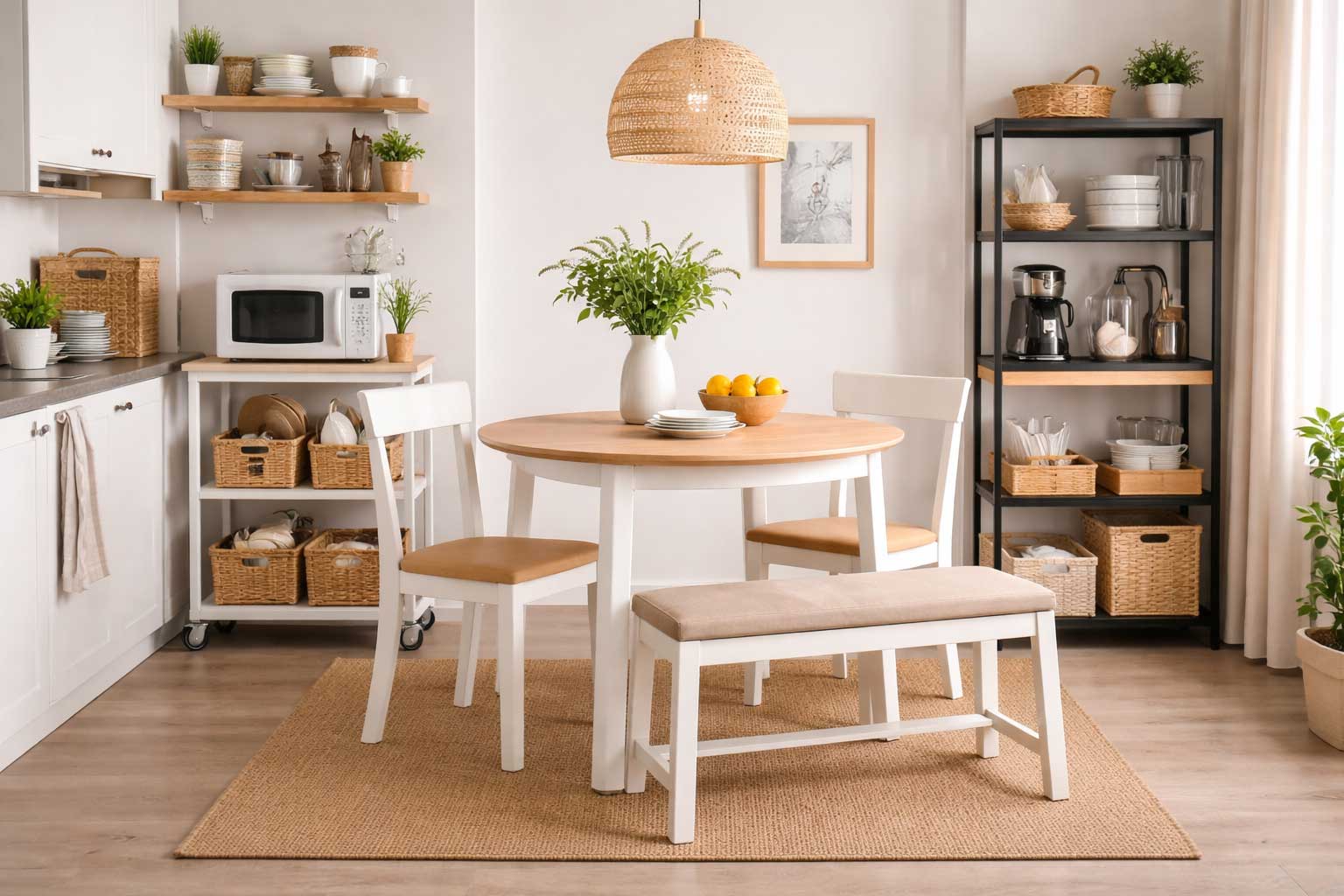
Benches often work well because they use space more efficiently and can slide under the table more cleanly when not in use. That keeps the area looking simpler and makes movement around the table easier. If you want a seating option that usually works better in tighter layouts, take a look at Best Small Apartment Dining Benches.
Flexible seating also helps when the dining area has to handle guests occasionally. Folding chairs, slim benches, or compact seats that do not dominate the room all the time usually work better than trying to keep the area permanently set up for more people than it normally serves. In a small apartment, flexible seating is often what makes the dining area feel practical instead of cramped.
Protect Walking Space Around the Dining Area
A dining area is only truly functional if you can move around it comfortably. In many apartments, the dining zone sits between the kitchen and another part of the home, which means it is part of a regular walkway whether you intend it that way or not. If the table or seating crowds that path, the whole space becomes harder to use.
Good spacing usually makes the area feel larger without adding any square footage. A table that leaves enough room to walk by easily is almost always better than one that technically seats more people but makes the apartment feel tight every day. This is especially important when the dining zone sits near the refrigerator, cabinets, or stove, where movement already matters a lot.
Drop-leaf and narrower tables often help with this because they preserve more flexibility around the edges. If your dining layout feels like it is always in the way, that is usually a sign the furniture needs to work harder for the space instead of expecting the space to work harder for it.
Use the Dining Area for More Than Meals Without Letting It Become a Catch-All
A small dining area often needs to support more than meals, and that is completely normal. It may double as a light work zone, coffee spot, overflow prep space, or quick landing place for daily life. The problem is not that it has multiple jobs. The problem is when those jobs take over and the table stops being usable without a full cleanup first.
Multi-use works best when clutter has another home. If papers, chargers, mail, and random kitchen items have nowhere else to go, the dining surface will collect them by default. That is why supporting storage matters so much. If the surrounding kitchen needs better clutter control, revisit How to Organize Kitchen Counters in a Small Apartment for ideas that keep the table from becoming backup counter space.
A functional dining area should still be usable spontaneously. You should be able to sit down for coffee or a meal without first clearing off half the apartment. In a small space, that kind of readiness is what makes the area feel genuinely useful.
Add Storage Nearby So the Dining Area Works Better
Dining areas often work better when they have nearby support storage. That might mean a slim cabinet, a small cart, shelving, or another storage piece that holds the categories most likely to land on the table otherwise. Without that support, the table itself tends to absorb everything.
A nearby cart or pantry-style piece can hold placemats, napkins, extra dishware, coffee items, or daily-use dining essentials without forcing those categories into already crowded cabinets. If your dining zone needs more nearby support, browse Best Apartment Kitchen Carts or Best Small Kitchen Pantry Cabinets.
The important thing is that support storage should help the dining area, not crowd it. One useful compact piece usually works much better than several smaller items fighting for the same floor space. In a small apartment, the best nearby storage is the kind that quietly makes the table easier to keep clear.
Use Lighting to Make the Dining Area Feel More Intentional
Lighting can make a small dining area feel more finished and more functional, even when the footprint stays exactly the same. In many apartments, the dining space feels awkward partly because it does not feel like its own zone. Better lighting helps solve that by giving the area more definition.
A more intentional light source can make everyday meals feel more comfortable and can visually separate the dining area from the surrounding kitchen or living space. That does not mean the setup has to be fancy. It just means the area should feel like a place you are meant to use. If you want guidance on making the whole apartment feel better lit, revisit How to Layer Lighting in a Small Apartment.
This matters because spaces that feel more intentional usually get used more. In a small apartment, even a modest improvement in how the dining area feels can make it much more likely to stay part of the daily routine instead of becoming dead space or clutter space.
Make the Dining Area Feel Clean and Inviting Instead of Overloaded
A functional dining area also needs to feel visually calm. Too many decorative extras, storage items, or table accessories can make a compact dining setup feel more crowded than it really is. In a small space, that clutter is felt immediately.
A few well-chosen pieces usually work better than trying to style every inch. One centerpiece, a cleaner tabletop, and seating that tucks in well often create a much stronger result than lots of little details layered on top of a layout that is already tight. The goal is not to make the dining area look empty. It is to make it feel open enough to use easily.
A cleaner setup usually feels more functional because there is less friction between you and the table. In a small apartment, the dining area often feels most inviting when it looks simple, clear, and ready to use.
Common Mistakes That Make a Small Dining Area Less Functional
One of the most common mistakes is choosing a table that is too large for the room. Even if it looks nice on its own, a too-large table can make the whole dining zone feel awkward every day. Bulky or inflexible seating can cause the same problem by making movement around the table harder than it should be.
Another issue is letting the table become permanent storage. Once the dining surface is treated like a shelf for random daily clutter, the whole area becomes less usable and less inviting. Ignoring flow around the dining zone is another major mistake. A dining setup that blocks kitchen paths or crowds the rest of the room will always feel harder to live with.
The best small dining areas usually work because they avoid extremes. They do not try to do too much with too much furniture. They stay clear, practical, and built around daily use.
Best Features to Look for in Small Dining Area Furniture
When choosing furniture for a small dining area, compact scale should be one of the top priorities. The table and seating should fit the room naturally instead of pushing against every edge of it. Flexible seating value also matters a lot because small apartments benefit from pieces that can adapt when guests come over or when the room needs to shift functions.
Multi-use functionality is another strong advantage. Furniture that supports everyday meals while also fitting the realities of apartment life usually performs much better than anything too specialized. Easy movement around the table should also be a priority, since layout comfort often matters more than maximum seating count.
Apartment-friendly design is what ties all of this together. The best dining furniture usually feels like it belongs in the room instead of trying to turn the apartment into something it is not. In small spaces, that balance makes all the difference.
Final Thoughts on Making a Small Dining Area More Functional
A small dining area does not need more room as much as it needs the right setup. When the table is scaled well, the seating is flexible, and nearby storage supports daily use, the area starts feeling much more natural and much more useful.
The best apartment dining spaces are not the ones with the most furniture. They are the ones that support real habits without crowding the room. A better table shape, a simpler seating plan, and clearer support storage can completely change how the space feels day to day.
That is the real goal: a dining area that works naturally for meals, daily routines, and occasional guests without turning into another clutter zone. In a small apartment, that kind of function matters a lot.
Our Top Small Dining Area Picks for Better Function
A small dining area works best when furniture supports everyday meals, preserves walking space, and stays flexible enough for real apartment life. The most useful pieces usually stay compact, practical, and easy to live with every day.
Best overall choice:
Small kitchen table — A compact table gives you a true dining zone without overwhelming the room or blocking movement.
👉 Check price on Amazon
Best seating upgrade:
Small apartment dining bench — A dining bench helps use space more efficiently and usually tucks away better than extra chairs.
👉 Check price on Amazon
Best flexible-table option:
Foldable dining table — A foldable table helps the area stay more adaptable when you need more or less surface space.
👉 Check price on Amazon
Best support-storage option:
Apartment kitchen cart — A compact cart gives the dining area nearby support storage so the tabletop stays clearer and easier to use.
👉 Check price on Amazon
Dining zones that feel especially tight may also benefit from a smaller table for two or a slim bench, especially when the goal is to improve flow without giving up daily function.
FAQ
How do you make a small dining area more functional?
The best way to make a small dining area more functional is to use a right-sized table, flexible seating, nearby support storage, and a layout that protects walking space.
What type of table works best in a small apartment dining area?
The best table for a small apartment dining area is usually one with a compact shape such as a round, narrow, drop-leaf, or small rectangular design that fits the room without wasting space.
Are benches better than chairs in a small dining space?
Benches are often better than chairs in a small dining space because they usually tuck in more cleanly and use the footprint more efficiently, especially in tighter apartment layouts.
How do you keep a small dining area from becoming cluttered?
Keep a small dining area from becoming cluttered by giving nearby items another home, keeping the table mostly clear, and using support storage so the surface stays ready for meals and daily use.