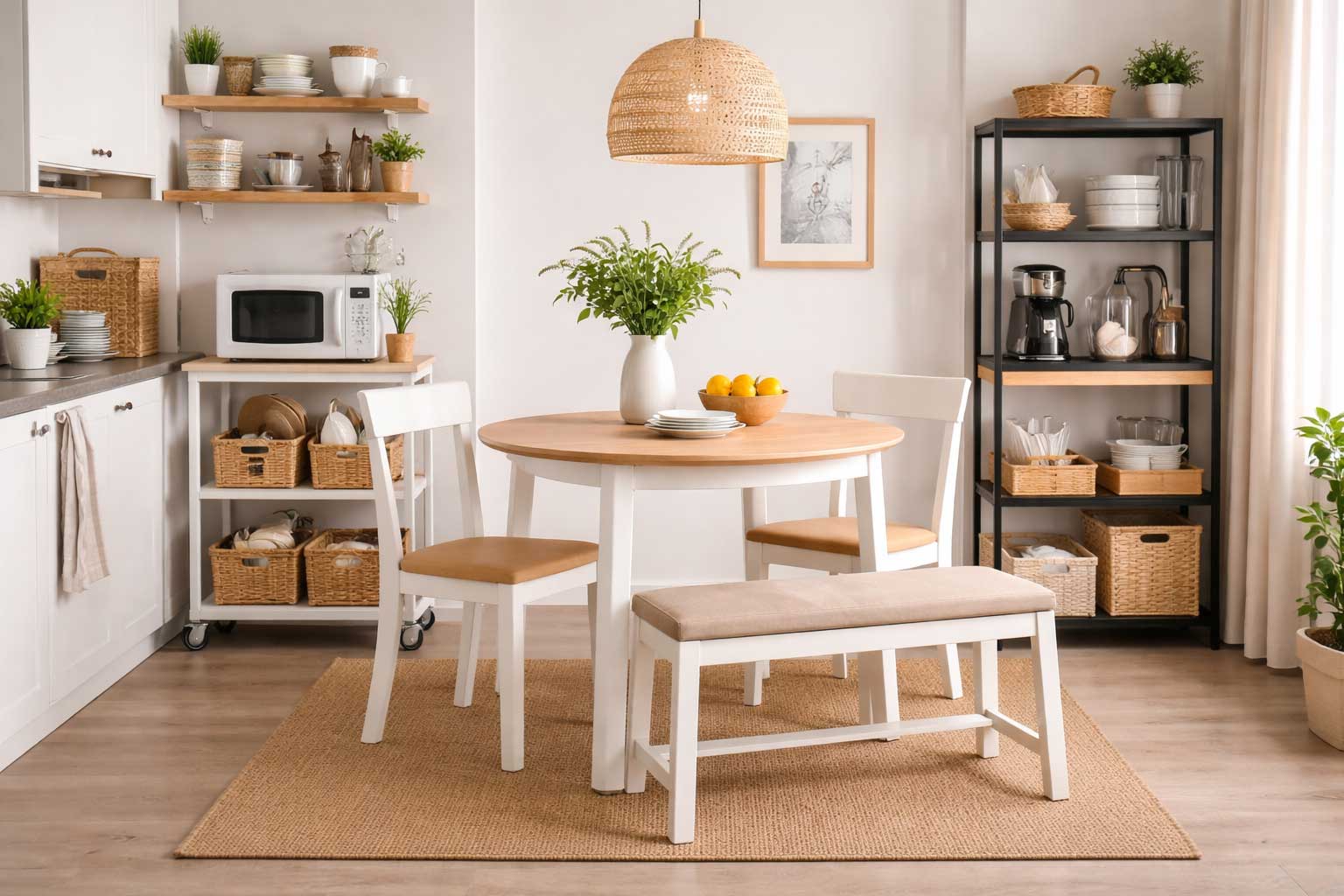

How to Create More Prep Space in a Small Apartment Kitchen
A small apartment kitchen can feel hard to cook in when there is barely enough room to chop vegetables, set down ingredients, or keep everyday tools within reach. In many apartments, the available counter space is limited by the sink, stove, microwave, coffee maker, dish rack, and small appliances that already compete for every usable inch. When prep space is too tight, even simple meals can start to feel more stressful and less efficient than they should.
The good news is that creating more prep space does not always mean adding new counters or remodeling the kitchen. In most cases, the best improvements come from using the existing layout more intentionally, clearing out low-value clutter, and adding support surfaces that work with the room instead of against it. With the right setup, a small apartment kitchen can feel much easier to cook in without needing a lot more square footage.
For extra movable prep support, start with Best Rolling Kitchen Islands for Small Spaces.
If you need more flexible overflow space, check out Best Apartment Kitchen Carts.
For better vertical storage that clears the counters, see Best Countertop Storage Shelves for Small Kitchens.
This guide is part of our Small Kitchen & Dining Solutions collection.
Why Small Apartment Kitchens Run Out of Prep Space So Fast
Small apartment kitchens usually run out of prep space because the same counters have to do too many jobs at once. The kitchen surface is expected to handle food prep, drying dishes, storing appliances, holding ingredients, and sometimes even catching random daily clutter. In a larger kitchen, those jobs can spread out. In a compact apartment kitchen, they all end up fighting over the same few inches.
Appliances make the problem worse quickly. A coffee maker, toaster, microwave, dish rack, knife block, or air fryer may all feel useful on their own, but together they shrink the actual working area fast. Once the best counter section is occupied by permanent storage, the kitchen starts feeling harder to cook in no matter how organized the cabinets are.
That is why better prep space often comes from better organization instead of more square footage. In many cases, the kitchen already has enough room to function better, but the layout is asking the most valuable surface area to do too many things at once.
Start by Clearing Anything That Does Not Need to Live on the Counter
The fastest way to create more prep space is to remove anything that does not deserve permanent counter placement. In many small kitchens, the counter has gradually become the default home for appliances, food items, extra dishware, and random kitchen tools that are only used occasionally. Once that happens, there is very little space left for actual cooking.
Start by identifying what truly belongs out every day. Maybe that is the coffee maker, dish soap, and one or two daily-use tools. Beyond that, many items can usually move elsewhere. If appliances are taking over your best work surface, revisit How to Store Small Appliances in a Small Apartment Kitchen for better storage ideas.
It also helps to clear the prep zone of “almost useful” items that keep lingering on the counter. The cleaner the surface is, the easier it becomes to prep meals without frustration. In a small apartment, prep space is often lost to convenience clutter more than anything else.
Use the Best Existing Counter Zone More Intentionally
Every small kitchen has one area that works best for prep, even if it does not feel very large. Usually, it is the section closest to both the sink and the stove, since that keeps washing, chopping, and cooking flowing more naturally. That is the area that should be protected first.
The main prep zone should stay as clear as possible. It should not become the permanent home for fruit bowls, mail, appliances, or extra storage pieces that could live elsewhere. If smaller prep tools are always spilling into that space, better drawer and cabinet support can help. For ideas on containing those categories, browse Best Kitchen Drawer Organizers.
One clear, dependable prep zone usually works better than trying to prep in several tiny scattered sections. In a compact kitchen, the goal is not to find more random places to chop. It is to protect one reliable area so cooking feels smoother every day.
Add Flexible Prep Surfaces That Do Not Overwhelm the Kitchen
When the built-in counters are not enough, the best solution is often an extra work surface that can adapt to the space instead of permanently crowding it. That is why rolling islands, carts, and foldable support pieces often work so well in apartments.
A rolling island can add a real prep surface while also offering storage below, which makes it one of the most effective upgrades for a tight kitchen. If you want a piece that can support chopping, mixing, or setting out ingredients without becoming dead weight in the room, check out Best Rolling Kitchen Islands for Small Spaces.
Kitchen carts work well too, especially in narrower layouts where a full island would feel too large. Foldable options can be especially useful because they provide support when you need it and disappear more easily when you do not. In a small apartment kitchen, flexible surfaces usually work better than heavy permanent additions because they support cooking without locking the room into a tighter layout all the time.
Use Vertical Storage to Get More Off the Counter
One of the easiest ways to create more prep space is to move as much support storage upward as possible. In many small kitchens, the counters are crowded not because there is too much stuff overall, but because the storage system is too flat. Once more of that storage starts building upward, the work surface opens up.
Countertop shelves can help lift mugs, jars, spices, bowls, or small kitchen tools off the prep area while still keeping them nearby. Wall-mounted racks can do the same for utensils, pans, or other frequent-use items. If you want better wall-based support, see Best Wall-Mounted Kitchen Storage Racks.
Under-cabinet storage can also make a big difference because it uses some of the most overlooked space in the room. In a small apartment kitchen, vertical storage works best when it protects the main prep counter for actual cooking instead of forcing everything to stay at surface level.
Use Sink and Stove Covers Carefully for Temporary Work Space
In especially tight kitchens, temporary work surfaces can help create a little more prep room when you need it most. That might mean using a stable board over part of the sink or relying on temporary covers that turn unused space into short-term work space during meal prep.
These solutions work best when they are stable, easy to move, and easy to clean. The goal is not to make the kitchen more complicated. It is to create extra room at the exact moments when you need it. Over-the-sink solutions can be especially helpful because they borrow space from an area that is not always in use every second of cooking. If your sink area needs better support, take a look at Best Over-the-Sink Dish Racks.
That said, safety matters more than squeezing out a few extra inches. Temporary prep surfaces should never make the kitchen feel unstable or harder to clean up afterward. In a small apartment, they work best as occasional support, not as a replacement for a better overall kitchen system.
Keep Prep Tools and Ingredients Close Without Letting Them Spread Everywhere
Prep space works best when the tools and ingredients you use often stay nearby but contained. If oils, spices, mixing bowls, utensils, and cutting boards are scattered across the counter, they reduce the work area instead of supporting it. A small kitchen needs those items to stay close enough to use but controlled enough not to take over.
Spices are a common problem because they often end up living right in the main prep zone. A better rack or defined spice area can make the counter feel much calmer. If that category is getting out of hand, browse Best Small Apartment Spice Racks.
Mixing bowls and prep tools need their own home too. When those categories have better storage, the prep area becomes much easier to keep clear before and after cooking. In a small apartment, the kitchen feels more functional when the supporting items are organized around the work area instead of sitting directly in it.
Use Nearby Dining or Utility Space When the Kitchen Is Extremely Tight
Some apartment kitchens are simply too small for every prep task to happen fully inside the kitchen itself. When that is the case, it helps to think of the prep system as extending slightly beyond the main counters. A nearby dining table or kitchen-adjacent surface can work well for overflow prep as long as it stays connected to the kitchen workflow.
This works especially well when the table is close enough that moving ingredients and tools back and forth does not feel annoying. If the dining zone needs to support more than meals, revisit How to Make a Small Dining Area More Functional for ideas on keeping that space practical without letting it become cluttered.
The key is keeping the expansion temporary and controlled. The dining area should help the kitchen when needed, not become a permanent dumping ground for cooking overflow. In a small apartment, that kind of flexible spillover can make a big difference when it is organized well.
Keep the Kitchen Easy to Reset After Cooking
Prep space disappears quickly when the kitchen cannot reset easily after meals. Even a good layout starts feeling tight when tools, ingredients, bowls, and appliances do not have obvious homes to return to. That is why cleanup and prep space are so closely connected.
A better reset routine protects tomorrow’s prep area. When the counter clears quickly, the kitchen stays ready to use again without needing a full reorganization before every meal. That only happens when every category has a place. Tools, appliances, ingredients, and dishes all need homes that are simple enough to use consistently.
In a compact kitchen, the best layout is the one you can maintain quickly. The easier it is to clear the prep zone after cooking, the more functional the entire room feels every day.
Common Mistakes That Make Prep Space Harder to Create
One common mistake is letting appliances dominate the main counter. Even useful machines can make a small kitchen much harder to cook in when they occupy the best work surface full time. Another mistake is adding extra furniture that blocks movement. A cart or island should support the kitchen, not make it harder to walk through.
Using the best prep zone for storage instead of cooking is another big issue. If the easiest-to-use counter area is always full of jars, appliances, or decorative items, the kitchen will feel cramped no matter how organized the rest of it is. Ignoring vertical and flexible storage options is another missed opportunity, since those are often what make the biggest difference in tight layouts.
The best prep-space setups are usually selective. They remove low-value clutter, protect the strongest work area, and add support only where it genuinely helps.
Best Features to Look for in Prep-Space Solutions for Small Kitchens
When choosing prep-space solutions for a small kitchen, compact footprint should be one of the first priorities. Every added piece needs to justify its presence. Stable surfaces are also essential, especially if the extra space is going to be used for real chopping, mixing, or ingredient prep.
Easy movement and flexibility matter a lot in apartments because the layout often has to adapt. A piece that rolls, folds, or shifts more easily will usually work better than one that permanently fills the room. Vertical storage value is also important, since upward storage often protects more prep space than another floor piece would.
Apartment-friendly practicality is what ties it together. The best prep-space solution is not the fanciest one. It is the one that makes cooking feel easier without making the kitchen feel more crowded.
Final Thoughts on Creating More Prep Space in a Small Apartment Kitchen
Creating more prep space in a small apartment kitchen usually starts with protecting what you already have. The best systems clear low-value clutter, preserve the strongest work zone, and use flexible or vertical support to make the room work harder without feeling heavier.
A better kitchen does not always need bigger counters. It often just needs a smarter relationship between appliances, tools, storage, and daily habits. When those pieces support the prep area instead of fighting it, the whole kitchen becomes easier to cook in.
That is the real goal: a kitchen that feels functional for real daily cooking. In a small apartment, even a modest increase in usable prep space can make a huge difference.
Our Top Prep-Space Picks for Small Apartment Kitchens
A small kitchen feels easier to cook in when prep space stays protected, support storage works upward instead of outward, and extra surfaces stay flexible enough for apartment life. The most useful upgrades usually stay compact, practical, and easy to reset after use.
Best overall choice:
Rolling kitchen island — A rolling island adds valuable prep space while also giving the kitchen extra storage and flexibility.
👉 Check price on Amazon
Best smaller-space support piece:
Apartment kitchen cart — A compact cart can create overflow prep support without taking over the room.
👉 Check price on Amazon
Best vertical upgrade:
Countertop storage shelf — A countertop shelf helps move support items off the main work area so the counter stays more usable for cooking.
👉 Check price on Amazon
Best wall-space helper:
Wall-mounted kitchen storage rack — A wall rack frees up counter space by moving tools and support items into vertical storage.
👉 Check price on Amazon
Kitchens that feel especially cramped may also benefit from a foldable cart or an over-the-sink support setup, especially when the goal is to create a little more prep room without permanently crowding the layout.
FAQ
How do you create more prep space in a small kitchen?
The best way to create more prep space in a small kitchen is to clear the main counter of low-value clutter, protect one primary prep zone, and add flexible or vertical support where needed.
What can you use instead of extra counter space?
Instead of extra counter space, you can use rolling islands, kitchen carts, temporary sink covers, nearby dining surfaces, and vertical storage systems that help protect the main work area.
Are kitchen carts worth it in a small apartment?
Yes, kitchen carts are often worth it in a small apartment because they can add prep surface, storage, and flexibility without requiring a permanent remodel or a large furniture footprint.
How do you keep prep space clear in a small kitchen?
Keep prep space clear by storing occasional-use appliances elsewhere, containing tools and ingredients in nearby storage, using vertical solutions, and resetting the kitchen quickly after cooking.