How to Organize a Small Bathroom Medicine Cabinet
A small bathroom medicine cabinet can get cluttered faster than almost any other storage spot in the room. Toothpaste, skincare, first-aid items, medications, razors, cotton swabs, and small daily-use products all compete for limited shelf space, and once a few things get out of place, the cabinet becomes hard to use fast. The challenge is not just fitting more into the medicine cabinet. It is organizing it in a way that keeps essentials easy to find without turning the shelves into a crowded mess.
The good news is that a small medicine cabinet can hold a lot more when it is organized by category instead of by convenience. In most apartment bathrooms, the best setup comes from keeping only high-use and bathroom-safe items inside, separating daily-use products from backups, and using small containers or shelf dividers to make the cabinet easier to reset. With the right approach, a cramped medicine cabinet can become one of the most useful storage spots in the bathroom.
For broader ideas that work in tight bathrooms, explore our Best Bathroom Storage Solutions for Small Apartments guide.
If your sink area is also under pressure, check out How to Keep a Small Bathroom Sink Area Organized.
For more enclosed bathroom storage options, browse Best Bathroom Mirror Cabinets for Small Spaces.
This guide is part of our Small Apartment Bathroom Solutions collection.
Quick Answer
If you want to organize a small bathroom medicine cabinet, the best approach is to keep only the items you use regularly inside it and divide the cabinet into clear product categories. In most bathrooms, that means using small bins, trays, shelf risers, or sectioned groupings so daily essentials stay easy to reach and backup products do not take over the space.
A good medicine-cabinet setup usually works best when it includes:
- one clear zone for daily-use essentials
- separate storage for first-aid and medications
- limited backup stock inside the cabinet
- grouped shelves instead of one mixed pile
- a setup that is easy to reset after use
Why Small Medicine Cabinets Get Cluttered So Fast
Medicine cabinets get messy quickly because they hold a lot of small items that are easy to toss in wherever there is space. A tube of toothpaste here, a travel-size bottle there, a few cotton swabs pushed to the back, and suddenly the cabinet stops feeling organized and starts feeling stuffed.
This happens even faster in small apartment bathrooms because the medicine cabinet may be doing more work than it should. If the vanity has no drawers or the sink area is tiny, the cabinet often becomes the default home for almost everything that does not fit somewhere else. That puts dental care, skincare, medications, first aid, shaving products, and miscellaneous toiletries all on the same few shelves.
The result is a cabinet that technically holds a lot but wastes time every day. You cannot find what you need quickly, smaller products get lost in the back, and the shelf space feels tighter than it actually is. A better system fixes that by giving each category a job and a place.
Start by Deciding What Actually Belongs in the Medicine Cabinet
One of the easiest ways to improve a medicine cabinet is to stop expecting it to store everything. Not every bathroom product belongs there. Some items are too bulky, some are used too rarely, and some are better stored somewhere with easier access or more space.
A good rule is to keep high-use, small-format items in the medicine cabinet and move overflow elsewhere. Toothpaste, floss, a few daily skincare items, contact supplies, small grooming products, and a basic first-aid selection usually make sense there. Bulk refills, duplicate toiletries, large bottles, unopened boxes, and low-use products usually do not.
This matters because the medicine cabinet works best as active storage, not overflow storage. When the cabinet is packed with extra bottles and old products, the things you use every day get harder to see and harder to reach. A smaller, more intentional mix usually makes the cabinet much more useful.
Divide the Cabinet by Category Instead of By Whatever Fits
A medicine cabinet stays organized longer when the shelves are divided by category instead of by whatever happened to fit in the moment. Random placement may seem efficient at first, but it usually leads to overlap and wasted space. When toothpaste is next to bandages, skincare is mixed with razors, and medications are scattered across different shelves, nothing feels easy to find.
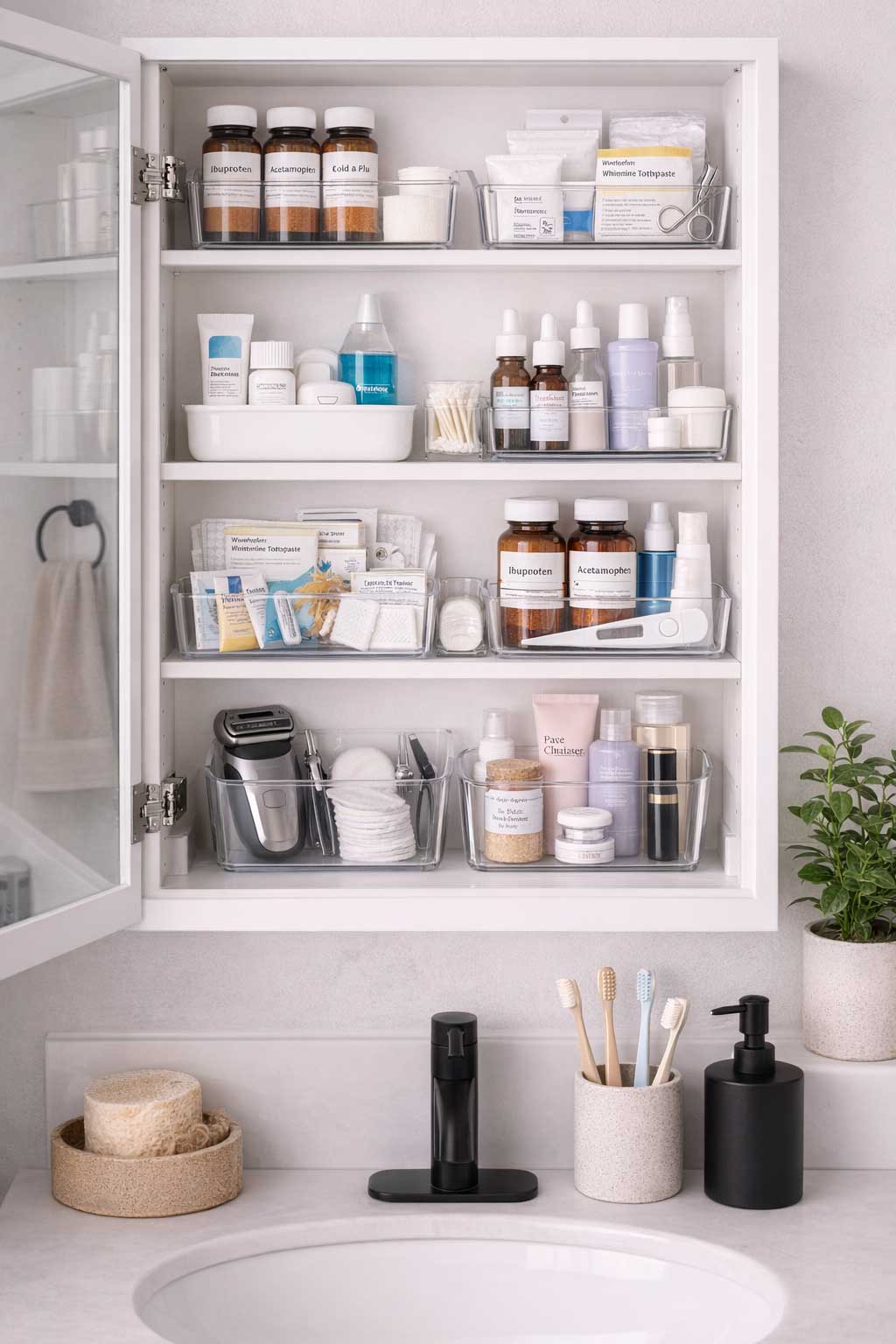
A better approach is to create simple groups. Dental products can share one zone. Everyday skincare can share another. First-aid supplies and medications should have their own areas. Shaving products and small grooming tools can go together too. These groups do not need to be complicated or heavily labeled. They just need enough structure that you know where to reach without digging.
This also makes the cabinet easier to reset. When each shelf has a purpose, misplaced items stand out quickly. That keeps the cabinet from slowly becoming one mixed shelf of small clutter again.
Choose the Best Organizing Tools for a Small Medicine Cabinet
The best organizing tools for a medicine cabinet are usually smaller and simpler than people expect. Oversized bins made for pantry shelves or drawers often do not work well in a shallow cabinet. Small-scale tools usually fit better and waste less precious shelf space.
Small trays are useful for grouping loose items like skincare bottles, cotton rounds, razors, or dental products. They keep categories together without making the shelf feel too segmented. Shelf risers can help in cabinets with wasted vertical height, especially when short products are taking up the same shelf as taller ones. A riser often doubles the usefulness of a short shelf.
Clear bins work especially well for medications or first aid because they keep similar items together and make it easier to see what is inside without digging. Divided organizers can help with dental items, contact supplies, and grooming essentials that tend to scatter. In shared bathrooms, small grouped containers can also help separate each person’s everyday products without turning the cabinet into a jumble.
The goal is not to fill the cabinet with organizers. It is to use just enough structure that the shelves stop functioning like open junk drawers.
Best Medicine Cabinet Setups for Common Small Apartment Bathroom Layouts
If your bathroom has a very shallow medicine cabinet above a tiny sink, the cabinet usually works best when it is reserved for true daily essentials. In that layout, every inch matters, so smaller grouped items and a strong eye-level zone make the biggest difference.
If the bathroom has no drawers and limited vanity storage, the medicine cabinet often ends up carrying too much. In that case, it helps to be even more selective about what stays there. Small daily-use categories should live in the cabinet, while bigger items and overflow should move elsewhere. If your bathroom struggles with this overall, revisit How to Organize a Small Bathroom With No Drawers for broader storage fixes.
If the bathroom is shared by two people, a small medicine cabinet needs lighter boundaries. One shelf can be split by person, or one tray per person can help keep daily products from blending together. Without that structure, shared cabinets get crowded very quickly.
If you have an older apartment bathroom with awkward shelf spacing, the solution is often to match products to the best-fitting shelf instead of forcing every category into equal sections. Shorter items can often be grouped on a riser, while taller bottles may need one dedicated shelf with tighter editing.
Keep the Most-Used Items at Eye Level So the Cabinet Works Better Daily
The items you use every morning and night should be the easiest to reach. This sounds simple, but it is one of the biggest reasons medicine cabinets either feel functional or frustrating. When toothpaste, face wash, contact supplies, or daily skincare are buried behind backup products or stored too high or low, the routine gets slower and the cabinet gets messier.
Eye-level space is the cabinet’s prime real estate. That is where the most-used items should live. Lower-priority products, occasional-use items, and extras can move to the top shelf or farther back where they are still available but not competing with the everyday routine.
This one change often makes a cabinet feel much more organized right away. Instead of opening the door and scanning a mixed shelf, you know exactly where your daily items are. In a small bathroom, that kind of speed and clarity matters more than squeezing every possible bottle into the cabinet.
Separate Medications, First Aid, and Daily Toiletries So Nothing Gets Lost
One of the most common medicine-cabinet problems is mixing too many categories together. Daily toiletries, medications, and first-aid supplies all belong in small containers and boxes, which means they often end up looking similar once they are shoved onto the same shelf. That is how items get lost, expired, or forgotten.
A better system is to give each of these categories a clearly defined zone. Daily toiletries should stay in the easiest-to-reach area because they support the everyday routine. Medications should stay grouped together so they are easy to locate when needed. First-aid supplies should have their own contained section instead of getting buried behind skincare and grooming products.
This kind of grouping is especially useful in small cabinets because the shelves are shallow and easy to overcrowd. Once these categories are separated, the cabinet starts working more like a tool and less like a hiding place for small clutter.
If the cabinet alone is not enough and the bathroom needs stronger grouped storage below the sink, check out How to Organize Under-Sink Space in a Small Apartment.
Limit Backup Products So the Cabinet Does Not Turn Into Overflow Storage
Too much backstock is one of the fastest ways to ruin a small medicine cabinet. A few extra tubes of toothpaste, duplicate cleansers, unopened skincare bottles, travel products, and refill-size containers may not seem like much individually, but together they can take over prime shelf space quickly.
The medicine cabinet usually works best when it holds the current routine and only a very small amount of backup stock. That might mean one extra toothpaste, one spare contact solution, or one small refill item. The rest can usually live under the sink, in a closet, or in another nearby storage zone.
This matters because backups tend to crowd out the things you actually need every day. Once that happens, the cabinet feels full but not useful. Keeping extra stock limited is one of the simplest ways to keep the shelves functional and easier to maintain over time.
If your bathroom needs more enclosed storage nearby to support overflow items, browse Best Small Bathroom Wall Cabinets.
Mistakes to Avoid When Organizing a Small Bathroom Medicine Cabinet
One common mistake is stuffing too many products inside just because they technically fit. A crowded cabinet is harder to use and harder to keep organized. Another mistake is mixing categories together so toiletries, medications, and first aid all overlap in the same shelf space.
Keeping heavy backup stock in prime space is another easy way to make the cabinet less useful. The best shelf space should go to the items you use most often, not to unopened extras. Ignoring vertical shelf height is another problem. When short products sit on a tall shelf with nothing stacked or grouped well, a lot of the cabinet’s usefulness gets lost.
Finally, expired or rarely used items tend to linger far too long in small medicine cabinets. Once those products stay there indefinitely, they start taking up the room that should be serving the current routine.
Products That Make a Small Medicine Cabinet Easier to Organize
The best products are the ones that add structure without eating up too much shelf space. Some medicine cabinets do best with a simple tray system that keeps loose items grouped together. Others benefit more from shelf risers that create better use of height. In some cases, small clear bins for medications or first aid make the biggest difference because they stop important categories from blending into everything else.
The right setup depends on how shallow the cabinet is, how many people share it, and which product categories are causing the most frustration. In a small apartment bathroom, the best medicine-cabinet system usually feels simple once it is working. You open the cabinet, see what you need, and put it back without thinking much about it.
Final Thoughts on Organizing a Small Bathroom Medicine Cabinet
A small medicine cabinet becomes much more useful when it stops acting like a random holding spot and starts functioning like organized active storage. That usually means keeping only the right items inside, grouping them clearly, and giving daily-use essentials the easiest access.
The best results usually come from a few practical choices: divide by category, keep the most-used items at eye level, and limit how much backup stock stays in the cabinet. When those pieces come together, the cabinet becomes easier to use every day and much easier to keep under control.
The goal is not to cram more into the cabinet. It is to make the cabinet hold the right things in the right order.
FAQ
How do you organize a small bathroom medicine cabinet?
Organize a small bathroom medicine cabinet by keeping only regular-use and small-format items inside, dividing the shelves by category, and using trays, risers, or small bins to keep products grouped.
What should go in a medicine cabinet and what should not?
A medicine cabinet usually works best for daily toiletries, small grooming products, medications, and basic first aid. Bulk backups, large bottles, and rarely used products are often better stored elsewhere.
How do you organize medicine, first aid, and toiletries in one cabinet?
Organize medicine, first aid, and toiletries in one cabinet by giving each category its own defined zone so daily items stay separate from safety supplies and everything is easier to find.
What is the best way to keep a medicine cabinet from getting cluttered again?
The best way to keep a medicine cabinet from getting cluttered again is to limit what stays inside, keep backups elsewhere, group products clearly, and reset items back to their zones after use.
How do you organize a shared medicine cabinet in a small bathroom?
Organize a shared medicine cabinet by splitting shelves or trays by person or category so daily-use products do not overlap and the cabinet stays easier for both people to use.