How to Store Toilet Paper in a Small Bathroom Without Wasting Space
Storing toilet paper in a small bathroom can feel more annoying than it should. Extra rolls are bulky, awkward to stack, and easy to leave out in the open when there is no linen closet, wide vanity, or extra cabinet space to work with. In a tight bathroom, even a small backup supply can make the room feel more crowded if it ends up piled on the floor, jammed under the sink, or stuffed into whatever open corner is available.
The good news is that toilet paper storage does not need a lot of square footage to work well. In most small apartment bathrooms, the best setup comes from keeping a small working supply in the room, choosing storage that fits the layout, and using vertical or enclosed space more intentionally. With the right approach, you can keep toilet paper easy to grab without letting it become visual clutter.
For broader ideas that work in tight bathrooms, explore our Best Bathroom Storage Solutions for Small Apartments guide.
If your bathroom needs stronger vertical support, check out Best Over-the-Toilet Storage Solutions for Small Bathrooms.
If the room is short on hidden storage overall, browse How to Organize a Small Bathroom With No Linen Closet.
This guide is part of our Small Apartment Bathroom Solutions collection.
Quick Answer
If you want to store toilet paper in a small bathroom without wasting space, the best approach is to keep only a practical backup amount in the room and give it one defined storage zone. In most bathrooms, that means using a basket, cabinet section, shelf, slim stand, or over-the-toilet storage instead of leaving extra rolls scattered around the floor or vanity.
A good toilet-paper storage setup usually works best when it includes:
- one clearly defined place for backup rolls
- only a small restock supply inside the bathroom
- storage that fits the layout without blocking movement
- vertical or enclosed storage where possible
- a setup that keeps extra rolls easy to reach but visually controlled
Why Toilet Paper Becomes Such a Storage Problem in Small Bathrooms
Toilet paper seems simple until you try to store more than one or two extra rolls in a small bathroom. The rolls are lightweight, but they take up a lot of volume for what they are. A few extras may seem harmless, yet once they start sitting on top of the toilet, under the sink, beside the vanity, or stacked in a corner, the room can look cluttered quickly.
This is even more noticeable in small apartment bathrooms because there usually is not much extra space to absorb bulky items. The vanity cabinet may already be full of toiletries. The room may not have a linen closet. The floor space may already feel tight. In that kind of layout, toilet paper can start competing with towels, cleaning products, and daily-use items for the same few storage spots.
That is why toilet paper storage needs more intention than people expect. It is not just about finding any open space. It is about keeping enough on hand without letting the room feel overtaken by backup rolls.
Start by Deciding How Much Toilet Paper Really Needs to Stay in the Bathroom
One of the easiest ways to waste space is by trying to store the entire bulk pack in the bathroom. In most small apartments, the bathroom does not need that much backup inventory inside the room itself. It only needs a working supply.
For many households, that means keeping a few extra rolls in the bathroom and storing the rest somewhere else. If you live alone, the bathroom may only need a modest backup supply at a time. If two people share the bathroom, the room may need a little more, but it still probably does not need the full package from the store sitting there all at once.
This small shift makes a big difference. A bathroom feels easier to organize when it holds the amount of toilet paper you are likely to use soon, not months of backup stock. Extra bulk packs often fit better in a hallway cabinet, bedroom closet, laundry area, or another nearby storage spot that is not already under pressure.
Choose the Best Toilet Paper Storage Type for Your Layout
The best storage type depends on what kind of bathroom you have and how much hidden storage already exists.
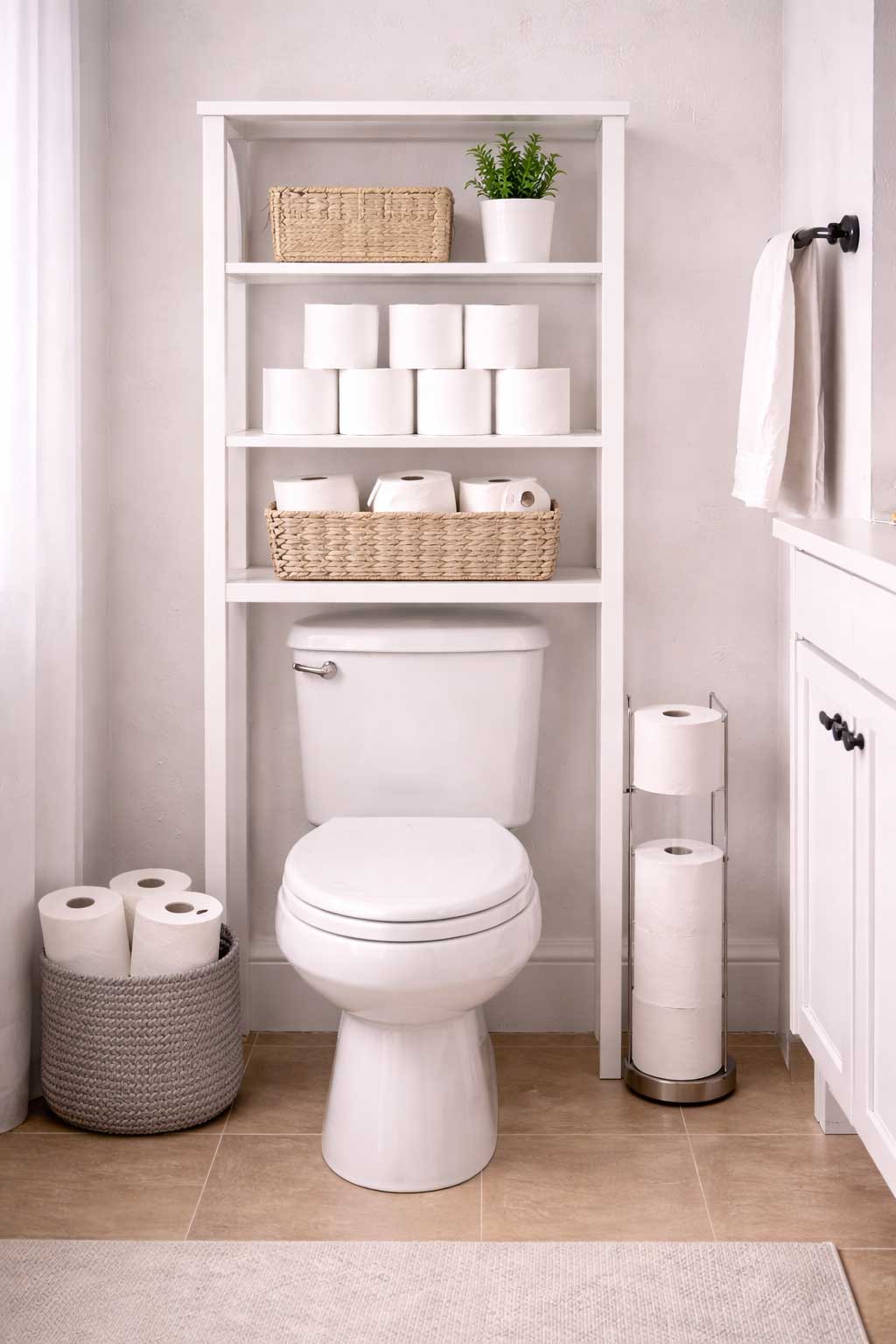
Baskets are one of the simplest options. They work well when you want quick access and have a little open shelf or floor space to spare. They are especially useful when the room needs flexible storage without adding a larger furniture piece.
Slim freestanding stands are good for bathrooms with tight floor plans because they can hold several extra rolls in a very small footprint. These tend to work best near the toilet when there is a little narrow space that is otherwise going unused.
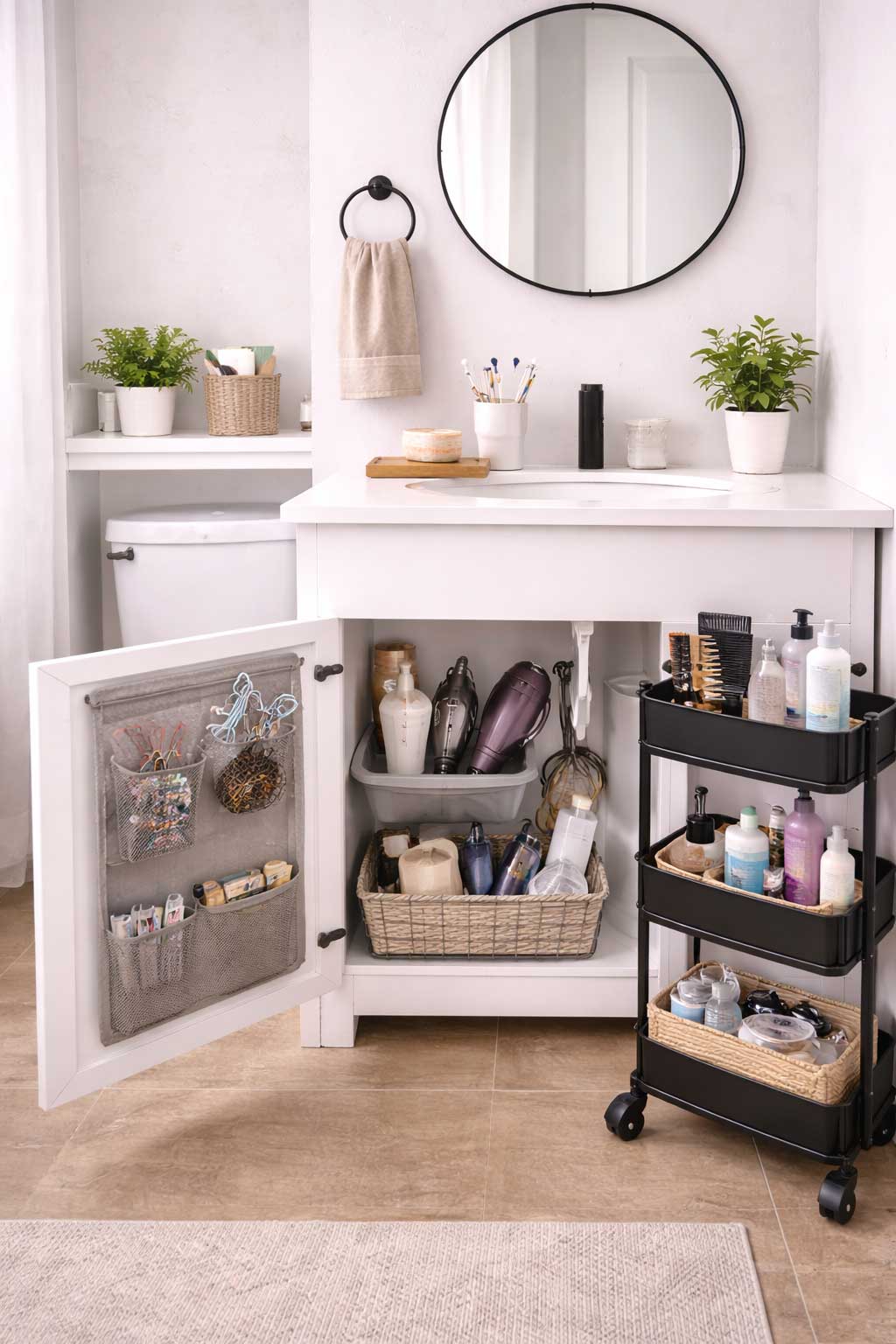
Under-sink storage is often the strongest hidden option if the vanity cabinet has room. This works especially well when toilet paper can have one dedicated section instead of getting mixed with toiletries and cleaning products.
Over-the-toilet shelves or cabinets are great when vertical space is available. This kind of storage can hold paper goods without taking up extra floor space, which makes it especially useful in apartment bathrooms that already feel crowded.
Wall cabinets and narrow towers can be helpful when the room needs more enclosed storage overall. These usually work best in layouts where the biggest problem is visible clutter rather than total lack of storage.
Nearby overflow storage is often the smartest solution when the bathroom is simply too small to support much backup stock. In those cases, the best bathroom storage plan includes support from another nearby area.
The key is choosing the storage type that fits the room instead of forcing a larger solution into a layout that cannot carry it well.
Best Toilet Paper Storage Setups for Common Small Apartment Bathroom Layouts
If your bathroom has only a vanity cabinet, the best setup often comes from assigning one section of that cabinet specifically to toilet paper. This works best when the rolls are grouped together and not mixed loosely with other bathroom clutter. A simple bin or defined shelf area usually makes that cabinet much easier to use.
If the bathroom has a pedestal sink and almost no built-in storage, vertical storage tends to matter much more. In that kind of layout, an over-the-toilet shelf, a slim stand, or a small basket can create a working toilet paper zone without needing vanity space that does not exist.
If the bathroom is narrow and has very little floor space, the best solution is usually one that uses height or hidden storage. Bulky baskets or oversized stands can make the room feel tighter. In narrow layouts, compact and edited storage almost always works better than trying to squeeze in too much.
If the bathroom is shared by two people, the room may need a slightly larger backup supply, but it still needs limits. Shared bathrooms usually work best when the current-use rolls are easy to reach and the overflow is kept elsewhere instead of letting the room become a storage area for a full household-sized supply.
Keep Extra Rolls Accessible Without Leaving Them Fully Exposed
Easy access matters. No one wants to dig through a crowded cabinet or leave the bathroom to hunt for toilet paper. At the same time, leaving too many rolls fully visible can make the room feel busier than it needs to.
That is why some of the best small-bathroom storage is storage that is both accessible and visually controlled. A basket on a shelf, a slim cabinet, a small lidded container, or a defined section of over-the-toilet storage usually works better than loose rolls sitting out on every available surface.
This is especially important in small bathrooms where visual clutter has a big impact. Even neat rolls can start to feel like too much when they are stacked in the open with no real boundary. A contained storage zone keeps the backup supply practical without turning it into one more thing the eye has to process every time you enter the room.
If your bathroom needs more enclosed storage above eye level, take a look at Best Small Bathroom Wall Cabinets.
Use Vertical and Under-Sink Space More Efficiently for Bathroom Paper Goods
Toilet paper usually stores best in the kind of space that is already slightly out of the way. That is why vertical storage and under-sink storage tend to work so well. They keep the rolls available without making them the center of attention in the room.
Under the sink, toilet paper often works best when it has a clearly defined section. A grouped bin or one side of a cabinet shelf is much easier to manage than loose rolls crowded in with bottles and cleaning supplies. This is especially helpful when the vanity cabinet is the main hidden storage area in the bathroom.
Above the toilet, a shelf or cabinet can create meaningful capacity without taking up more of the room’s footprint. This works especially well for bathrooms that do not have enough vanity space but do have empty wall area above the tank. The goal is to use that vertical space intentionally so the room can hold what it needs without feeling heavier.
If your under-sink area is underused, check out How to Organize Under-Sink Space in a Small Apartment.
If your bathroom also needs stronger grouped storage for towels and nearby paper goods, browse Best Towel Storage Solutions for Small Bathrooms.
Make Shared Bathroom Toilet Paper Storage Work Better
Shared bathrooms usually need a little more toilet paper on hand, but that does not mean the room should hold everything. The best shared setup usually includes an accessible working supply in the bathroom and a separate overflow area elsewhere in the apartment.
This keeps the bathroom practical without making it feel like a paper-products closet. It also helps if one clear spot is always used for the active backup supply. When extra rolls are left wherever they fit, the room starts feeling cluttered fast and it becomes harder to tell when restocking is actually needed.
Shared bathrooms work best when they have a simple rhythm: a small in-room backup, one defined storage zone, and a larger overflow stash stored nearby but outside the bathroom.
Avoid Common Space-Wasting Toilet Paper Storage Mistakes
One of the most common mistakes is storing the whole bulk pack in the bathroom. This usually eats up too much space without making the room more functional. A better approach is to keep only what the bathroom can comfortably carry.
Leaving loose rolls on the floor is another easy mistake. Even when the rolls are technically accessible, they make the room feel unfinished and can get in the way quickly. Using storage that is too bulky for the layout is another problem. A large basket or oversized stand may hold a lot, but it may also crowd the room more than it helps.
Mixing toilet paper with unrelated clutter under the sink can also make storage harder to use. When the rolls are buried behind cleaning supplies or mixed in with random bathroom products, the room loses structure. Finally, keeping more visible backup stock than the space can handle is a very common source of visual clutter.
Products That Make Toilet Paper Storage Easier in Small Bathrooms
The best products are the ones that match the room’s actual limits. Some bathrooms do best with a simple basket or slim stand that keeps a few extra rolls near the toilet. Others work better with over-the-toilet shelves or cabinets that take advantage of unused wall space. In bathrooms with a workable vanity, grouped under-sink storage can be the cleanest solution.
The right choice depends on whether the room is short on floor space, hidden storage, or vertical capacity. In small apartment bathrooms, the best toilet paper storage usually feels invisible once it is set up well. It supports the room without taking over it.
Final Thoughts on Storing Toilet Paper in a Small Bathroom Without Wasting Space
Toilet paper storage works best when the bathroom holds only what it can comfortably support. That usually means keeping a working supply in the room, storing the rest elsewhere, and choosing one storage zone that fits the layout without adding unnecessary clutter.
The strongest setups usually come from a few simple choices: keep extra rolls contained, use vertical or hidden storage when possible, and avoid treating the bathroom like long-term bulk storage. When those pieces come together, toilet paper stays easy to grab without making the room feel smaller.
The goal is not to find room for every roll in the package. It is to create a setup that keeps the bathroom practical, calm, and easy to maintain.
FAQ
How do you store toilet paper in a small bathroom?
Store toilet paper in a small bathroom by keeping a small backup supply in one defined spot, such as a basket, cabinet section, slim stand, or over-the-toilet unit, instead of scattering loose rolls around the room.
How much toilet paper should stay in a small bathroom?
A small bathroom usually only needs a practical working supply of extra rolls, not the entire bulk pack. The exact amount depends on the household, but the room should only hold what fits comfortably.
Where should extra toilet paper go if the bathroom is tiny?
If the bathroom is tiny, extra toilet paper often works best in a nearby hallway cabinet, bedroom closet, utility area, or other overflow storage spot outside the bathroom.
What is the best toilet paper storage for a bathroom with no linen closet?
The best toilet paper storage for a bathroom with no linen closet usually includes over-the-toilet shelves, under-sink storage, slim stands, baskets, or nearby overflow storage that keeps the working supply accessible without crowding the room.
How do you keep toilet paper accessible without making the bathroom look cluttered?
Keep toilet paper accessible without making the bathroom look cluttered by storing only a small backup supply in a contained basket, cabinet, or shelf zone and moving the rest of the bulk storage elsewhere.