How to Store Shoes by the Front Door in a Small Apartment
Storing shoes by the front door in a small apartment can get messy fast. A few everyday pairs can turn into a pile near the entrance, making the apartment feel cluttered the moment you walk in. The problem is not just finding somewhere to put shoes. It is creating a setup that keeps them easy to access without letting them take over the entryway.
The good news is that small-apartment shoe storage does not need to be complicated. The best setups usually come from keeping only the right shoes near the door, choosing storage that fits the layout, and making sure the entrance still feels easy to walk through. With the right approach, you can keep daily footwear under control without making the apartment feel tighter or more chaotic.
For broader front-door organization ideas, explore our Best Entryway Storage Solutions for Small Apartments guide.
If you need more dedicated shoe storage options, check out Best Shoe Storage Solutions for Small Apartments.
For tighter layouts, browse Best Shoe Cabinets for Narrow Apartment Entryways.
This guide is part of our Small Apartment Entryway Solutions collection.
Quick Answer
If you want to store shoes by the front door in a small apartment, the best approach is to keep only daily-use pairs near the entrance and use a compact storage solution that fits the space. In most apartments, that means using a shoe cabinet, slim rack, storage bench, tray, or wall-mounted option that keeps shoes contained without blocking the walkway.
A good front-door shoe setup usually works best when it includes:
- space for only the shoes you use most often
- one clearly defined storage zone near the entrance
- a storage type that matches the layout
- enough clearance to keep the doorway easy to use
- a simple system that is easy to maintain every day
Why Shoe Clutter Builds Up So Fast Near the Front Door
Shoes become a problem quickly because they are part of everyday routines. Unlike seasonal decor or backup storage, shoes are constantly moving in and out of the apartment. That makes them one of the easiest things to drop by the door and forget about until the whole entrance starts feeling crowded.
In a small apartment, even a few loose pairs can have a big visual impact. When the front door opens into the living room, kitchen, or a narrow hallway, shoes on the floor make the apartment look less organized right away. They also create practical problems. The entry becomes harder to clean, harder to walk through, and harder to reset once clutter starts spreading.
This is why storing shoes well is not just about aesthetics. A controlled shoe setup makes the apartment easier to enter, easier to leave, and easier to keep looking clean.
Decide Which Shoes Actually Belong by the Door
One of the biggest mistakes people make is treating the entryway like their entire shoe closet. In a small apartment, that almost never works. The front door area should hold the shoes you actually reach for often, not every pair you own.
A better system is to think in terms of daily-use shoes. These are the sneakers, flats, sandals, loafers, or boots you wear most often during the current season. Those pairs make sense by the door because they support your routine. Shoes for special occasions, off-season weather, or occasional use are usually better stored in a bedroom closet, under-bed container, or another storage area.
This matters even more in apartments shared by two people. If each person treats the entrance as unlimited shoe storage, the area fills up fast. A much cleaner system is to cap how many pairs stay by the door and move everything else elsewhere. That keeps the front entry functional instead of turning it into overflow.
Choose the Best Shoe Storage Type for Your Layout
The best shoe storage depends on how your apartment is laid out and how visible the entry area is from the rest of the home.
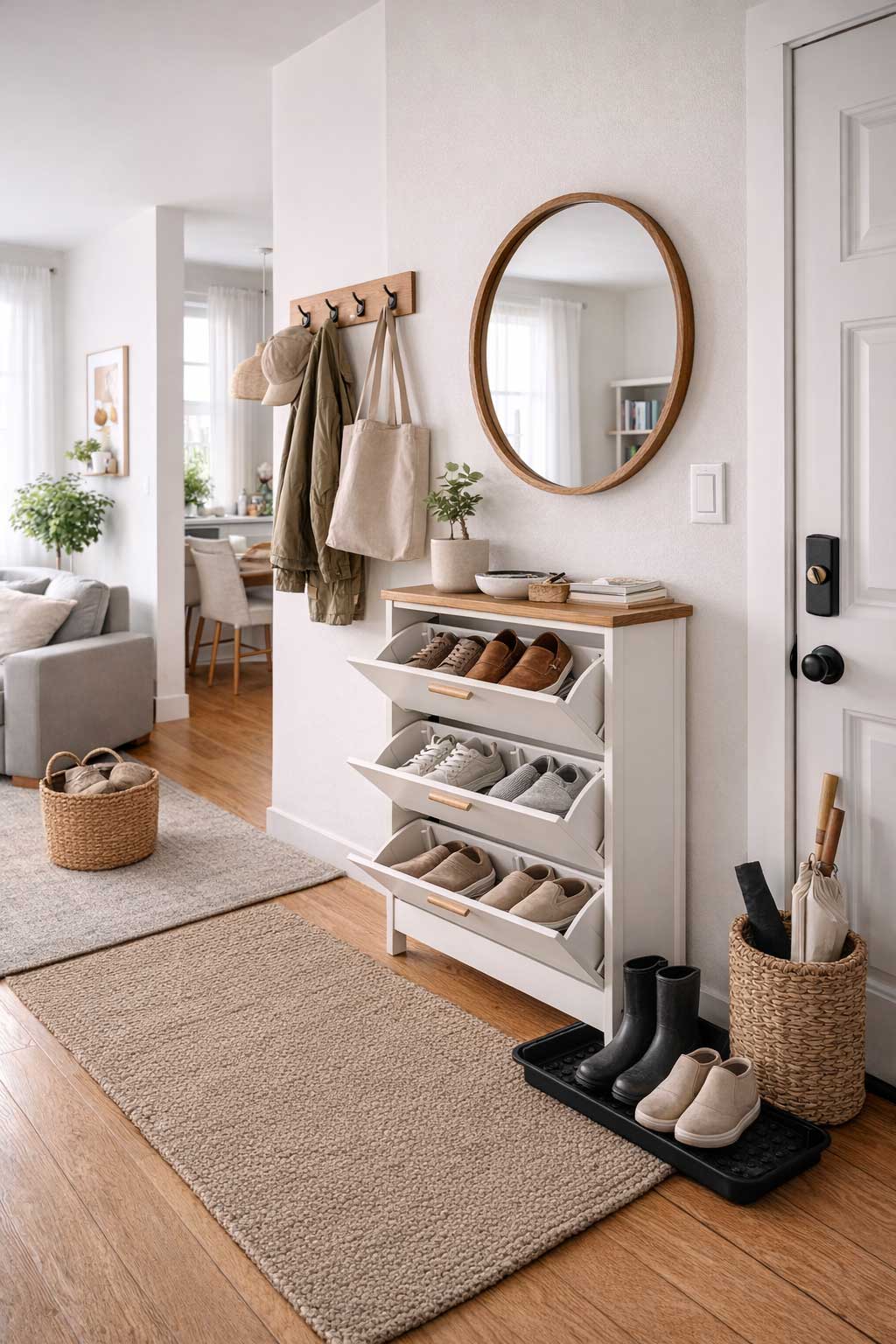
Slim shoe cabinets are often the strongest option for narrow entries because they keep shoes contained without sticking too far into the room. They work especially well when the front door opens into a hallway or a living room where visible floor clutter stands out immediately.
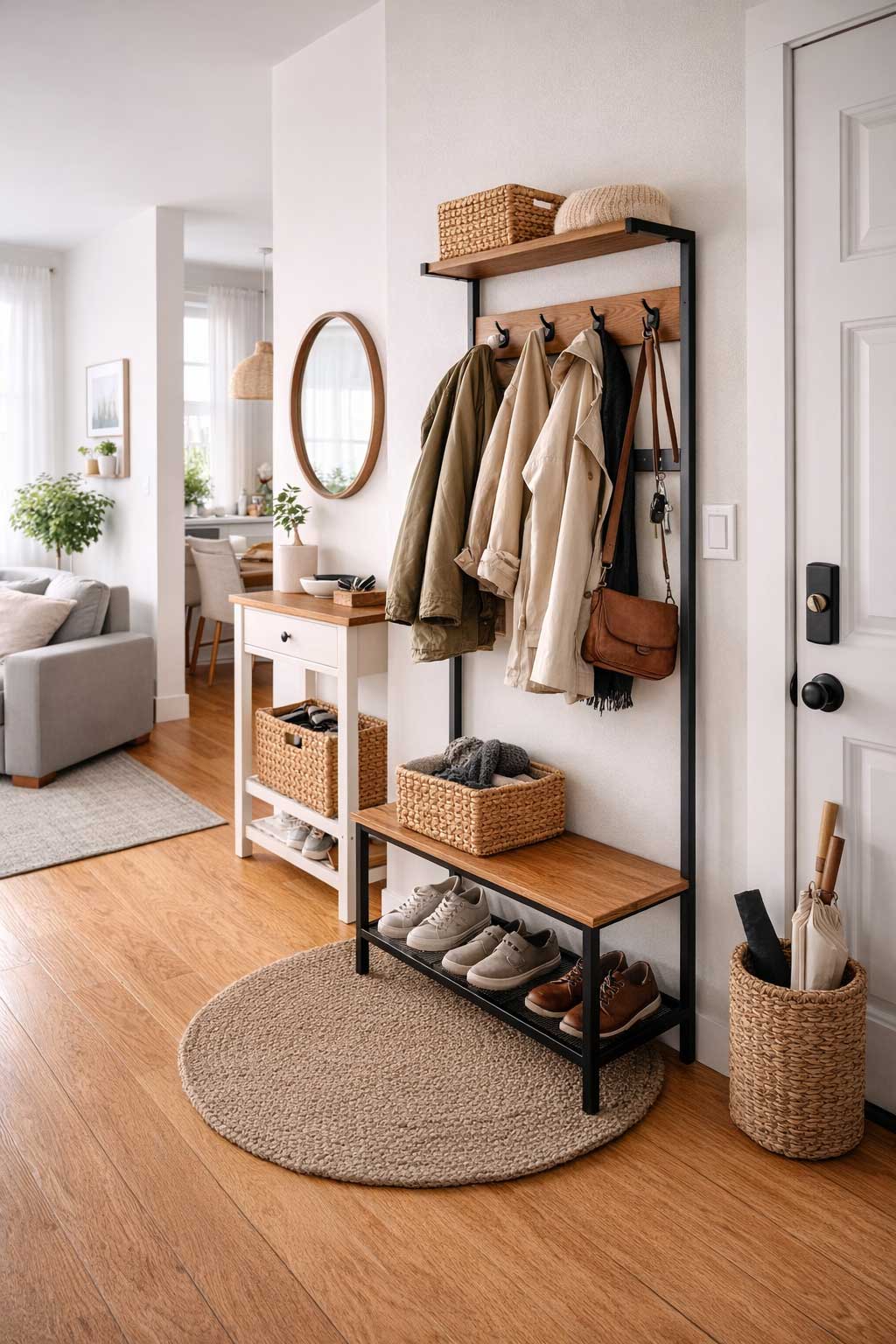
Open racks can work well when quick access matters most. If you only keep a few pairs near the door and do not mind seeing them, a small rack can be simple and effective. The downside is that open storage looks messy faster, especially if different household members leave shoes loosely instead of placing them neatly.
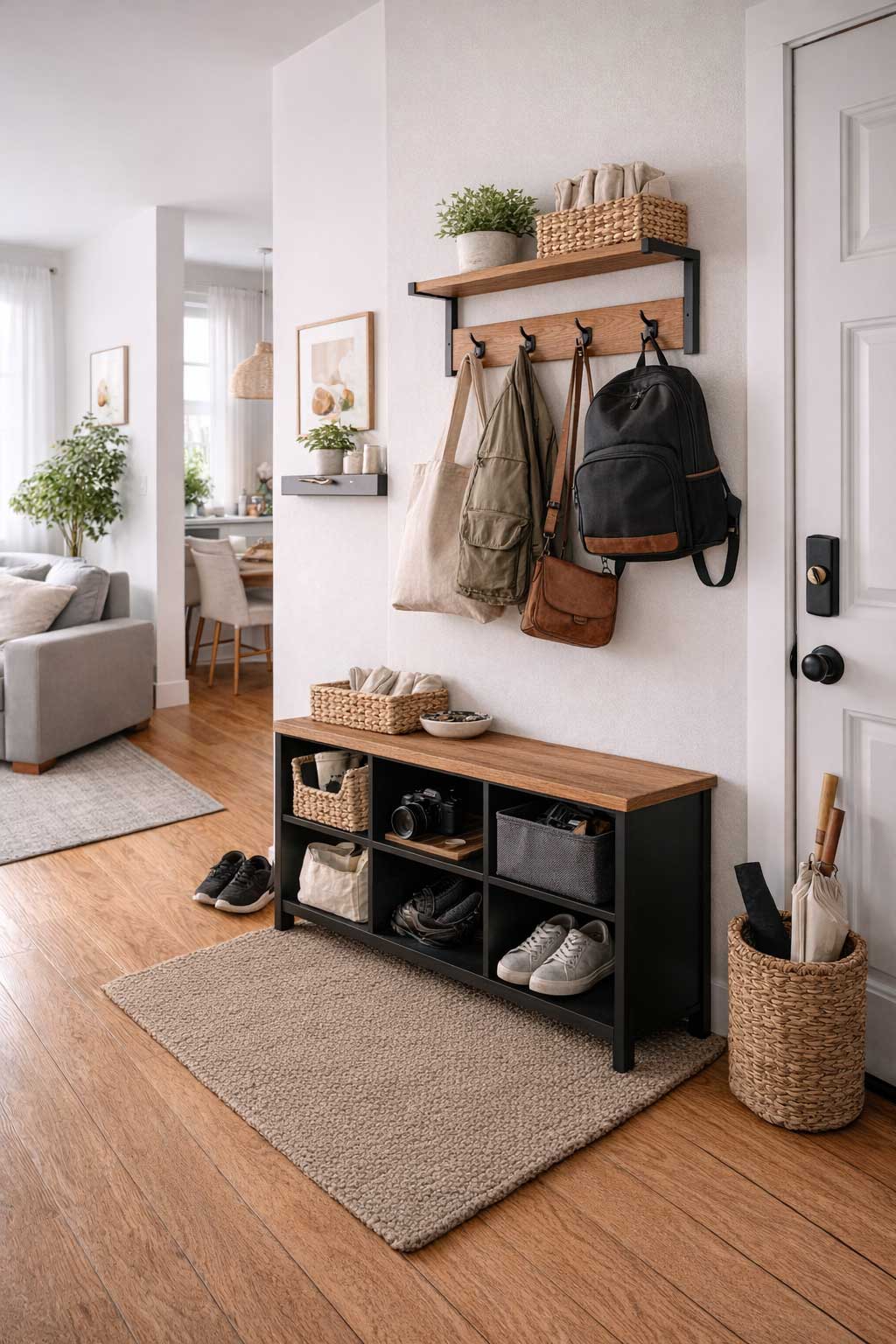
Storage benches are a smart fit when you want shoe storage and another function in the same footprint. In many apartments, that extra seating makes the entryway feel more useful, especially for putting shoes on and taking them off.
Trays and mats are best for boots, wet shoes, and dirty soles. They do not replace a full shoe system, but they are often essential for handling weather-related mess.
Wall-mounted options work best when floor space is very limited. These can be helpful in tighter layouts where every inch of walkway matters.
The key is choosing the storage type that fits your actual floor plan rather than picking something just because it looks good online.
Best Front-Door Shoe Setups for Common Small Apartment Layouts
If your apartment has no foyer and the front door opens straight into the main living area, contained storage matters most. A slim shoe cabinet or cleaner-looking bench usually works better here than an open rack because the shoe zone stays visible from the rest of the room. The more polished the storage looks, the calmer the apartment usually feels.
If you have a narrow hallway entry, depth becomes the biggest issue. Bulky benches or wide open racks can make the space feel cramped fast. In that kind of layout, a shallow cabinet or wall-mounted option usually works better because it preserves the path near the door.
If you live in a studio apartment, visual control matters even more. A few scattered pairs can make the whole apartment feel busier because the entry area is visible from almost everywhere. In studios, smaller and more contained storage almost always works better than large open solutions.
If the front door opens directly into the kitchen or dining area, the best shoe setup is often simple and tightly edited. In this layout, you usually want one clearly defined shoe zone rather than shoes spilling near food prep, dining chairs, or counters. A narrow cabinet, tray, or compact bench often works well as long as it stays contained.
Keep Shoe Storage Contained So It Does Not Spill Into the Walkway
Containment is what separates a functional entryway from a messy one. Shoes do not just need storage. They need boundaries. When there is no clear limit, they slowly spread beyond the original spot and start taking over the surrounding floor.
That is why one controlled shoe zone usually works much better than several loose ones. A small rack, cabinet, tray, or bench tells the household where shoes belong. Once you start letting a few extra pairs sit beside the cabinet or just outside the tray, the system breaks down quickly.
It also helps to think about door clearance and walking flow. Shoes should not block the door swing or sit where you need to step immediately after entering. The best front-door shoe storage feels close enough to use naturally but not so close that it interferes with movement.
If you want seating and shoe storage in one compact setup, see Best Entryway Storage Benches for Small Spaces.
Handle Boots, Wet Shoes, and Dirty Soles Without Making the Entryway Gross
Boots and wet shoes need different treatment than everyday dry footwear. They are bulkier, dirtier, and often harder to fit into standard shoe furniture. If they do not have a dedicated spot, they end up dripping onto the floor or sitting awkwardly in the middle of the entryway.
A tray or waterproof mat is one of the easiest fixes. It gives wet shoes and boots a defined place to dry without spreading moisture or dirt across the floor. This is especially useful in rainy or snowy seasons when even a tidy entryway can start feeling messy fast.
It also helps to separate wet-weather footwear from everyday pairs. If boots are soaked or muddy, they should not go directly into enclosed storage beside clean sneakers or flats. Giving them a temporary drying zone near the door keeps the system cleaner and easier to manage.
In many apartments, a combination works best: a main storage piece for regular shoes and a tray for the pairs that come in wet or dirty.
Make Shared Shoe Storage Work in Small Apartments
Shared shoe storage usually breaks down when there are no clear rules. In apartments with two or more people, shoes pile up quickly if everyone assumes there is always room for one more pair by the door.
A better approach is to define how much space each person gets. That does not need to be formal, but it should be clear enough that the entryway does not become a free-for-all. If one person uses the top section of a cabinet and the other uses the bottom, the setup tends to stay neater. If the rack has no assigned structure, shoes start overflowing onto the floor.
It also helps to separate daily-use shoes from overflow. The front door area should support the pairs each person reaches for regularly, not the full collection. Once the everyday section fills up, less-used pairs should move elsewhere.
This kind of limit is what keeps shared shoe storage practical in a small apartment. Without it, even a good storage product ends up looking messy.
Mistakes to Avoid When Storing Shoes by the Front Door
One of the most common mistakes is keeping too many shoes at the entrance. This makes almost any storage solution look overwhelmed. A better entryway comes from fewer pairs, not just more storage.
Another mistake is choosing storage that is too deep or too open for the space. A bulky bench or deep cabinet can crowd the entrance, while an open rack can start looking messy if it holds too many mixed styles of footwear.
Letting shoes sit loose on the floor is another obvious but important problem. Even a good system fails if people stop using it and start placing shoes beside it instead. That is why ease of use matters so much.
Ignoring boots, wet shoes, and dirty soles is another issue. If the system only works for dry sneakers and flats, it will break down during bad weather. Finally, avoid any setup that blocks the door or narrows the walkway too much. Shoe storage should make the apartment easier to use, not harder.
Products That Make Front-Door Shoe Storage Easier
The best shoe-storage products are the ones that solve your actual entry problem clearly. Some apartments do best with slim cabinets that hide shoes and reduce visual clutter. Others work better with benches that combine seating and storage in one compact piece. Some need a wall-mounted solution because the floor plan is especially tight, while others just need a simple tray for boots and wet-weather footwear.
If floor space is especially limited, browse Best Wall-Mounted Shoe Racks for Apartment Entryways.
If your entry area is always visible and needs a more controlled setup, check out Best Entryway Organizers for Studio Apartments.
The right option depends on how much room you have, how many pairs need to stay near the entrance, and how polished you want the front-door area to look from the rest of the apartment.
Final Thoughts on Storing Shoes by the Front Door in a Small Apartment
Storing shoes by the front door in a small apartment works best when the setup stays simple, contained, and realistic. You do not need to keep every pair near the entrance. You just need a system that supports daily life without turning the entryway into a clutter zone.
The strongest setups usually come from three things: limiting the number of shoes by the door, choosing storage that matches the layout, and making room for boots or wet shoes when needed. When those pieces come together, the apartment feels cleaner and easier to manage the moment you walk in.
A small apartment entryway does not need a lot of square footage to work well. It just needs a shoe-storage setup that fits the space and stays easy to maintain.
FAQ
How many shoes should you keep by the front door in a small apartment?
You should usually keep only the shoes you wear most often by the front door. In most small apartments, that means daily-use pairs rather than your full shoe collection.
What is the best way to store shoes near the entrance?
The best way to store shoes near the entrance is to use a compact, clearly defined storage solution such as a slim cabinet, small rack, bench, tray, or wall-mounted option that fits the layout.
Are shoe cabinets better than open racks for small apartments?
Shoe cabinets are often better for small apartments when you want a cleaner look and less visible clutter. Open racks can still work well when you keep only a few pairs near the door and want faster access.
How do you store boots by the front door without making a mess?
Store boots by the front door with a tray or waterproof mat so moisture and dirt stay contained. In many apartments, boots need a temporary drying zone separate from regular shoe storage.
What shoe storage works best in a narrow apartment entryway?
The best shoe storage for a narrow apartment entryway is usually a shallow shoe cabinet or wall-mounted option that keeps the walkway open while still containing daily-use shoes.