How to Organize Bags and Backpacks Near a Small Apartment Entryway
Organizing bags and backpacks near a small apartment entryway can get messy quickly. Work bags, purses, backpacks, tote bags, gym bags, and reusable shopping totes often end up on the floor, slung over chairs, or piled onto whatever surface is closest to the door. The problem is not just finding somewhere to drop them. It is creating a system that keeps them easy to grab without making the front-door area feel crowded or chaotic.
The good news is that bag storage near the entrance does not need to be complicated. In most small apartments, the best setup comes from giving everyday bags one defined home, choosing storage that fits the layout, and preventing the entryway from turning into a catch-all zone for everything you carry in and out. With the right approach, you can keep bags accessible while making the apartment look cleaner and feel easier to manage.
For broader front-door organization ideas, explore our Best Entryway Storage Solutions for Small Apartments guide.
If your apartment needs a compact setup, check out Best Entryway Organizers for Studio Apartments.
For more dedicated landing-zone solutions, browse Best Drop Zone Organizers for Small Apartment Entryways.
This guide is part of our Small Apartment Entryway Solutions collection.
Quick Answer
If you want to organize bags and backpacks near a small apartment entryway, the best approach is to keep only everyday bags near the door and give them one clearly defined storage zone. In most apartments, that means using hooks, cubbies, a bench with storage, or a compact entryway organizer that keeps bags off the floor and easy to grab on the way out.
A good bag-and-backpack entryway setup usually works best when it includes:
- space for only the bags you use regularly
- one clear storage zone near the door
- a setup that keeps bags off the floor
- enough separation so bags do not tangle together
- a simple system that is easy to use every day
Why Bags and Backpacks Create Entryway Clutter So Fast
Bags create clutter quickly because they move in and out of the apartment constantly. Unlike decorative items or seasonal storage, bags are part of daily routines. Backpacks come home from work or school and get dropped by the door. Totes pile up after errands. Gym bags linger until the next workout. Reusable shopping bags multiply faster than most people realize.
In a small apartment, this clutter feels bigger because the entrance often opens directly into another room. A few bags on the floor can make the living room feel messier. A couple of overloaded hooks can make a narrow hallway feel cramped. When the front door has no clear bag-storage system, the whole apartment tends to feel less organized because the clutter starts at the point of entry.
That is why bag storage near the entrance needs more than just “a place to put things.” It needs structure. Once everyday bags have one obvious home, the rest of the entryway becomes much easier to control.
Decide Which Bags Actually Need to Stay Near the Door
One of the biggest mistakes people make is keeping too many bags in the entryway. In a small apartment, the front-door area should not hold every tote, weekender, diaper bag, travel backpack, and backup purse you own. It should hold the bags that are currently part of your routine.
A better approach is to separate bags into categories. Daily-use bags should stay closest to the door. These are your work bag, your most-used purse, your main backpack, or the tote you grab for errands several times a week. Everything else should be evaluated honestly. Travel bags, special-event bags, overflow reusable totes, and rarely used backpacks usually belong in a closet, bedroom storage bench, or another area of the apartment.
This kind of rotation matters even more when two or more people share the same entrance. If everyone keeps every bag by the door, the entryway fills up fast. A much cleaner system is to limit the front-door zone to the bags you actually use often and move backup items elsewhere.
Choose the Best Bag Storage Type for Your Entryway Layout
The best bag-storage type depends on the shape of the entryway and how visible the area is from the rest of the apartment.
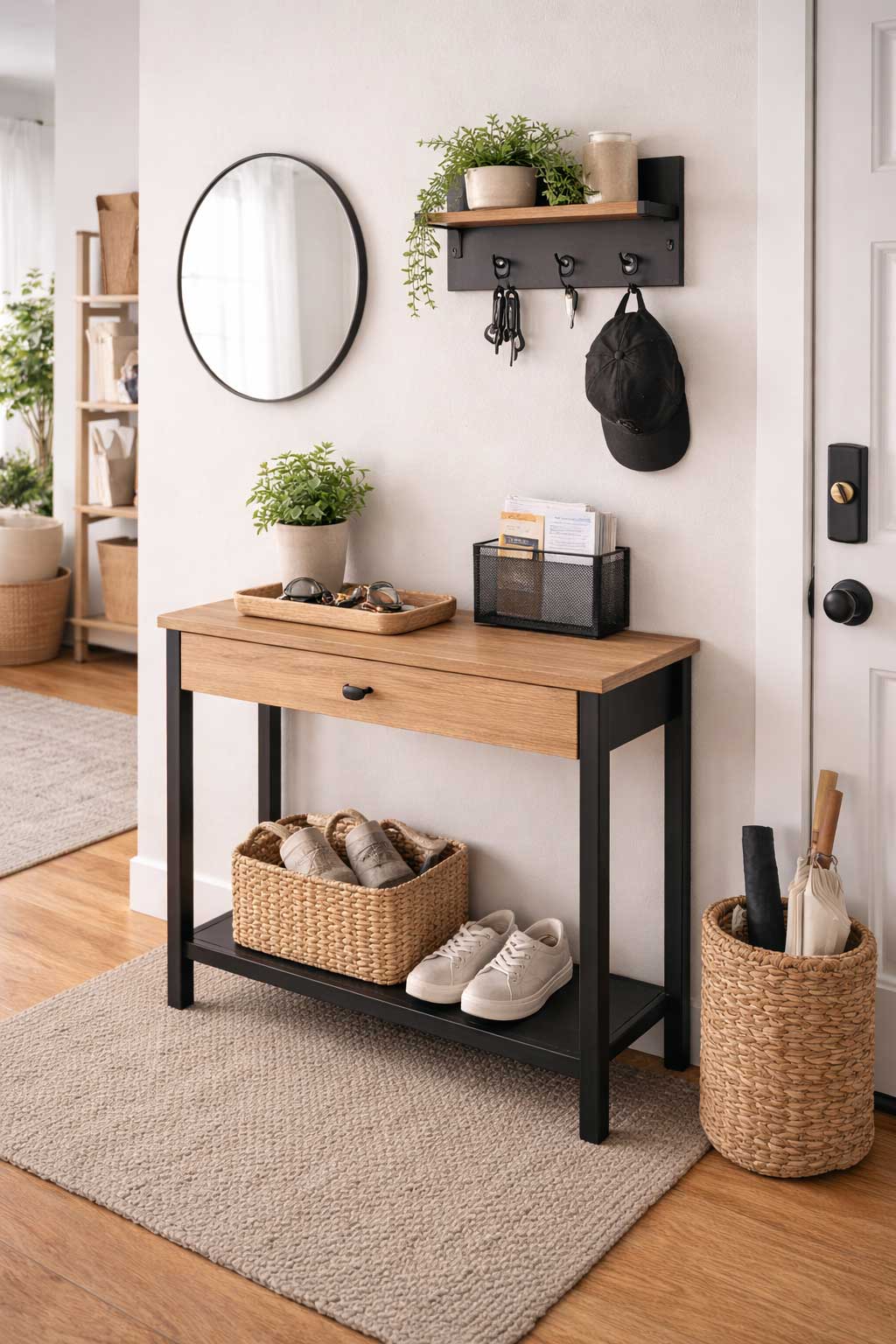
Hooks are often the simplest answer for very tight layouts. They take up little space and keep bags off the floor. They work especially well when only one or two bags per person need to stay out at a time. The downside is that too many hooks can make the wall look overloaded fast.
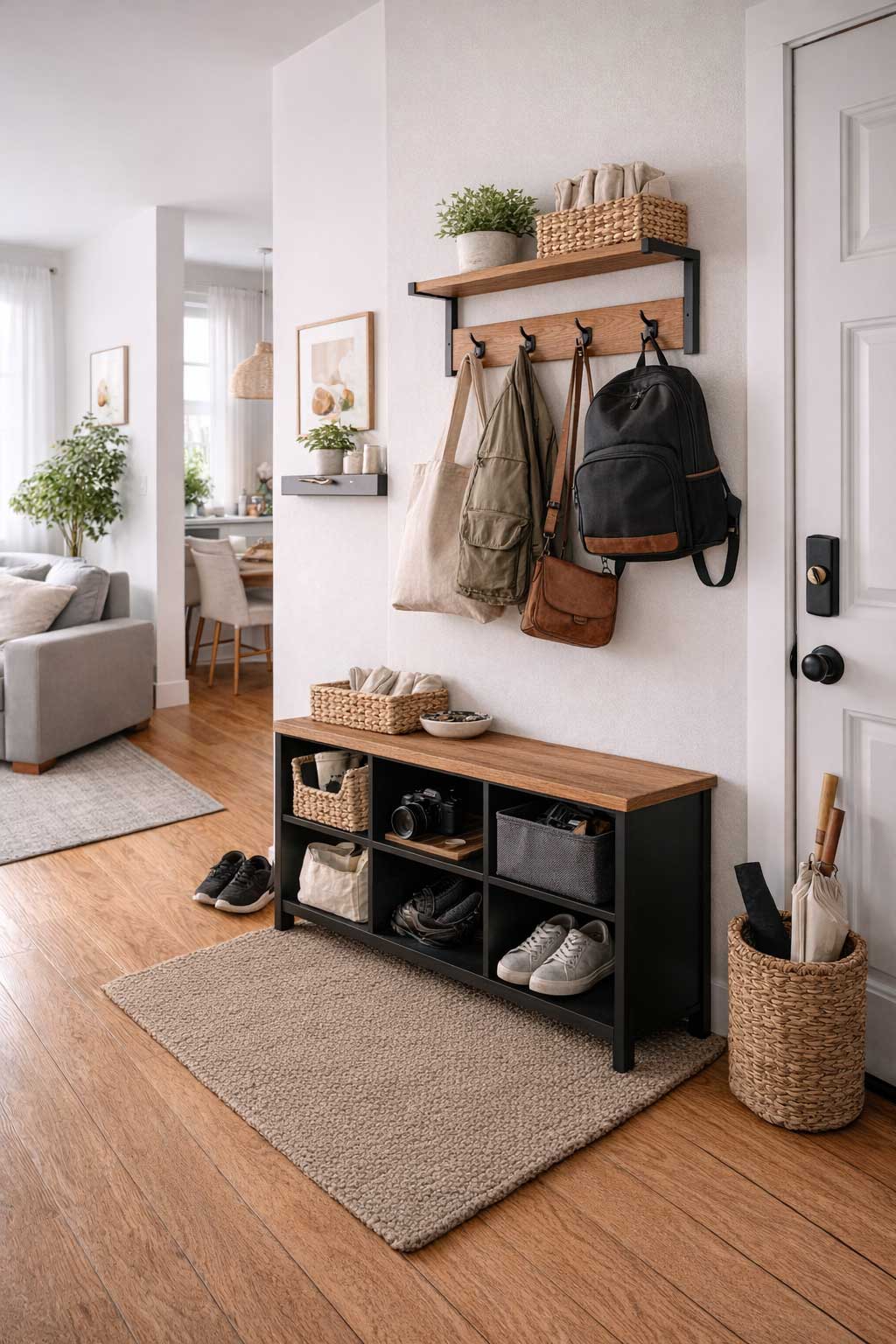
Cubbies are a great option for shared apartments because they create defined sections. Instead of one pile of bags competing for the same hook space, each person or bag type can have its own compartment. This setup usually feels more controlled when the household has multiple backpacks, purses, or totes in daily use.
A bench with storage works well when the entryway needs to do more than one job. In many apartments, this kind of piece creates a place for bags while also adding seating, shoe storage, or a drop zone for smaller items. It is a good fit when the front door area needs more structure overall.
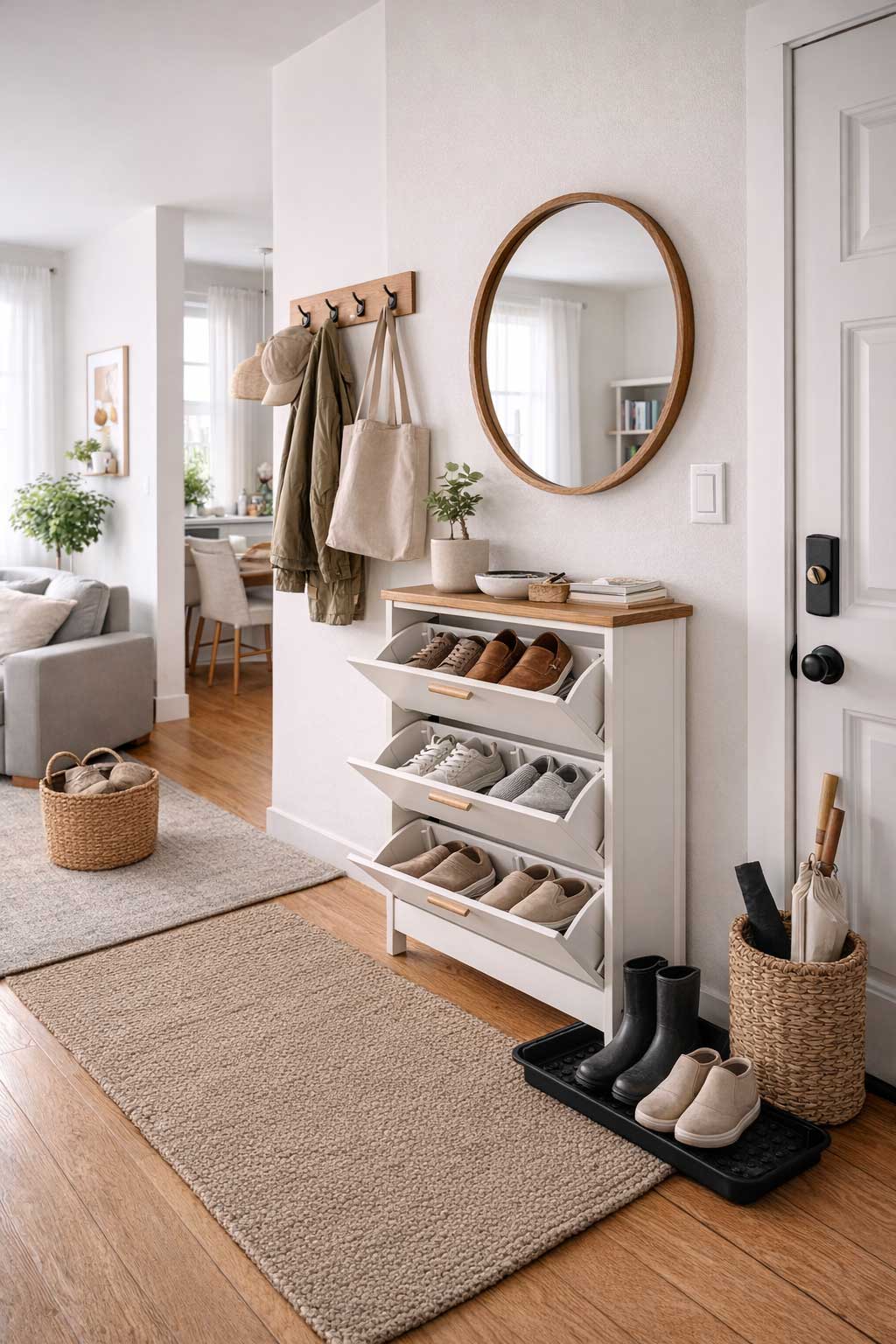
Compact cabinets are often best when visual clutter is the real problem. If the front door opens right into the living room, a closed piece can help the apartment feel calmer because the bag zone stays less visible.
Wall-mounted organizers work well when floor space is especially limited. These can be useful in narrow apartments where every inch matters, but they need to stay edited so the wall does not become a tangle of straps and totes.
The most important thing is choosing one main storage style that fits your layout. Too many mixed systems usually make the entrance feel busier instead of better organized.
Best Bag and Backpack Setups for Common Small Apartment Layouts
If your apartment has no foyer and the front door opens directly into the main living area, bag storage needs to look intentional. In this layout, visible clutter stands out immediately, so cleaner-looking hooks, cubbies, or an entry bench usually work better than a random collection of bags piled near the door. Limiting how many bags stay out at once matters a lot here.
If you have a narrow hallway by the front door, depth becomes the biggest concern. Large benches or baskets can quickly tighten the walkway. In this kind of layout, wall-based storage or a very slim organizer is usually the better choice because it keeps bags off the floor without narrowing the path.
If you live in a studio apartment, bag storage has to work visually as well as practically. Since the entry area may be visible from the bed, sofa, and kitchen, too many hanging bags can make the whole apartment feel cluttered. In studios, a more edited setup with fewer visible items usually works best. A compact entry organizer or a small cubby solution often feels more controlled than a wall full of hooks.
If the front door opens directly into the living room, it helps to treat the bag zone like part of the room instead of a utility corner. A piece that matches the apartment’s furniture style usually looks better than something that feels temporary or overly functional. That keeps the entry area useful without making it look disconnected from the rest of the home.
Keep Bags Off the Floor Without Overloading the Wall
Getting bags off the floor makes a huge difference in a small apartment. Floor piles make the entryway feel cluttered faster than almost anything else. They also make the area harder to clean and harder to walk through.
At the same time, wall storage can go too far. When every available hook holds a bulky backpack, tote, or purse, the entryway can start looking visually heavy. This is especially true in apartments where the entrance is visible from the living room or kitchen.
The best balance is usually somewhere in the middle. Keep the floor clear, but limit how many bags stay on display. A few strong hooks, one cubby unit, or a bench with compartments usually works better than trying to hang every bag you own on the wall. In most small apartments, controlled visibility is what makes the setup feel organized rather than crowded.
If you need a wall-based option for everyday carry items, browse Best Wall Hooks for Small Apartment Entryways.
Separate Backpacks, Everyday Bags, and Reusable Totes
One giant bag pile almost never works. Backpacks, work totes, purses, gym bags, and reusable grocery bags all behave differently, so they usually need at least some separation.
Backpacks are bulkier and heavier than most bags, so they often do best on sturdier hooks or in deeper cubbies. Everyday bags like purses or work totes usually need the easiest access because they are used most often. Reusable shopping bags tend to multiply quickly, so they should usually be grouped together in one basket, bin, or dedicated hook instead of hanging loose everywhere.
This kind of category-based storage makes the whole entryway easier to maintain. It also helps you find what you need faster because the system has more structure. When each bag type has a rough zone, the front door area stops feeling like a catch-all and starts functioning more like an organized drop zone.
Make Shared Bag Storage Work in Small Apartments
Shared bag storage breaks down fast when there are no clear limits. In apartments with two or more people, one person’s backpack, work tote, purse, and gym bag can easily take over the whole entrance unless the setup is defined.
A better approach is to assign space. That might mean one hook per person, one cubby section per person, or a bench with clearly divided compartments. The details do not have to be rigid, but there should be enough structure that everyone understands where their bags belong.
It also helps to separate everyday bags from overflow. The entryway should support what each person grabs most often, not act as permanent storage for every bag in the household. When the front-door zone is limited to routine-use items, shared storage becomes much easier to keep neat.
If your apartment needs more structured compartments near the entrance, check out Best Entryway Cubbies for Small Spaces.
Mistakes to Avoid When Organizing Bags Near the Entryway
One common mistake is keeping too many bags by the door. This makes even a decent storage solution feel overloaded. A better system usually comes from editing the number of bags out at one time, not just adding more hooks.
Another mistake is using weak or decorative hooks for heavy bags. Backpacks, laptop bags, and loaded totes can be much heavier than they look. If the hardware is not sturdy enough, the system quickly becomes annoying and unreliable.
Letting bags pile on the floor is another obvious but important problem. Even a good storage setup fails if the easiest habit is still dropping everything by the door. That is why accessibility matters so much. The system needs to be quick and natural to use.
Mixing bags, coats, mail, shoes, and small clutter into one undefined zone is another issue. When too many categories overlap, the entryway loses structure fast. Finally, avoid any setup that spills into the walkway. Bag storage should make the front door area easier to use, not more frustrating to move through.
Products That Make Bag Storage Easier Near the Front Door
The best bag-storage products are the ones that solve your actual entry problem clearly. Some apartments do best with strong hooks that keep a few everyday bags accessible. Others work better with cubbies or benches that create more defined compartments. In some layouts, a compact hall tree can make sense because it handles coats, bags, and shoes in one footprint.
If your entryway needs a fuller furniture-based setup, take a look at Best Hall Trees for Small Apartments.
The right option depends on how many bags need to stay near the door, how visible the area is from the rest of the apartment, and how much floor space you can realistically give to the setup. In small apartments, the best bag-storage solution is usually the one that keeps things simple enough to maintain.
Final Thoughts on Organizing Bags and Backpacks Near a Small Apartment Entryway
Organizing bags and backpacks near a small apartment entryway works best when the system stays simple, defined, and easy to use. You do not need to keep every bag by the front door. You just need to keep the ones you use most often accessible without letting them turn the entrance into a clutter zone.
The strongest setups usually come from a few smart choices: limit the number of bags near the door, choose one storage style that fits the layout, and separate major bag categories enough that they do not all collapse into one pile. When those pieces come together, the entryway feels cleaner, more functional, and easier to reset every day.
A small apartment entry does not need much space to work well. It just needs a bag-storage setup that matches real daily habits.
FAQ
Where should bags go in a small apartment entryway?
Bags in a small apartment entryway should usually go in one defined storage zone near the front door, such as hooks, cubbies, a storage bench, or a compact organizer that keeps them off the floor and easy to grab.
How do you store backpacks by the front door without making a mess?
Store backpacks by the front door by using sturdy hooks, deeper cubbies, or a structured entryway organizer so they do not end up piled on the floor or mixed with other clutter.
Are hooks or cubbies better for entryway bag storage?
Hooks are usually better for tighter layouts and smaller numbers of bags, while cubbies work better when multiple people share the entryway or when you want more defined sections.
How many bags should stay near the door?
Only the bags you use regularly should stay near the door. In most small apartments, that means daily-use bags rather than every tote, purse, and backpack in the household.
What is the best way to organize reusable shopping bags near the entrance?
The best way to organize reusable shopping bags near the entrance is to keep them grouped together in one basket, bin, or dedicated hook area instead of letting them hang loose with everyday bags.