How to Set Up a Small Apartment Drop Zone Without Visual Clutter
Setting up a drop zone in a small apartment can help control daily clutter fast, but it can also backfire if the setup starts looking messy itself. Keys, wallets, sunglasses, mail, bags, and small everyday items need a place to land near the front door, but in a smaller apartment, too many trays, hooks, baskets, and bins can make the entryway feel busier instead of better.
The good news is that a small apartment drop zone does not need to be big or complicated to work well. The best setups usually come from identifying what actually lands near the door, limiting the number of storage pieces, and choosing solutions that keep daily essentials contained without creating more visual noise. With the right approach, you can create a practical entryway landing zone that supports your routine while still keeping the apartment calm and uncluttered.
For broader front-door organization ideas, explore our Best Entryway Storage Solutions for Small Apartments guide.
If you want more dedicated landing-zone products, check out Best Drop Zone Organizers for Small Apartment Entryways.
For smaller homes that need a tighter setup, browse Best Entryway Organizers for Studio Apartments.
This guide is part of our Small Apartment Entryway Solutions collection.
Quick Answer
If you want to set up a small apartment drop zone without visual clutter, the best approach is to give only your most-used daily items a defined home near the door and keep the setup as edited as possible. In most apartments, that means one clear landing surface, one contained storage solution for loose items, and just enough structure to support your routine without covering the entryway in baskets, trays, and hooks.
A good small-apartment drop zone usually works best when it includes:
- space for only the items you use every day
- one clear catch-all area for small essentials
- limited visible storage
- a layout that keeps counters and floors clear
- a setup that is easy to reset quickly
Why Small Apartment Drop Zones Get Messy So Easily
Drop zones are useful because they catch the little items that would otherwise spread across the apartment. They are also easy to overdo. In a small apartment, a few extra trays, piles of mail, reusable bags, charging cords, loose keys, and everyday carry items can make the entryway feel cluttered almost immediately.
Part of the problem is that drop zones deal with the most random categories in the home. Shoes usually go with shoes. Towels usually go with towels. But a drop zone catches everything from sunglasses and wallets to outgoing packages and dog-walking supplies. Without limits, it quickly stops functioning like an organized landing zone and starts acting like a holding pen for whatever you do not want to deal with yet.
This is why a good drop zone in a small apartment needs more editing than people expect. The goal is not to create a mini command center loaded with organizers. The goal is to make the front-door routine easier without letting the solution become a new source of visual clutter.
Start by Identifying What Actually Lands Near the Door
The best drop zone starts with reality, not inspiration photos. Before setting anything up, it helps to pay attention to what actually lands near your front door every day. In some apartments, that means keys, wallets, sunglasses, and mail. In others, it includes work badges, dog leashes, chapstick, earbuds, and reusable shopping bags.
This matters because the most effective drop zones are built around routine. If you never sort mail near the entrance, a giant mail station is probably unnecessary. If keys are constantly getting lost, that should be one of the first things the setup solves. If everyone in the household drops small items on the kitchen counter because the entry area has nowhere for them to go, the drop zone should fix that specific problem.
A few days of paying attention usually tells you everything you need to know. What do you set down first when you walk in? What items always seem to wander away from the front door? What ends up in a pile by the end of the week? Those are the categories that deserve space in the drop zone.
Decide What Deserves a Spot in the Drop Zone and What Does Not
One of the biggest reasons drop zones get visually cluttered is that they try to hold too much. In a small apartment, a drop zone should support the items you use constantly, not become overflow storage for every loose object in the home.
Daily essentials deserve space there. Keys, wallets, sunglasses, work badges, transit cards, small mail piles, and similar grab-and-go items usually make sense. Bags may deserve nearby storage too, but they should not automatically be part of the same surface where tiny essentials live. The same goes for shoes and coats. Those may belong near the entrance, but they usually need their own storage zones rather than taking over the drop zone itself.
What does not deserve a permanent spot? Random receipts, unopened packages, backup cords, old shopping lists, rarely used accessories, and paper clutter that keeps getting postponed. If the drop zone becomes a place for delayed decisions, it will start looking messy fast.
The best way to keep it clean is to treat the drop zone like premium space. Only the items that support your actual front-door routine should live there.
Choose the Best Drop Zone Format for Your Layout
The best drop zone format depends on how much room you have and how visible the entry area is from the rest of the apartment.
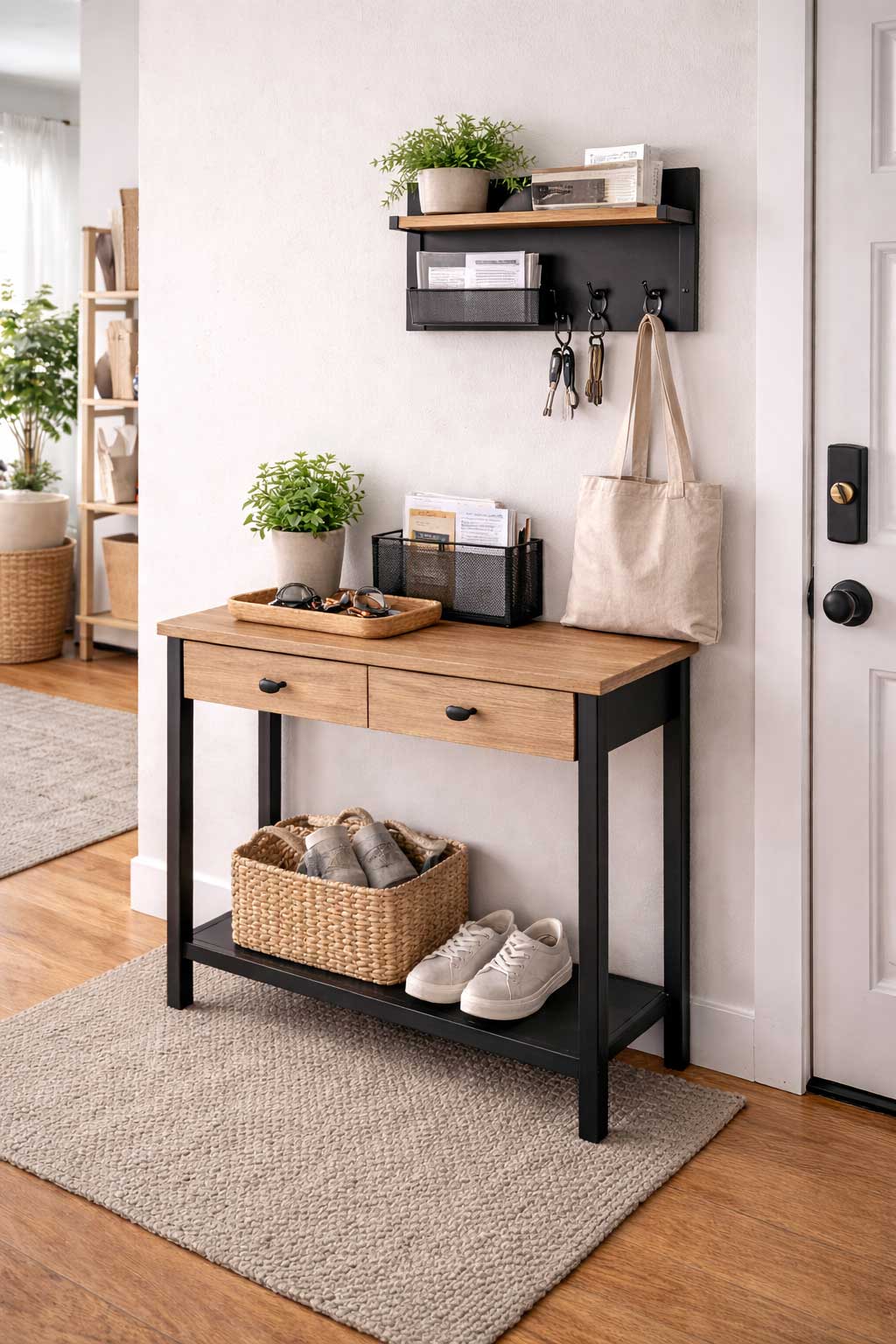
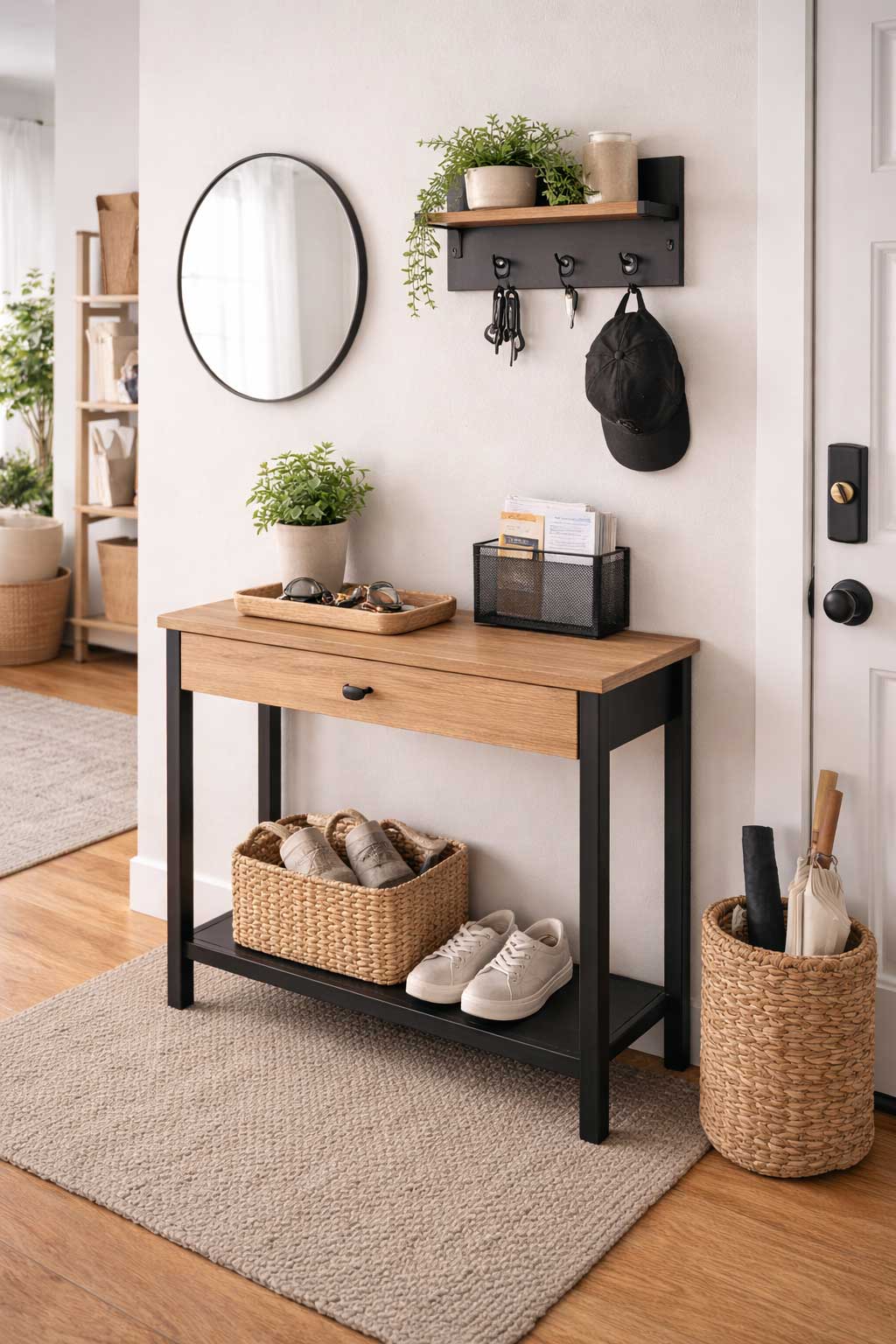
A narrow console or slim shelf works well when the front door opens into the living room and the drop zone needs to look intentional. It creates a simple landing surface without overwhelming the room.
A compact wall shelf can work especially well in tight hallways. It keeps essentials off the floor and off nearby counters while taking up very little space.
A drawer-based setup is often best for apartments where visual calm matters most. If the entrance is highly visible, even a neat pile of small items can make the room feel busier. A shallow drawer helps hide that kind of clutter while still keeping essentials easy to access.
A tray-and-hook combo can work well in minimal entryways. This setup usually makes sense when you only need a place for keys, mail, and one or two grab-and-go items.
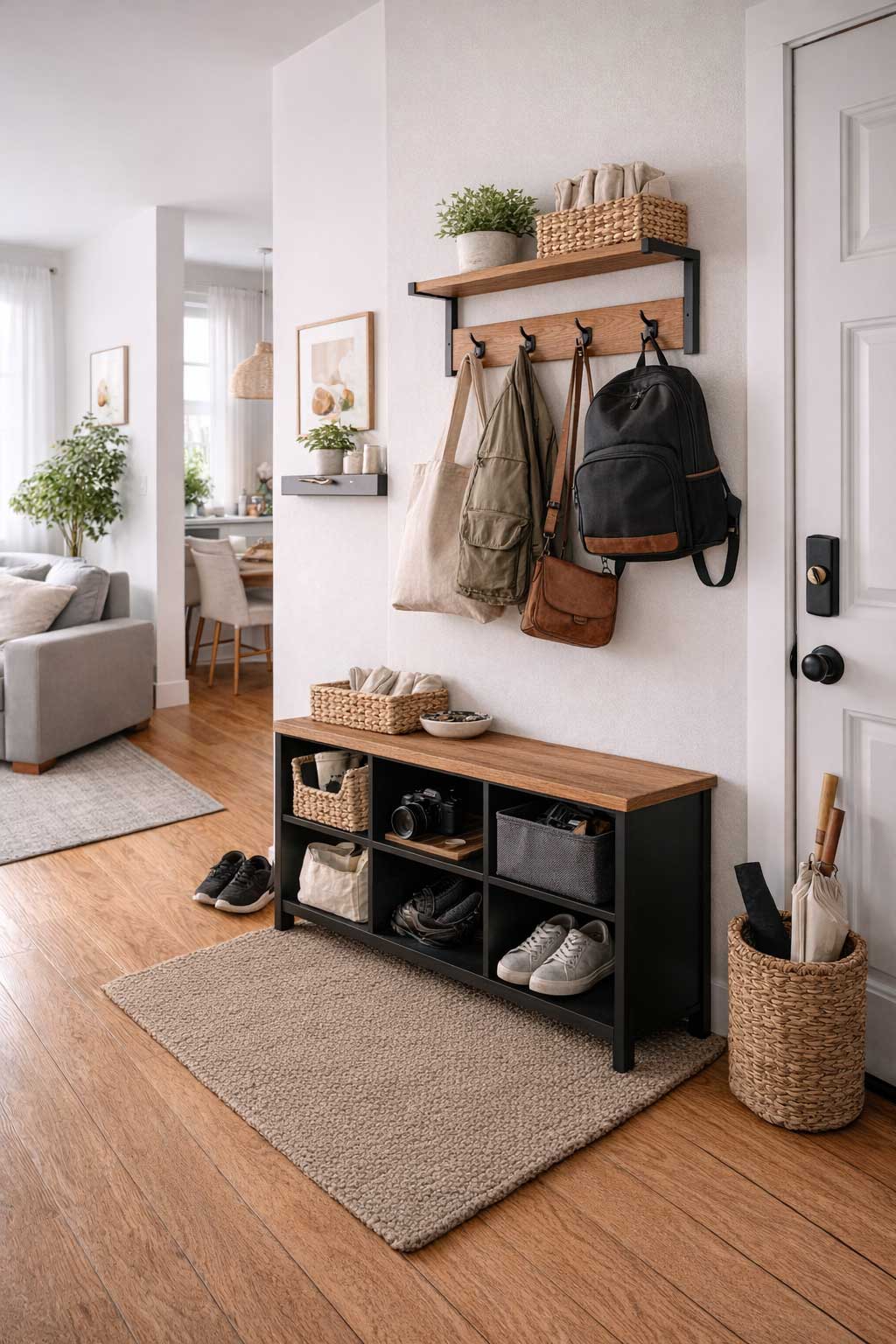
A cubby or cabinet setup is often better for households that need more structure. This can be helpful in shared apartments where several people need room for daily items but the entrance still needs to stay controlled.
The key is choosing a format that matches the layout instead of forcing a bigger system than the space can handle.
Best Drop Zone Setups for Common Small Apartment Layouts
If your apartment has no foyer and the front door opens into the main living area, the drop zone should feel like part of the room rather than a pile of utility items by the door. In this kind of layout, a cleaner-looking console, cabinet, or wall shelf usually works better than a large collection of visible containers.
If you have a narrow hallway near the front door, depth matters more than width. Bulky benches, deep baskets, or wide trays can make the entry feel tighter than it already is. A shallow wall shelf, key holder, or slim organizer usually works better because it keeps the path clear.
If you live in a studio apartment, visual control is even more important. Since the entry area may be visible from almost everywhere, the drop zone needs to stay simple. Fewer pieces and more contained storage usually work better than a more elaborate setup full of open organizers.
If the front door opens directly into the kitchen, the drop zone should stop clutter from spilling onto kitchen counters. In this layout, even a small shelf, tray, or cabinet near the door can make a big difference because it gives keys, mail, and pocket items somewhere to go before they migrate into food-prep space.
Keep the Drop Zone Functional Without Covering It in Containers
One of the easiest ways to create visual clutter is to add too many organizing pieces. A basket for this, a tray for that, a bowl for coins, a dish for keys, a small bin for mail, a second bin for outgoing mail, and suddenly the drop zone looks more cluttered than the items it was supposed to organize.
That is why a smaller number of more purposeful pieces usually works better. In many apartments, one tray and one hidden storage element are enough. Or one shelf and one mail organizer. Or one drawer and one hook. The goal is not to label every possible item category. It is to create enough structure that essentials stop floating around.
This is especially important when the entrance is visible from the living room. Too many containers, even matching ones, can make the apartment feel busy. A clean drop zone usually looks better because it uses less, not because it adds more.
If you want a more focused setup for tiny essentials, take a look at Best Key Holders for Apartment Entryways.
Give Keys, Mail, and Small Essentials Their Own Defined Spots
The little items are often what make the biggest visual mess. A single pair of sunglasses, two envelopes, a wallet, and loose keys can make a surface look cluttered immediately because the objects are small, irregular, and easy to scatter.
This is where small category-based structure helps. Keys should have one obvious place. Mail should have one controlled spot rather than spreading across the nearest counter. Wallets, earbuds, and other daily essentials should either go into one tray or into a shallow drawer that keeps them from floating around.
The point is not to create a complicated sorting system. It is to make sure the most common small items do not compete for the same undefined surface. Once that happens, the drop zone starts to feel calmer and more functional.
If paper clutter is part of the problem, browse Best Mail Organizers for Apartment Entryways for more targeted solutions.
Make Shared Drop Zones Work in Small Apartments
A shared drop zone can get messy even faster than a single-person one because the same surface suddenly has to handle double the keys, double the mail, and twice as many little everyday items. Without some structure, it usually turns into one mixed pile.
The best fix is to create light boundaries. That might mean one side of the tray for one person and one side for the other. It might mean two hooks, two compartments, or a cabinet with clearly understood sections. The goal does not need to be rigid, but it should be clear enough that everyone knows where their things go.
It also helps to limit duplicates. If both people have reusable bags, sunglasses cases, and other similar items near the entrance, the drop zone can get overloaded quickly. In many small apartments, only the most-used versions of those items should stay in the entry area while backup items live elsewhere.
If your household needs more divided storage near the entrance, see Best Entryway Cubbies for Small Spaces.
Mistakes to Avoid When Setting Up a Drop Zone Without Visual Clutter
One of the biggest mistakes is putting too many items in the drop zone. Once it starts holding everything that comes through the door, it stops being useful and starts becoming another clutter surface.
Another mistake is using too many visible containers. Even when each organizer has a purpose, the overall result can still look busy. In a small apartment, visual simplicity matters just as much as function.
Letting mail pile up is another common problem. Paper clutter spreads fast and makes the whole setup feel neglected. A drop zone can hold incoming mail, but only if it is regularly sorted and kept under control.
Mixing too many categories together is another issue. Shoes, coats, bags, keys, and mail all need some relationship to the entrance, but they do not all belong in one pile or on one small surface. Finally, avoid any setup that spills into the walkway or nearest countertop. A good drop zone should reduce clutter migration, not redirect it somewhere else.
Products That Make a Small Apartment Drop Zone Easier to Manage
The best products for a small apartment drop zone are the ones that help daily essentials land in one controlled place without making the entryway feel heavier. Some apartments do best with a narrow wall shelf or small console. Others work better with a simple key holder and a mail organizer. In tighter spaces, a shallow cabinet or cubby may make more sense because it keeps little items tucked away.
If your entry area needs more furniture-based support, revisit Best Entryway Storage Solutions for Small Apartments for broader ideas that can work alongside a smaller drop zone.
The right setup depends on how much space you have, how visible the front door area is, and how many daily items truly need to land there. In small apartments, the best drop zones are usually the ones that stay easy to reset.
Final Thoughts on Setting Up a Small Apartment Drop Zone Without Visual Clutter
A good drop zone should make a small apartment feel calmer, not busier. That usually means focusing on the few items that actually need to land near the front door and resisting the urge to turn the area into a mini storage station for everything.
The strongest setups are usually simple. They use one defined landing surface, keep small essentials contained, and avoid overloading the entry with too many organizers. When that balance is right, the drop zone helps the apartment function better without adding more visual noise.
In a small apartment, less structure often works better than more. The goal is not to organize every possible thing near the entrance. It is to make the front-door routine easier while keeping the space looking clean and controlled.
FAQ
What should go in a small apartment drop zone?
A small apartment drop zone should usually hold daily essentials like keys, wallets, sunglasses, work badges, and a small amount of incoming mail rather than acting as overflow storage for random clutter.
How do you keep a drop zone from looking cluttered?
Keep a drop zone from looking cluttered by limiting what stays there, using fewer visible containers, giving small essentials defined spots, and resetting the area regularly.
Where should you put a drop zone if your apartment has no foyer?
If your apartment has no foyer, the best place for a drop zone is usually a small area near the front door, such as a wall shelf, narrow console, shallow cabinet, or other compact landing surface that does not block movement.
How do you organize keys and mail near the front door?
Organize keys and mail near the front door by giving each category its own defined place, such as a key holder, tray, shallow drawer, or compact mail organizer, so they do not spread across nearby counters.
What furniture works best for a small apartment drop zone?
The best furniture for a small apartment drop zone usually includes narrow consoles, shallow cabinets, wall shelves, compact cubbies, and other slim entry pieces that create structure without taking over the space.