How to Organize Mail and Keys in a Small Apartment Entryway
Organizing mail and keys in a small apartment entryway can feel harder than it should. These are small items, but they create clutter fast when there is no clear place for them to go. Keys get dropped on kitchen counters, mail stacks up on nearby tables, and the area near the front door starts collecting random paper and pocket items instead of staying clean and functional.
The good news is that you do not need a large foyer or a complicated setup to keep mail and keys under control. In most small apartments, the best system comes from giving each category a clear home, limiting how much paper stays in the entryway, and choosing storage that fits the layout without adding more visual clutter. With the right approach, the front door area can stay practical, easy to reset, and much less stressful to manage.
For broader front-door organization ideas, explore our Best Entryway Storage Solutions for Small Apartments guide.
If you want more dedicated solutions for paper clutter, check out Best Mail Organizers for Apartment Entryways.
For more focused storage for everyday essentials, browse Best Key Holders for Apartment Entryways.
This guide is part of our Small Apartment Entryway Solutions collection.
Quick Answer
If you want to organize mail and keys in a small apartment entryway, the best approach is to give both categories clearly defined homes near the front door and keep the setup as simple as possible. In most apartments, that means using a key holder, tray, shelf, wall organizer, or small drawer-based setup that keeps keys easy to grab and prevents mail from spreading across nearby surfaces.
A good mail-and-keys setup usually works best when it includes:
- one obvious place for keys every day
- one controlled spot for incoming mail
- minimal visible paper clutter
- a layout that keeps counters and tables clear
- a system that is easy to sort and reset quickly
Why Mail and Keys Create Clutter So Quickly in Small Apartments
Mail and keys create more clutter than their size would suggest because they move through your routine constantly. Keys come in and out every day, which means they are easy to drop on the nearest available surface instead of putting them somewhere intentional. Mail is even worse because it keeps arriving whether you have dealt with the last stack or not.
In a small apartment, these categories also tend to spread beyond the entryway fast. Keys land on the kitchen counter, envelopes collect on the dining table, receipts pile up on a side table, and suddenly several rooms are carrying front-door clutter. The problem is not just that these items are small. It is that they are easy to postpone.
That is why a good entryway setup matters. When keys and mail have one defined landing zone near the door, the rest of the apartment is much less likely to become a backup drop zone.
Start by Identifying What Actually Lands Near the Door
The best setup starts with your real habits, not with a picture-perfect entryway idea. In some apartments, the main problem is lost keys. In others, it is unopened mail, sunglasses, work badges, dog-walking items, receipts, or the loose paper that falls out of bags and pockets at the end of the day.
It helps to pay attention for a few days. What do you set down the second you walk in? What keeps ending up on a kitchen counter instead of staying near the door? What do you find yourself hunting for when leaving in the morning? Those categories deserve space in the entryway.
This step matters because the best mail-and-keys setup is usually compact. It cannot solve every organization problem in the apartment. It needs to solve the specific front-door clutter that keeps showing up in your real routine.
Decide What Should Stay in the Entryway and What Should Not
One reason entryways get messy is that they are expected to hold too much. In a small apartment, the front door area should support active daily items, not become a paper dump or a junk drawer that happens to sit near the entrance.
Keys should stay there. A small amount of incoming mail can stay there too. Wallets, sunglasses, work badges, and similar daily essentials may also make sense. But once the entryway starts holding old receipts, store flyers, random cords, unopened packages, and paper that has been sitting there for a week, the setup stops working.
The easiest way to keep the area clean is to treat entryway space like premium space. If an item is not part of your daily leave-and-return routine, it probably does not need a permanent place by the front door.
Choose the Best Mail-and-Keys Setup for Your Layout
The best format depends on how your apartment is shaped and how visible the entryway is from the rest of the home.
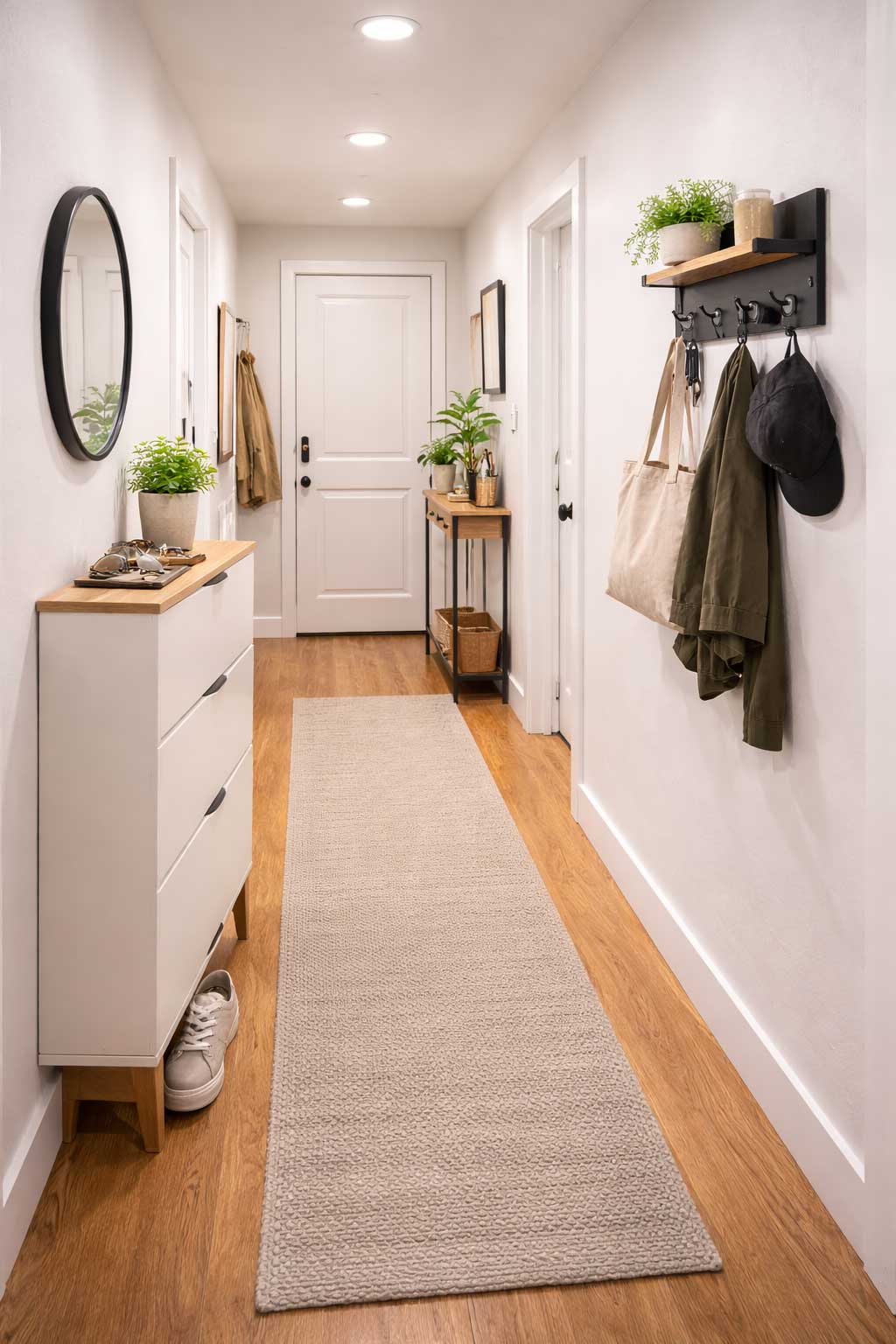
A wall-mounted key holder and mail sorter usually works well in tight hallways because it keeps essentials off the floor and uses very little space. This setup is especially practical when the entry area is narrow and there is no room for furniture.
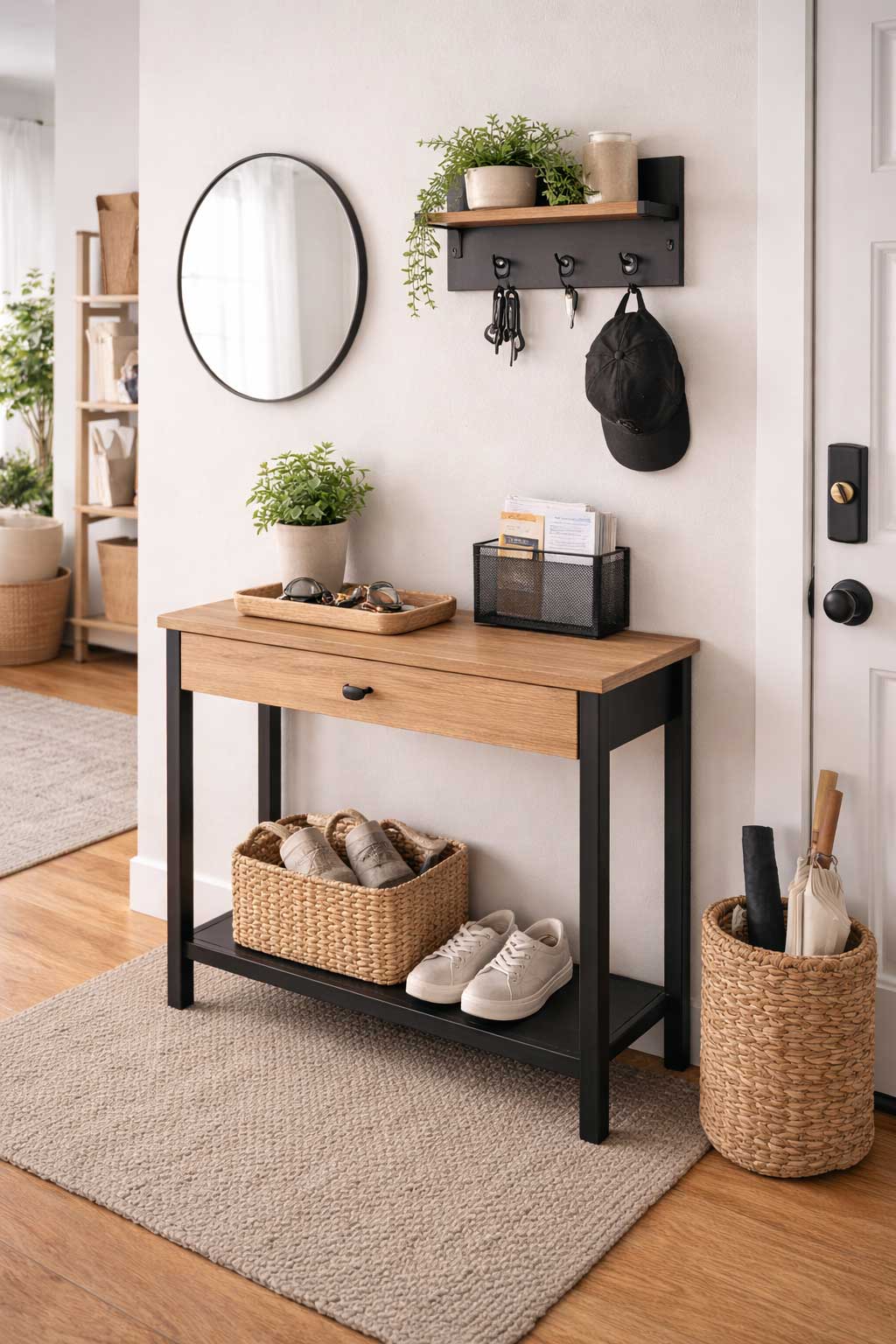
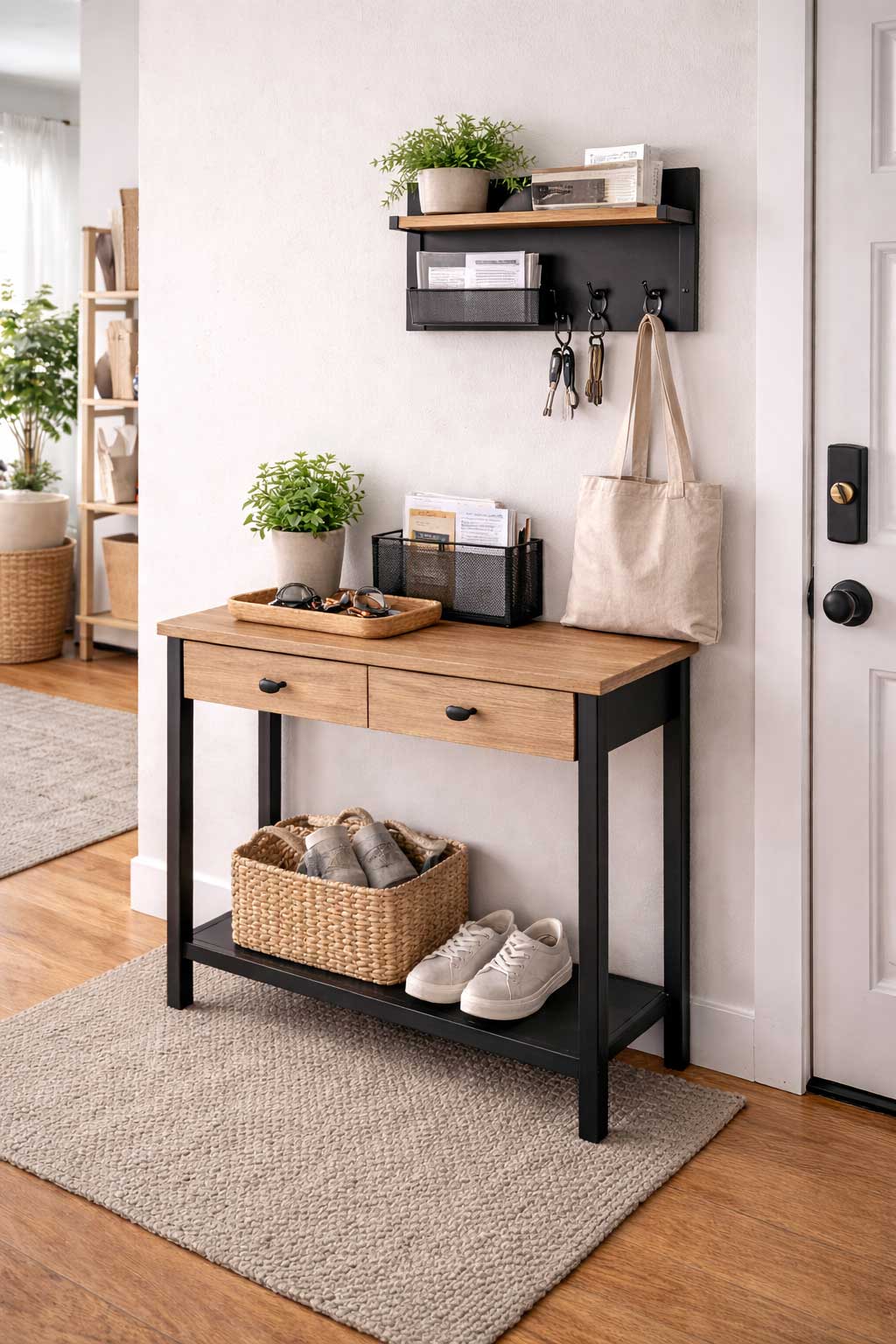
A narrow console with a tray can work well when the front door opens into the living room. It creates a small landing surface that feels intentional instead of improvised. This kind of setup usually looks better when the entryway is part of the main room.
A shallow drawer setup is often best when visual clutter is the bigger issue. Even a tidy stack of envelopes and a few small items can make an entry look busy. A shallow drawer helps hide those categories while still keeping them easy to access.
A shelf-and-hook combo is a good minimal option when you only need room for keys, mail, and one or two small items. It works especially well in simpler apartments where the front-door setup needs to stay light.
A cabinet or cubby setup can make more sense in shared households. If more than one person needs storage near the entrance, a little extra structure can make the difference between an organized drop zone and one mixed pile of stuff.
The key is choosing one simple format that matches the space instead of stacking too many organizers together.
Best Mail and Key Setups for Common Small Apartment Layouts
If your apartment has no foyer and the front door opens right into the living space, the entry setup should look like it belongs there. A clean console, cabinet, or small shelf usually works better than a collection of mismatched trays and bins. In this layout, visual control matters because the entryway becomes part of the room.
If you have a narrow hallway by the front door, depth matters more than width. A bulky table or oversized basket can make the entrance feel cramped right away. In that kind of space, a wall-mounted organizer or shallow shelf often works best because it keeps essentials within reach without tightening the walkway.
If you live in a studio apartment, the entry area is usually visible from almost everywhere. That means a little clutter looks bigger than it would in a larger home. In studios, a more edited setup with fewer visible items usually works best. A shelf, key holder, or small cabinet tends to feel calmer than an elaborate command-center approach.
If the front door opens into the kitchen, the goal is to stop mail and keys from migrating to counters. In that layout, even a very small drop zone near the entrance can make a big difference because it keeps paper and pocket items out of food-prep space.
If you want more compact solutions for a highly visible entry area, browse Best Entryway Organizers for Studio Apartments.
Keep Paper Clutter From Taking Over the Entryway
Mail is often the hardest part of the system because it keeps building unless you actively control it. Keys usually need one home and stay manageable after that. Mail can turn into a pile in a matter of days.
The best way to keep paper clutter under control is to limit how much stays in the entryway at one time. Incoming mail should have one defined spot, but that spot should not become permanent storage for old envelopes, ads, catalogs, and random receipts. A small sorter, tray, or slot works well because it creates a boundary. Once the space is full, it is time to deal with it.
It also helps to sort mail quickly. The faster junk mail gets recycled and important papers get moved where they actually belong, the easier it is to keep the entryway looking clean. In a small apartment, even one neglected paper stack can make the front door area feel cluttered.
If you need a more structured landing-zone setup overall, take a look at Best Drop Zone Organizers for Small Apartment Entryways.
Give Keys, Wallets, and Small Essentials Separate Spots
Mail and keys often end up in the same pile, but they usually work better when they are slightly separated. Keys need instant access. Wallets, sunglasses, and earbuds often need a small catch-all. Mail needs a place to sit without mixing with everything else.
That is why even a little category separation helps. Keys can live on hooks or in one tray section. Wallets and pocket items can sit in a small bowl or tray. Mail can go into one vertical organizer, shallow drawer, or sorter. This does not need to be elaborate. It just needs to keep the most common small items from collapsing into one random surface pile.
The simpler the categories, the easier the system is to maintain. In most small apartments, one obvious spot for keys and one controlled spot for mail do most of the work.
Make Shared Mail and Key Storage Work in Small Apartments
Shared entryways get messy faster because the same small surface suddenly needs to handle multiple sets of keys, multiple wallets, and a larger flow of paper. Without boundaries, the whole thing turns into one mixed pile quickly.
A better approach is to assign light structure. That might mean one hook per person, one side of the tray for each person, or a small cabinet or cubby arrangement that creates obvious divisions. The system does not need to be rigid, but it should be clear enough that everyone knows where their daily items belong.
This becomes even more helpful when one person tends to carry more small items than the other. Without structure, the entryway often ends up reflecting the messiest routine in the household. A little separation keeps the setup usable for everyone.
If your household needs more divided entry storage, see Best Entryway Cubbies for Small Spaces.
Mistakes to Avoid When Organizing Mail and Keys Near the Front Door
One common mistake is letting unopened mail pile up. Even a well-designed entryway starts looking cluttered when paper sits there too long. A mail zone only works if it stays limited.
Another mistake is using too many trays or visible containers. Even if every piece has a purpose, the result can still feel visually busy. In a small apartment, fewer organizing pieces usually look and work better than more.
Mixing paper clutter with shoes, coats, bags, and other entry categories is another problem. These items all relate to the front door, but they do not all belong on the same surface. When everything overlaps, the setup loses clarity fast.
The last big mistake is failing to give keys one obvious home. If keys land in a different place every day, the system is not really a system. The best setup makes it easy to put them in the same spot without thinking about it.
Products That Make Mail and Key Storage Easier in Small Apartment Entryways
The most useful products are the ones that match the way your entryway actually functions. Some apartments do best with a wall organizer that handles keys and a small amount of paper in one compact footprint. Others work better with a narrow console and tray setup because the front door opens into a larger room. In some layouts, a shallow drawer or cabinet makes more sense because it keeps everyday clutter from staying visible.
The right solution depends on how much space you have, how visible the entryway is, and how much paper and pocket clutter you are really dealing with. In a small apartment, the best storage usually looks simple because it solves the real problem without overbuilding the setup.
For more broader ideas that support a front-door landing zone, revisit Best Entryway Storage Solutions for Small Apartments.
Final Thoughts on Organizing Mail and Keys in a Small Apartment Entryway
Organizing mail and keys in a small apartment entryway works best when the setup stays simple, intentional, and easy to reset. You do not need a complicated command center to keep these categories under control. You just need a clear place for keys, a limited place for mail, and enough structure to stop both from spreading into the rest of the apartment.
The strongest systems usually come from a few smart choices: keep only active daily items in the entryway, control paper before it piles up, and make sure the setup matches the layout instead of fighting it. When those pieces come together, the front door area feels calmer and more useful every day.
A small apartment entryway does not need much square footage to work well. It just needs a system that is realistic enough to maintain.
FAQ
Where should keys go in a small apartment entryway?
Keys should go in one obvious, repeatable spot near the front door, such as a key holder, tray, hook, or small organizer that makes them easy to grab on the way out.
What is the best way to organize mail near the front door?
The best way to organize mail near the front door is to give it one controlled place, such as a mail sorter, tray, shallow drawer, or small wall organizer, and sort it regularly so it does not pile up.
How do you stop mail from piling up in a small apartment?
Stop mail from piling up by limiting how much stays in the entryway, recycling junk mail quickly, and moving important papers out of the front-door zone once you have reviewed them.
What furniture works best for organizing mail and keys?
The best furniture for organizing mail and keys usually includes narrow consoles, shallow cabinets, wall shelves, and other compact entry pieces that create a small landing zone without taking over the space.
How do you organize mail and keys in an apartment with no foyer?
Organize mail and keys in an apartment with no foyer by creating a compact drop zone near the front door using a shelf, tray, key holder, wall organizer, or narrow furniture piece that keeps both categories contained.