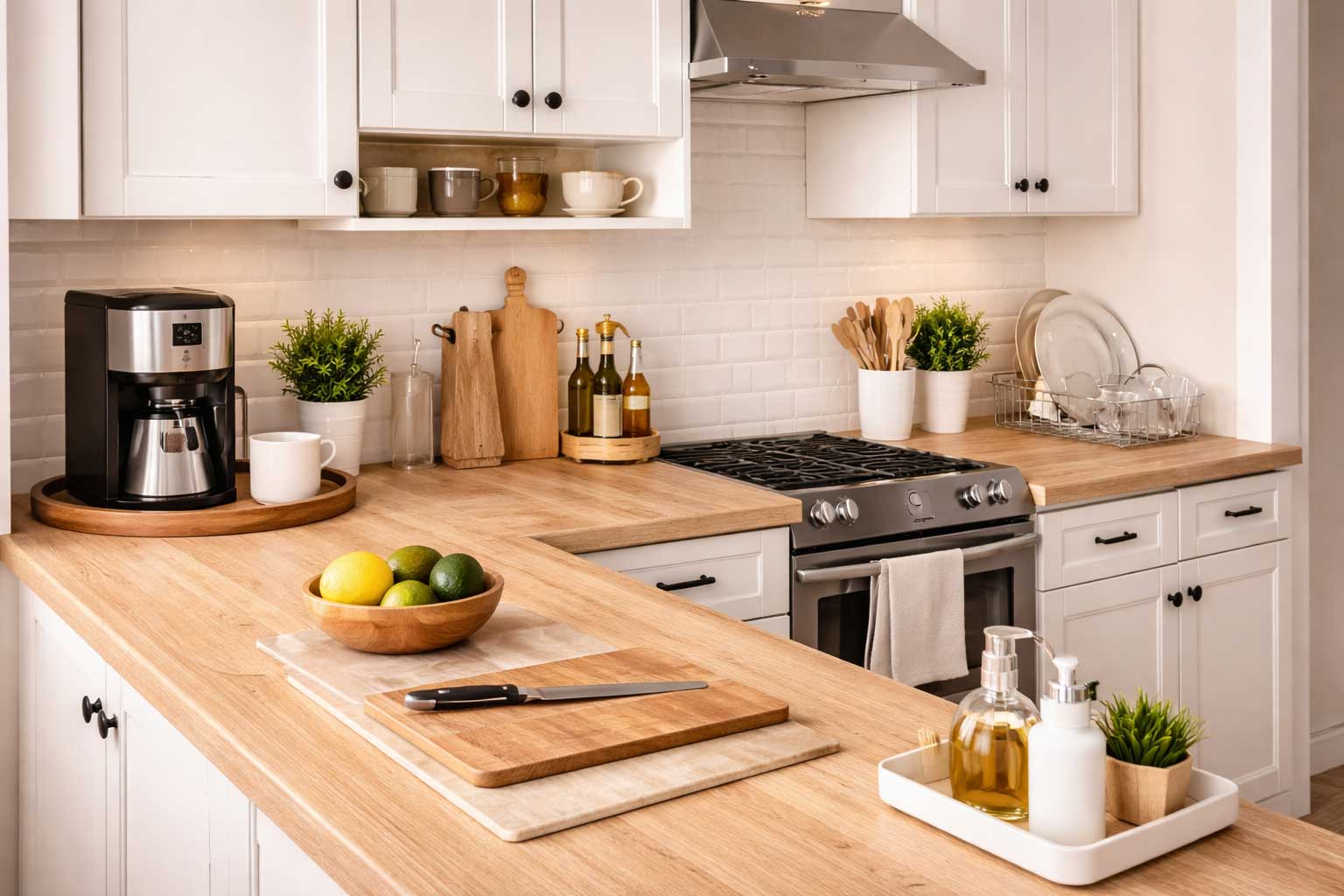

How to Create a Coffee Station in a Small Apartment
A coffee station can make a small apartment kitchen feel more organized, more intentional, and more functional, but only if it is set up the right way. In a compact home, even a small amount of countertop clutter can make the kitchen feel cramped, so the goal is not just to create a cute coffee corner. The goal is to build a station that supports your daily routine without eating up too much prep space or adding another layer of visual noise.
That is why coffee stations work especially well in small apartments when they are treated as storage solutions rather than just décor ideas. A well-planned setup can keep mugs, coffee pods, beans, filters, sweeteners, and equipment contained in one efficient area. Instead of having coffee supplies scattered across cabinets, counters, and drawers, you create one defined zone that feels easy to use and easy to maintain.
In many apartments, the real value of a coffee station is not the coffee maker itself. It is the way the station prevents the rest of the kitchen from becoming cluttered. When the setup is thoughtful, mornings feel smoother, counters stay cleaner, and the kitchen feels more structured overall. That is especially important in small spaces, where even a few extra loose items can make the room feel more crowded than it is.
A coffee station works best when it fits into the bigger kitchen system, which is why it pairs naturally with How to Organize Kitchen Counters in a Small Apartment, How to Organize a Small Pantry Without a Pantry, and Best Compact Coffee Stations for Small Kitchens. In a small apartment, the best coffee setup is the one that adds convenience without creating clutter somewhere else.
Why a coffee station makes sense in a small apartment
In a larger kitchen, coffee supplies can be spread out without causing much trouble. The machine might sit on one counter, mugs might be in an upper cabinet, pods or beans might be in a pantry, and sweeteners might live in a drawer. In a small apartment, that kind of scattered setup becomes annoying fast. Every extra movement matters more when the kitchen is tight, and any repeated daily routine benefits from having its essentials grouped together.
That is one of the biggest reasons a coffee station works so well in a small home. It creates a compact zone for one of the most repeated kitchen habits. If coffee is part of your morning routine every day, it deserves a setup that feels efficient. You should not have to open multiple cabinets and shuffle things around just to make one cup.
A coffee station also helps reduce countertop drift. Without a designated zone, coffee supplies tend to spread. A mug gets left out. A bag of beans stays open near the machine. Filters get shoved beside the toaster. A spoon stays on the counter. The whole setup starts occupying more room than it really needs. A station brings boundaries to that routine, which helps the kitchen feel calmer.
In small apartments, routine-based organization is often more effective than general organization. When you build a zone around something you do every day, the system is more likely to hold up. Coffee stations succeed for the same reason entryway drop zones and pantry zones succeed: they reduce decision-making and contain repetition.
The best coffee station starts with the right location
The most important decision is where the station should live. A coffee station only works if it fits naturally into the flow of the apartment. If it is squeezed into an awkward area, blocks prep space, or competes with another important kitchen function, it will feel like a burden rather than a convenience.
In most small apartments, the best location is a spot that already makes sense for daily use. That might be one section of the kitchen counter, a corner of the counter away from the main prep space, a compact cart, or even a nearby shelf or cabinet if the kitchen itself is especially tight. What matters is that the setup feels easy to access without interrupting cooking, dishwashing, or movement around the room.
A coffee station does not have to be large. In fact, smaller is usually better. The strongest small-apartment coffee setups are often the ones that use a tight footprint very intentionally. A compact machine, a small mug zone, and a tidy container for coffee supplies can be enough. The goal is not to turn half the kitchen into a café. The goal is to create a contained and repeatable system.
This is where How to Organize Kitchen Counters in a Small Apartment becomes especially relevant. If the best location for your coffee station is on the counter, it needs to earn that space by staying compact and organized. The station should support the kitchen, not take over one of the few useful work surfaces you have.
Countertop is not the only option
A lot of people assume a coffee station has to live on the kitchen counter, but that is not always the best choice in a small apartment. If your counters are already limited, using one of them for a full coffee setup may create more frustration than convenience. In that case, it helps to think more creatively about where the station could go.
Some apartments benefit from a coffee station placed on a slim cart, a small shelving unit, a compact kitchen island, or a nearby cabinet surface. In studio apartments or open-concept layouts, a coffee setup may even work well in a dining nook or along the edge of a living-room-adjacent wall if that location feels more natural than crowding the main kitchen. The important thing is that the setup still feels logically connected to the kitchen routine.
This is one reason Best Apartment Kitchen Carts and Best Small Kitchen Utility Carts can be such useful companion pages for this topic. In a small apartment, movable or secondary storage often makes more sense than forcing every function onto the main counter. A slim cart can hold the coffee maker, mugs, beans, and accessories without permanently consuming valuable prep space.
When the kitchen is truly tight, relocating the station slightly can actually make the entire apartment function better. What matters is convenience, not strict adherence to where a coffee setup is “supposed” to go.
A small coffee station should hold only what you actually use
One of the biggest mistakes people make is trying to turn a coffee station into a styled display full of extras. In a larger home, that might be manageable. In a small apartment, it usually just creates clutter. The best coffee station is not the one with the most accessories. It is the one with the clearest purpose.
A small-apartment coffee station usually only needs a few core elements: the coffee maker or brewing device, your primary coffee supply, the mugs you use most often, and the limited extras that support the routine. That may include filters, pods, sugar, stirring spoons, or a favorite creamer setup if it makes sense to keep it there.
What it does not need is every mug you own, every seasonal syrup, decorative signs, stacked canisters with no real function, or multiple appliances fighting for the same small surface. Once a coffee station starts trying to do too much, it quickly loses the efficiency that made it useful in the first place.
A good rule is that the station should support your real coffee habit, not an aspirational version of it. If you make one cup every morning before work, build around that. If two people use the same machine daily, build around that. If you rarely use specialty accessories, they do not need front-row placement.
That restraint matters because small spaces reward focus. The tighter the apartment, the more every zone benefits from having a clearly edited purpose.
Coffee supplies should feel contained, not scattered
Containment is what separates a true coffee station from a collection of coffee items. When the supplies feel grouped and controlled, the station looks intentional and the rest of the kitchen stays cleaner. When the supplies sprawl across the counter or across multiple cabinets, the routine feels disorganized no matter how nice the equipment is.
This is why grouping matters. Mugs should have a nearby home. Coffee pods or beans should have a nearby home. Filters, stirrers, or sweeteners should have a nearby home. The goal is not necessarily to hide everything, but to make sure each supporting item has a defined place. Even when the station is visible, it should still feel contained.
In a small apartment, that often means using one tray, one shelf, one basket, or one compact drawer area rather than letting supplies drift outward. That kind of structure helps the station stay visually clean while also making it easier to reset after use. It is much easier to maintain a small coffee zone when everything belongs to one contained footprint.
This is also why coffee stations often pair well with Best Countertop Storage Shelves for Small Kitchens. A small amount of vertical structure can help keep the station compact rather than wide, which is usually the better tradeoff in a tight kitchen.
Mugs are often the hidden source of coffee station clutter
A lot of coffee clutter is not really coffee clutter. It is mug clutter. Small-apartment kitchens often do not have enough room for a large mug collection, but many people still try to keep too many mugs near the coffee area. That is usually what makes the station start feeling bulky.
In reality, the mugs you use most often are the only ones that need to be close by. The rest can stay in a cabinet, a higher shelf, or another less prominent kitchen zone. A coffee station works best when it supports daily use, not full inventory display. Keeping a few favorites accessible is practical. Keeping every mug in one visible area usually is not.
This matters because mugs take up more room than they seem to, especially if they are different sizes or shapes. Once they start spreading across a counter or filling open shelving too densely, the station can go from efficient to messy very quickly. A strong setup keeps mug storage selective and intentional.
If your apartment already struggles with dish and cabinet overflow, this kind of editing becomes even more important. The coffee station should reduce friction, not create a new storage problem.
The station should work with the rest of the kitchen, not compete with it
A coffee station is only a good idea if it respects the other jobs the kitchen has to perform. In a small apartment, the kitchen already has limited room for meal prep, food storage, dishwashing, and appliance access. If the coffee zone interferes with those functions, the setup may need to be relocated or simplified.
That is why placement and scale matter so much. A coffee station should not take over the only clear prep zone. It should not crowd the sink area. It should not block access to frequently used cabinets. And it should not force other important items onto the counters just to make room for coffee supplies.
The most successful setups usually fit into underused or easily defined spots. A corner of the counter may work well. A small cart beside the kitchen may work even better. A compact shelf near a breakfast nook may be ideal. The best answer depends on the apartment, but the standard stays the same: the station should feel helpful, not intrusive.
This is also why Best Small Kitchen Appliance Carts and Best Wall-Mounted Kitchen Storage Racks can be useful internal complements here. If your kitchen is already crowded, support storage around the station may help you keep the setup compact instead of letting it spill outward.
A coffee station can also improve visual order
In a small apartment, visual clutter matters almost as much as physical clutter. A room can technically be functional and still feel stressful if too many unrelated items are visible at once. Coffee stations help because they gather one daily category into one place, which usually makes the kitchen feel more coherent.
That visual benefit becomes even more noticeable in open-concept apartments, where the kitchen may be visible from the living room or dining area. In those layouts, scattered coffee supplies can make the entire main living space feel less tidy. A contained station gives those items a home and makes the apartment feel more put together.
This does not mean the station needs to be styled in an elaborate way. It just means it should look like one intentional area rather than a coffee maker surrounded by kitchen drift. Clean grouping, a limited footprint, and a few well-chosen supporting pieces usually create a much stronger look than decorative overload.
For small-apartment living, that kind of visual clarity matters. The apartment does not need more stuff competing for attention. It needs better-defined zones.
The best small-apartment coffee stations are easy to reset
One of the easiest ways to tell whether a coffee station is working is to ask how easy it is to reset after use. If the station constantly ends up messy, crowded, or half-abandoned after the morning routine, it may be too large, too unstructured, or too ambitious for the space.
A good station should be easy to wipe down, easy to restock, and easy to return to order in a minute or two. If that feels difficult, the setup may need simplification. In small apartments, the best systems are usually the ones with the least friction. That is true for entryways, pantry storage, closets, and coffee stations alike.
A reset-friendly setup usually means fewer visible items, fewer categories, and a smaller footprint. It also means keeping only the tools and supplies that actually belong in the daily routine. When the station is leaner, the maintenance becomes easier, which is what helps the system last beyond the first few days.
That is one of the main reasons coffee stations succeed or fail. The good ones are not just attractive. They are sustainable.
Small apartment coffee stations work best when they feel personal but practical
There is absolutely room for personality in a coffee station. In fact, one reason people enjoy creating them is that they can add comfort and routine to the apartment. A favorite mug, a small tray, a simple plant, or a well-chosen container can make the setup feel warm and enjoyable. But in a small apartment, the practical side still has to lead.
The most effective coffee stations balance those two things. They feel pleasant to use, but they do not rely on excessive décor. They feel like part of the home, but they still earn their space. That balance is what makes them so effective in compact kitchens.
A station that is purely practical may feel cold or temporary. A station that is purely decorative may feel cluttered and inefficient. The best setup sits between those extremes. It makes the morning routine smoother while still fitting naturally into the style of the apartment.
That is especially valuable in small-space living, where routine and atmosphere often have to coexist in the same tight footprint.
A small coffee station should solve a problem, not create one
This is the simplest way to judge whether your coffee setup makes sense. Does it make mornings easier? Does it reduce scattered countertop clutter? Does it keep coffee supplies contained? Does it fit naturally into the kitchen without interfering with something more important?
If the answer is yes, then the station is doing its job. If the answer is no, the solution is usually not to add more accessories. It is to simplify the setup, move it to a better location, or scale it down until it fits the apartment more naturally.
That is the real value of a coffee station in a small home. It is not about copying a Pinterest layout or creating a decorative moment for its own sake. It is about giving one daily routine a defined home. When done well, that one small improvement can make the kitchen feel more organized, more efficient, and more enjoyable to use.