How to Use Over-the-Door Storage in a Small Apartment
Small apartments force you to look at space differently. Storage is not just about closets, cabinets, and shelves. It is also about noticing the surfaces that usually get ignored. One of the most overlooked storage opportunities in a compact apartment is the back of the door.
Doors exist in almost every room, but many people never think of them as usable square footage. In a small apartment, that is a missed opportunity. A well-placed over-the-door organizer can help store shoes, toiletries, pantry items, cleaning products, accessories, office supplies, and more without taking up valuable floor space. That makes over-the-door storage one of the easiest ways to create function in an apartment that already feels full.
The key is using it strategically. Over-the-door storage can be extremely helpful, but only when it is matched to the right room, the right door, and the right category of items. If it is overloaded, poorly placed, or filled with random clutter, it can quickly become more annoying than useful. The goal is not to hang organizers on every door just because you can. The goal is to use this kind of storage in a way that supports the flow of the apartment and reduces pressure on your closets, counters, and cabinets.
That is why over-the-door storage works best when viewed as part of a broader small-space strategy alongside Best Over-the-Door Storage Solutions for Small Apartments and How to Maximize Storage in a Small Apartment. In a compact home, the most effective solutions usually come from making better use of what is already there.
Why over-the-door storage works so well in small apartments
Over-the-door storage is useful because it creates storage without expanding the footprint of the room. In a small apartment, that is a major advantage. Floor space is limited, counters get crowded quickly, and closets are often overworked. When you can shift lighter or smaller categories of items onto the back of a door, you free up more important storage zones for the things that need them most.
This kind of storage also works well because it is flexible. Most over-the-door organizers do not require permanent installation, which makes them especially practical for renters. They can usually be moved from room to room, repurposed as your needs change, and removed without major damage.
Another strength is accessibility. When an over-the-door system is used well, it keeps items visible and easy to grab. That can be especially helpful in apartments where deep shelves, crowded drawers, and packed cabinets make it hard to see what you already own.
The biggest reason it matters, though, is that it helps you use vertical surfaces more intentionally. In small apartments, the best storage solutions are rarely about finding more room. They are about unlocking wasted room. That same idea is central to How to Use Vertical Space in a Small Apartment, because vertical thinking is often what turns a cramped apartment into a workable one.
The best doors for over-the-door storage
Not every door should be treated the same. Before adding an organizer, it helps to think about which doors are actually suited for storage and which ones are better left clear.
The best candidates are usually:
- bedroom closet doors
- bathroom doors
- pantry or utility closet doors
- entry-adjacent closet doors
- home office doors
- laundry area doors
These doors tend to work well because they are tied to storage-heavy functions and can usually handle light to moderate organizational use. They also tend to lead to spaces where the stored items make sense contextually.
Doors that may be less ideal include:
- doors with very tight clearance
- doors that already scrape or stick
- doors in narrow hallways
- doors that need to stay visually clean
- lightweight doors that may not handle extra weight well
A small apartment can benefit from over-the-door storage, but only if the door still opens and closes comfortably and the organizer does not make the room feel more cramped. Good storage should reduce friction, not create more of it.
Choose the storage type based on the room
One of the best ways to make over-the-door storage look intentional instead of random is to match the organizer to the room’s actual function.
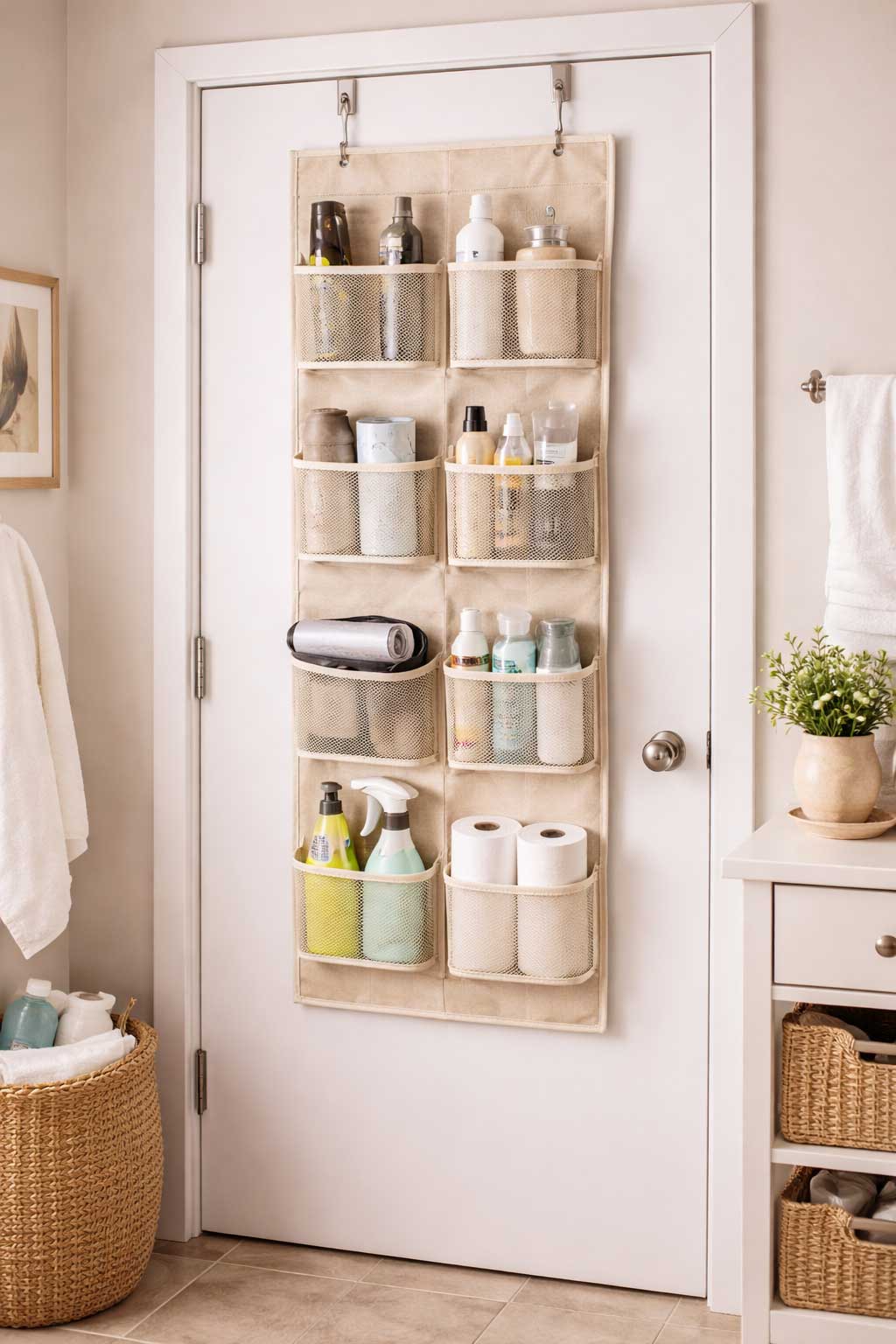
Bathroom doors
Bathroom doors are often ideal for:
- toiletries
- hair tools
- extra soap
- cleaning supplies
- hand towels
- small personal care products
This can be especially helpful in apartments with limited vanity or cabinet space. Instead of crowding the bathroom counter or stuffing everything under the sink, over-the-door storage can create an extra zone for lighter essentials.
Bedroom or closet doors
These are often useful for:
- shoes
- bags
- scarves
- belts
- accessories
- folded soft goods
- small daily-use items
Over-the-door storage on a closet door can work particularly well when the closet itself is already full and needs support rather than more bulk inside it.
Kitchen or pantry-adjacent doors
These can help store:
- wraps and foil
- small pantry items
- snacks
- dish towels
- light cleaning products
- kitchen accessories
This approach works best when the organizer is slim and the stored items are lightweight. Kitchen door storage can be surprisingly helpful in apartments with very limited cabinet capacity.
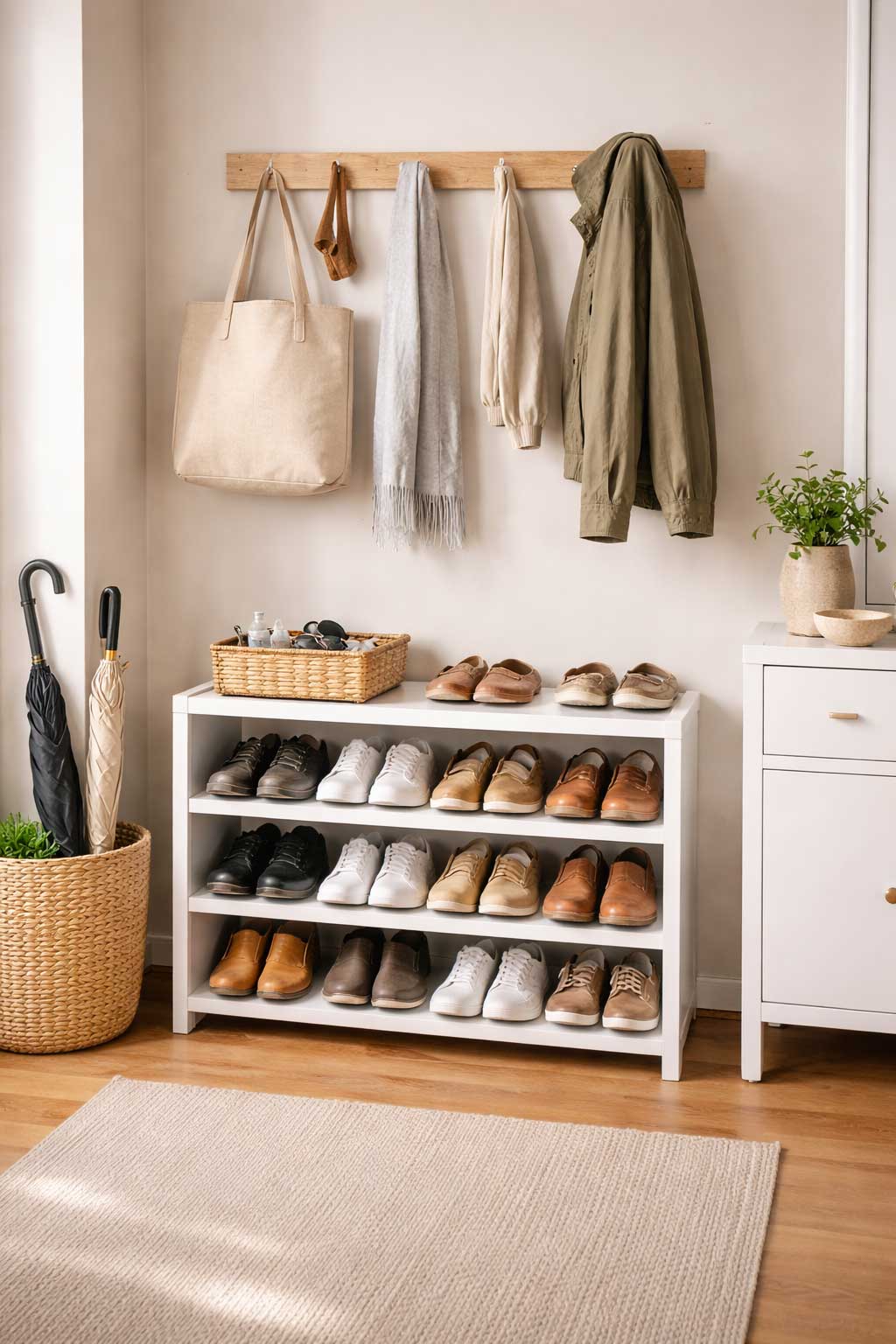
Entryway or utility doors
These may be useful for:
- umbrellas
- dog-walking supplies
- reusable bags
- seasonal accessories
- light outerwear accessories
The more closely the stored items match the room, the cleaner and more natural the solution feels.
Use over-the-door storage for the right categories of items
The most successful over-the-door systems usually hold smaller or lighter items rather than bulky or heavy ones. That is because the storage works best when it stays easy to access, easy to maintain, and visually controlled.
Great categories for over-the-door storage include:
- toiletries
- cleaning supplies
- shoes
- accessories
- hair products
- pantry packets
- office supplies
- children’s items
- lightweight linens
- reusable daily-use items
Less ideal categories include:
- very heavy bottles
- oversized tools
- breakable glass containers
- bulky folded blankets
- anything that makes the organizer sag or swing excessively
A good rule is that over-the-door storage should support your main storage system, not replace it completely. It works best as a home for smaller categories that otherwise create drawer, shelf, or counter clutter.
This is why it often pairs well with Best Wall-Mounted Storage Solutions for Small Apartments. When both are used thoughtfully, they help move low-profile items off crowded surfaces and into vertical zones that would otherwise go unused.
Keep it organized by category, not by overflow
One of the quickest ways to ruin over-the-door storage is to treat it like a place for miscellaneous overflow. Once that happens, it stops feeling helpful and starts feeling messy.
Instead, each organizer should have a specific job. For example:
- bathroom door organizer = personal care and hair products
- closet door organizer = shoes or accessories
- kitchen door organizer = food wraps and light pantry items
- office door organizer = stationery and desk extras
The clearer the purpose, the easier the system is to maintain. When an organizer holds a defined category, it becomes obvious what belongs there and what does not. When it becomes a catch-all, clutter starts expanding again.
This is especially important in small apartments because visible disorder has a bigger impact when space is limited. Even a useful product can make the apartment feel busier if it is overloaded with unrelated items.
Think about what should stay hidden and what can stay visible
Over-the-door storage can sometimes be visible even when it is on the back of a door, especially in apartments where doors stay open often. That means you should think about visual impact as well as function.
If the door is usually closed, visibility may not matter much. If the door is usually open, you may want to keep the organizer tidier, lighter, and more selective. A bulky organizer filled with colorful products can make a calm room feel visually crowded, even if the storage is technically practical.
Ask yourself:
- Will this organizer be seen most of the day?
- Will the stored items make the room feel busier?
- Would a more concealed storage solution work better here?
- Is this the best place for this category of items?
Sometimes the most functional place is not the most visually comfortable place. In those cases, it may make more sense to store the items elsewhere and reserve the door for a tidier category. Small-apartment storage should always balance capacity with how the room actually feels to live in.
Use over-the-door storage to solve specific apartment problems
The most effective use of over-the-door storage is usually problem-based. Instead of asking, “What can I hang on this door?” ask, “What storage problem keeps showing up in this room?”
That question leads to much better results.
Small bathroom with limited drawer space
Use a door organizer for toiletries, styling products, or backup personal care items.
Small closet with no shelf structure
Use the back of the closet door for shoes, belts, bags, or light accessories.
Kitchen with crowded cabinets
Use a pantry or utility door for wraps, pouches, or smaller packaged goods.
Entryway with nowhere for daily-use extras
Use a nearby door for umbrellas, reusable bags, seasonal gloves, or dog supplies.
Small office with overloaded desk drawers
Use an office door for stationery, cords, notebooks, or light accessories.
When over-the-door storage is tied to a real friction point, it tends to get used consistently and feel much more worthwhile.
Use it to support small kitchens, bedrooms, and entryways
Some of the best over-the-door storage uses show up in the rooms that feel most storage-starved.
In the kitchen, this kind of storage can take pressure off shallow cabinets and crowded counters. That is especially useful in apartments where cooking supplies, wraps, pantry extras, and cleaning items all compete for the same few cabinets. If that is already a challenge in your apartment, it connects naturally with How to Organize a Small Kitchen with Limited Cabinet Space.
In the bedroom, over-the-door storage can help support closets that do not have enough shelving or accessory organization. This is particularly useful when the room needs to store both wardrobe items and general apartment overflow. That is why it also pairs naturally with How to Organize a Small Apartment Bedroom.
In the entryway, it can solve everyday clutter that otherwise has nowhere to go. Apartments without a defined foyer often need creative ways to contain small daily-use items without making the entrance feel chaotic. That is one reason How to Organize a Small Entryway Without a Closet remains such an important supporting guide.
Do not overload the door
This is one of the biggest mistakes with over-the-door storage. Because it feels like “bonus space,” people often try to push it too far. The result is a heavy, overstuffed organizer that swings, bulges, catches on the frame, or makes the door frustrating to use.
A good over-the-door system should feel stable and easy. If it is overloaded, it quickly becomes irritating in daily life.
Watch for these warning signs:
- the door no longer closes cleanly
- items press tightly against the frame
- the organizer sags or leans
- stored items are crammed too tightly
- things fall out when the door moves
- opening the door feels noisy or awkward
When that happens, the answer is usually not a better organizer. It is fewer items. Over-the-door storage works best when it stays selective and well-contained.
Combine over-the-door storage with larger storage zones
Over-the-door storage is usually most effective when it supports a larger system instead of trying to carry the whole load by itself.
For example:
- use a closet organizer for clothing, then use the back of the door for accessories
- use under-sink storage for core bathroom supplies, then use the door for hair products or backups
- use pantry shelving for bulk food, then use the door for smaller packaged items
- use an entry bench or cabinet for shoes, then use a nearby door for umbrellas or reusable bags
This layered approach works well in small apartments because it divides categories logically instead of forcing one area to do everything. It also helps keep each individual zone from becoming overcrowded.
If your apartment is especially tight on traditional storage, this kind of combination works well alongside Best Storage Solutions for Small Apartments with No Closet, because both approaches focus on creating function where there was not much before.
Common over-the-door storage mistakes to avoid
A few bad habits can make over-the-door storage much less effective than it should be.
Using it without a clear purpose
If the organizer does not have a defined role, it usually turns into miscellaneous clutter.
Choosing the wrong door
A badly placed organizer can interrupt movement, make a room feel tighter, or create daily annoyance.
Storing items that are too heavy
Over-the-door storage is usually better for lightweight and medium-weight categories, not dense or bulky supplies.
Letting it become visually messy
When every pocket is stuffed with random items, the organizer can make the apartment feel more crowded rather than more organized.
Adding it before decluttering
Storage should support what you actually need to keep, not help you hold onto more unnecessary items. That is why the same mindset from How to Declutter a Small Apartment Fast still applies here.
A simple way to decide if over-the-door storage makes sense
If you are trying to decide whether a door is worth using for storage, ask these questions:
Does this room have a recurring storage problem?
If yes, the door may be worth considering.
Are the items small enough and light enough?
If not, another solution may be more practical.
Will the door still open comfortably?
If clearance becomes an issue, the organizer may not be worth the tradeoff.
Will this reduce clutter somewhere else?
Good over-the-door storage should solve a visible problem, not create a new one.
Can the organizer stay neat with minimal effort?
If the system depends on constant reworking, it probably will not last.
These questions help keep the decision grounded in function instead of impulse.
The best over-the-door storage is intentional, not excessive
Over-the-door storage can be one of the smartest tools in a small apartment, but only when it is used with discipline. It is not about hanging organizers everywhere just to squeeze in more stuff. It is about selecting the right doors, the right categories, and the right amount of storage so the apartment works better without feeling busier.
At its best, this kind of storage creates relief. It clears cabinets, reduces counter clutter, supports awkward rooms, and makes small spaces feel more functional without demanding more square footage. It gives overlooked surfaces a purpose and helps you use the apartment more intelligently.