How to Organize Shoes in a Small Apartment
Shoe storage becomes a small-apartment problem faster than most people expect. Even people who do not think they own “that many shoes” can end up with pairs scattered near the entryway, under the bed, beside the closet, under chairs, or piled on the floor of a bedroom. In a compact apartment, shoes have a way of expanding into every available gap, and once that happens, the whole place starts to feel more cluttered than it really is.
The issue is not just the number of pairs. The real challenge is that shoes come with different functions, sizes, and frequencies of use. Everyday sneakers need to stay easy to reach. Dress shoes may only come out occasionally. Boots take up more vertical space. Seasonal pairs may sit untouched for months. Without a clear system, everything competes for the same limited space, and the result is usually a mix of visible clutter and hard-to-find pairs.
The good news is that organizing shoes in a small apartment does not require a huge closet or custom built-ins. What it does require is a realistic plan. The best shoe storage systems are based on how often you wear each pair, where you naturally take shoes off, and which storage zones in the apartment can actually support them. Once those decisions are made, the apartment starts feeling calmer almost immediately.
If shoes have become one of the main clutter triggers in your home, it helps to think about them within your overall storage setup, especially alongside Best Shoe Storage Solutions for Small Apartments and Best Entryway Storage Solutions for Small Apartments. In a small space, the best organization systems work because they connect the daily habit with the right storage location.
Why shoe clutter becomes such a big problem in small apartments
Shoes are deceptively difficult to organize because they are both everyday essentials and oddly shaped items. They do not stack neatly on their own, they are often dirty from outdoor use, and they tend to accumulate in transition zones like entryways, bedrooms, closets, and living rooms.
In a larger home, shoe clutter can be absorbed into mudrooms, larger closets, garages, or spare corners. In a small apartment, there usually is no extra space to hide the overflow. That means even a moderate number of pairs can start creating visual and functional mess very quickly.
Shoe clutter becomes especially noticeable because it often lands in high-traffic areas. A few pairs left near the door can make an entryway feel cramped. A closet floor covered in shoes makes it harder to store clothing efficiently. Shoes shoved under furniture can make a room feel more chaotic than clean. Over time, the problem is not just about storage capacity. It is about how those scattered items change the feel of the apartment.
This is why shoe organization matters more than it seems. When shoes are handled well, the entryway feels cleaner, the closet functions better, and everyday routines become easier.
Start by reducing the number of shoes in active rotation
Before choosing where shoes should go, it helps to separate what you own into categories. Many shoe storage problems come from treating every pair as equally important, even though some are worn weekly and others barely get touched.
Start by sorting shoes into these groups:
- everyday shoes
- work or dress shoes
- seasonal shoes
- exercise shoes
- occasional-event shoes
- shoes to donate or discard
This step creates clarity right away. The goal is not necessarily to get rid of a huge number of pairs, although that may help. The goal is to make sure the best storage spots are reserved for the shoes you actually use.
Everyday shoes deserve the easiest access. Seasonal and occasional pairs can be stored in secondary zones. Shoes that are worn out, uncomfortable, or never used should not be taking up prime real estate in a small apartment.
This editing step follows the same logic as How to Declutter a Small Apartment Fast. Organizing is always easier after you remove what no longer deserves space.
Match the shoe storage location to your daily habits
One of the biggest mistakes people make is trying to force all shoes into one single storage zone, even when that does not match how they live. In a small apartment, shoe organization works better when storage is divided by routine.
Think about where you naturally take shoes off and where you normally put them on. For some people, that is right by the front door. For others, it is inside a bedroom near the closet. A useful system should support those habits instead of fighting them.
A practical apartment shoe setup often has more than one zone:
- an entryway zone for everyday pairs
- a closet zone for less frequently used shoes
- a secondary storage zone for seasonal shoes
- a hidden zone for special-occasion footwear
When you try to make one location do everything, the system usually breaks down. When you divide shoes by use and frequency, it becomes much easier to keep things contained.
This is also why shoe organization often connects naturally with How to Organize a Small Entryway Without a Closet. In many apartments, the entry is where shoe clutter begins, even if the long-term storage plan includes other rooms.
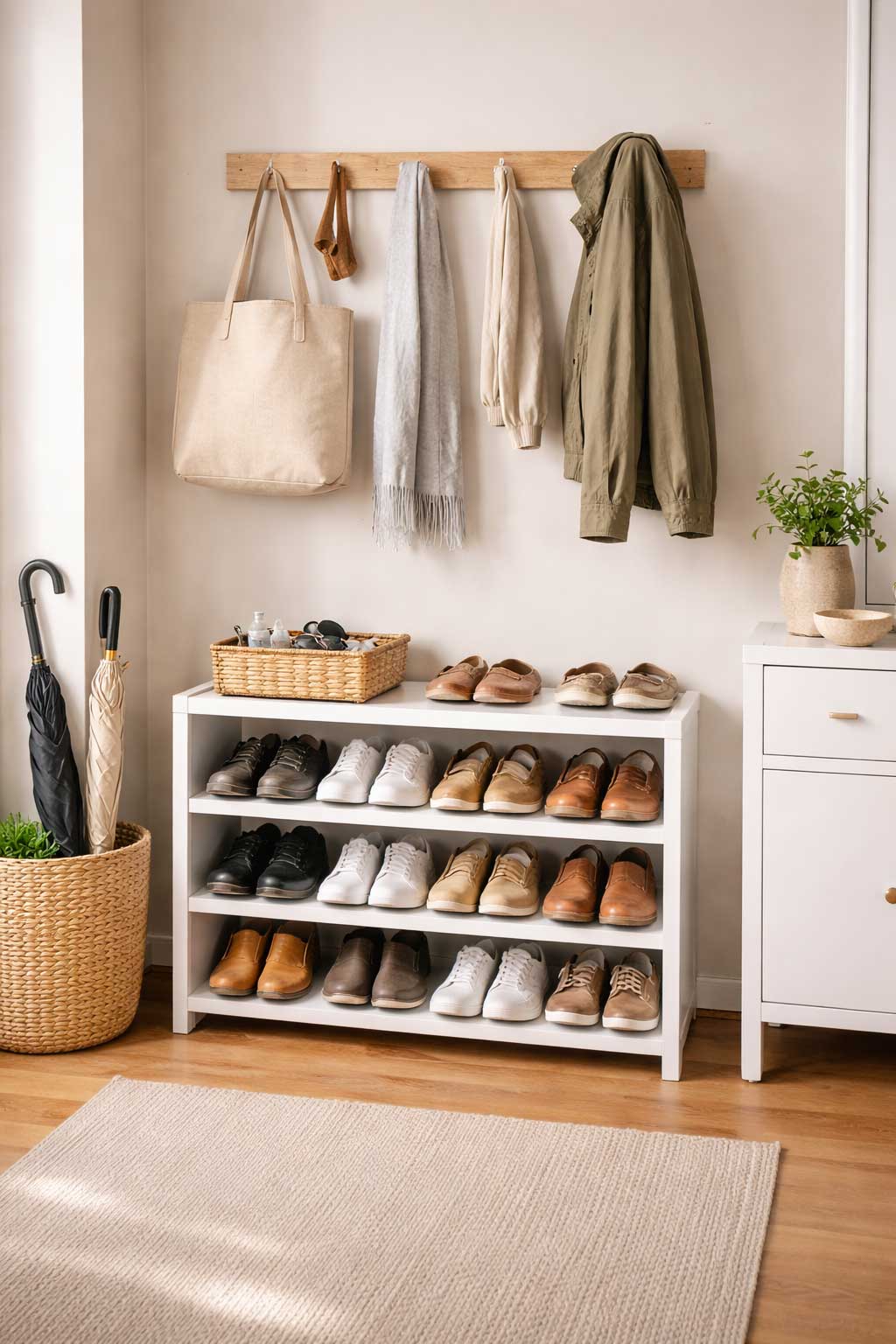
Keep everyday shoes near the entry when possible
The shoes you wear most often should be the easiest to access. In many small apartments, that means keeping a limited number of everyday pairs near the entryway.
This does not mean every shoe you own belongs by the door. It means the shoes that support your daily life should be where they are most practical. That might include:
- one or two pairs of sneakers
- work shoes
- a frequently worn casual pair
- weather-appropriate footwear for the current season
Keeping a small, defined entryway shoe zone helps prevent the “drop and leave” habit from spreading into the rest of the apartment. It also makes getting out the door faster and keeps dirt and outdoor debris more contained near the entrance rather than tracked deep into the apartment.
The key is restraint. An entryway should not become the permanent home for every pair you own. It should serve as a short-access zone, not a full shoe warehouse. If your apartment has limited space near the entrance, Best Small Entryway Tables for Apartments and Best Entryway Storage Benches for Small Spaces can also support a cleaner setup without taking over the room.
Use closet floors more intentionally
For many apartment dwellers, the closet is the natural place for shoe storage, but the closet floor often becomes one of the messiest areas in the home. Shoes get lined up randomly, stacked on top of each other, or kicked into corners where pairs separate and dust collects.
A better approach is to treat the closet floor as organized storage rather than overflow space. That means assigning it a structure. Depending on your closet, that may involve:
- a low shoe rack
- clear pair zones
- a dedicated section for frequently used shoes
- an upper-lower split between daily and occasional pairs
Even a simple change like organizing shoes by category instead of by random placement can make the closet feel much more functional. The floor should support the closet, not block it.
This is especially important if your closet already has limited built-in structure. If that is the case, the same principles from How to Choose the Right Closet Organizer for a Small Apartment apply here too. Shoe storage works best when it is integrated into the larger closet plan instead of added as an afterthought.
Move seasonal shoes out of prime storage zones
One of the easiest ways to free up apartment space is to stop storing off-season shoes in the most accessible areas year-round. Heavy boots do not need to crowd the closet floor in summer, and sandals do not need front-row access in winter.
Seasonal rotation is one of the most useful strategies for small-apartment shoe organization because it reduces visual clutter without requiring you to get rid of items you still use.
Shoes that are out of season can often be stored in:
- under-bed containers
- upper closet shelves
- labeled bins
- less convenient closet corners
- secondary storage furniture
The goal is to keep active storage focused on what you actually wear now. This makes it easier to see your options, easier to keep the space tidy, and less likely that everyday shoes will get mixed with rarely used ones.
For apartments with limited closet capacity, it can help to combine this approach with Best Under-Bed Storage Containers (Low Profile & Stackable) so seasonal footwear does not compete with current daily essentials.
Separate dirty-use shoes from cleaner indoor storage
Not all shoes should be stored the same way. One important distinction in a small apartment is whether a pair regularly brings in dirt, water, or debris from outside.
Shoes worn in bad weather, for long walks, or in messy conditions should usually stay closer to the entry area or in a spot that is easier to clean. Cleaner dress shoes or less frequently worn pairs may be better suited for closet storage.
This matters because mixing dirty everyday shoes with cleaner stored items can make the entire storage area feel messier. It can also transfer dirt to closet floors, rugs, or nearby clothing.
A simple separation system might look like this:
Entry or utility zone
Use this area for:
- wet-weather shoes
- frequently worn outdoor sneakers
- boots during active season
Closet or bedroom storage zone
Use this area for:
- dress shoes
- cleaner occasional pairs
- off-season shoes stored in containers
- shoes you want protected from dust or damage
That kind of separation makes the whole apartment easier to maintain and reduces the feeling that shoes are always “everywhere.”
Choose visibility or concealment based on your habits
Some people do best when shoes are visible. Others do better when shoes are hidden. The right approach depends on whether visibility helps you stay organized or just makes the apartment feel busier.
Visible shoe storage works well if:
- you like seeing what you own
- you use the same few pairs regularly
- you are good about limiting overflow
- the storage area already feels tidy
Hidden shoe storage works well if:
- visible shoes make the space feel cluttered
- you want the room to look calmer
- you need protection from dust
- your apartment has a more minimal visual style
There is no universal right answer. A small apartment often benefits from a mix. Everyday shoes may stay partly visible near the entry, while lesser-used pairs stay concealed in closets, bins, or storage furniture. The important thing is that the system matches your actual behavior. A visible setup is only helpful if it stays neat. A hidden setup is only helpful if it stays accessible.
Do not let shoe storage spread into every room
Once shoe clutter starts expanding, it can easily bleed into unrelated rooms. A pair ends up under the dining table. Another lands next to the sofa. Exercise shoes stay by the bed. Before long, the whole apartment feels like it is storing shoes without meaning to.
That is why boundaries matter. Shoes should have defined home zones, even if those zones are small. In a compact home, strong boundaries often matter more than large storage furniture.
A helpful question is: where should shoes never live?
For many apartments, that list should include:
- living room walkways
- random floor corners
- under chairs
- beside the couch
- exposed spots that interrupt room flow
The more disciplined you are about keeping shoes inside dedicated storage zones, the less visual clutter they create elsewhere. This also supports the broader goal of How to Organize a Small Apartment Living Room, because floor clutter from unrelated items can make even a well-designed room feel crowded.
Use vertical space when floor space is limited
If your apartment has very little available floor area, the best answer may be to use height more effectively. Vertical shoe storage can help prevent footwear from taking over valuable walking space while still keeping pairs organized and accessible.
This might include:
- stacked shoe shelves
- vertical racks
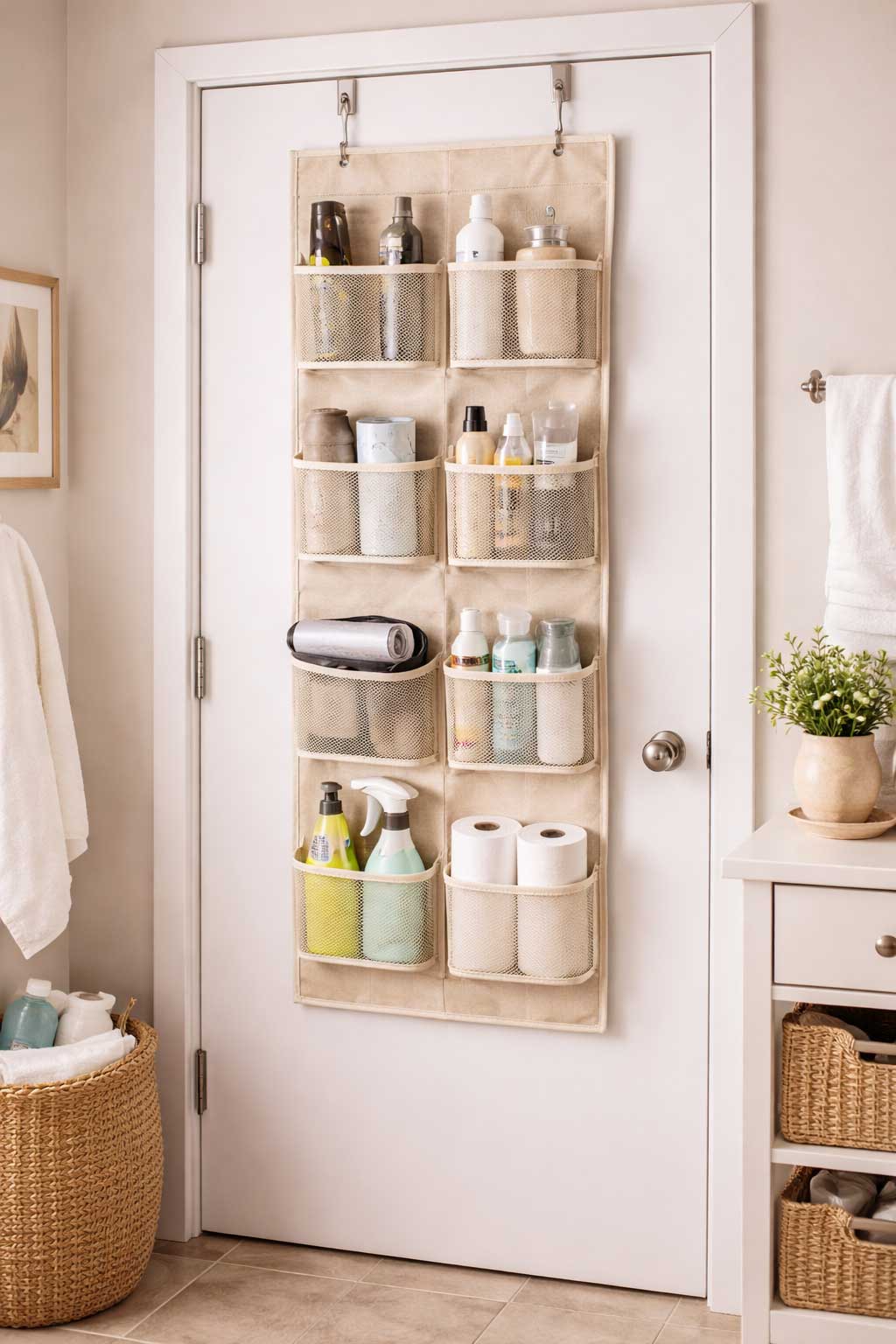
- over-the-door organizers
- tall narrow cabinets
- wall-friendly shoe storage solutions
Vertical strategies tend to work best when the shoe collection is moderate and the apartment layout is tight. They are especially useful in narrow closets, small entryways, and bedrooms where floor space needs to stay open.
The same principle connects naturally with How to Use Vertical Space in a Small Apartment. Shoes are just one more category that benefits from upward thinking when square footage is limited.
A simple shoe organization system for small apartments
If you want a practical way to organize shoes without overcomplicating the process, use this framework:
Step 1: Sort every pair
Group shoes into everyday, occasional, seasonal, and donate/discard categories.
Step 2: Identify your main shoe drop zone
Figure out where shoes naturally collect now. That is usually where the system needs the most improvement.
Step 3: Choose two to three storage zones
Most small apartments do best with a limited entry zone, a closet zone, and possibly a seasonal overflow zone.
Step 4: Limit prime access space
Only everyday shoes should get the easiest spots.
Step 5: Relocate off-season pairs
Move them to less convenient but still organized storage areas.
Step 6: Maintain pair limits per zone
Do not let one area quietly expand beyond what it was designed to hold.
Step 7: Reset regularly
A quick weekly reset is often enough to keep shoes from slowly taking over again.
This kind of system works because it is realistic. It accepts that different shoes serve different purposes and that a small apartment cannot treat every pair like front-row inventory.
Common shoe organization mistakes to avoid
There are a few common habits that make shoe clutter worse even when people think they are trying to get organized.
Keeping all shoes in one overstuffed area
This often creates piles, hidden pairs, and frustration. Dividing storage by use usually works better.
Giving off-season shoes prime access
That wastes your most useful space on things you are not even wearing right now.
Letting the entryway become permanent overflow
A few everyday pairs make sense by the door. A full shoe collection does not.
Ignoring the closet floor
When the closet floor has no structure, it quickly becomes dead space filled with scattered shoes.
Holding onto too many low-value pairs
Shoes that are uncomfortable, worn out, or rarely used should not keep competing for limited apartment storage.
The best shoe storage system is the one you can maintain
The goal is not to create a picture-perfect shoe display. The goal is to create a setup that works with the way you actually live.
A good shoe organization system should make it easier to:
- find the pair you want
- put shoes away quickly
- keep dirt contained
- prevent overflow into living spaces
- reduce visual clutter across the apartment
That usually means keeping the system simple. The more complicated it becomes, the less likely it is to hold up over time. A small apartment does not need a fancy shoe room. It needs clear limits, smart zones, and storage that supports real daily habits.