How to Hide a Printer and Office Equipment in a Small Apartment
Hiding a printer and office equipment in a small apartment can feel harder than it sounds. Printers, paper trays, shredders, routers, chargers, label makers, docking stations, and extra cords can quickly turn a clean workspace into the part of the apartment that always looks messy. The challenge is not just finding somewhere to put office equipment. It is keeping it accessible when you need it without letting it dominate the room the rest of the time.
The good news is that office equipment does not have to stay visible to stay useful. In most small apartments, the best setup comes from grouping office gear by function, choosing storage that hides bulkier items, and keeping the most-used equipment close enough to access without leaving it fully exposed. With the right approach, you can make your workspace look cleaner and still keep everything practical.
For broader strategies on making work fit into a small home, explore our How to Fit a Home Office Into a Small Apartment Without a Separate Room guide.
If your work area already feels cluttered, check out How to Organize a Small Apartment Home Office.
For desk options that can support hidden office storage, browse Best Office Desks for Small Apartments.
This guide is part of our Small Apartment Office Solutions collection.
Quick Answer
If you want to hide a printer and office equipment in a small apartment, the best approach is to keep larger gear grouped in one defined storage zone and use furniture or organizers that conceal bulk without making access difficult. In most apartments, that means using cabinets, printer stands, rolling carts, shelves with baskets, or storage furniture that keeps printers, paper, cords, and accessories out of sight when they are not in use.
A good office-equipment storage setup usually works best when it includes:
- one clearly defined equipment zone
- hidden or semi-hidden storage for bulkier tech
- grouped storage for paper, cables, and accessories
- easy enough access that the setup stays practical
- a system that keeps work gear from spreading into the rest of the room
Why Printers and Office Equipment Create So Much Visual Clutter
Printers and office gear create clutter quickly because they are awkward, boxy, and surrounded by smaller support items that rarely stay contained on their own. The printer may be the biggest object, but it is usually not the only issue. Printer paper, spare ink, charging cables, adapters, label refills, staplers, folders, and extra tech accessories often end up stacked nearby, which makes the whole area feel busier than it actually is.
This is especially noticeable in a small apartment because office equipment often shares space with rooms that are supposed to feel comfortable and lived in. A printer in a living room, bedroom corner, or dining nook stands out more than it would in a separate office. Even when the equipment is useful, it can make the room feel more like a workspace and less like home.
That is why hiding office equipment is really about more than looks. A cleaner setup often works better too. When the gear is grouped and controlled, it becomes easier to use, easier to put away, and much less likely to spread across the room.
Start by Deciding Which Office Equipment Actually Needs to Stay Out
One of the biggest mistakes people make is giving prime space to equipment they barely use. Some people print constantly and need a printer within easy reach every day. Others only print a few times a month and do not need the printer sitting in full view all the time.
It helps to separate your office gear into daily-use items, occasional-use items, and backup supplies. Daily-use items may need easier access. Occasional-use items can usually be stored farther back in a cabinet, cart, or shelf. Backup ink, archived paperwork tools, extra chargers, and unopened supplies usually do not need the same level of access as the printer itself.
This matters because a small apartment office setup works best when the most visible area is reserved for what you actually use often. The more honest you are about frequency, the easier it becomes to hide what does not need to stay out.
Group Equipment by Function Instead of Storing Everything Randomly
A printer setup is easier to hide when all the related gear lives together. This is one of the biggest differences between a workspace that feels clean and one that always feels messy. If the printer is in one corner, the paper is in another, the extra cords are in a random drawer, and the ink is tucked away in a closet, the setup becomes harder to manage and easier to clutter.
A better approach is to build one office-equipment zone. The printer, paper, extra ink, label refills, chargers, and related accessories should live as close together as possible. That way, when you need to print, refill, plug something in, or grab supplies, you are not pulling items from all over the apartment.
This also makes hiding easier. It is much simpler to conceal one organized office-equipment area inside a cabinet, desk, or rolling cart than it is to hide five related categories scattered across the room.
Choose the Best Storage Type to Hide Printers and Office Gear
The best storage type depends on how often you use the equipment and how visible the workspace is from the rest of the apartment.
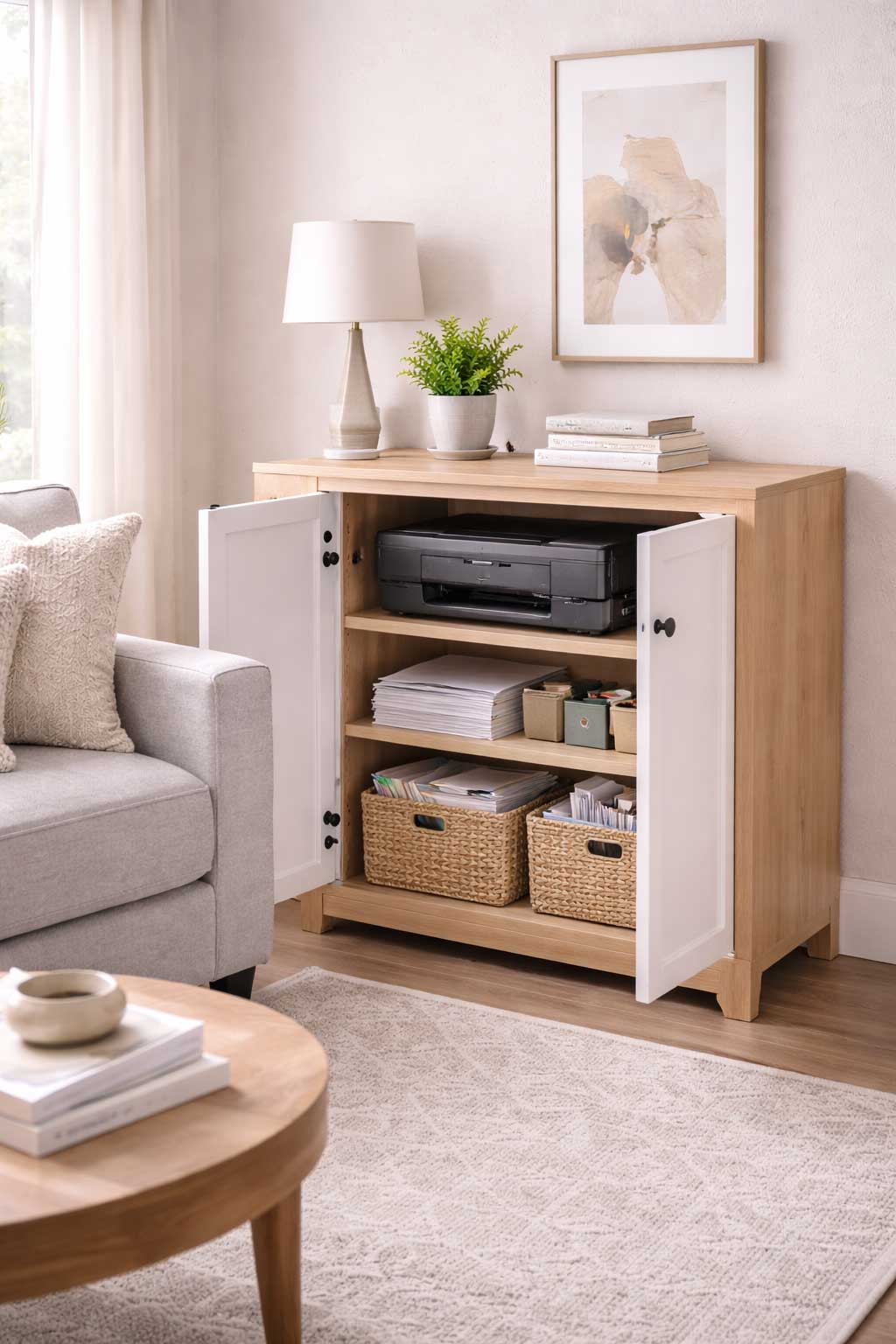
Cabinets usually create the cleanest look because they hide the printer and the surrounding clutter at the same time. This is often the best option when the office shares space with a living room or bedroom and you want the room to feel calmer when work is over.
Printer stands with shelves can work well in compact setups where the gear needs to stay accessible but more controlled. They are especially useful when you want the printer off the desk and paper stored directly below it.
Rolling carts are a strong option when flexibility matters. They work especially well in small apartments where the printer does not need to live in one permanent spot or where the equipment needs to move closer to the desk only when in use.
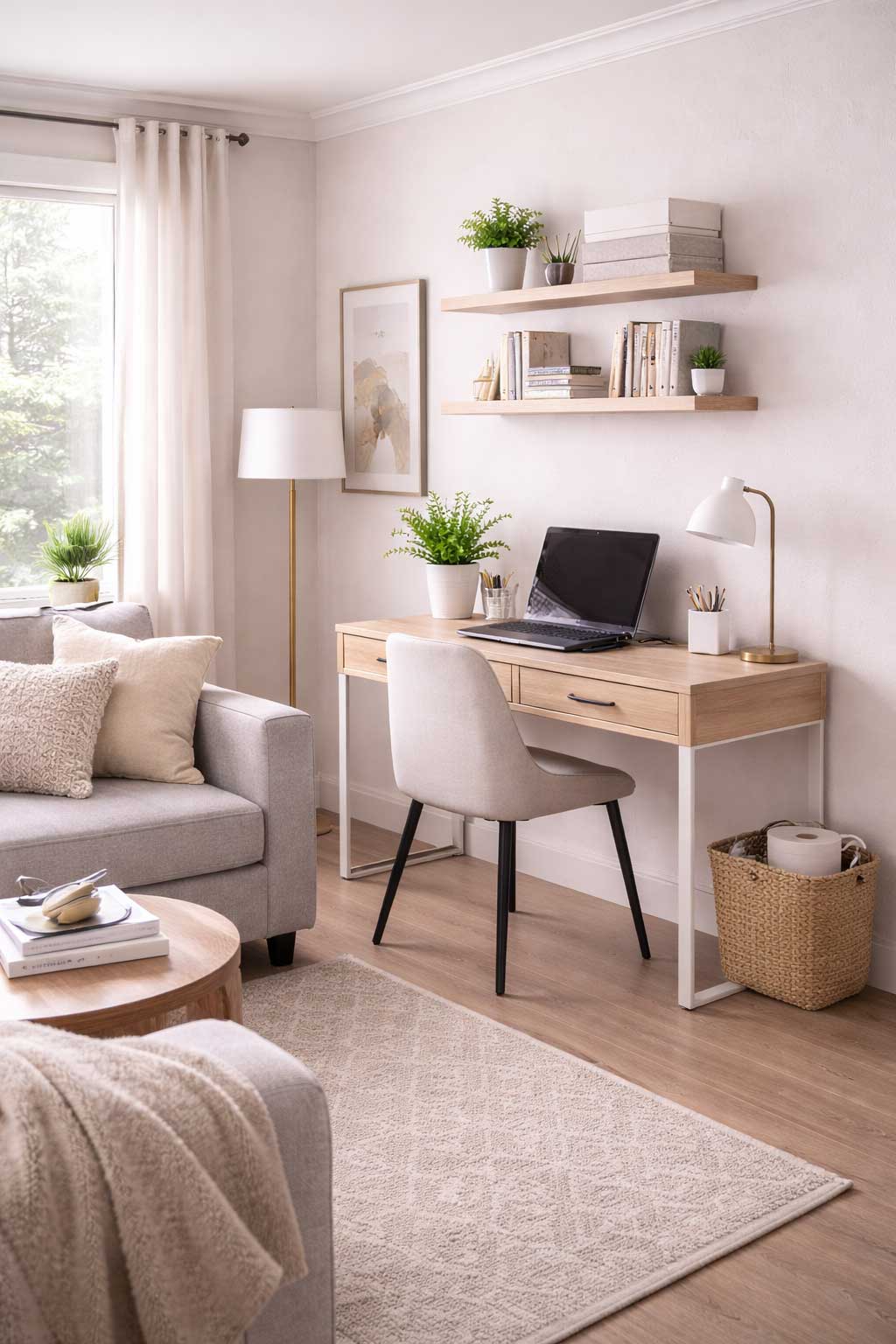
Desks with built-in storage can be efficient when the office zone is already small and the room cannot support extra furniture. A desk with one enclosed side or a drawer stack often works much better than a plain table plus a pile of office accessories around it.
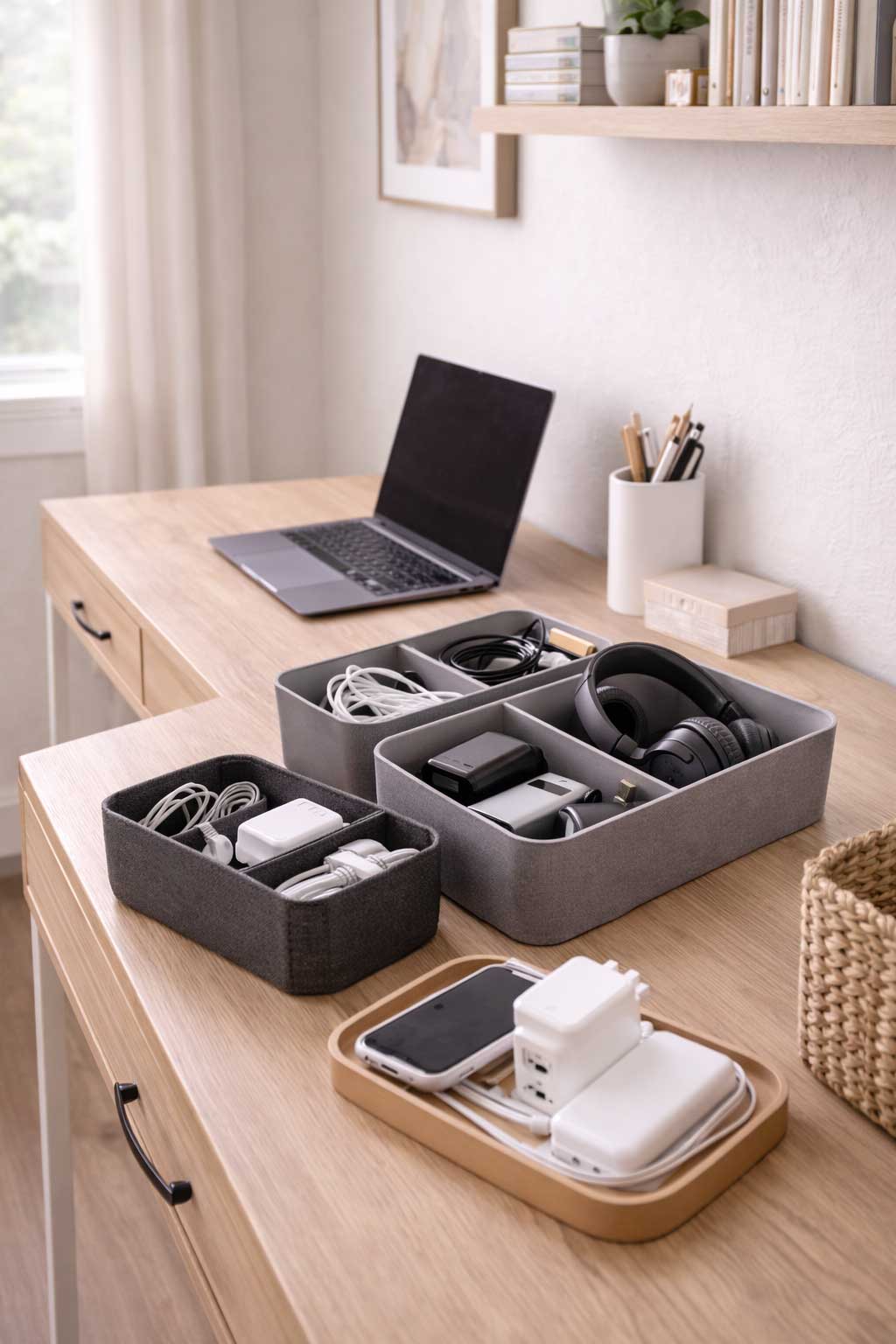
Baskets and bins are important for the smaller items that make the whole setup feel messy. Even if the printer is hidden, the office will still look cluttered if the paper, cables, and supplies stay loose.
Media-console-style pieces or sideboards can be especially useful in living-room offices because they blend better with the rest of the room than obvious office furniture.
Best Printer and Office Equipment Setups for Common Small Apartment Layouts
If your office is in the living room, the cleanest setup usually comes from furniture that blends into the room. A sideboard, cabinet, or storage piece that hides the printer and office gear usually works better than leaving everything exposed beside the sofa or TV zone. In this kind of layout, the equipment should feel contained enough that the room can still read as a living room after work.
If the workspace is in a bedroom corner, the best setup often comes from using one desk-adjacent cabinet, rolling cart, or printer stand that keeps the office zone tight. This usually works better than storing office items across multiple bedroom surfaces where they start mixing with personal clutter.
If the office is inside a closet or alcove, grouped storage becomes even more important. In a smaller tucked-away office, the easiest way to keep the setup functional is to make sure the printer and its support items are tightly organized instead of stacked loosely in the back.
If you have no dedicated office room at all, the best printer setup usually comes from choosing the furniture piece that can hide the gear most naturally in the room where you already work. In many small apartments, that is better than forcing a visible office station into the middle of the layout.
If two people share the same work zone, the storage needs more structure. Shared setups usually benefit from clearer bins, sections, or shelves so the office equipment does not turn into one mixed pile.
Hide Bulkier Equipment Without Making It Hard to Use
A hidden printer setup only works if the printer is still practical to use. This is where many small-space systems break down. People hide the printer so well that using it becomes annoying. Once that happens, the equipment starts drifting back onto open surfaces again.
The best hidden setups leave enough room for the printer to open, print, vent, and reload paper without a complicated routine. If the printer sits inside a cabinet, the doors should open fully and the shelf should leave enough clearance. If it lives on a rolling cart, the cart should be easy to pull out. If it is stored in a sideboard, the setup should still allow for power access and cable routing.
This is especially important for bulkier gear like printers, shredders, or docking equipment. Hiding them should reduce visual clutter, not add friction every time you need to use them. A good system makes the equipment less visible when you do not need it and still easy to reach when you do.
Keep Cords, Paper, and Accessories Controlled So the Setup Stays Clean
Most office-equipment clutter comes from the support items, not just the hardware. Loose reams of paper, extra ink cartridges, charging blocks, USB cords, adapters, and miscellaneous accessories are usually what make a workspace feel messy even after the larger equipment is hidden.
That is why grouped accessory storage matters so much. Paper should have one home. Extra ink should have one home. Chargers and cables should stay bundled or boxed instead of hanging behind furniture and spreading across the floor. Small bins, drawer organizers, cable boxes, and paper trays often make a much bigger visual difference than people expect.
This is also what helps a hidden office setup keep working over time. If every supporting item has a place near the printer, the equipment stays easier to use and easier to put away. If those items stay scattered, the room starts feeling cluttered again even when the printer itself is technically hidden.
If cable mess is one of the main problems, browse Best Cable Management Kits for Small Apartment Offices.
If you need stronger grouped storage around the work zone, take a look at Best Office Storage Cabinets for Small Apartments.
Make Hidden Office Equipment Work in Multi-Use Rooms
A printer setup in a small apartment usually shares space with something else. It may live in the living room, bedroom, dining nook, or another area that has to do more than one job. That is why the best office-equipment storage is the kind that supports the room instead of calling attention to itself.
In a multi-use room, it helps if the printer zone stays close to the desk area but not visually spread across the whole space. Office gear should feel concentrated in one footprint. The more the equipment starts taking over side tables, shelving, and lounge surfaces, the less the room feels balanced.
This is especially important in living-room offices. If your work area shares space with your lounge area, revisit How to Set Up a Home Office in a Small Apartment Living Room for ways to keep the office side from visually taking over the rest of the room.
Mistakes to Avoid When Trying to Hide a Printer and Office Equipment
One common mistake is hiding the printer somewhere too inconvenient to use. If getting to it becomes annoying, it usually ends up back on an open surface. Another mistake is storing paper, ink, and cords in separate random places, which makes the whole setup harder to maintain.
Choosing furniture with no ventilation or cable access is another issue. Printers and tech gear need practical clearances, not just visual concealment. Leaving cords exposed around an otherwise hidden setup can also undo a lot of the benefit. Even when the equipment is tucked away, visible cable mess still makes the area feel unfinished.
Another mistake is treating every office item as if it needs the same level of access. Some things belong close at hand. Others can be stored farther back. When that difference is ignored, the workspace ends up giving too much prime space to low-priority clutter.
Products That Make Office Equipment Easier to Hide in a Small Apartment
The best products are the ones that help the office gear stay grouped, concealed, and practical. Some apartments do best with cabinets or desks that hide the printer almost completely. Others work better with printer carts, sideboards, or shelf-and-bin combinations that keep everything together without making the room feel too office-heavy.
In many cases, the most important add-ons are the smaller control pieces: bins for supplies, trays for paper, and cable management that keeps the setup from unraveling visually. In a small apartment, the best office-equipment storage usually looks simple because the printer, paper, and tech accessories all have a clear place.
Final Thoughts on Hiding a Printer and Office Equipment in a Small Apartment
Hiding a printer and office equipment in a small apartment works best when the setup stays practical, grouped, and contained. That usually means keeping the larger gear in one defined storage zone, controlling the paper and cables around it, and choosing furniture that helps the room feel cleaner when the equipment is not in use.
The strongest setups usually come from a few smart choices: decide what really needs prime access, keep the office equipment grouped by function, and hide the bulk without making it frustrating to use. When those pieces come together, the workspace looks cleaner and the apartment feels less dominated by tech.
The goal is not to pretend the office equipment does not exist. It is to make it useful without letting it become the thing you notice first every time you enter the room.
FAQ
Where should you put a printer in a small apartment?
A printer in a small apartment usually works best in one defined office-equipment zone, such as a cabinet, printer stand, rolling cart, desk with storage, or another contained setup near the workspace.
How do you hide a printer without making it hard to use?
Hide a printer without making it hard to use by choosing storage that allows enough clearance for doors, paper loading, ventilation, and cable access so the printer stays convenient when needed.
What furniture works best for hiding office equipment?
The best furniture for hiding office equipment usually includes cabinets, desks with storage, printer stands, sideboards, media-console-style pieces, and rolling carts that keep larger gear grouped and less visible.
How do you organize printer paper, ink, and cords in a small space?
Organize printer paper, ink, and cords in a small space by storing them close to the printer in grouped bins, trays, drawers, or cable-management containers instead of scattering them across different surfaces.
How do you hide office equipment in a living room?
Hide office equipment in a living room by using furniture that blends with the room, such as a cabinet or sideboard, and keeping the printer, paper, and tech accessories concentrated in one contained area near the work zone.