How to Create More Shower Storage in a Small Apartment Bathroom
Creating more shower storage in a small apartment bathroom can feel difficult when bottles, razors, loofahs, soap, and daily shower products all have to fit into one tight space. A small shower can get cluttered fast, especially when there are no built-in niches, wide ledges, or extra shelves to work with. The challenge is not just adding more places to put things. It is creating storage that keeps the shower functional without making it feel cramped or messy.
The good news is that even a small apartment shower can hold more than it seems. In most bathrooms, the best shower-storage setup comes from using vertical space, limiting what actually needs to stay in the shower, and choosing organizers that fit the shape of the stall instead of fighting it. With the right approach, you can create a cleaner, easier-to-use shower without needing a remodel.
For broader ideas that work in tight bathrooms, explore our Best Bathroom Storage Solutions for Small Apartments guide.
If your bathroom needs more wall-based shower storage options, check out Best Shower Shelves for Small Bathrooms.
For tighter bathrooms that need overall storage support, browse Best Shower Caddies for Small Apartments.
This guide is part of our Small Apartment Bathroom Solutions collection.
Quick Answer
If you want to create more shower storage in a small apartment bathroom, the best approach is to keep only your regular-use shower items inside the shower and use vertical organizers that fit the space without crowding it. In most bathrooms, that means using caddies, corner shelves, hanging organizers, or tension-based storage to add capacity while keeping bottles and tools grouped and easy to reach.
A good small-shower storage setup usually works best when it includes:
- room for only the products you use regularly
- one main organizer that fits the shower layout
- storage that uses height instead of floor space
- grouped zones for bottles, soap, and tools
- a setup that stays easy to clean and maintain
Why Small Apartment Showers Get Cluttered So Fast
Shower clutter builds quickly because the space is small, the products are bulky, and daily routines tend to add more items over time. A couple of shampoo bottles, conditioner, body wash, face cleanser, a razor, a loofah, and soap can already fill most of the available ledge space in a compact apartment shower. Once specialty products, backup bottles, or multiple people’s items get added, the shower starts feeling crowded almost immediately.
This feels even worse in apartment bathrooms because many showers do not include much built-in storage to begin with. There may be one tiny corner shelf, one shallow ledge, or nothing at all. When the shower has no dedicated organization system, products end up balanced on the tub edge, packed onto a small ledge, or piled in one overloaded caddy.
That is why better shower storage makes such a difference. A small shower does not need dozens of extra compartments. It needs a clearer system that gives everyday products a place to go without taking over the limited standing space.
Start by Deciding What Actually Needs to Stay in the Shower
One of the easiest ways to create more shower storage is to stop expecting the shower to hold everything. Not every product belongs there all the time. A lot of clutter comes from storing backup bottles, rarely used treatments, extra razors, or specialty products in the shower just because there is nowhere else for them.
A better approach is to separate true daily-use items from overflow. The products you use most showers should stay inside the shower. Backup shampoo, extra soap bars, occasional masks, and less-used tools can usually live elsewhere in the bathroom. This instantly reduces how much the shower has to carry.
This step matters because the best shower organizer in the world will still feel crowded if it is holding too many low-priority items. In a small apartment bathroom, the shower usually works best when it supports the current routine, not long-term storage.
Choose the Best Type of Shower Storage for Your Layout
The best shower storage depends on the shape of the shower and what kind of surfaces you are working with.
Hanging caddies are a strong option for standard shower heads because they use vertical space that is already there. They can work especially well in simple shower stalls or shower-tub combos where you want storage off the floor and easy to reach.
Corner shelves are often a better fit for tight shower stalls because they use awkward corners that might otherwise go to waste. In smaller showers, this can help add storage without making the center of the shower feel more crowded.
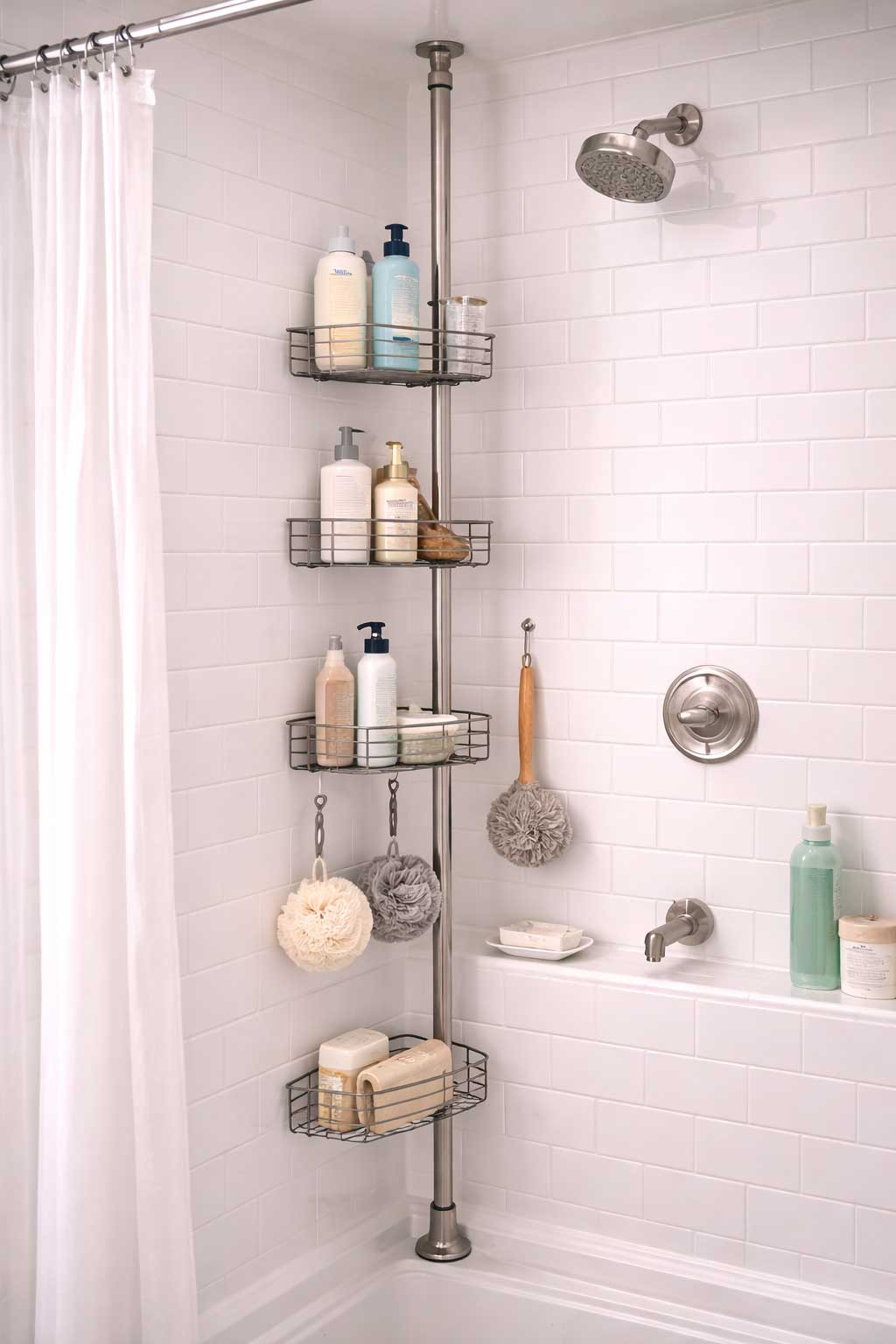
Tension-pole storage can be a good choice when the shower needs more vertical capacity. These systems usually work best when there are multiple categories to separate and enough ceiling height to make the setup practical.
Wall-mounted shelves work best when the shower walls are smooth and compatible with the storage style you choose. These can be a cleaner-looking solution when installed thoughtfully and kept limited.
Tub-edge or ledge organizers are usually the best fit for shower-tub combinations with a little horizontal surface to work with. They can help keep products contained without hanging anything from the shower head.
The key is matching the organizer to the shower’s shape instead of choosing something generic and forcing it into a space where it does not really fit.
Best Shower Storage Setups for Common Small Apartment Bathroom Layouts
If your bathroom has a tiny shower stall with no built-in shelf, a hanging caddy or compact corner organizer is usually the best first move. In that kind of layout, the goal is to get products off the floor and off any narrow ledges while preserving as much standing room as possible.
If you have a shower-tub combo with limited ledge space, a tub-edge organizer or a hanging caddy often works better than several scattered bottles along the back wall. This helps contain products in one main zone instead of letting them spread around the tub.
If the shower is shared by two people, separation becomes much more important. Without boundaries, duplicate bottles and overlapping products can make a small shower feel crowded fast. In shared setups, giving each person a shelf, section, or basket usually makes the space much easier to maintain.
If the shower has awkward corners, sloped walls, or unusual angles, the best storage solution is often the one that works with the least usable area rather than against it. In those layouts, smaller organizers and tighter editing usually work better than large multi-tier systems that take over the space.
Use Vertical Space Without Making the Shower Feel More Crowded
Vertical storage is one of the most effective ways to create more shower storage because it adds capacity without taking up standing room. Hanging caddies, tension poles, and corner shelves all help shift products upward instead of outward. In a tight shower, that usually matters a lot more than adding width.
At the same time, vertical storage can become part of the problem if it is overdone. Too many shelves, too many hanging baskets, or one oversized organizer packed with products can make the shower feel visually heavy and harder to use. In small spaces, more storage is only helpful if it still leaves the shower feeling open enough to move comfortably.
The best vertical setups are usually the most controlled ones. One well-sized organizer often works better than multiple smaller pieces attached all over the shower walls. The goal is to use height to create structure, not to cover every surface with storage.
If your bathroom needs stronger vertical support outside the shower too, browse Best Over-the-Toilet Storage Solutions for Small Bathrooms.
Keep Bottles, Tools, and Soap Grouped So the Shower Stays Easy to Use
Shower storage works best when categories stay grouped. If shampoo, conditioner, razors, scrubbers, and soap all get tossed into one crowded basket, the setup quickly becomes frustrating. Items tip over, collect residue, and get harder to reach.
A better system is to keep similar products together. Bottles can share one section. Soap and face wash can sit in another. Razors and smaller tools should have their own spot instead of floating around loosely. Even simple grouping makes the shower feel more organized because each category has a clearer home.
This kind of structure also makes the shower faster to reset. When everything has a rough zone, it is easier to put products back where they belong after cleaning or restocking. In a small apartment bathroom, that little bit of control makes a big difference.
If clutter outside the shower is also part of the problem, revisit How to Organize a Small Bathroom With No Drawers for better grouped storage around the rest of the room.
Make Shared Shower Storage Work in Small Apartments
Shared showers usually get messy because the same limited space has to support twice as many products. One person’s shampoo and razor is manageable. Two people’s overlapping bottles, soaps, and tools can make the shower feel packed very quickly.
The easiest fix is to create some kind of division. That might mean one shelf per person, one side of a caddy for each person, or one shared basket for duplicate categories like soap and body wash. The setup does not need to be rigid, but it should be clear enough that the shower does not become one mixed pile of products.
It also helps to limit duplicates when possible. If two people can share certain products, the shower usually feels less crowded. If not, then structure becomes even more important so the space stays usable.
Keep Shower Storage Easy to Clean and Maintain
A shower organizer that traps water, rusts quickly, or collects soap residue can become its own problem. This is why usability matters just as much as storage capacity. A solution that holds more but is annoying to clean often stops feeling helpful over time.
The best setups usually allow water to drain well and make products easy to wipe around. Bottles should not be packed so tightly that the organizer becomes grimy behind them. Soap should not sit where it creates constant buildup. The easier the system is to rinse, wipe, and reset, the more likely it is to keep working well.
This is especially important in apartments where bathroom humidity can build up quickly. A cleaner, simpler organizer often holds up better than a more complicated one that looks impressive at first but becomes frustrating to maintain.
If sink-area clutter nearby is also adding pressure to the room, check out How to Keep a Small Bathroom Sink Area Organized.
Mistakes to Avoid When Trying to Create More Shower Storage
One common mistake is storing too many products inside the shower. This makes even a decent organizer feel overcrowded. Another issue is choosing a storage system that does not fit the layout well, such as a bulky hanging caddy in a shower where it constantly gets bumped.
Overcrowding the shower walls with too many shelves is another problem. Even when each shelf adds storage, the overall effect can make the shower feel tighter and more cluttered. Keeping backup items in the shower is another easy way to lose control of the space.
Ignoring drainage and easy cleaning is also a mistake. If the organizer makes water buildup worse or becomes difficult to wipe down, the shower storage will start creating maintenance problems instead of solving clutter. In a small apartment bathroom, the best system is usually the one that stays simple enough to use and clean easily.
Products That Make Shower Storage Easier in Small Apartment Bathrooms
The best products depend on the shower’s layout and how many categories need to stay inside. Some showers work best with a hanging caddy that keeps everything off the ledge. Others benefit more from corner shelves that use awkward space efficiently. In some layouts, a tension-pole system adds the most useful vertical storage, while in others a smaller ledge organizer is all the space really needs.
The right setup comes from matching the organizer to the shower’s shape and editing the number of products it has to hold. In small apartment bathrooms, the best shower-storage solutions usually work because they feel simple once they are in place.
Final Thoughts on Creating More Shower Storage in a Small Apartment Bathroom
A small apartment shower becomes easier to use when storage is designed around the actual layout and the products you really use. That usually means keeping only the regular-use items in the shower, using vertical space carefully, and avoiding setups that make the shower feel tighter than it already is.
The best systems usually come from a few smart decisions: choose the right organizer for the shower shape, group products clearly, and keep the setup easy to clean and reset. When those pieces come together, even a small shower can feel much more functional.
The goal is not to fit as many products into the shower as possible. It is to create a setup that keeps the shower simple, usable, and less cluttered every day.
FAQ
How do you add storage to a small shower?
Add storage to a small shower by using a vertical organizer like a hanging caddy, corner shelf, or tension-pole system and limiting the shower to regular-use products.
What is the best shower storage for small apartment bathrooms?
The best shower storage for small apartment bathrooms depends on the layout, but hanging caddies, corner shelves, and compact shower organizers usually work well because they add storage without taking up standing room.
How do you organize shower products in a small bathroom?
Organize shower products in a small bathroom by keeping only daily-use items in the shower, grouping similar products together, and giving bottles, soap, and tools their own defined sections.
What should stay in the shower and what should be stored outside it?
Only regular-use shower items should usually stay in the shower, while backup bottles, occasional-use products, and overflow supplies are often better stored elsewhere in the bathroom.
How do you organize a shared shower with limited space?
Organize a shared shower with limited space by assigning shelves or sections, limiting duplicate products where possible, and keeping the storage system simple enough that both people can maintain it easily.