How to Create an Entryway in a Small Apartment With No Foyer
Creating an entryway in a small apartment can feel difficult when the front door opens straight into the living room, kitchen, or a narrow hallway. Without a dedicated foyer, shoes, coats, bags, keys, and mail can spread into the rest of the apartment fast. The challenge is not just finding a place to put things. It is creating a small landing zone that makes daily life easier without making the apartment feel tighter or more cluttered.
The good news is that you do not need a true foyer to create a functional entryway. In a small apartment, an entryway is really about purpose, not architecture. When you define one compact zone near the front door and give your most-used items a home, the whole apartment feels more organized from the moment you walk in.
For furniture and storage ideas built for tight layouts, explore our Best Entryway Storage Solutions for Small Apartments guide.
If your entrance area is especially narrow, check out Best Entryway Furniture for Narrow Apartment Hallways.
For compact setups designed for even tighter layouts, browse Best Entryway Organizers for Studio Apartments.
This guide is part of our Small Apartment Entryway Solutions collection.
Quick Answer
If your apartment has no foyer, the best way to create an entryway is to turn a small area near the front door into a defined landing zone for the items you use every day. In most apartments, that means choosing one narrow anchor piece, containing shoes and bags, and giving smaller items like keys and mail one consistent place to go.
A no-foyer entryway usually works best when it includes:
- one main piece that visually defines the zone
- one contained storage solution for shoes, bags, or both
- one place for coats or grab-and-go items
- one small surface or tray for keys, mail, and pocket items
- enough open floor space to enter comfortably
- Why No-Foyer Apartments Get Cluttered Fast
Apartments without foyers usually feel cluttered faster because the entrance has no built-in stopping point. When the front door opens directly into another room, everything you bring in has a tendency to spill onto the nearest chair, counter, bench, or open patch of floor. What starts as one pair of shoes and one bag quickly becomes a messy front-door zone that makes the rest of the apartment feel less organized too.
This is why creating an entryway matters even if the apartment was never designed with one. A well-planned entry setup helps you contain daily clutter before it spreads into the living room, kitchen, or hallway. It also makes leaving the apartment easier because the items you use most often are already grouped near the door.
In a small apartment, that kind of control makes a big difference. The front door area is one of the first things you see when you enter, so even a little mess there can make the entire place feel smaller. A defined entryway helps the apartment feel calmer, more functional, and easier to maintain.
Start by Identifying What Actually Needs to Live Near the Door
The best no-foyer entryway starts with your real routine, not with a styled photo online. Some apartments mainly need shoe storage. Others need a place for coats, dog leashes, tote bags, backpacks, umbrellas, or incoming mail. Before buying anything, it helps to pay attention to what actually piles up near your door every day.
Think about what you drop first when you come home and what you reach for when you leave. The items that create the most friction should shape the entryway. If shoes are always in the way, that should be the first thing the setup solves. If keys and mail keep disappearing onto kitchen counters, the entryway needs a better catch-all zone. If jackets and bags are constantly draped over chairs, the entryway needs a stronger coat-and-bag solution.
This matters because most no-foyer entryways need to stay compact. You are not trying to build a full mudroom. You are trying to solve the handful of daily problems that make the front door area feel disorganized.
Measure the Space Like an Entryway, Not Like a Blank Wall
This is one of the biggest places people get it wrong. A piece may fit the wall on paper but still fail once you account for the way the apartment actually functions. In a no-foyer layout, you need to measure for movement as much as storage.
Start with the width of the wall or available area, but also check the door swing, nearby trim, outlets, vents, and the clearance you need to enter without bumping into furniture. If the front door opens inward, make sure the setup does not block the door or force you to sidestep around it every time you come home.
Depth is often the most important measurement. Many standard consoles, benches, and cabinets are simply too deep for tight apartments. A shallow piece that leaves the walkway open usually works much better than a larger storage piece that overwhelms the entrance. In most small apartments, a cleaner and more compact setup ends up being more functional over time.
Choose the Best Entryway Anchor for Your Layout
The easiest way to create an entryway in a small apartment with no foyer is to define the zone with one main piece. That anchor piece gives the area purpose and helps the entryway feel intentional instead of random.
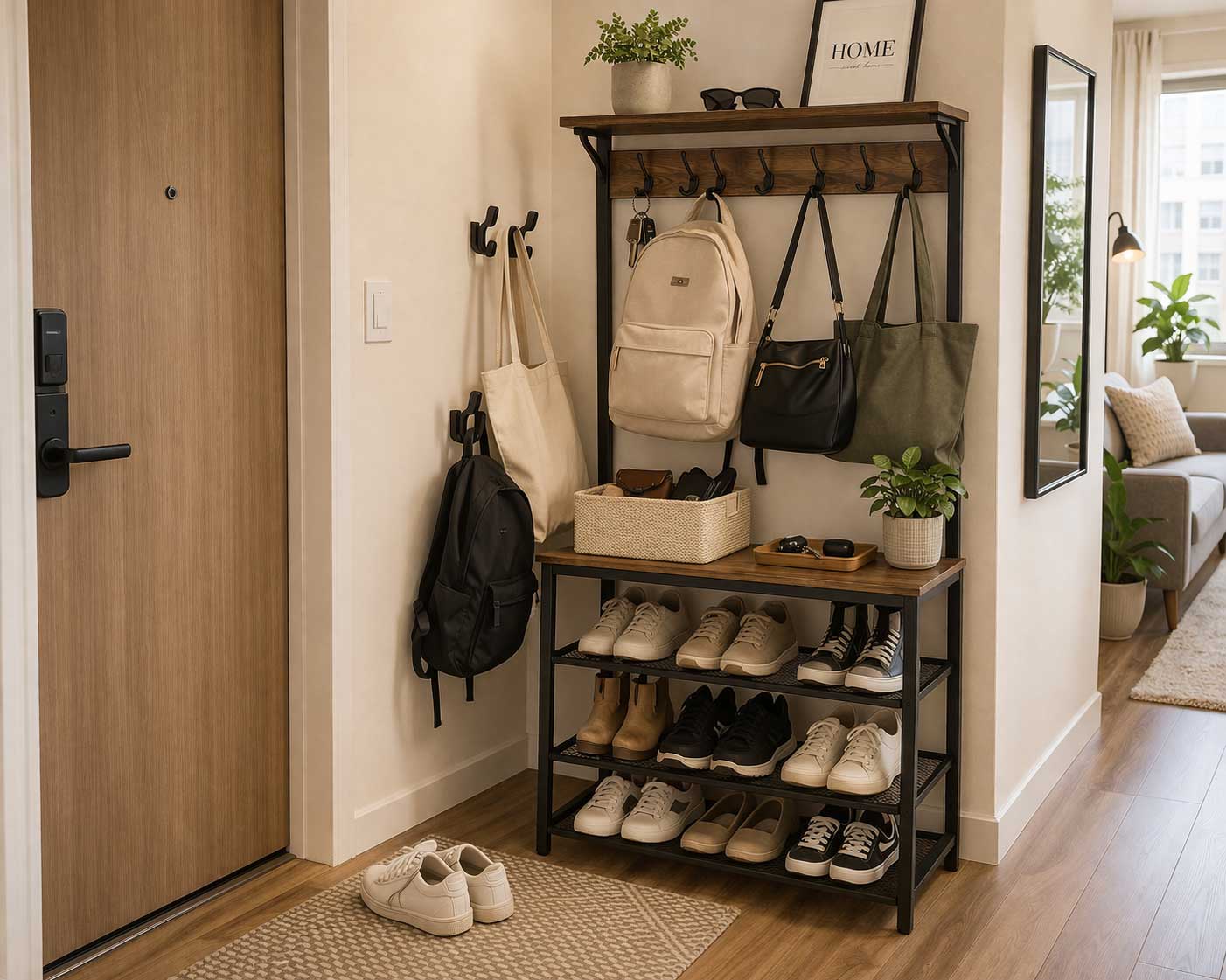
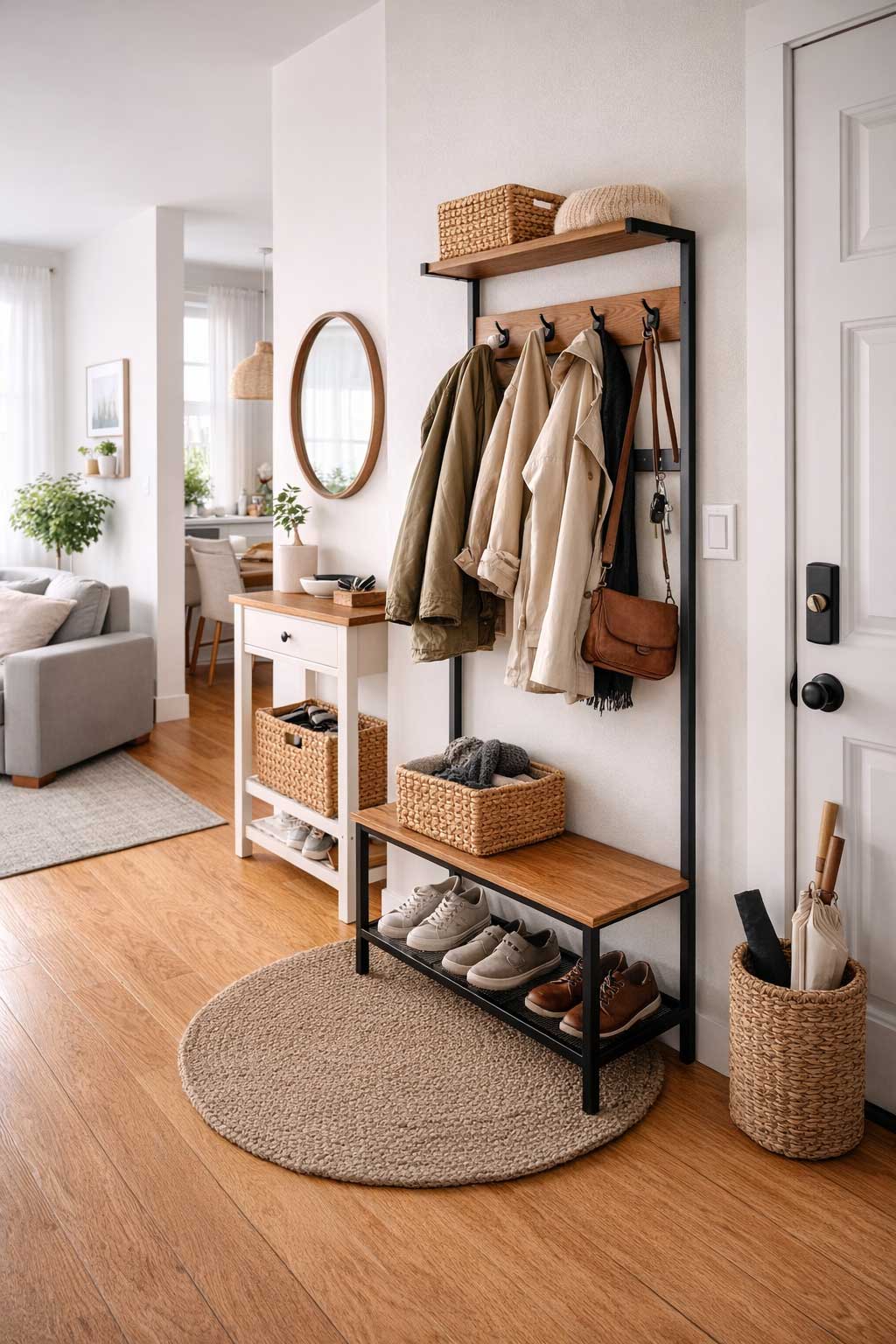
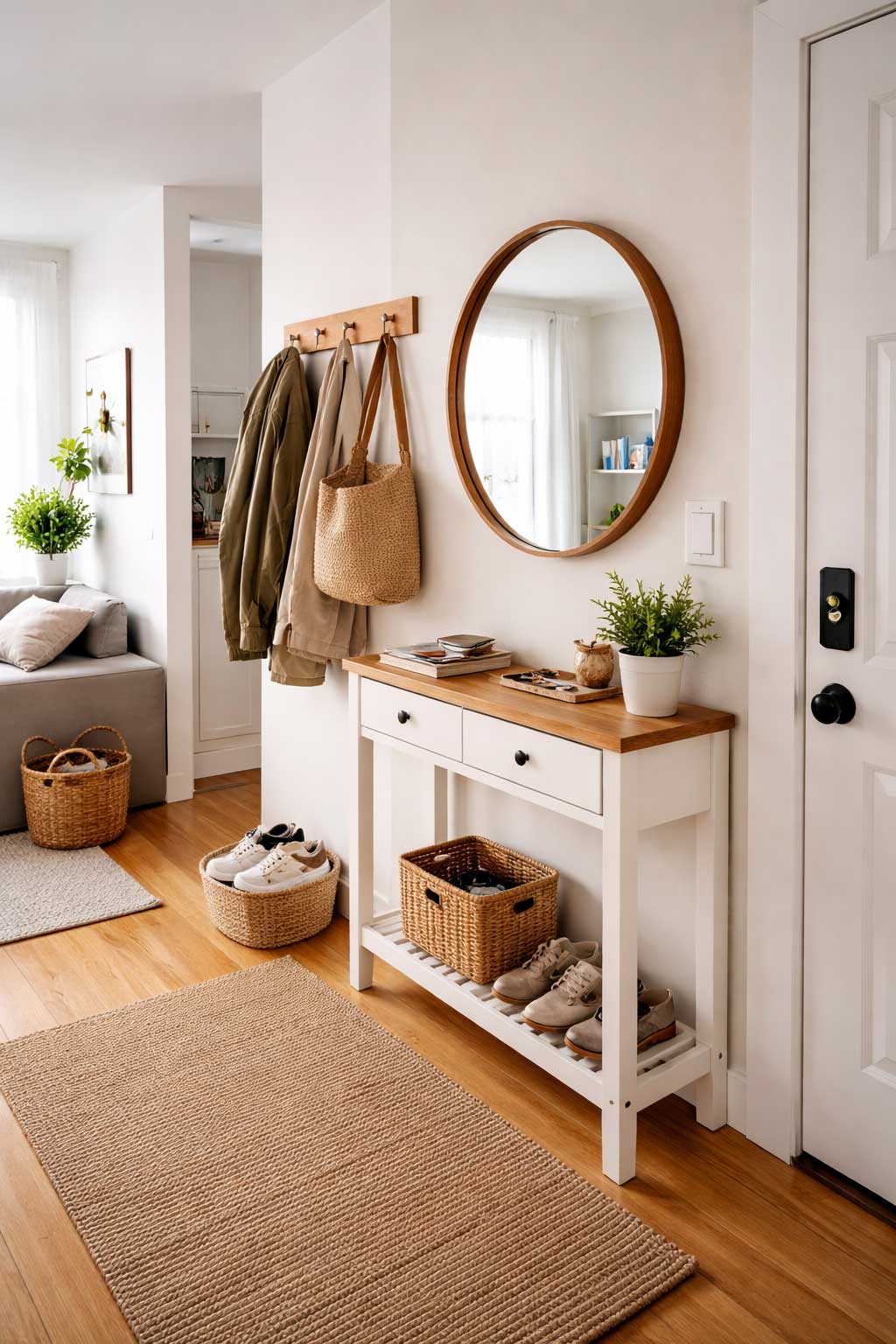
A slim console works well when the biggest need is a landing surface for keys, mail, sunglasses, and other daily items. A storage bench is often the better choice if you need shoe storage and a place to sit while taking shoes on and off. A shallow cabinet can work especially well if you want the entrance to look cleaner from the rest of the room, since closed storage hides visual clutter. A compact hall tree or cubby system can also make sense when you need to handle several categories at once, like coats, bags, and shoes.
The key is choosing one piece that solves the main problem without taking over the space. A no-foyer entryway works best when it feels edited. One smart anchor usually does more than several small pieces fighting for the same few feet of room.
Best Entryway Setups for Common No-Foyer Apartment Layouts
If the front door opens directly into the living room, the entryway should look like it belongs with the rest of the room. A nicer-looking bench, slim cabinet, or narrow console usually works best in this setup because the entry zone is always visible. Storage that looks too temporary or too utility-focused can make the whole room feel messier.
If the front door opens into a narrow hallway, shallow pieces matter even more. A slim shoe cabinet, compact wall hooks, or a very narrow shelf often works better than a bench or open rack that extends too far into the path. In this layout, the goal is to gain function without tightening the walkway.
If the front door opens into the kitchen or dining area, the entryway should stay especially controlled. A small tray for keys, a contained shoe solution, and one narrow piece of furniture may be all you need. In these apartments, it is important to keep the entry zone from visually blending into food prep or dining surfaces.
If you live in a studio apartment, the entryway has to do more with less. Because the setup is visible from most of the room, it usually looks better when it includes fewer pieces and more concealed storage. A studio entryway often works best when it feels quiet and deliberate rather than overly styled or overloaded.
Keep Shoes, Coats, and Bags Contained
Shoes, coats, and bags are usually the three biggest reasons a no-foyer apartment feels chaotic. If they are not contained, they spread immediately into the nearest open space.
Shoes should stay limited to daily-use pairs near the door. A slim shoe cabinet, boot tray, narrow rack, or closed bench often works better than leaving shoes loose on the floor. The biggest mistake is trying to store every pair you own in the entryway. In most apartments, the front door area should only handle the shoes you reach for regularly.
Coats need limits too. In a small apartment, keeping every jacket near the entrance usually makes the area feel heavy. A few hooks, a coat stand, or a compact hall tree can work well, but the entryway should focus on current-use coats instead of acting as full-season outerwear storage.
Bags are easiest to control when they have one obvious home. A bench cubby, a couple of sturdy hooks, or a shelf basket usually works better than letting totes and backpacks land on chairs or pile on the floor. Once these three categories are contained, the apartment immediately feels more functional.
If shoes are your biggest source of clutter, browse Best Shoe Cabinets for Narrow Apartment Entryways.
If you need a more vertical solution for coats or bags, see Best Wall Hooks for Small Apartment Entryways.
Give Small Everyday Items a Dedicated Spot
Even a good entryway can still feel messy if the little things have nowhere to go. Keys, wallets, earbuds, sunglasses, dog bags, and incoming mail can quickly spread across whatever surface is closest to the door.
That is why a small catch-all zone is so important. This can be as simple as a tray on a console, a shallow drawer in a cabinet, a small divided organizer, or a shelf with a bowl for loose items. The purpose is not to create a giant command center. It is to stop daily pocket clutter from scattering across the apartment.
This part of the entryway should be extremely easy to use. If it takes effort to put something away, it will not happen consistently. The best catch-all setups are simple, visible, and easy to reset in a few seconds.
Use Visual Boundaries to Make the Entryway Feel Separate
A no-foyer apartment still benefits from visual separation. Even when there are no walls dividing the space, small design cues can make the entrance feel like its own zone.
A rug is one of the simplest ways to mark the entry area and signal that this space has a distinct purpose. A mirror can help too, both functionally and visually. A small lamp, a framed piece of art, or a slight shift in furniture placement can also help define the entrance without adding much bulk.
These details matter because they make the entryway feel intentional. In a small apartment, that sense of structure can make the whole layout feel more thought-out. The goal is not to overdecorate the front door. It is to create just enough visual definition that the area feels like part of the apartment plan instead of clutter collecting by accident.
Mistakes to Avoid When Creating an Entryway With No Foyer
One of the biggest mistakes is choosing furniture that is too deep. A bulky cabinet or oversized bench may add storage, but it can also make the entrance feel cramped every single day. In small apartments, a shallow piece that preserves movement is usually the smarter choice.
Another common mistake is trying to store too much by the front door. The entryway should support daily routines, not act as overflow storage for everything you own. When too many items live there, the setup starts working against you.
Too much open storage is another issue. Open hooks, baskets, and shelves can be useful, but when they are overloaded, they create visual clutter fast. A little closed storage often goes a long way in a no-foyer apartment because it helps the entrance look calmer from the rest of the room.
People also make the mistake of focusing on appearance before function. A beautiful entry setup that does not hold shoes, coats, keys, or bags in a practical way will not stay organized for long. In a small apartment, the best-looking entryway is usually the one that actually supports your routine.
Products That Make a No-Foyer Entryway Easier to Manage
The most helpful entryway products are usually the ones that solve one daily problem clearly. A slim shoe cabinet can keep footwear from spilling into the room. A compact wall-hook setup can handle bags and jackets without taking up floor space. A small drop-zone organizer can stop keys, wallets, and mail from migrating to kitchen counters or coffee tables.
For more product ideas that match those needs, explore Best Drop Zone Organizers for Small Apartment Entryways.
You can also revisit Best Entryway Storage Solutions for Small Apartments if you need a broader mix of furniture and storage types that work in tighter layouts.
Final Thoughts on Creating an Entryway in a Small Apartment With No Foyer
Creating an entryway in a small apartment with no foyer is not about pretending you have a formal front hall. It is about building a compact landing zone that makes the apartment easier to live in. When shoes, coats, bags, keys, and other daily essentials have a defined place near the front door, the whole home feels more organized.
The best no-foyer entryways are usually simple. They use one smart anchor piece, contain the most common clutter categories, and leave enough open space to move comfortably. That combination helps the entry area feel intentional without making the apartment feel smaller.
A well-planned entryway does not need much square footage to make a big difference. It just needs to work with your routine and your layout.
FAQ
How do you create an entryway in an apartment with no foyer?
Create an entryway in an apartment with no foyer by defining a small zone near the front door with one main piece of furniture, contained storage for shoes or bags, and a simple place for keys, mail, and daily essentials.
What should you put by the front door in a small apartment?
The best things to put by the front door in a small apartment are the items you use every day, such as a narrow landing surface, shoe storage, a coat or bag solution, and a small catch-all for keys and mail.
What furniture works best for a small apartment entryway?
The best furniture for a small apartment entryway usually includes slim consoles, shallow shoe cabinets, storage benches, compact hall trees, and other narrow pieces that create function without blocking the walkway.
How do you organize shoes and coats without an entry closet?
Organize shoes and coats without an entry closet by limiting the entry area to everyday items, using contained shoe storage, and adding a compact hook, coat stand, or hall tree for outerwear and bags.
How do you make an entryway feel separate in a studio apartment?
Make an entryway feel separate in a studio apartment by using visual boundaries like a rug, mirror, lighting, or a clear furniture anchor to define the front-door zone without needing walls.