How to Separate Work and Living Space in a Small Apartment
Separating work and living space in a small apartment can feel nearly impossible when the same room has to handle everything. A desk may sit a few feet from the sofa, work gear may spill onto the coffee table, and the apartment can start feeling like there is no clear line between being on the clock and actually being home. The challenge is not always having more square footage. It is creating enough structure that work and everyday life do not keep blending together.
The good news is that you do not need a separate office to create better separation. In most small apartments, the best setup comes from defining one real work zone, controlling visual clutter, and making it easier for the room to shift back into living mode when the workday ends. With the right approach, even a compact apartment can feel more balanced, more functional, and less mentally crowded.
For broader strategies on fitting work into a small home, explore our How to Fit a Home Office Into a Small Apartment Without a Separate Room guide.
If your setup is in the main lounge area, check out How to Set Up a Home Office in a Small Apartment Living Room.
For help keeping the workspace itself more controlled, browse How to Organize a Small Apartment Home Office.
This guide is part of our Small Apartment Office Solutions collection.
Quick Answer
If you want to separate work and living space in a small apartment, the best approach is to give work one clearly defined zone and keep the rest of the room from becoming overflow office territory. In most apartments, that means using furniture placement, storage boundaries, lighting, and simple visual cues to make the work area feel intentional while helping the rest of the apartment still feel like home.
A good work-living separation setup usually works best when it includes:
- one clearly defined work zone
- enough visual difference between work and lounge areas
- contained storage for work clutter
- a clear end-of-day reset routine
- a layout that supports work without taking over the apartment
Why Work and Living Space Blur So Easily in a Small Apartment
Work and living space blur quickly because work rarely stays inside one neat square of the room by itself. A laptop moves from the desk to the sofa. A charger lands on a side table. A notebook ends up on the coffee table. Headphones stay draped over a chair. Before long, work is no longer happening in one area. It is happening everywhere.
This is especially common in small apartments because there may be no dedicated office at all. The living room, bedroom, or dining area ends up carrying both functions. Once that happens, the problem is often less about size and more about boundaries. If work does not have a defined footprint, it will naturally expand onto every nearby surface that feels convenient.
That is why separation matters so much. The goal is not to pretend work is not happening in the apartment. The goal is to make sure work has a home so the rest of the apartment does not start feeling like part of the office too.
Start by Defining What Counts as the Work Zone
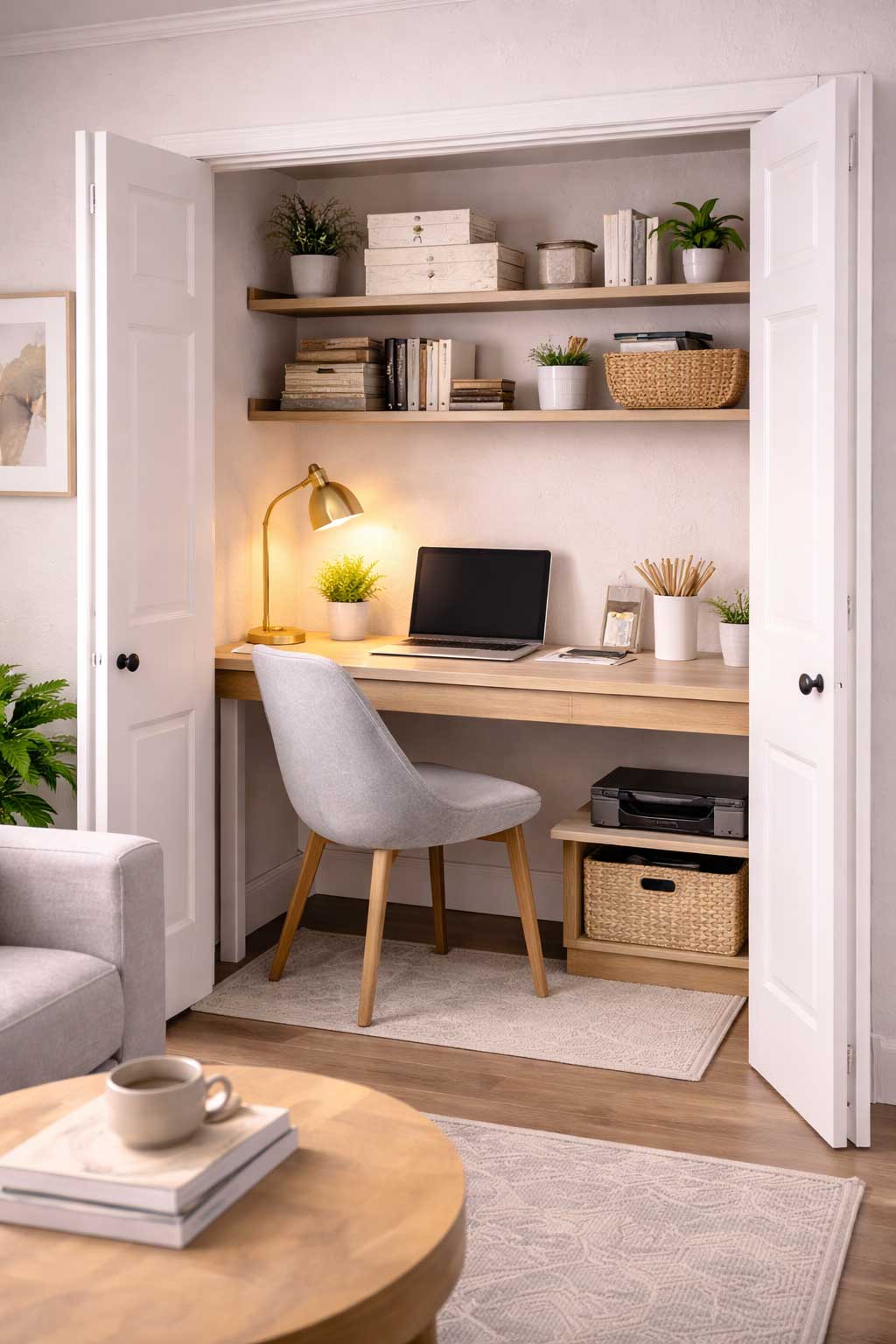
The first step is deciding exactly where work lives. In a small apartment, that zone does not need to be large, but it does need to be real. It might be one wall, one corner, one desk, one side of the living room, or one small section of a studio. What matters is that work has a clear boundary.
This sounds simple, but it is one of the biggest differences between a setup that feels manageable and one that feels mentally exhausting. If your work zone is vague, it becomes too easy for work items to spread. If the zone is defined, it becomes much easier to tell what belongs there and what does not.
A good way to think about it is this: if someone walked into the apartment and asked where work happens, there should be an obvious answer. Even if the space is small, the work zone should feel intentional instead of accidental.
Choose the Best Way to Separate the Zones Without Blocking the Room
The best separation method is usually the lightest one that still creates a clear distinction. In a small apartment, the goal is not to build walls around the office. It is to make the work area feel different enough that it does not visually swallow the rest of the room.
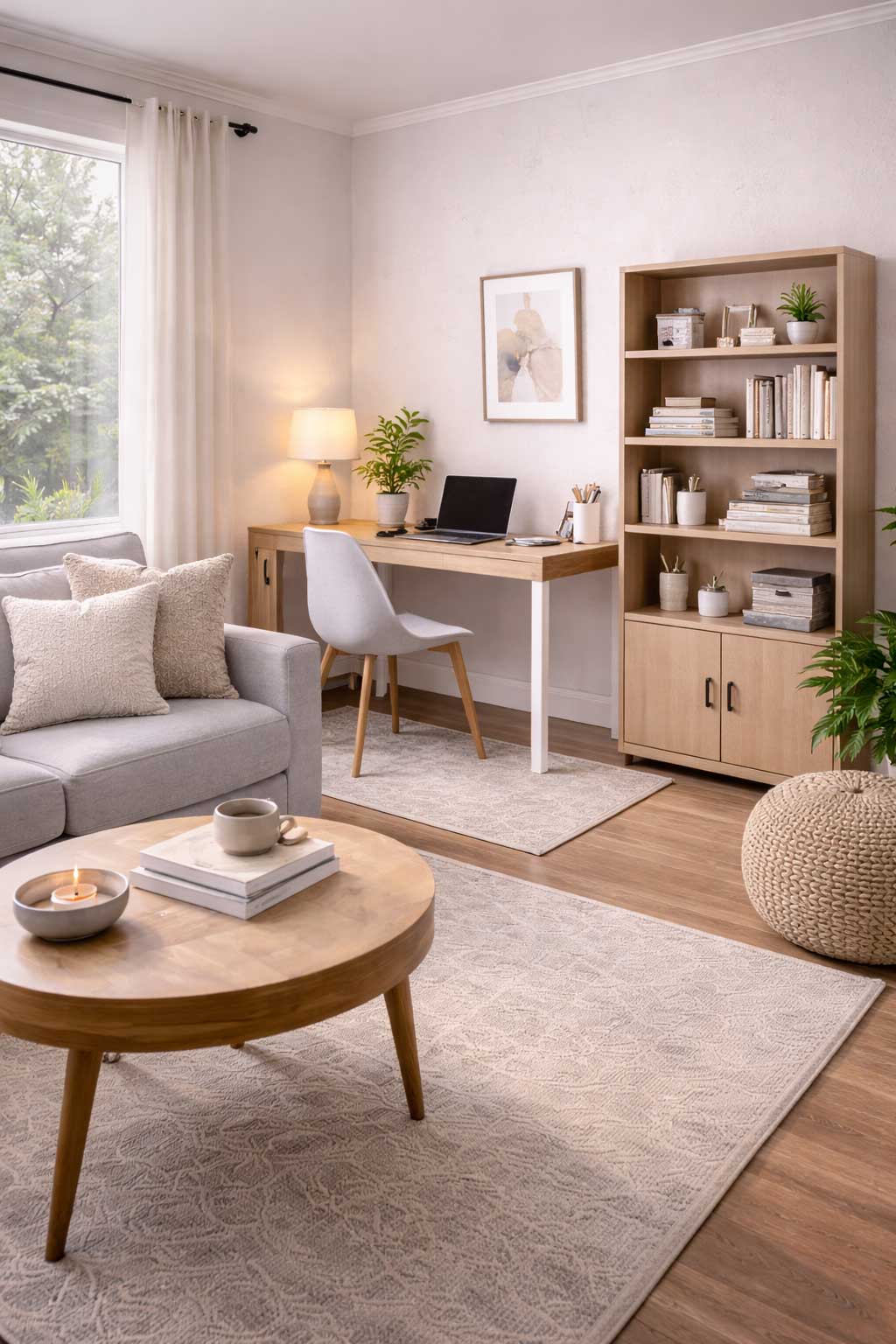
Desk placement is often the first and most effective tool. A desk against one wall, in one corner, or behind a sofa can instantly define a work area without adding extra furniture. A rug can also help by visually anchoring one zone without making the room feel tighter. Lighting is another powerful separator. A desk lamp or focused task lighting can make the office area feel distinct from the softer lighting used in the rest of the room.
Shelving or a slim divider can work too, but only if the room can handle it. In a small apartment, oversized dividers often make the room feel more cramped. Lighter separation usually works better than heavy separation. The point is clarity, not enclosure.
Best Ways to Separate Work and Living Space in Common Small Apartment Layouts
If you live in a studio apartment, the best separation usually comes from treating one side or one corner of the room as the office and resisting the urge to let work drift beyond it. In studios, even a small visual boundary matters because everything is visible at once.
If your office is in the living room, furniture placement often does the most work. A desk behind the sofa, against a side wall, or tucked into a corner usually feels better than a desk that directly competes with the TV wall or the main seating area.
If your workspace is in a bedroom corner, the best setup usually comes from keeping it as edited as possible. In a bedroom, work tends to feel more intrusive, so the storage needs to be tighter and the reset routine more important.
If two people work from home in the same apartment, separation matters even more. Each person needs a defined work zone, even if the zones are small. Without that structure, work tools, papers, and tech gear tend to overlap fast.
If you work from a dining table, the separation has to come from routine and containment more than furniture. In that setup, the work zone may only exist during work hours, which makes the daily reset even more important.
Create Visual Separation So Work Does Not Dominate the Whole Room
Visual separation is often what keeps a small apartment from feeling like an office after work. Even if the desk is physically small, it can still dominate the room if the office zone looks too stark, too cluttered, or too disconnected from the rest of the space.
One of the easiest ways to soften that is to make the work area feel like part of the apartment instead of a different environment dropped into it. A desk that matches the room’s finishes usually works better than something that looks overly corporate. Open shelving can help if it stays restrained. A lamp, a plant, or one framed piece of art can make the workspace feel more integrated without turning it into a decorative project.
This is also where scale matters. The work zone should feel defined, but it should not become the main visual event in the room. In most small apartments, subtle separation works better than dramatic separation. A clear zone that still feels connected to the apartment usually creates the best balance.
If you need a stronger physical boundary between the lounge and office areas, browse Best Small Living Room Room Dividers for Apartments.
Keep Work Gear and Office Clutter From Crossing Into Living Space
In most apartments, separation fails because the desk is not the real problem. The real problem is the spillover. Chargers drift onto side tables. Papers land on the coffee table. Work bags sit by the sofa. Printers, notebooks, and small accessories start spreading outside the office zone until the entire room feels like work territory.
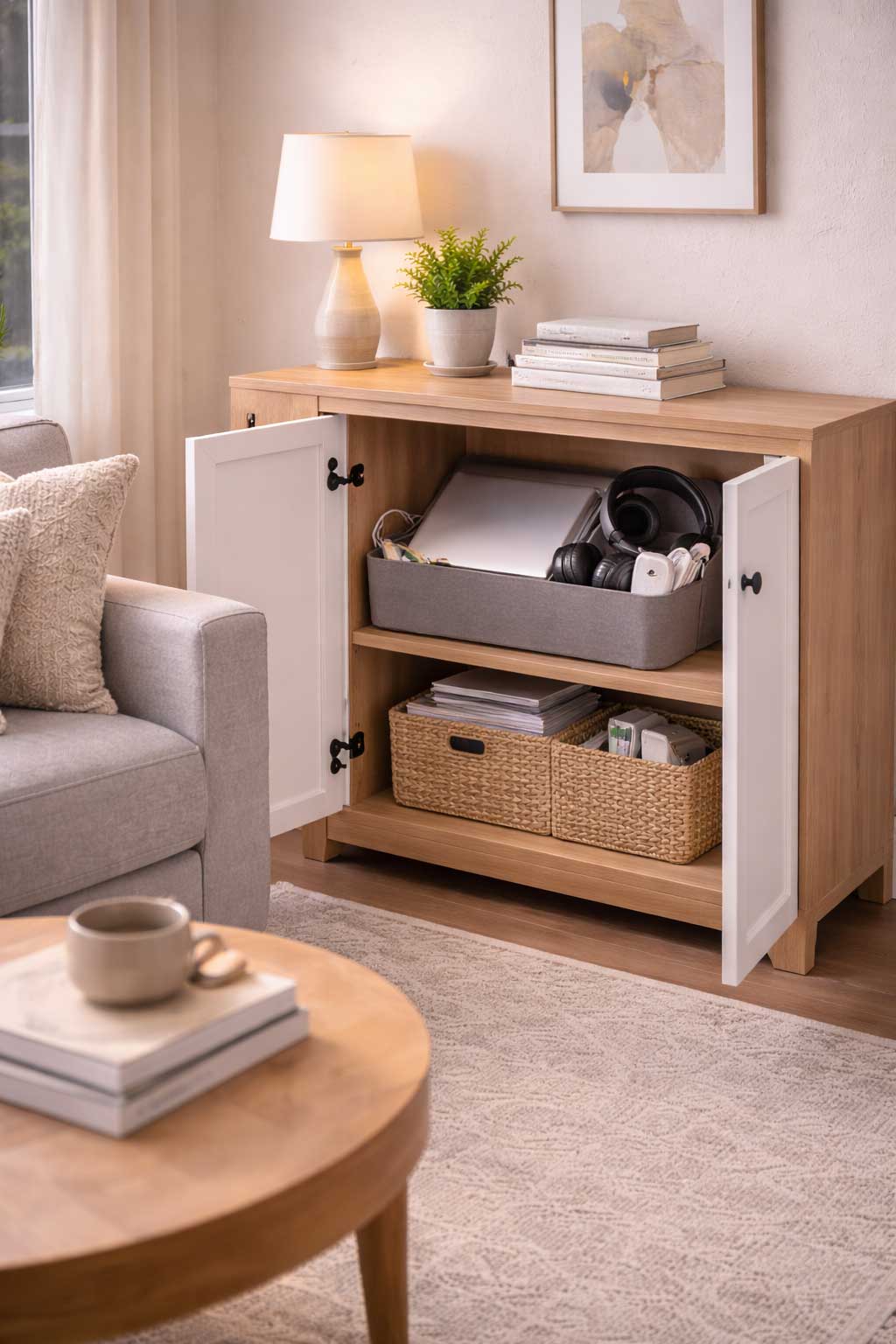
That is why work clutter has to stay contained if the separation is going to last. Drawers, cabinets, baskets, printer storage, trays, and grouped tech organization all help because they keep work gear inside the office footprint instead of letting it migrate across the room.
This is especially important in living rooms and studios. A sofa can still feel relaxing with a desk nearby. It usually stops feeling relaxing when the lounge surfaces start holding work gear too. Keeping work items concentrated in one area protects the room from that feeling.
If office equipment is part of the clutter problem, revisit How to Hide a Printer and Office Equipment in a Small Apartment.
If you need more enclosed desk-side support, take a look at Best Office Storage Cabinets for Small Apartments.
Use End-of-Day Habits to Reinforce the Boundary
Physical boundaries help, but habits are what make the separation stick. If the workday ends and the laptop stays open, the task light stays on, and the notes stay spread out, the room still feels like work is in progress no matter how well the furniture is arranged.
That is why one simple shutdown routine matters so much. Closing the laptop, putting away the notebook, tucking chargers back into place, and resetting the desk takes only a few minutes, but it changes how the room feels immediately. In a small apartment, those few actions often matter more than adding more furniture.
The best routine is the one you will actually repeat. It does not have to be elaborate. It just has to clearly mark the shift from work mode back to living mode. Once that transition becomes regular, the apartment usually feels much less mentally crowded.
Make the Apartment Feel Like Home Again After Work
Separating work and living space is not only about controlling the office zone. It is also about strengthening the living side of the apartment so it still feels like home after the workday ends.
That usually means keeping the relaxing surfaces clear, using softer lighting outside the work area, and making sure the non-work parts of the room still feel visually stronger than the office setup. The sofa, lounge chair, coffee table, reading lamp, and other personal parts of the room should not feel like leftovers beside the desk. They should still feel like the main identity of the space.
In a small apartment, even a little intentionality helps here. If the work zone resets and the living zone stays visually calm, the apartment can shift back into a much more personal and restful feeling after hours.
Mistakes to Avoid When Trying to Separate Work and Living Space
One common mistake is letting work spread onto every nearby surface. Even a good desk setup loses its benefit if the sofa, coffee table, and dining area all become part of the work zone too.
Another mistake is choosing a desk location with no visual boundary at all. If the desk is dropped into the center of the room without any structure around it, the space often feels more chaotic. Oversized dividers are another problem. While separation helps, bulky partitions can make a small apartment feel smaller than it already is.
Keeping office equipment fully visible all the time can also make the room feel more office-heavy than necessary. And finally, many people expect the separation to happen automatically without an end-of-day reset. In a small apartment, the physical setup matters, but the routine matters just as much.
Products That Make Work-Living Separation Easier in a Small Apartment
The best products are the ones that help define the work zone without making the room feel heavier. Some apartments do best with compact desks and restrained storage. Others benefit more from shelving, baskets, cabinets, room dividers, or lighting that helps separate the work area visually.
The right solution depends on the layout and how visible the office zone is from the rest of the apartment. In some homes, the best upgrade is a divider or shelf. In others, it is simply better storage that keeps work clutter from crossing into the living side of the room. In small spaces, the most effective products are usually the ones that reduce overlap instead of adding more visual noise.
Final Thoughts on Separating Work and Living Space in a Small Apartment
A small apartment does not need a separate office to feel more balanced. It needs a work zone that is clearly defined, a living zone that stays protected, and enough routine that the room can shift out of work mode at the end of the day.
The strongest setups usually come from a few simple choices: decide where work really lives, create enough visual distinction for that area to feel separate, and stop work clutter from spilling across the rest of the apartment. When those pieces come together, the room usually feels easier to work in and easier to relax in too.
The goal is not perfect separation. It is enough separation that the apartment can still feel like home when the workday is done.
FAQ
How do you separate work and living space in a small apartment?
Separate work and living space in a small apartment by giving work one clearly defined zone, keeping office items contained there, and using furniture placement, lighting, storage, and daily reset habits to protect the rest of the room.
How do you make a small apartment feel less like an office?
Make a small apartment feel less like an office by keeping the work footprint small, putting away visible work gear after hours, and making sure the living side of the room stays visually calmer and stronger than the office side.
What is the best way to define a work zone in a studio apartment?
The best way to define a work zone in a studio apartment is usually to anchor it to one wall, one corner, or one desk area and use subtle cues like rugs, shelving, lighting, or furniture placement to make that zone feel intentional.
How do you stop work clutter from taking over the living room?
Stop work clutter from taking over the living room by keeping work gear in drawers, baskets, cabinets, or grouped storage near the desk and avoiding spillover onto the sofa, coffee table, and other lounge surfaces.
What furniture helps separate work and lounge space?
Furniture that helps separate work and lounge space usually includes compact desks, shelving, slim dividers, storage cabinets, and other pieces that define the office zone without making the room feel boxed in.