How to Set Up a Home Office in a Small Apartment Living Room
Setting up a home office in a small apartment living room can feel tricky because the space already has to do so many jobs at once. It may need to work as a TV room, guest space, reading area, dining overflow zone, or everyday hangout spot, and adding a desk setup can make the whole room feel more crowded fast. The challenge is not just fitting a desk somewhere. It is creating a workspace that helps you focus during the day without making the living room feel like an office all the time.
The good news is that a small apartment living room can still support a functional home office when the setup is planned around the room instead of forced into it. In most apartments, the best approach comes from choosing the right office footprint, giving the workspace a defined zone, and keeping work clutter controlled when the day is done. With the right setup, you can make the living room work harder without making it feel overloaded.
For broader ways to make a workspace fit into a small home, explore our How to Fit a Home Office Into a Small Apartment Without a Separate Room guide.
If you need help organizing the work zone itself, check out How to Organize a Small Apartment Home Office.
For furniture ideas built for compact work setups, browse Best Office Desks for Small Apartments.
This guide is part of our Small Apartment Office Solutions collection.
Quick Answer
If you want to set up a home office in a small apartment living room, the best approach is to give the workspace one clearly defined zone and keep the setup proportional to the room. In most apartments, that means using a compact desk, choosing furniture that fits living-room scale, and creating enough visual separation that the room can still feel like a living room when work is over.
A good living-room office setup usually works best when it includes:
- one clearly defined work area
- a desk footprint that fits the room without dominating it
- storage that keeps work items contained
- enough separation between work and lounge zones
- a setup that is easy to tidy when the workday ends
Why a Living Room Home Office Feels So Hard in a Small Apartment
A living room office feels difficult because the living room is already one of the hardest-working spaces in the apartment. It often has to handle relaxing, entertaining, watching TV, eating occasionally, and sometimes even guest sleeping. Once work enters that space too, the overlap between activities becomes much more obvious.
This is why a living room office can feel stressful even when the desk technically fits. The problem is often not the desk itself. It is the way work starts bleeding into the rest of the room. A laptop stays open on the coffee table. Chargers trail across the floor. Papers stack beside the sofa. The room starts feeling less like a place to unwind and more like a permanent work zone.
That is why the best small living room office setups are not just about squeezing in furniture. They are about creating enough structure that the workspace supports the workday without taking over the room the rest of the time.
Start by Deciding What Your Home Office Actually Needs
Before choosing a desk or rearranging the living room, it helps to get very honest about what your work setup actually requires. Some people truly need a monitor, keyboard, mouse, task chair, lighting, and storage for work supplies. Others mostly need a laptop, a reliable surface, and a quiet corner to focus.
This distinction matters because small apartments do not have much room for unnecessary office bulk. If the work only requires a laptop and a notebook, a large executive-style desk will almost always be too much. If the work requires a more serious setup, then the room needs to be planned around that reality instead of pretending a tiny decorative table will be enough.
A better office starts with identifying your non-negotiables. Do you need two screens? Do you need drawer storage? Do you take video calls and need a cleaner background? Do you need room for paperwork, or is almost everything digital? The clearer those needs are, the easier it becomes to build a setup that is functional without getting larger than necessary.
Choose the Best Spot for the Office Zone in the Living Room
The best location for a living room office is usually the one that supports focus without breaking the room’s main flow. In many apartments, that means using a section of wall that is underused instead of forcing the desk into the center of the space.
An open wall is often the simplest option because it gives the desk a clear boundary and keeps the office area visually contained. A corner can also work very well, especially if the rest of the room is already organized around the sofa and TV. Placing a desk behind the sofa can be effective in some layouts because it creates natural separation between the lounge zone and the work zone without needing a full divider.
A window-adjacent setup can be a strong choice if glare is manageable and natural light helps you work better. In other apartments, a desk beside a media console or bookshelf may make more sense because it allows the office zone to blend into furniture that already belongs in the room.
The most important thing is protecting the room’s traffic path. If the desk blocks movement between the sofa, TV, doorway, or dining area, the office will make the living room feel frustrating every day.
Choose Office Furniture That Fits Living Room Scale
Office furniture works better in a living room when it looks like it belongs there. This does not mean the desk has to disappear completely. It means it should fit the room’s scale and visual style instead of looking like a corporate workstation dropped into the apartment.
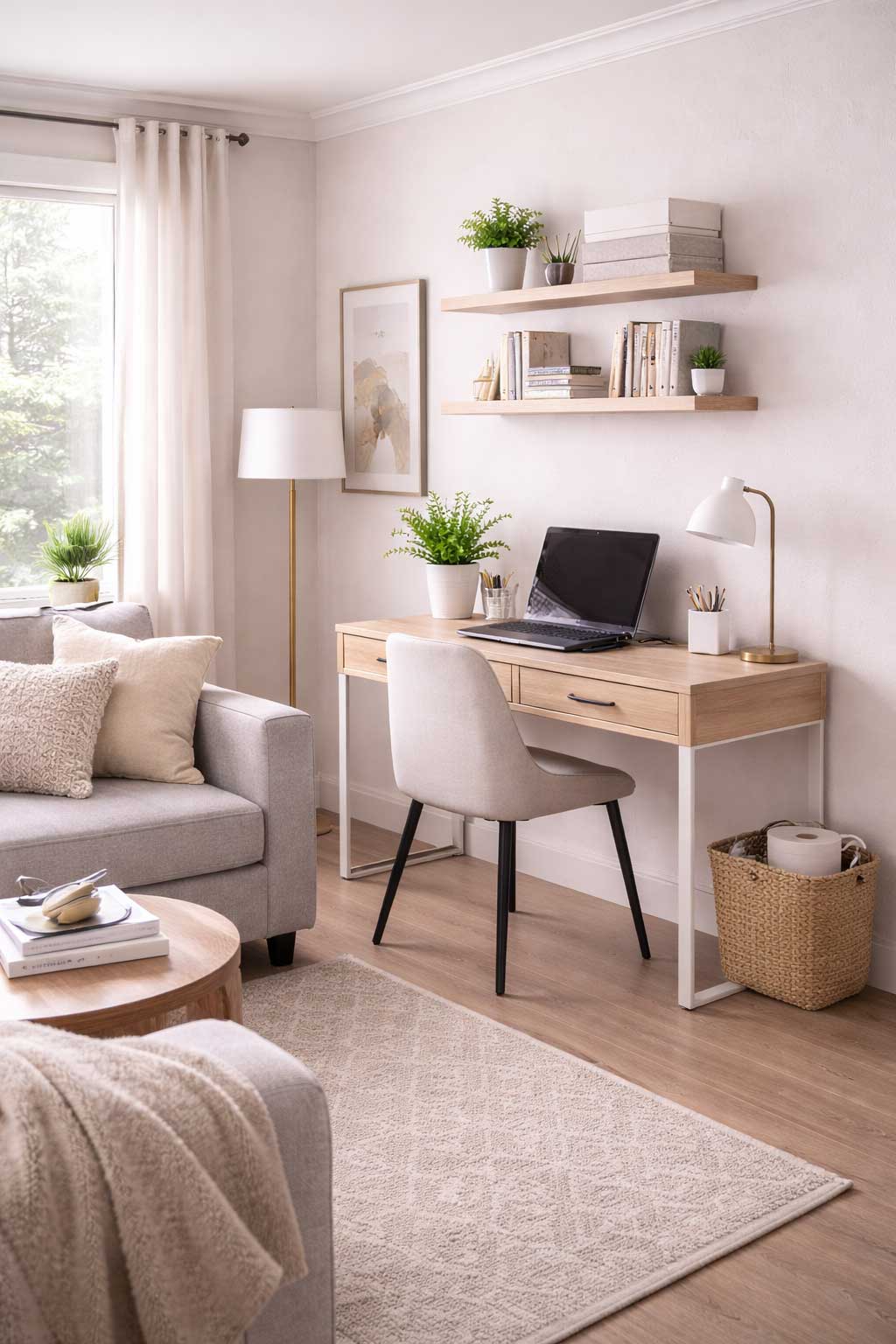
Compact desks usually work best because they create enough work surface without taking over the wall. Slim-profile desks, wall-adjacent pieces, and desks with simple legs often feel lighter than bulkier models. Chairs matter too. A heavy task chair can make a small living room feel more office-like than necessary, while a cleaner-lined chair can often blend in better if it still provides enough support.
Built-in storage can help a lot because it reduces the need for extra office furniture nearby. A desk with drawers or a shelf can be much more efficient than a plain desk plus a separate filing cabinet. Finishes matter too. When the desk and chair echo the room’s wood tones, metal finishes, or general style, the office zone usually feels less intrusive.
The goal is not to hide the fact that you work there. It is to make the office area feel integrated instead of out of place.
Best Living Room Office Setups for Common Small Apartment Layouts
If you live in a studio apartment, the living room may effectively be the office by default. In that kind of layout, the best setup usually comes from keeping the work zone tightly defined and visually contained. A compact desk against one wall or in one corner often works better than letting work float into the middle of the room.
If you live in a one-bedroom apartment with a tight living room wall, a narrow desk or wall-adjacent setup is usually the strongest fit. The room often cannot handle a large footprint, so choosing a desk that supports the work without demanding too much width makes a big difference.
If the living room also needs to prioritize TV watching, the desk usually works best off to one side rather than directly competing with the media wall. In these layouts, it helps when the office zone feels secondary once the workday is over.
If the desk has to share space with a sofa and coffee table, it becomes even more important to edit the setup. The room usually feels better when the office uses one defined boundary and keeps clutter tightly controlled instead of spilling into the lounge area.
Create Visual Separation Without Making the Room Feel Smaller
A small living room office works better when the workspace feels distinct, but that separation has to stay light. If the office is too visually blended into the lounge area, work clutter spreads easily. If the separation is too heavy, the room can start feeling boxed in.
One of the simplest ways to create distinction is through furniture placement. A desk facing a different direction than the sofa or tucked behind the main seating zone can make the office feel intentional without adding extra pieces. Lighting helps too. A dedicated desk lamp can subtly define the workspace and make it feel separate from the rest of the room.
Rugs, bookshelves, and lightweight dividers can also help in the right layout, but they need restraint. The goal is not to build a wall around the desk. It is to signal that this corner or wall section has a different purpose. In many apartments, even a small visual shift is enough to make the workspace feel more organized and the living room feel less invaded by work.
If the room needs a stronger but still apartment-friendly separation, browse Best Small Living Room Room Dividers for Apartments.
Keep Work Clutter Contained So the Living Room Still Feels Relaxing
Work clutter is usually what makes a living room office feel harder than it needs to be. A desk itself is often manageable. What overwhelms the room is everything around it: chargers, notes, pens, documents, headphones, notebooks, and the loose items that slowly migrate onto the coffee table or sofa.
That is why containment matters so much. Drawers, baskets, desktop organizers, small cabinets, and end-of-day reset habits all help keep work from spreading into the rest of the room. Even a simple system can make a huge difference if it gives papers, office tools, and accessories a defined place to go.
This is especially important in small apartments because the living room still needs to function after work. If the workspace never resets, the room starts feeling tense and unfinished all the time. A contained office zone helps the living room stay more relaxing once the workday ends.
If wall-based storage would help keep the desk zone lighter, check out Best Floating Shelves for Small Apartment Offices.
Manage Cords, Screens, and Tech So the Setup Looks Cleaner
Tech clutter often makes a living room office stand out more than the desk itself. A monitor, visible power strip, hanging cables, chargers, and side devices can make the office zone feel busier even when the rest of the room is tidy.
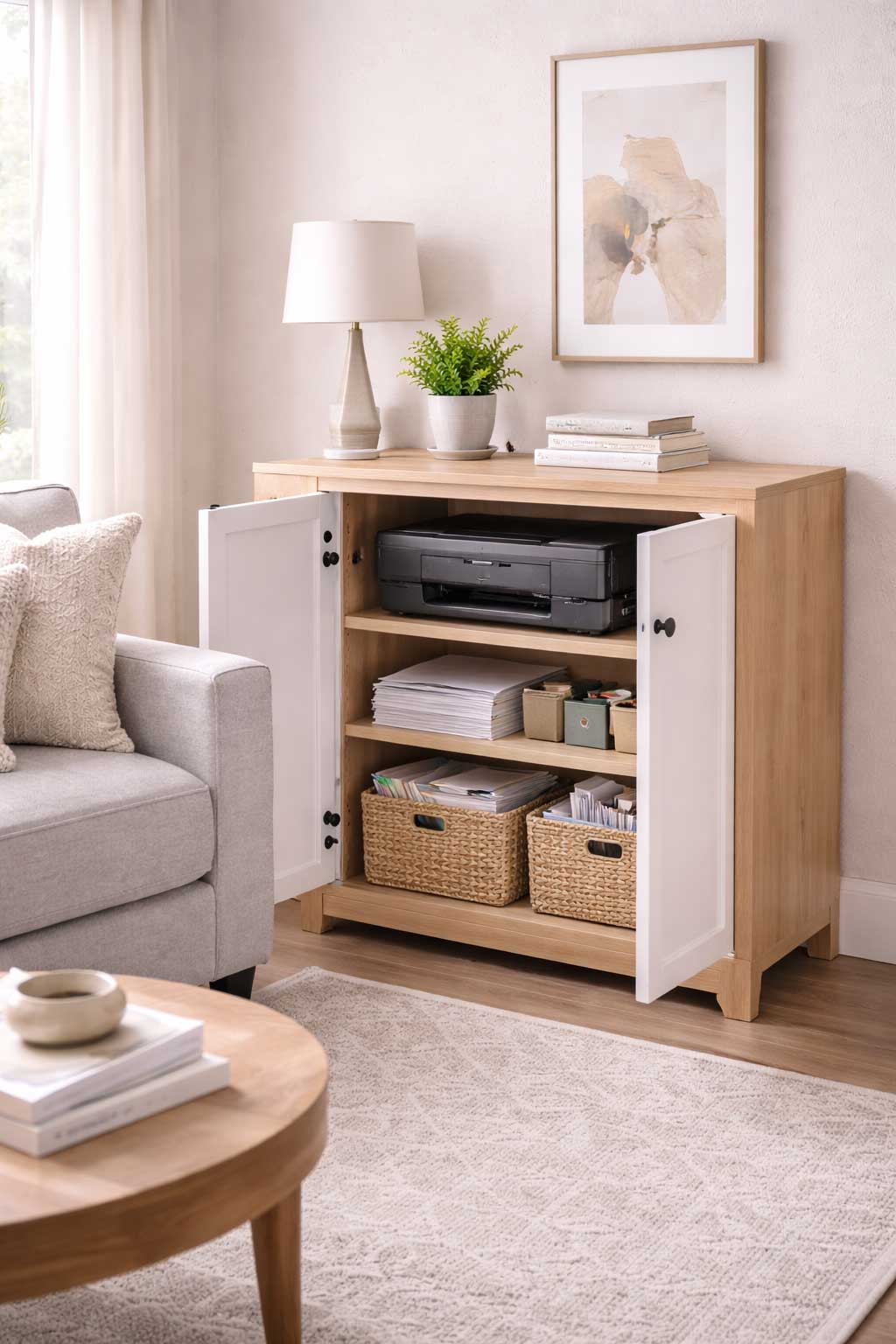
The best way to clean this up is to make tech placement feel deliberate. Monitors should sit in a way that does not visually dominate the room more than necessary. Chargers and cords should be grouped and routed instead of dangling wherever they fall. Printers, routers, and extra devices should stay hidden or at least visually minimized whenever possible.
This does not mean the setup has to be perfect or invisible. It means the obvious visual noise should be reduced. In a room that is doing double duty, cleaner tech management helps the office feel more integrated and helps the living room feel more finished.
If cables are one of the biggest problems in your setup, see Best Cable Management Kits for Small Apartment Offices.
Mistakes to Avoid When Setting Up a Home Office in a Small Living Room
One common mistake is choosing a desk that is too big for the room. Even if it seems more productive, an oversized desk usually makes the whole space feel off balance. Another mistake is blocking the natural pathways people use to move through the room. A functional office should not make the living room harder to live in.
Letting office supplies spread into the lounge zone is another major issue. Once work starts occupying the coffee table, sofa, or media console, the room stops feeling clearly divided. Treating the whole living room like office territory is also a problem. The workspace should have a clear footprint instead of slowly claiming every nearby surface.
Finally, many people ignore how the office looks when work is over. In a small apartment, that matters a lot. A living room office needs to function during the day, but it also needs to let the room return to feeling like a living room at night.
Products That Make a Living Room Office Easier to Set Up in a Small Apartment
The best products are the ones that support the work without overwhelming the room. Some living rooms do best with compact desks and furniture that blends into the space visually. Others benefit more from discreet storage, cable management, floating shelves, or lightweight divider-style pieces that define the office zone without making the room heavier.
The right setup depends on how the living room is used, how much equipment the work actually requires, and how much separation the room needs to feel balanced. In small apartments, the best living room offices usually look intentional and restrained. They solve the work problem without creating a new layout problem in return.
Final Thoughts on Setting Up a Home Office in a Small Apartment Living Room
A small apartment living room can absolutely support a good home office, but it works best when the setup is defined, proportional, and controlled. That usually means choosing a desk that fits the room, creating just enough separation between work and living space, and keeping clutter from spreading beyond the office zone.
The strongest setups usually come from a few smart choices: build the office around your real work needs, keep the furniture scaled to the room, and make sure the living room can still feel like a place to relax when the workday ends. When those pieces come together, the space feels more intentional and much easier to live in.
The goal is not to turn the living room into a perfect office. It is to create a workspace that helps you work well while still letting the room feel like home.
FAQ
How do you put a home office in a small living room?
Put a home office in a small living room by choosing one defined area for the workspace, using a desk that fits the room’s scale, and keeping work items contained so the office does not spread across the whole room.
Where should a desk go in a small apartment living room?
A desk in a small apartment living room usually works best against an open wall, in a corner, behind a sofa, or in another spot that supports workflow without blocking the room’s main pathways.
How do you separate work space from living space in a small apartment?
Separate work space from living space in a small apartment by using furniture placement, lighting, rugs, shelving, or light divider-style elements to define the office zone without making the room feel smaller.
What desk works best in a small living room?
The best desk for a small living room is usually a compact, clean-lined desk that fits the room’s scale and ideally includes some built-in storage so the setup stays more contained.
How do you hide office clutter in a living room?
Hide office clutter in a living room by using drawers, baskets, cabinets, desktop organizers, shelf storage, and cable management so work supplies stay grouped and easy to put away at the end of the day.