How to Choose the Right Closet Organizer for a Small Apartment
A small apartment closet can either make daily life easier or quietly create frustration every single morning. When the storage inside that closet does not match what you actually own, the result is usually the same: stacked clothing, wasted vertical space, hard-to-reach shelves, crowded floors, and the constant feeling that the apartment never stays organized for long.
The good news is that choosing the right closet organizer is usually less about buying the biggest system and more about choosing the right one for your layout, your wardrobe, and your daily habits. In a compact apartment, smart organization matters more than sheer storage capacity. The best setup helps you use the full height of the closet, keeps frequently used items accessible, and prevents the space from turning into a catch-all dumping zone.
If you already know closet storage is a weak point in your apartment, it helps to start by looking at solutions that fit your broader storage strategy, including Best Closet Organizers for Small Apartments, Best Small Closet Storage Solutions for Apartments, and Best Storage Solutions for Small Apartments. The goal is not just to make the closet look better for a day. The goal is to create a system that keeps working week after week in a small-space home.
Why the right closet organizer matters in a small apartment
In a larger home, one inefficient closet may not feel like a major issue. In a small apartment, it can create clutter that spills into the bedroom, entryway, or living area. When closet storage fails, the rest of the apartment often starts carrying the overflow.
That is why choosing the right organizer is so important. A well-matched system can help you:
- store more without overstuffing the closet
- separate everyday items from seasonal items
- make use of shelf, floor, wall, and door space
- reduce visual clutter in the bedroom
- make laundry, dressing, and clean-up faster
The wrong organizer, on the other hand, often creates new problems. Shelves may be too deep, bins may block access, hanging sections may be too tall or too short, and bulky frames may waste more room than they save. In small apartments, every inch needs a job.
A closet should support your routine, not slow it down. That means the best organizer is not always the most impressive-looking one. It is the one that works with your apartment’s specific limitations.
Start by measuring the closet before you buy anything
This is the step many people rush through, and it is one of the main reasons closet organizers fail. Before comparing products, measure the closet carefully. Even a well-reviewed organizer can become useless if the width, depth, or clearance is off.
Measure these areas first:
- total closet width
- total closet depth
- total closet height
- height to the existing rod
- shelf depth if a shelf is already installed
- floor clearance
- door swing or sliding door access
- wall obstructions, trim, vents, or outlets
If the closet has a traditional swinging door, make sure baskets, drawers, or shelving units will not interfere with the door opening. If it has sliding doors, think about what parts of the closet need to stay easily reachable from one side at a time.
It also helps to measure the items you need to store. Long dresses, coats, stacked shoes, storage bins, and handbags all need different amounts of vertical and horizontal room. Choosing a closet organizer without checking item dimensions often leads to wasted capacity.
This is especially important in apartments where closet layouts are awkward, shallow, or unusually narrow. If your space already feels limiting, product dimensions matter even more than design style.
Identify what you actually need the closet to hold
Before choosing an organizer style, figure out what the closet is supposed to do. Many people say they need “more closet space” when what they really need is better division inside the space they already have.
Start by grouping what belongs in the closet:
- everyday hanging clothes
- folded clothing
- shoes
- bags and accessories
- outerwear
- laundry-related items
- seasonal storage
- extra bedding
- overflow items from other rooms
This step makes it easier to choose a system with the right balance of hanging space, shelving, drawers, cubbies, or bins. A closet used mostly for work clothes needs something different than a closet used for sweaters, shoes, and extra blankets.
For example, someone with lots of hanging clothing may need a double-rod solution or hanging shelves. Someone with limited clothing but lots of accessories may benefit more from cubbies, pull-out bins, and over-the-door storage. Someone in a studio apartment may need the closet to function as both wardrobe storage and general household storage.
That is why it is worth comparing your needs with related guides such as How to Organize a Small Closet Without Built-In Shelves and Best Storage Solutions for Small Apartments with No Closet. Both help clarify how much storage should stay inside the closet and how much should move elsewhere in the apartment.
Match the organizer type to your closet layout
Not all closet organizers are built for the same type of closet. One of the smartest things you can do is match the system to the layout you actually have.
Reach-in closets
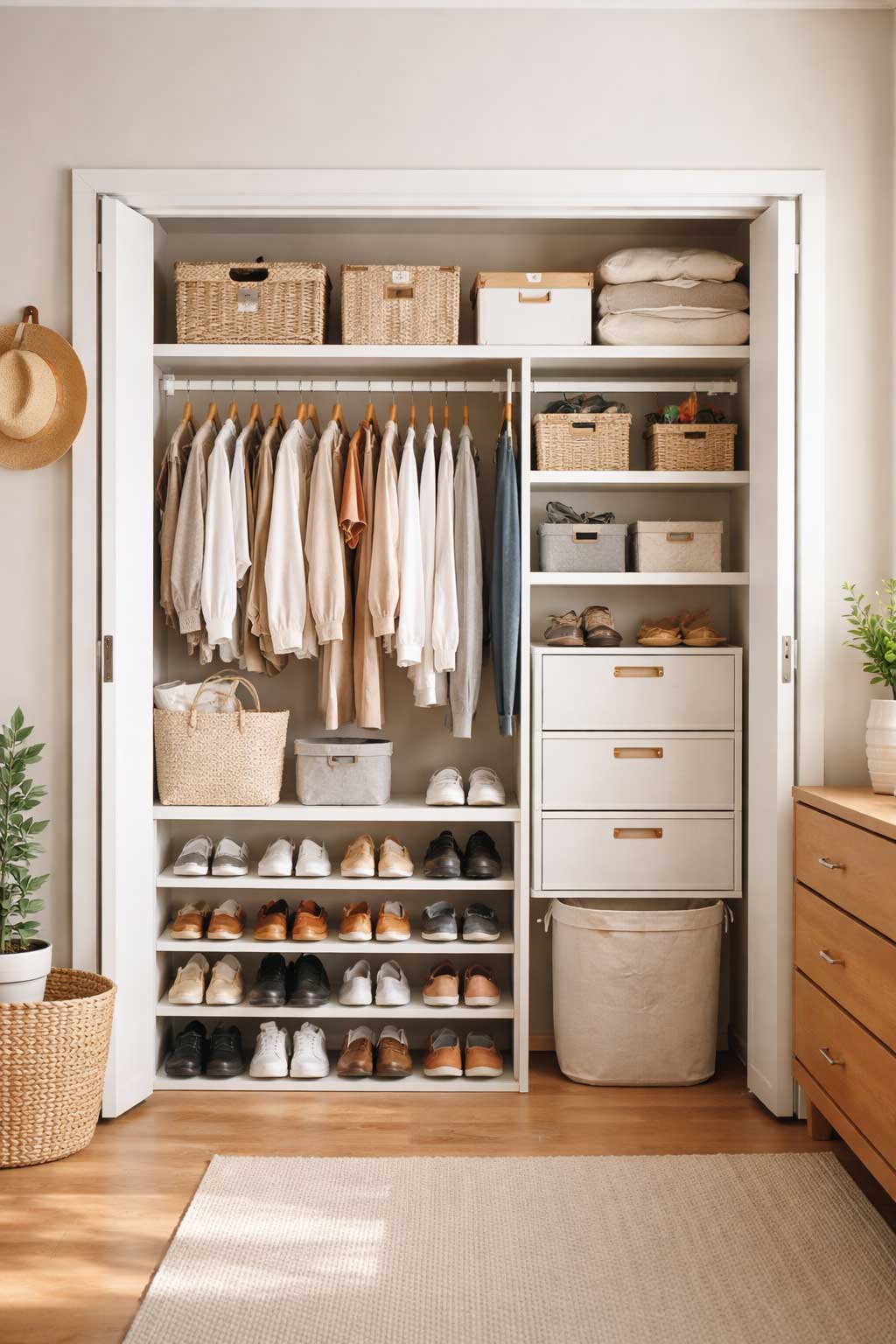
Reach-in closets are common in small apartments, and they usually work best with slim organizers that increase vertical use without overcrowding the center. Good options include:
- hanging shelf organizers
- stackable shelf dividers
- slim drawer towers
- double hanging rods
- narrow shoe racks
- under-shelf baskets
In this type of closet, depth is usually limited, so bulky freestanding organizers can backfire. Slim and open designs tend to perform better.
Narrow closets
Narrow closets often need more structure, not more bulk. Adjustable rods, vertical shelving, narrow bins, and hanging organizers can make better use of the limited footprint. Deep baskets are often less helpful in narrow closets because they create hidden clutter.
Closets with one shelf and one rod
This is one of the most common apartment closet setups. These closets usually benefit from adding a second layer below the rod, using hanging shelves, or placing a slim storage tower below shorter hanging items. Without that added structure, a lot of usable space goes untouched.
Apartments with very limited closet space
Some apartments barely have enough closet capacity for clothing, let alone shoes, accessories, and linens. In those cases, the “right closet organizer” may include some items that work just outside the closet too. You may need to combine closet improvements with under-bed, wall-mounted, or over-door storage.
That is where related pages like How to Maximize Storage in a Small Apartment and How to Create Storage in a Small Apartment with No Closet become especially useful. In a small home, the best closet strategy is often part of a larger apartment-wide storage plan.
Prioritize vertical space first
In small apartments, vertical space is often the easiest opportunity to miss. Many closets only use the bottom half effectively, while the top portion becomes a messy shelf full of random items no one can access well.
A strong closet organizer should help you use the full height of the closet in a practical way. That may include:
- stacked shelves for folded clothes
- hanging shelf organizers
- upper bins for seasonal items
- shelf risers
- hooks mounted to interior walls
- vertical cubby systems
- hanging accessory organizers
When vertical space is used correctly, the closet feels less crowded because each category of item has a defined zone. Shoes are not mixed into folded sweaters, bags are not buried behind hanging jackets, and off-season items are not taking up prime everyday space.
This is where How to Use Vertical Space in a Small Apartment becomes a valuable internal support article, because the same thinking applies across closets, bedrooms, kitchens, and entryways. The best small-space organization almost always starts by building upward.
Do not ignore the closet door and surrounding wall space
A lot of apartment dwellers focus only on shelves and rods, but the back of the closet door and nearby wall areas can add a surprising amount of function.
Depending on your setup, the right organizer might include:
- over-the-door hooks
- hanging pocket organizers
- accessory racks
- belt and scarf hangers
- hat storage
- slim shoe organizers
- mounted hooks on nearby walls
These additions are especially helpful when the closet itself is too shallow for extra shelving or drawer units. Instead of forcing more structure into the center of the closet, you can move lighter and smaller categories outward.
If you want to extend storage without giving up floor space, it makes sense to also review Best Over-the-Door Storage Solutions for Small Apartments and Best Wall-Mounted Storage Solutions for Small Apartments. Those pages support the same small-space logic and can work alongside a closet organizer instead of competing with it.
Choose the right mix of hanging space, shelves, and drawers
A closet organizer should be built around how you naturally store items. Most small apartment closets need a combination of storage types rather than one single method.
Hanging space
Hanging storage is best for:
- shirts and blouses
- dresses
- jackets
- wrinkle-prone items
- clothing you wear often
If your closet is full of shorter garments, a double-rod organizer can instantly increase capacity. If you wear more long items, you may need one full-height hanging section and smaller organizer elements beside it.
Shelves
Shelving works well for:
- sweaters
- jeans
- handbags
- storage bins
- folded loungewear
- hats
Open shelving tends to work best when each shelf has a single category. Mixed shelves quickly become cluttered.
Drawers or bins
Drawers and bins are useful for:
- socks
- underwear
- workout clothing
- accessories
- smaller seasonal items
If you prefer hidden storage, drawers can make the closet look cleaner. If you want faster visibility, open bins with labels may be better.
The right organizer is usually the one that mirrors the way you already live. If you hate folding, do not choose a shelf-heavy system that depends on perfect folded stacks. If you wear shoes often and switch pairs frequently, make sure footwear gets a convenient dedicated area.
For apartments where footwear constantly creates clutter, Best Shoe Storage Solutions for Small Apartments can also support your overall setup and help prevent closet floors from becoming unusable.
Think about what should stay in the closet and what should move out
One of the most overlooked small-apartment strategies is deciding what does not belong in the closet at all. When closet space is limited, every item inside should earn its place.
These items usually deserve prime closet space:
- daily clothing
- frequently worn shoes
- everyday bags
- workwear
- basic accessories
These items often do better elsewhere:
- off-season clothing
- spare bedding
- rarely used bags
- backup toiletries
- keepsakes
- bulky blankets
- occasional-use shoes
For example, out-of-season items may be better stored in Best Under-Bed Storage Containers (Low Profile & Stackable) rather than crowding the closet year-round. Small apartments function better when closets are reserved for active-use items and overflow is moved to alternative storage zones.
This kind of editing matters because even the best organizer cannot solve a space problem if the closet is trying to hold too many low-priority items.
Focus on flexibility, especially if you rent
For apartment living, flexibility matters. Many renters need storage solutions that can adapt to a future move, a different closet size, or lease restrictions. That makes adjustable and modular organizers especially useful.
Look for features like:
- adjustable shelves
- movable hanging rods
- stackable cubes
- removable drawers
- collapsible bins
- freestanding components that can be repurposed later
A flexible organizer gives you more long-term value. If you move to a new apartment with a different closet shape, you can often reconfigure pieces instead of replacing the whole setup.
This is also why permanently installed closet systems are not always the best first choice for renters. They can look polished, but they may require wall anchoring, precise dimensions, or a level of commitment that does not match apartment life.
When in doubt, prioritize function, portability, and easy reconfiguration over custom-looking complexity.
Pay attention to materials and visual weight
Closet organizers do not just affect storage. They also influence how crowded or calm the closet feels. In a small apartment, visual weight matters more than many people realize.
Heavy, dark, bulky organizers can make a compact closet feel tighter. Lighter, slimmer, more open designs often make the space feel more usable. Wire shelving, fabric organizers, light wood tones, and narrow metal frames can all work well depending on the room style and the type of storage needed.
Material choice also affects maintenance:
- fabric bins are soft and flexible but may sag over time
- metal frames are durable and slim but may look more utilitarian
- plastic drawers are easy to clean but can feel bulky
- engineered wood can look polished but often adds more visual mass
Choose materials based on your real priorities. If you want the closet to feel minimal and easy to reset, open lightweight components may work best. If you need hidden containment, bins or drawers may be worth the added structure.
Avoid the most common closet organizer mistakes
A lot of small-space frustration comes from predictable mistakes rather than from the closet itself.
Buying before decluttering
Do not organize clutter you do not need. First reduce what belongs in the closet, then choose an organizer around what remains. This is one reason How to Declutter a Small Apartment Fast is such a useful companion to any closet project.
Choosing bins that are too deep
Deep bins seem efficient, but they often hide items and create forgotten piles. Shallow, categorized containers are usually easier to maintain.
Keeping too much single-purpose storage
A closet full of specialty organizers can become harder to use, not easier. Try to choose pieces that serve multiple categories or can adapt over time.
Ignoring daily access
The best-looking closet can still fail if commonly used items are hard to reach. Everyday clothing and accessories should be placed at the most accessible height.
Overfilling every inch
A closet should not be packed so tightly that you cannot see or remove items easily. Leave enough room to maintain order without constant rearranging.
A simple process for choosing the right organizer
If you want a practical decision-making method, use this process:
1. Empty and sort the closet
Take everything out and divide it into categories. This gives you a clear picture of what the organizer needs to support.
2. Measure the space
Record dimensions carefully, including width, depth, height, and door clearance.
3. Identify your top storage needs
Ask yourself whether the closet needs more:
- hanging capacity
- folded clothing space
- shoe storage
- accessory storage
- seasonal overflow separation
4. Decide what belongs elsewhere
Move low-priority or seasonal items to alternate storage zones if needed.
5. Choose one primary organizer type
Start with the main solution, such as a hanging shelf organizer, double-rod system, freestanding drawer tower, or modular shelf unit.
6. Add one or two support pieces
Support pieces may include hooks, slim bins, shelf dividers, or over-door storage. Avoid overcomplicating the setup.
7. Test the system with real use
After organizing, pay attention for one to two weeks. If shoes pile up on the floor or folded clothes topple over, adjust the system before buying more pieces.
This step-by-step approach helps you avoid impulse storage purchases and build a closet around real behavior rather than idealized behavior.
The best closet organizer is the one you will actually maintain
That is the most important principle in this entire process.
A perfect-looking closet system is not helpful if it requires constant refolding, precise stacking, or unrealistic habits. The right organizer should make tidying feel easier, not more demanding. It should reduce friction when putting things away. It should make it obvious where items belong. And it should support the lifestyle realities of a small apartment.
For some people, that means simple hanging shelves and a shoe rack. For others, it means a more layered combination of rods, bins, baskets, and upper storage. There is no single correct formula. The right choice depends on the closet, the apartment, and the person using it.
What matters most is building a system that makes everyday use smoother while supporting the rest of your space. When the closet functions better, the bedroom often feels calmer, laundry is easier to manage, and clutter has fewer places to spread.
If your apartment still feels storage-starved after upgrading the closet, it is worth exploring broader small-space strategies through How to Maximize Storage in a Small Apartment and Best Storage Solutions for Small Apartments. In many cases, the best closet organizer works best when it is part of a whole-apartment organization plan.
A small apartment closet does not need to be huge to be effective. It just needs to be intentional. Once the organizer matches the space and the way you live, even a modest closet can start working a lot harder for you.