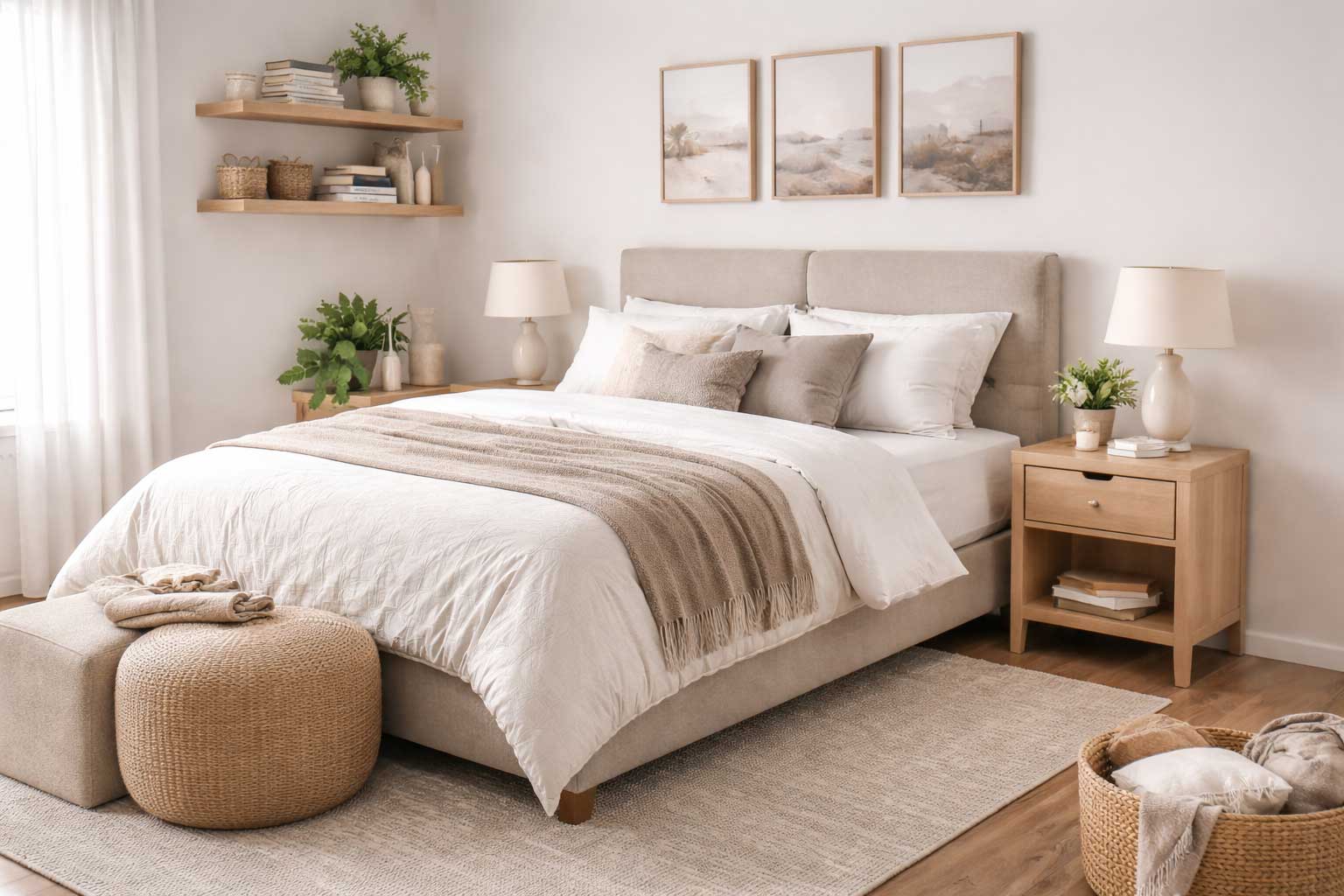
How to Store Extra Bedding in a Small Apartment
Extra bedding can be surprisingly hard to store in a small apartment. Spare sheets, pillowcases, duvet covers, comforters, blankets, and guest bedding take up far more room than most people expect, especially when closets are limited and bedroom storage is already under pressure. In many apartments, extra bedding ends up stuffed into random shelves, piled into overfull closets, or shoved into corners where it becomes harder to access and harder to keep neat.
The good news is that extra bedding does not need a huge amount of dedicated space as much as it needs a smarter storage system. The best setups usually come from using under-bed space, hidden furniture storage, vertical shelving, and better category separation so bulky linens stop competing with everyday items. With the right approach, a small apartment can store extra bedding neatly without making the bedroom or closet feel overloaded.
For hidden storage that works especially well for bulky linens, start with Best Bedroom Storage Benches for Small Spaces.
If you want to use the biggest hidden zone in the bedroom, check out Best Under-Bed Storage Containers (Low Profile & Stackable).
For soft-goods storage ideas that fit compact bedrooms, see Best Space-Saving Blanket Storage Solutions.
This guide is part of our Small Apartment Bedroom Solutions collection.
Why Extra Bedding Is So Hard to Store in a Small Apartment
Extra bedding becomes a problem quickly because soft goods take up more volume than their number suggests. A couple of extra sheet sets may not seem like much, but once you add spare pillowcases, comforters, guest blankets, duvet covers, and seasonal layers, the total storage demand gets surprisingly large. In a small apartment, that bulk starts competing with clothing, shoes, towels, and other daily necessities very quickly.
This is especially true when closet space is limited. Many apartments simply do not have a dedicated linen closet, which means bedding gets mixed into bedroom closets, shoved into storage corners, or piled into already crowded furniture. Once that happens, the room starts feeling less organized even if the bedding itself is technically put away.
Bedding also creates clutter faster because it is often stored without clear categories. Sheets, pillowcases, comforters, and throws all get mixed together, which makes it harder to find what you need and easier for the whole system to feel messy. In a small apartment, better bedding storage is usually more about organization than about owning less.
Start by Separating Everyday Bedding from True Extra Bedding
The first step is figuring out what really needs prime storage space. Not every sheet set or blanket deserves to be in the easiest-to-reach location. In a small apartment, the most convenient storage should go to the items that support the current bed setup and the routines you actually use every week.
That usually means your everyday extra sheet set, pillowcases for regular rotation, and perhaps one extra blanket that gets used often should stay closest. Guest bedding, seasonal layers, and backup comforters can usually move into less prime storage without making daily life harder. This one shift can immediately relieve pressure on closets and bedroom furniture.
It also helps to separate the bedding by type. Sheets should stay with sheets, pillowcases with pillowcases, blankets with blankets, and larger comforters or duvet inserts should have their own defined categories. The clearer those groupings are, the easier it becomes to build a system that stays usable after laundry day instead of turning into one soft-goods pile again.
Use Under-Bed Storage for the Bulkiest Bedding Categories
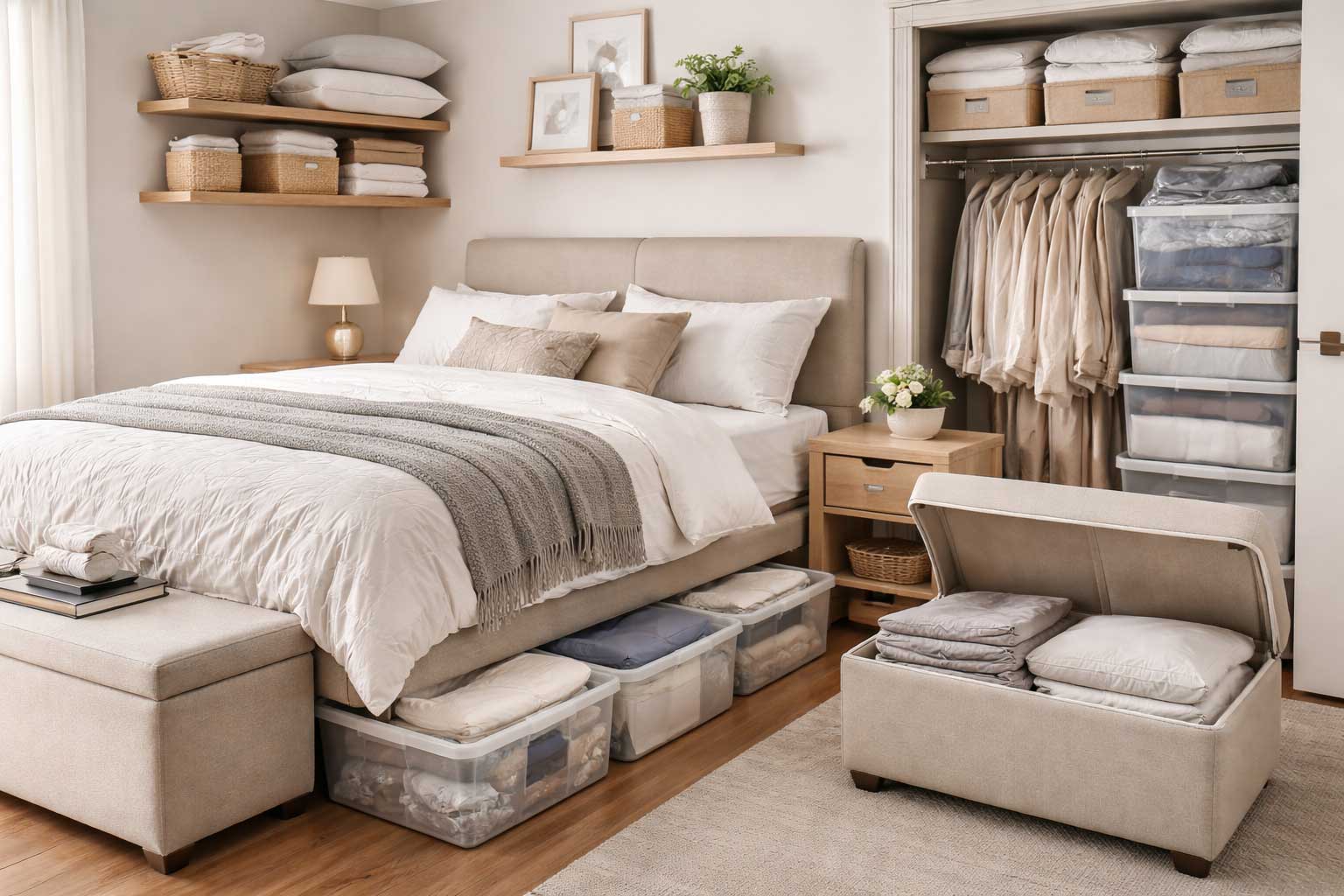
Under-bed storage is one of the best places to keep extra bedding because it uses a large hidden area that already exists in the room. In many apartments, the bed is the biggest furniture piece in the bedroom, so making that footprint work harder is often the smartest storage move.
This space works especially well for spare sheet sets, guest blankets, extra pillowcases, and even seasonal comforters if the containers are low-profile enough to slide easily. If you need options designed for this exact purpose, browse Best Under-Bed Storage Containers (Low Profile & Stackable).
Storage beds can make this even easier by building the storage directly into the bed frame. That can be especially useful for apartments with almost no closet margin at all. For built-in solutions, take a look at Best Under-Bed Storage Beds.
The biggest advantage is that under-bed storage adds capacity without making the room feel heavier. Instead of forcing another cabinet or bulky bin into the layout, you use hidden space that does not interrupt the bedroom at all.
Use Storage Benches and Hidden Furniture Storage
Bulky soft goods usually store better in hidden furniture than in open bins or exposed shelves. Bedding is visually heavy, so even when it is neatly folded, it can make a small room feel more crowded if it stays out in the open. Hidden storage solves that problem by keeping the items accessible without putting them on display.
Storage benches work especially well for extra bedding because they are deep enough to hold folded blankets, spare sheet sets, or guest linens while still functioning as bedroom furniture. A bench at the foot of the bed can quietly absorb a surprising amount of overflow. If you want a piece built for this kind of storage, see Best Bedroom Storage Benches for Small Spaces.
Other multi-functional furniture can help too, especially pieces that add concealed capacity without taking over the room. The more storage is built into furniture you already want in the bedroom, the less likely the room is to feel overloaded. In a small apartment, that kind of hidden efficiency goes a long way.
Use Closet and Vertical Storage More Intentionally
If the apartment does have some closet space, using it more intentionally can make extra bedding much easier to manage. The key is to treat bedding as its own category instead of letting it get mixed in with clothing, bags, and random overflow.
Upper closet shelves are usually best for less-frequently used bedding categories. That might mean guest comforters, backup pillows, or off-season blankets that do not need daily access. When those items are grouped and contained better, the rest of the closet becomes easier to use too. If the room needs more vertical support beyond the closet, browse Best Floating Shelves for Bedrooms.
Over-bed storage can also help when the floor plan is especially tight. That part of the room is often underused, and it can support lighter or less-frequently reached bedding categories without taking up valuable floor space. For options there, check out Best Over-Bed Storage Solutions for Small Bedrooms.
Vertical storage works best when the categories stay controlled. In a small apartment, that usually means using it for overflow and backup bedding rather than trying to turn every visible shelf into a linen display.
Store Seasonal Bedding Separately So the Room Feels Lighter
One of the easiest ways to reduce bedding clutter is to stop storing every season’s layers in the same prime spaces all year. Thick winter comforters, heavy blankets, and flannel sheet sets do not usually need to stay front and center during warm months, and lightweight summer bedding does not need to dominate the best storage zones in colder seasons.
A seasonal rotation helps keep the bedroom and closet easier to manage because it reduces how much bulk is competing for daily-use space at one time. If your apartment already uses seasonal storage strategies elsewhere, revisit How to Store Seasonal Items in a Small Apartment for ideas that apply well to bedding too.
This does not need to be complicated. It just means deciding which bedding supports the current season and moving the rest into secondary or hidden storage. In a small apartment, rotating bulky linens this way often makes the room feel calmer immediately.
Keep Guest Bedding Accessible Without Letting It Take Over the Bedroom
Guest bedding should be easy enough to find when needed, but it should not dominate the bedroom all year just because it might be useful occasionally. In small apartments, this category often gets more prime space than it deserves simply because there was never a better plan.
The easiest fix is to give all guest bedding one defined home. That might be an under-bed container, a storage bench, or one section of closet storage. The important part is that the category stays together and does not spill into multiple corners of the room. If your apartment has to support overnight guests in a compact layout, that kind of defined storage makes setup much easier.
Extra pillows and guest blankets are especially important to contain well because they are bulky enough to make a room feel crowded quickly. A cleaner guest-bedding system usually improves everyday bedroom function too, since fewer stray soft goods are competing for space.
Use Containers and Storage Methods That Keep Bedding Cleaner and Easier to Manage
The way bedding is stored matters almost as much as where it is stored. Loose stacks of linens tend to slump, mix together, and become harder to manage after a few rounds of use and laundry. A more contained approach keeps the categories easier to reset and easier to find.
Folded sets are usually much easier to store than mixed loose pieces. When a fitted sheet, flat sheet, and matching pillowcases stay together, the system becomes faster to use and much simpler to maintain. Contained storage also helps protect the bedding from dust and keeps the room from feeling more chaotic when the storage zone is opened.
A simpler linen system is what makes the whole arrangement sustainable. In a small apartment, the best storage is rarely the one that looks perfect once. It is the one that stays easy to use every week after laundry and real life happen again.
Common Mistakes That Make Bedding Storage Harder
One common mistake is keeping too many extra sets in a small apartment. It can feel harmless to hold onto multiple backup sheet sets or several blankets “just in case,” but in a tight space those extras often crowd out more important daily storage. Another mistake is mixing bedding with unrelated categories like clothing, bags, or random closet overflow.
Letting blankets and linens live in too many different spots also creates friction. When sheets are in one shelf, blankets in another room, and extra pillowcases tucked somewhere else, the whole system becomes harder to use and harder to maintain. Ignoring hidden storage opportunities is another major issue. Under-bed space, storage benches, and multi-use furniture are often the best tools available, but they are easy to overlook.
The best bedding-storage systems are usually not the biggest ones. They are the ones that stay controlled, grouped, and easy to reset.
Best Features to Look for in Extra Bedding Storage for Small Apartments
When choosing bedding storage for a small apartment, hidden capacity should be one of the first priorities. Bulky linens tend to store better when they are out of sight, especially in bedrooms that already feel tight. Easy access also matters, since heavy blankets and folded sets should not be stored in a way that makes them annoying to retrieve.
Compact footprint is another major advantage. The best storage usually uses furniture or spaces that already exist rather than requiring a big new cabinet. Vertical storage value is helpful too, especially if closet space is minimal and the room needs to build upward instead of outward.
Apartment-friendly flexibility is what ties it all together. The most useful bedding storage usually adapts to different seasons, different room layouts, and different soft-goods categories without making the apartment feel more crowded.
Final Thoughts on Storing Extra Bedding in a Small Apartment
Extra bedding can absolutely be stored neatly in a small apartment, but it usually works best when the system relies on hidden space, category control, and better use of the room’s existing furniture. The goal is not to squeeze bulky linens into any open shelf. It is to give them realistic homes that support how often they are actually used.
Under-bed zones, storage benches, vertical shelves, and better seasonal rotation usually make the biggest difference. When sheets, comforters, guest bedding, and blankets stop competing with everyday bedroom items, the whole room feels easier to manage.
That is the real win in a small apartment: not just storing more, but storing it in a way that keeps the room calmer. Extra bedding should support comfort, not create clutter.
Our Top Extra Bedding Storage Picks for Small Apartments
Extra bedding is easiest to manage when storage keeps bulky linens hidden, grouped by type, and easy to access without taking over the bedroom. The most useful solutions usually stay compact, flexible, and well suited to apartment layouts.
Best overall choice:
Under-bed storage containers — Low-profile under-bed containers can hold spare sheets, blankets, and guest bedding without adding any extra furniture bulk.
👉 Check price on Amazon
Best hidden furniture option:
Bedroom storage bench — A storage bench adds concealed room for bulky linens while fitting naturally into the bedroom layout.
👉 Check price on Amazon
Best soft-goods support option:
Space-saving blanket storage solution — A better blanket-storage system helps prevent bulky layers from taking over closets and shelves.
👉 Check price on Amazon
Best vertical backup option:
Floating bedroom shelf — A floating shelf can support lighter linen categories or overflow bedding while preserving floor space.
👉 Check price on Amazon
Apartments with very limited closet space may also benefit from a storage bed or another multi-functional furniture piece, especially when the goal is to add bedding capacity without introducing another bulky cabinet.
FAQ
Where should extra bedding be stored in a small apartment?
Extra bedding is usually best stored in under-bed containers, storage benches, upper closet shelves, or other hidden storage zones that can handle bulky soft goods without crowding the room.
Is under-bed storage good for blankets and sheets?
Yes, under-bed storage is often one of the best places for blankets and sheets because it uses a large hidden area and keeps bulky linens out of the main bedroom or closet storage zones.
How many extra sheet sets should you keep in a small apartment?
In a small apartment, it usually makes sense to keep only the extra sheet sets you realistically use for rotation, guests, or seasonal needs, rather than storing too many backups that take up valuable space.
What is the best way to store bulky bedding without a linen closet?
The best way to store bulky bedding without a linen closet is to use hidden storage such as under-bed containers, storage benches, or other multi-functional bedroom furniture that can hold soft goods neatly out of sight.