How to Organize Office Supplies in a Small Workspace
Office supplies can make a small workspace feel cluttered much faster than most people expect. Pens, sticky notes, paper clips, chargers, notebooks, scissors, labels, and other everyday work tools do not take up much room individually, but together they can quickly overwhelm a compact desk. In a small apartment, where a workspace may already be tucked into a bedroom corner, living room wall, or multi-use desk setup, loose office supplies can make the entire area feel crowded and harder to use.
The good news is that organizing office supplies in a small workspace does not require a large desk or a full office. The key is to keep only the most-used items close by, create clear categories, and use compact storage that fits the scale of the space. With the right setup, a small work area can stay cleaner, more efficient, and much easier to maintain without losing the supplies you need every day.
For desktop organization ideas, start with Best Desk Organizers for Small Apartment Offices.
If you need better in-drawer storage, check out Best Desk Drawer Organizers for Small Apartment Offices.
For everyday essentials storage near the desk, see Best Office Supply Organizers for Small Apartment Desks.
This guide is part of our Small Apartment Office Solutions collection.
Why Office Supplies Create Clutter So Quickly in a Small Workspace
Office supplies are harder to manage than they seem because they build up in small pieces rather than one obvious bulky item. A desk chair or lamp takes up visible space, so it is easy to account for. Office supplies are different. Pens, chargers, notes, clips, tools, and notebooks slowly spread across the desk in ways that feel minor until the surface starts looking crowded all at once.
This happens even faster in a small workspace because there is very little room for overflow. A desk in a bedroom corner or living room nook usually does not have extra cabinets, drawers, or side storage nearby. That means the work surface starts carrying too much of the burden. As more supplies stay out in the open, the workspace becomes less functional and more distracting.
Small workspaces also tend to be multi-use spaces. The desk may share a room with a bed, sofa, dining area, or living room furniture, so supply clutter does not just affect productivity. It changes how the entire room feels. That is why better office supply organization matters so much in an apartment. It keeps the workspace easier to use and helps the rest of the room feel less crowded.
Start by Sorting Supplies by Category and Frequency of Use
The first step in organizing office supplies is not buying storage. It is figuring out what you actually use and how often you use it. A lot of clutter comes from treating every office item like it needs to stay close at hand, even when some things are used only once in a while. In a small workspace, that approach fills up the desk much faster than it should.
Start by separating supplies into categories like writing tools, paper goods, tech accessories, mailing supplies, filing tools, and miscellaneous small items. Then sort those groups by frequency of use. Daily essentials should stay closest to the desk, occasional-use items can move into nearby drawers or shelves, and rarely used extras can go into less convenient storage.
This is also a good time to remove duplicates, dried-out pens, extra paper clips, broken chargers, old sticky note pads, and other low-value clutter that tends to stay around longer than necessary. A small workspace functions better when every category is intentional. Once you know what actually belongs near the desk, it becomes much easier to choose storage that supports the way you work.
Keep the Desktop Limited to Only the Most-Used Supplies
A small desk needs more open surface area than people usually realize. It may feel productive to keep supplies visible and ready, but too many items on the desktop quickly make the workspace feel tighter and less useful. The desk should stay focused on work, not act as permanent storage for every office category.
That is why it helps to keep only the most-used supplies on the surface. Pens, a notebook, a few sticky notes, and maybe one or two other daily tools are usually enough. The moment chargers, scissors, folders, extra paper, clips, and random accessories all stay visible together, the desk starts feeling busier than it needs to. If you need a better system for containing daily-use items, browse Best Desk Organizers for Small Apartment Offices.
One well-chosen organizer usually works better than several loose containers spread across the desk. A compact organizer keeps the supplies you reach for often in one place instead of scattering them across the work area. That makes the desk easier to use and much easier to reset when the day is over.
Use Drawers and Under-Desk Storage More Intentionally
Small office supplies usually do best in hidden but accessible storage. Pens, clips, charging cords, spare sticky notes, envelopes, and small tools are exactly the kinds of items that clutter a desk visually even when they are not taking up much space physically. Drawers and under-desk storage help solve that problem by keeping those categories close without leaving them out in the open.
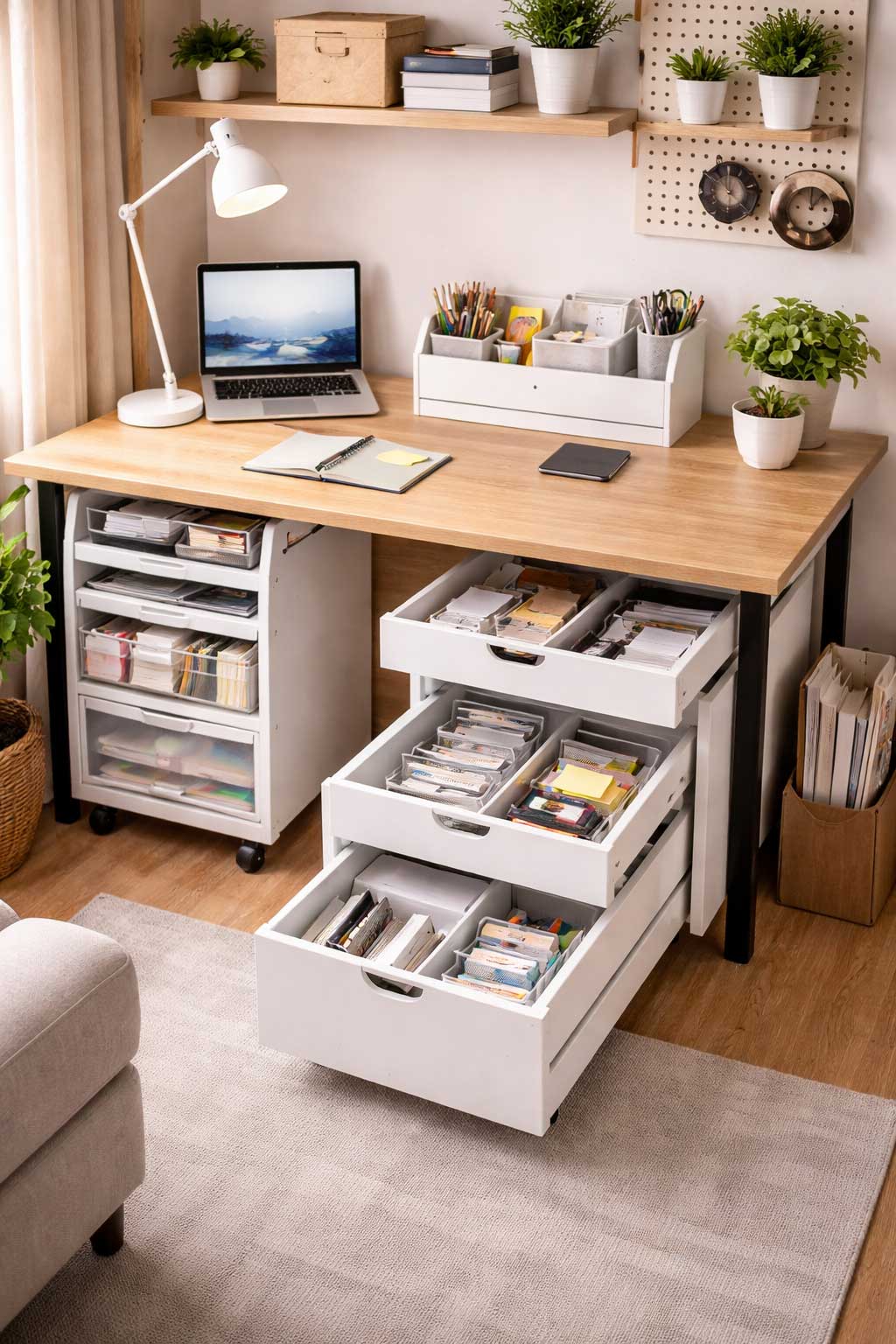
Drawer organizers are especially useful because they prevent small supplies from mixing together into one messy container. Instead of throwing everything into one shallow drawer, divide it by use so common items are easy to spot and easy to return. If your setup needs better in-drawer structure, take a look at Best Desk Drawer Organizers for Small Apartment Offices.
Under-desk storage can help too, especially when the desk has little or no built-in storage. A compact drawer mounted underneath the surface can hold everyday extras without using up the top of the desk. For hidden storage that supports smaller workspaces, see Best Under-Desk Storage Drawers for Small Offices.
The more hidden storage handles your smaller categories, the calmer the desktop feels. In a small apartment, that visual difference matters because the workspace often stays visible from the rest of the room.
Use Vertical Storage to Expand Supply Space Without Taking Over the Desk
Vertical storage is one of the easiest ways to add office supply space without making a small work area feel heavier. In an apartment, the wall above the desk often has far more potential than the desk surface itself. Using that space well can take pressure off the desktop and make the workspace feel more complete.
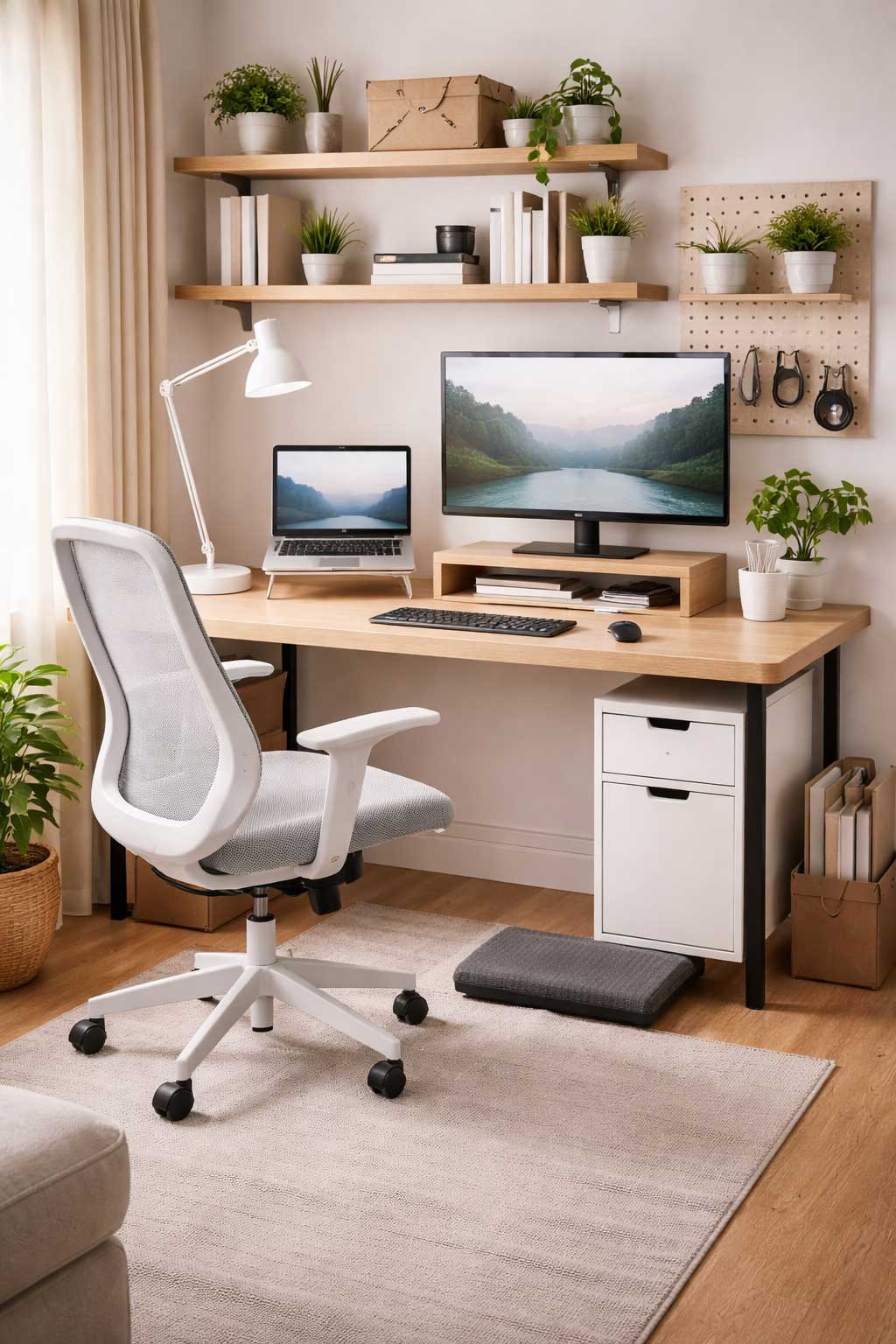
Floating shelves are especially useful for backup supplies, notebooks, folders, and light storage bins that do not need to stay right on the desk. They help move categories upward so the work surface can stay more open for actual work. If you need storage that builds up instead of out, check out Best Floating Shelves for Small Apartment Offices.
A pegboard or compact wall organizer can also work well for tools you use often but do not want sitting loose on the desk. The advantage of vertical storage is not just extra room. It also gives the workspace structure. In a small apartment, that structure helps the desk area feel intentional instead of like a temporary pile of work supplies squeezed into a corner.
Give Paper, Tech Accessories, and Small Tools Separate Zones
Not all office supplies should be stored the same way. Paper products behave differently than pens, chargers behave differently than clips, and small tools like scissors or staplers usually need a different kind of access than sticky notes or mailing labels. When all these categories are stored together, the workspace becomes harder to manage and harder to keep tidy.
Paper supplies usually need flatter, more stable storage so they do not bend, slide, or pile unevenly. Tech accessories work better when they have their own contained area so cords and chargers do not tangle with writing tools. If your workspace needs better separation for cords and extras, browse Best Cable Boxes for Small Apartment Offices.
Small tools also become easier to manage when they stay grouped with similar items instead of floating around the desk independently. This kind of category-based storage makes a small workspace much more functional because it reduces searching, keeps clutter from spreading, and makes cleanup faster. When each type of supply has its own zone, the entire desk becomes easier to maintain.
Use the Space Beside the Desk for Overflow Supplies
The space beside a desk can be surprisingly helpful for office supply overflow. Even a narrow section of floor can sometimes hold a small file cart, a slim cabinet, or a compact rolling storage piece that keeps extras off the desk itself. This matters in small apartments because the desk surface usually runs out of room before the rest of the setup is truly optimized.
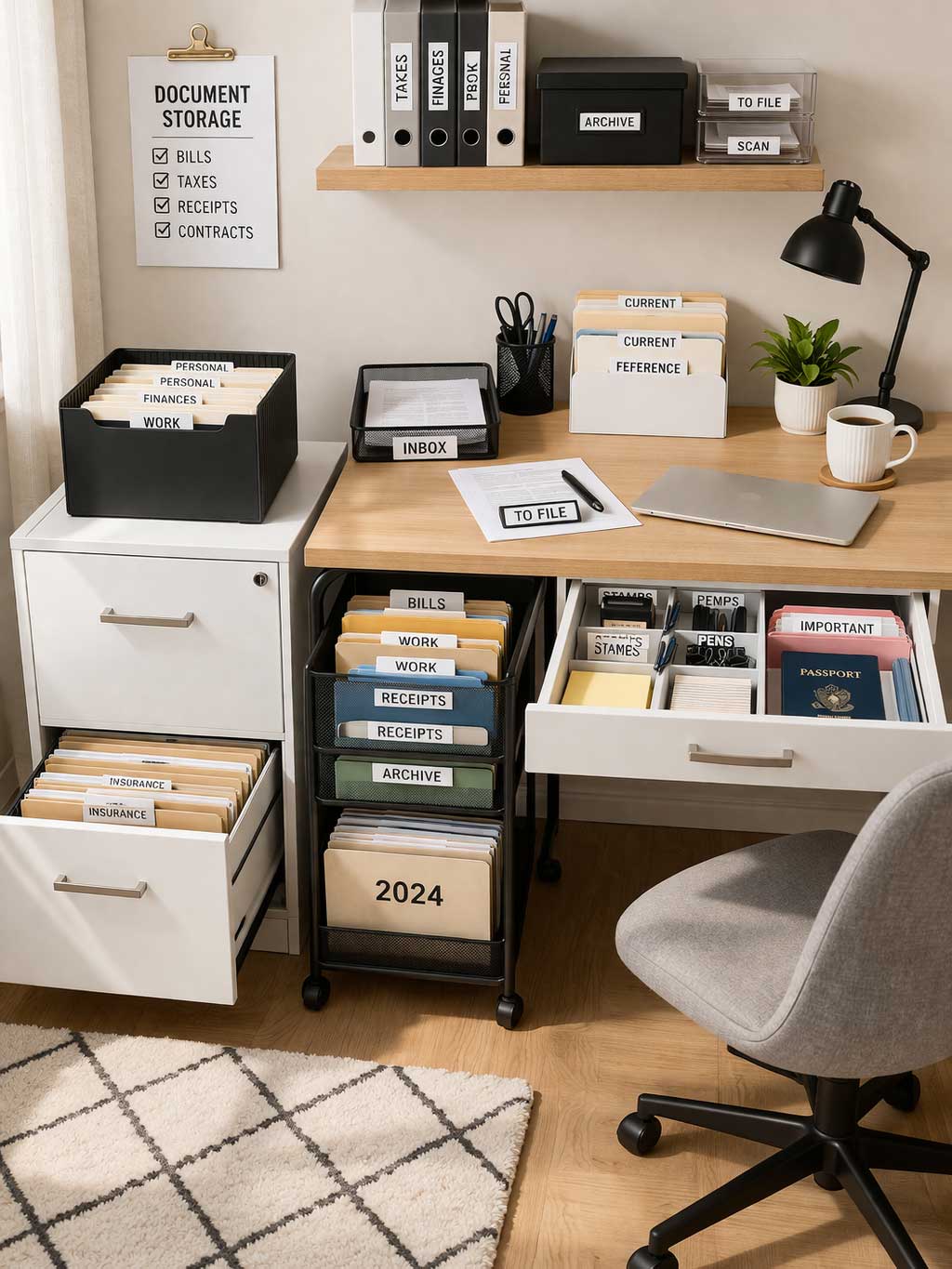
A slim rolling cart can work especially well for categories like extra notebooks, paper supplies, mailing materials, or backup office tools. It adds capacity without requiring a large permanent footprint. If you need flexible overflow storage near the desk, see Best Mobile File Carts for Small Apartment Offices.
The key is to make sure side storage supports the desk without crowding it. A unit that blocks movement, squeezes the chair area, or makes the room feel boxed in is not helping. In a small workspace, side storage should feel proportional. When chosen carefully, it gives supplies a proper home and makes the desk itself much more usable.
Create a Supply System That Is Easy to Reset Every Day
A good office supply setup should make cleanup fast, not complicated. In a small workspace, daily reset matters because the desk often sits in a room that is used for more than work. If the setup is hard to put back in order, clutter tends to stay out and slowly rebuild. That makes the desk feel permanently messy even when it technically has enough storage.
The best systems give every category an obvious home. Pens go in one place, chargers go in one place, paper has its own area, and smaller extras are easy to put away without thinking too hard. When categories are clear, even a short cleanup at the end of the day can make a huge difference in how the workspace looks and feels.
This also helps the space stay functional over time. An organization system is only as good as its ability to survive real use. In a small apartment, the most effective supply storage is usually not the most elaborate. It is the one that makes it realistic to keep the desk neat day after day.
Common Mistakes That Make Office Supply Organization Harder
One of the most common mistakes is keeping too many supplies on the desktop. It may seem convenient to leave everything visible, but that usually creates more clutter than usefulness. A small desk works better when the surface is protected for actual working space.
Another mistake is relying on one large bin instead of clear categories. Large bins often become catch-all storage, which makes it harder to find what you need and easier for clutter to build inside the organizer itself. Smaller categories usually create a much more functional system.
People also tend to store daily and backup supplies together, which crowds the most useful storage zones. Finally, many small workspaces ignore vertical and hidden storage opportunities. When shelves, drawers, and under-desk storage are underused, too much pressure falls on the desktop, and clutter builds much faster than it should.
Best Features to Look for in Office Supply Organizers for Small Workspaces
When choosing office supply organizers for a small workspace, compact size should be one of the first priorities. A good organizer should add order without overwhelming the desk. In a tight apartment setup, every storage piece needs to justify the space it takes up.
Clear category separation is another important feature. Organizers work better when they make it easy to tell where things belong and easy to spot when something is out of place. Easy access matters too. Storage should help you move through work smoothly, not make common supplies harder to reach.
Stackable or vertical potential can be especially helpful because it adds storage without spreading the setup wider. Clean styling also matters more in apartments, since the desk often sits in a bedroom or living room rather than a closed office. The best supply organizers help the workspace stay efficient while still looking simple enough to live with every day.
Final Thoughts on Organizing Office Supplies in a Small Workspace
Organizing office supplies in a small workspace is really about protecting the function of the desk. When supplies are grouped clearly, the desktop is kept open, and hidden or vertical storage carries more of the load, the workspace becomes easier to use and much easier to maintain.
The best systems are usually simple. They keep the most-used items close, move overflow into supportive storage, and make daily cleanup realistic. That matters even more in a small apartment where the workspace shares room with the rest of life.
A small desk does not need to feel cluttered just because it holds important work tools. With the right setup, it can stay efficient, organized, and visually lighter while still giving you access to everything you need.
Our Top Office Supply Organization Picks for Small Workspaces
Office supplies are easiest to manage when storage keeps categories separated, the desktop clear, and everyday tools easy to reach. The best organizers for a small workspace usually stay compact, practical, and easy to maintain.
Best overall choice:
Compact desk organizer — A small organizer keeps daily-use supplies grouped together without taking over valuable desk space.
👉 Check price on Amazon
Best hidden-storage option:
Desk drawer organizer — A divided drawer organizer helps keep small office items sorted and out of sight.
👉 Check price on Amazon
Best overflow solution:
Under-desk storage drawer — A compact under-desk drawer adds everyday storage without crowding the desktop.
👉 Check price on Amazon
Best side-storage option:
Mobile file cart — A slim file cart helps move extra office supplies off the desk while staying easy to reposition in a small apartment.
👉 Check price on Amazon
Workspaces with a lot of papers, chargers, or accessories may also benefit from floating shelves or cable storage, especially when the goal is to keep the desk functional without letting supplies spread everywhere.
FAQ
How do you organize office supplies in a small workspace?
The best way to organize office supplies in a small workspace is to sort them by category and frequency of use, keep daily essentials close, use hidden storage for smaller items, and limit the desktop to only the most-used tools.
What office supplies should stay on a desk?
Only the supplies used most often should stay on a desk, such as pens, a notebook, sticky notes, and a few daily-use tools. Backup items and less-used supplies should be stored elsewhere.
How do you store extra office supplies in a small apartment?
Extra office supplies are usually best stored in drawers, under-desk storage, side carts, slim cabinets, or floating shelves so they stay accessible without crowding the main work surface.
What is the best organizer for a small desk?
The best organizer for a small desk is usually a compact desktop organizer that groups daily essentials together without taking up too much surface space.