
How to Organize a Small Bathroom with No Counter Space
Trying to keep a small bathroom organized is hard enough, but it becomes even more frustrating when you have little to no counter space to work with. Toothbrushes, soap, skincare, and daily toiletries can quickly pile up around a tiny sink, making the bathroom feel cramped, messy, and harder to use every day. In apartments, this problem is especially common because bathrooms are often designed with minimal vanity space and very limited built-in storage.
The good news is that a small bathroom can still function well without a large countertop. The key is to move storage away from the counter and use smarter alternatives like wall-mounted shelves, sink caddies, vanity organizers, over-the-toilet storage, and slim bathroom storage pieces that keep essentials accessible without creating visual clutter. With the right setup, even a compact apartment bathroom can feel cleaner, more efficient, and easier to maintain.
If you want to improve sink-area organization, start with our guide to Best Bathroom Counter Organizers for Small Spaces.
For enclosed under-sink and vanity storage ideas, check out Best Bathroom Vanity Organizers for Small Spaces.
This guide is part of our Small Apartment Bathroom Solutions collection.
Why Small Bathrooms with No Counter Space Get Cluttered So Fast
A small bathroom with no real counter space can become messy almost immediately because there is no natural landing zone for daily essentials. Items like toothbrushes, hand soap, skincare, razors, and hair products all need to live somewhere, and when they do not have a designated place, they end up balancing around the sink, on the toilet tank, or tucked into awkward corners. In many apartments, the bathroom vanity is either extremely narrow or almost nonexistent, which means even a few products can make the entire room feel crowded.
The issue usually is not just that the bathroom is small. The bigger problem is that the space is not set up to support daily routines efficiently. Without clear storage zones, every item competes for the same limited area. That is why a tiny apartment bathroom can start to feel disorganized faster than a larger one, even when you own fewer things overall.
Visual clutter also matters more in a small bathroom. When the sink area is overloaded, the room immediately looks tighter, dirtier, and harder to clean. Even if the products are technically organized, too many visible items can still make the space feel chaotic. The best small bathroom setups reduce what sits out in the open and shift as much storage as possible to walls, vertical zones, and compact containers.
Start by Removing Everything That Does Not Need to Sit Near the Sink
The first step in organizing a small bathroom with no counter space is to stop treating the sink area like general storage. Many people leave too many products nearby simply because they use them often enough to want them close. But in a bathroom with almost no surface area, every item needs to justify its spot.
Start by pulling everything out of the sink zone and separating it into categories. Daily-use items should stay accessible, but backup products, occasional-use tools, and anything purely decorative should move elsewhere. This quick reset makes it much easier to see what actually needs to remain within reach every day.
In most small bathrooms, the true essentials are pretty simple: hand soap, toothbrushes, toothpaste, and perhaps one or two skincare or grooming products. Everything else should either be stored in a drawer, inside a cabinet, on a shelf, or in a separate storage zone. The goal is to create breathing room around the sink so the bathroom feels functional instead of overloaded.
This step also helps you choose the right organizers later. When you know exactly which items need to stay close by, you can avoid oversized storage products that waste space or create even more clutter. Small bathrooms work best when storage is intentional, not oversized.
Use Wall Space Instead of Counter Space
When you do not have enough room on the vanity, the wall becomes the best storage surface in the bathroom. Vertical storage is one of the most effective ways to keep a tiny bathroom organized because it adds function without using precious floor or sink space. In many apartment bathrooms, walls are the only underused area left.
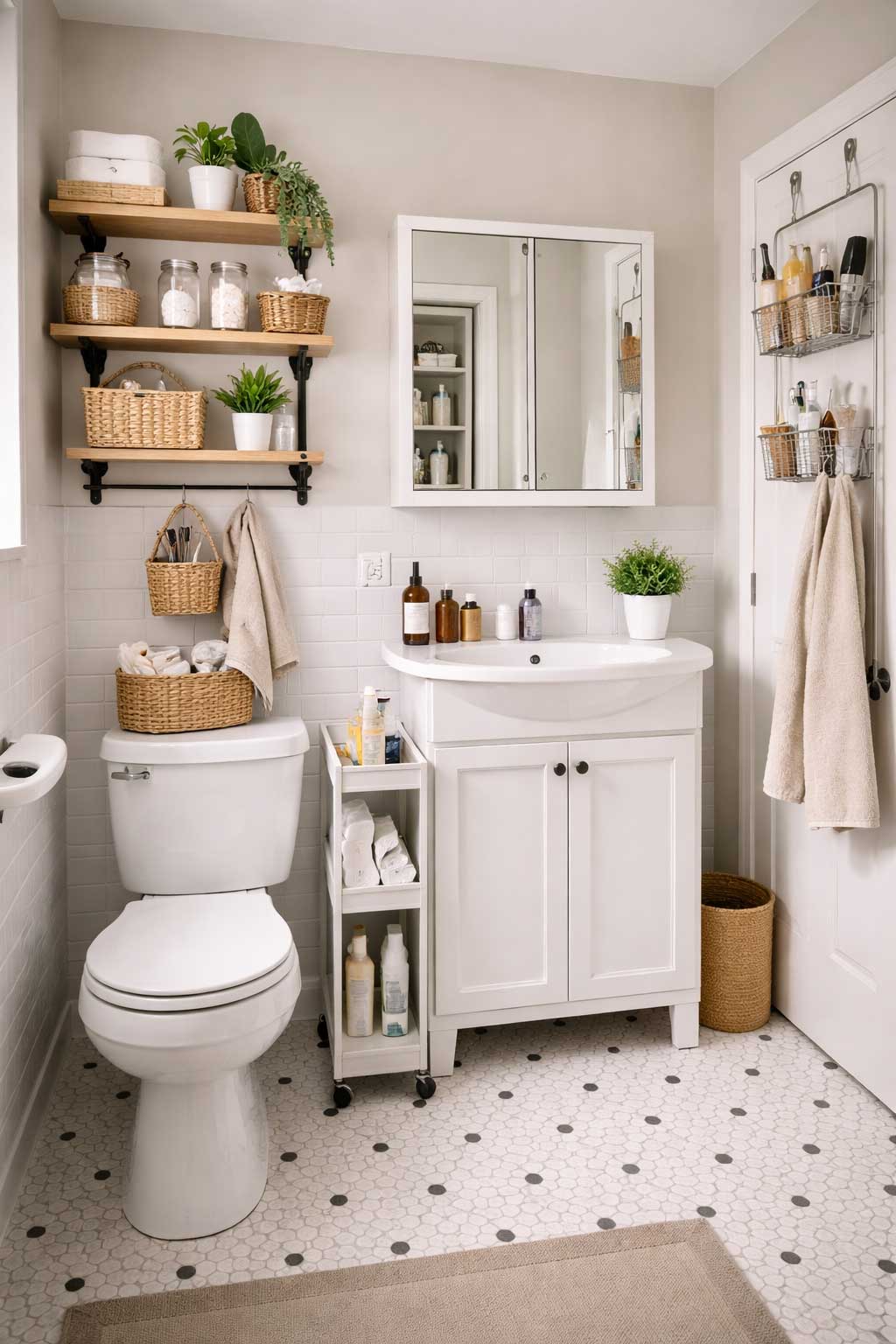
Wall-mounted shelves can hold everyday toiletries, extra toilet paper, or small storage bins without crowding the sink. Hooks can keep towels, robes, and frequently used accessories off the back of the toilet or hanging over the shower rod. A mirror cabinet can add hidden storage while keeping the room looking cleaner and less busy. If you want renter-friendly vertical storage ideas, see Best Wall-Mounted Bathroom Shelves for Apartments. If you want storage built into a feature you already need, check out Best Bathroom Mirror Cabinets for Small Spaces.
The biggest advantage of wall storage is that it lets you move items upward instead of outward. That matters in bathrooms where every inch around the sink already feels tight. Even a narrow wall shelf above the toilet or next to the vanity can make a noticeable difference in how the room functions each day.
It is also worth thinking about convenience when choosing vertical storage. The best wall-based solutions keep daily-use items easy to grab without forcing you to dig through deep bins or crowded shelves. In a small apartment bathroom, simple storage that supports your routine will always work better than decorative storage that only looks good in photos.
Create an Organized Sink Zone Without a Real Countertop
Even if your bathroom has almost no countertop, you still need the sink area to function well. That means creating a small, controlled zone for the few items that truly belong there. The goal is not to eliminate every visible product. The goal is to keep only the most important ones nearby and give them a defined place.
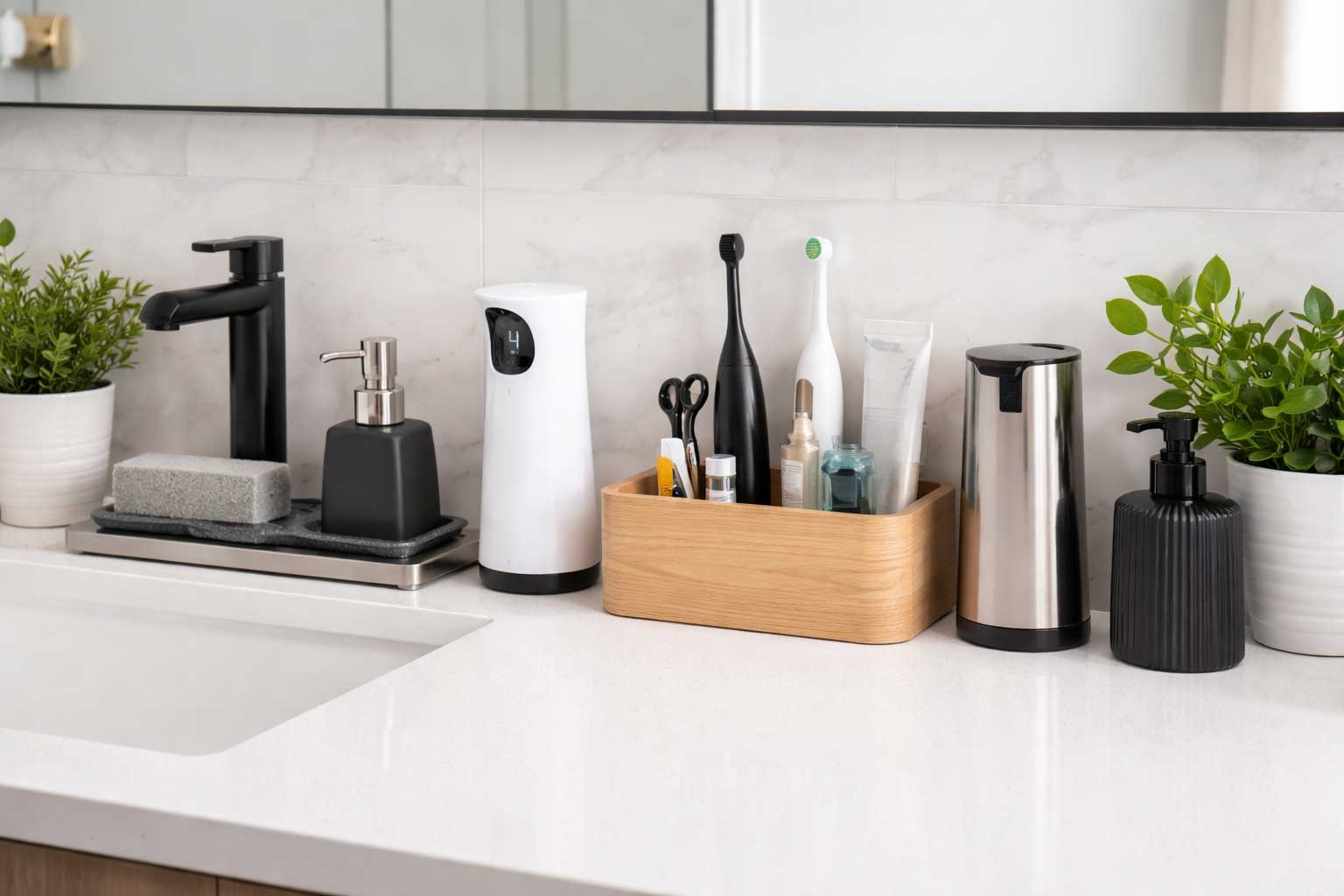
A sink caddy is one of the easiest ways to do that. Instead of allowing soap, grooming items, or random small products to spread out loosely around the sink, a compact caddy keeps them together in one contained area. This instantly makes the space easier to wipe down and visually cleaner. For better sink-area containment, check out Best Soap Dispensers and Sink Caddies for Small Bathrooms.
The same principle applies to toothbrushes and cups. Vertical holders are usually a much better fit than loose cups or trays because they use less width and keep the sink area from looking crowded. If you need a compact everyday setup near the sink, see Best Toothbrush Holders and Bathroom Cup Organizers for Small Spaces.
If you use skincare, shaving products, or other daily essentials in the bathroom, keep them grouped together in one compact organizer instead of spreading them across multiple surfaces. A contained system looks neater, reduces the chance of items tipping over, and makes your morning or evening routine much easier to manage. Small bathrooms do not need more surfaces. They need better zones.
The sink area should also be easy to reset. If it takes too long to put items away, clutter will come back fast. The best setup is one that makes tidying the bathroom feel nearly automatic. When every daily essential has an obvious home, maintaining the space becomes much less frustrating.
Add Storage Above and Around the Toilet
One of the most overlooked storage areas in a small bathroom is the space above the toilet. When there is little or no counter space, this area becomes even more valuable because it can hold many of the items that would otherwise end up stacked around the sink. Over-the-toilet storage works especially well in apartment bathrooms because it uses empty vertical space that usually goes to waste.
This area is ideal for items like extra tissue, hand towels, backup toiletries, and small bins filled with daily essentials. The key is to keep it practical and not overload it with bulky décor or oversized baskets. A clean, simple setup is usually more useful than trying to turn the entire area into decorative display space.
If you use the over-the-toilet zone correctly, it can relieve a surprising amount of pressure from the sink area. Instead of forcing every bathroom necessity into one cramped corner, you spread storage across multiple zones. That instantly makes the room feel more balanced and easier to use. For vertical storage ideas above the toilet, see Best Over-the-Toilet Storage Solutions for Small Bathrooms.
Use Slim Floor Storage Where It Actually Fits
Not every bathroom has room for a cabinet or shelving unit, but many do have narrow gaps that can support slim vertical storage. That might be the space between the vanity and toilet, a tight corner near the shower, or a narrow wall that cannot fit a full cabinet. In those situations, tall and narrow storage usually works better than anything wide.
Slim rolling carts and narrow storage pieces help take advantage of awkward leftover space without disrupting movement in the room. This matters because a storage solution that technically fits but makes the bathroom harder to move through is not really helping. The best small bathroom storage improves function without making the room feel boxed in.
Tall storage is often more effective than deep storage in a tight bathroom. Instead of expanding outward, it builds upward. That gives you more room for toiletries, extra tissue, cleaning products, or backup supplies while preserving a cleaner visual footprint. In a bathroom with no counter space, that tradeoff is usually worth it. For narrow freestanding storage, see Best Slim Storage Carts for Small Bathrooms.
Separate Shared Items from Personal Items
Bathrooms become even harder to manage when more than one person is using them. Shared spaces fail quickly when everyone leaves their personal products near the sink or in random open spots. If your apartment bathroom is used by a partner, roommate, or family member, separating storage by person can make a huge difference.
The easiest way to do this is by creating designated containers or zones. Shared items like hand soap, tissue, and basic first-aid or grooming supplies can stay in one easy-to-reach area, while each person keeps their own personal products in a separate container, shelf, or basket. This prevents the sink from becoming a crowded mix of unrelated items.
Clear zones also make the bathroom easier to reset. Instead of guessing where products belong or having everything migrate back to the vanity, each item has a place based on whether it is personal or shared. That reduces friction, saves time, and keeps the space from looking chaotic after only a day or two of use.
Common Mistakes That Make a Small Bathroom Feel More Crowded
A lot of bathroom organization problems come from using the wrong type of storage rather than having no storage at all. One of the biggest mistakes is leaving too many items visible at once. Even attractive organizers can make a bathroom feel cluttered if they are packed with too many products. A better strategy is to keep only the essentials out and store backups elsewhere.
Another common mistake is choosing organizers that are too wide, too deep, or too bulky for the room. Small bathrooms need compact storage that fits the scale of the space. Oversized bins, large baskets, or thick countertop trays often create more problems than they solve.
It is also easy to ignore vertical opportunities and rely too heavily on the sink or floor. When the bathroom lacks countertop space, walls, mirror cabinets, narrow shelves, and over-the-toilet storage should do more of the work. Finally, many people mix daily-use items with long-term backups. That makes every area feel overloaded. Everyday products should stay accessible, while refill items and extras should move into less visible storage.
Best Storage Features to Look for in a No-Counter-Space Bathroom
If you are choosing products for a bathroom with minimal vanity space, prioritize storage features that support compact living. Vertical design should be at the top of the list. Products that stack, hang, mount, or build upward usually work better than items that spread across a surface.
Water-resistant materials also matter, especially near sinks, tubs, and showers. Storage should be easy to clean and durable enough for a humid bathroom environment. Smooth surfaces, simple shapes, and open designs can also make organizers easier to maintain in everyday use.
Compact footprints are another major priority. In a small bathroom, even useful storage can become a problem if it blocks movement or overwhelms the room visually. Look for narrow, efficient designs that solve one problem well instead of oversized products that try to do everything at once.
Finally, multi-use function is always valuable. A mirror cabinet that adds hidden storage, a toilet-area organizer that adds shelving, or a rolling cart that stores several categories of essentials can help you get more value out of every inch. In a no-counter-space bathroom, every storage piece should earn its place.
Final Thoughts on Organizing a Small Bathroom with No Counter Space
A small bathroom does not need a large vanity to stay functional and organized. In many apartment bathrooms, the best results come from rethinking where storage happens rather than wishing for more countertop space. When you move essentials off the sink and into better zones, the room becomes much easier to use every day.
The most effective strategy is usually a mix of vertical storage, compact sink-area organization, narrow floor storage, and a clear system for separating daily essentials from extras. Even a tiny bathroom can feel calmer and less cluttered when every item has a purpose and a place.
Instead of trying to cram more onto the vanity, focus on reducing what stays out, using walls more effectively, and choosing organizers sized for a small space. That approach keeps the room looking cleaner, supports your routine better, and helps the entire bathroom feel larger than it actually is.
Our Top Bathroom Organization Picks for No-Counter-Space Bathrooms
A small bathroom with little to no counter space works best when storage is moved upward, simplified, and kept close to the areas where daily routines happen. The most effective solutions do not just add storage. They reduce visual clutter, make essentials easier to access, and help the sink area stay clear.
Best overall storage upgrade:
Wall-mounted bathroom shelf — A slim wall shelf helps move daily essentials off the vanity and uses vertical space more efficiently in a compact bathroom.
👉 Check price on Amazon
Best sink-area organizer:
Toothbrush holder and bathroom cup organizer — A compact vertical organizer keeps brushing essentials contained without taking over the sink area.
👉 Check price on Amazon
Best high-capacity solution:
Over-the-toilet storage unit — This is one of the easiest ways to add useful bathroom storage when the vanity offers little to no surface space.
👉 Check price on Amazon
Best narrow storage option:
Slim rolling bathroom cart — A narrow rolling cart can turn tight unused gaps into practical storage for toiletries, extra tissue, or cleaning supplies.
👉 Check price on Amazon
Bathrooms that need extra support for daily routines may also benefit from a compact sink caddy or a mirror cabinet with hidden storage, especially when the goal is to keep essentials nearby without letting the space feel cluttered.
FAQ
How do you organize a bathroom when there is no counter space?
The best way to organize a bathroom with no counter space is to move storage to walls, narrow vertical units, and contained sink-area organizers. Keep only daily essentials near the sink and store backups somewhere else.
Where should toiletries go in a small bathroom?
Toiletries should be divided by frequency of use. Everyday items can go in a compact sink organizer, caddy, or wall shelf, while backup products should be stored in cabinets, shelves, or over-the-toilet storage.
What is the best storage for a tiny apartment bathroom?
The best storage for a tiny apartment bathroom usually includes wall-mounted shelves, mirror cabinets, slim rolling carts, and over-the-toilet storage because these use vertical space without taking over the room.
How do you keep a bathroom sink area from looking cluttered?
Keep only the essentials at the sink, use a small organizer or caddy, store toothbrushes vertically, and avoid leaving extra products out in the open. The fewer loose items around the sink, the cleaner and larger the bathroom will feel.