How to Store Paperwork in a Small Apartment Office
Paperwork can take over a small apartment office much faster than most people expect. Bills, work documents, notebooks, printed forms, receipts, mail, and random loose papers tend to pile up quickly, especially when the workspace already has limited drawers and storage. In a small apartment, even a modest stack of papers can make a desk feel cluttered, reduce usable work surface, and create the sense that the whole office area is harder to control.
The good news is that storing paperwork in a small apartment office does not require a large filing system or a dedicated office room. In most cases, the best approach is to sort papers by type, keep only active documents close by, and use compact storage that fits the scale of the workspace. With the right setup, paperwork can stay organized, accessible, and much less visually overwhelming in a small home office.
For compact file storage, start with Best Compact Filing Cabinets for Small Apartment Offices.
If you need flexible paper storage beside the desk, check out Best Mobile File Carts for Small Apartment Offices.
For larger office organization support, see Best Office Storage Cabinets for Small Apartments.
This guide is part of our Small Apartment Office Solutions collection.
Why Paperwork Becomes a Problem So Quickly in a Small Apartment Office
Paper clutter builds faster than many people expect because paper spreads visually even when it does not take up much physical space. A few folders, unopened envelopes, printed forms, and scattered notes can make a desk look chaotic almost immediately. In a small apartment office, where the workspace may already be limited to one narrow desk or a compact corner, that visual clutter makes the room feel tighter and more stressful.
Another reason paperwork becomes a problem so quickly is that small workspaces usually lack dedicated filing storage. Without a cabinet, file drawer, or paper system nearby, papers tend to stay out in the open by default. Once that starts happening, the desk becomes a holding zone for everything from mail to work documents to receipts.
Mixed paper categories make things even harder. Household paperwork, office documents, financial records, notes, and incoming mail all behave differently, but they often get piled together. That creates clutter faster and makes it harder to know what needs action, what should be filed, and what can be thrown away. In a small apartment office, the real problem is usually not paper itself. It is the lack of structure around it.
Start by Separating Active Papers from Archived Papers
The first step in storing paperwork well is deciding what actually needs regular access. In many small offices, the desk gets overloaded because old records, finished documents, and active papers all end up living in the same prime space. That makes the workspace feel full even when much of what is there is no longer relevant to daily use.
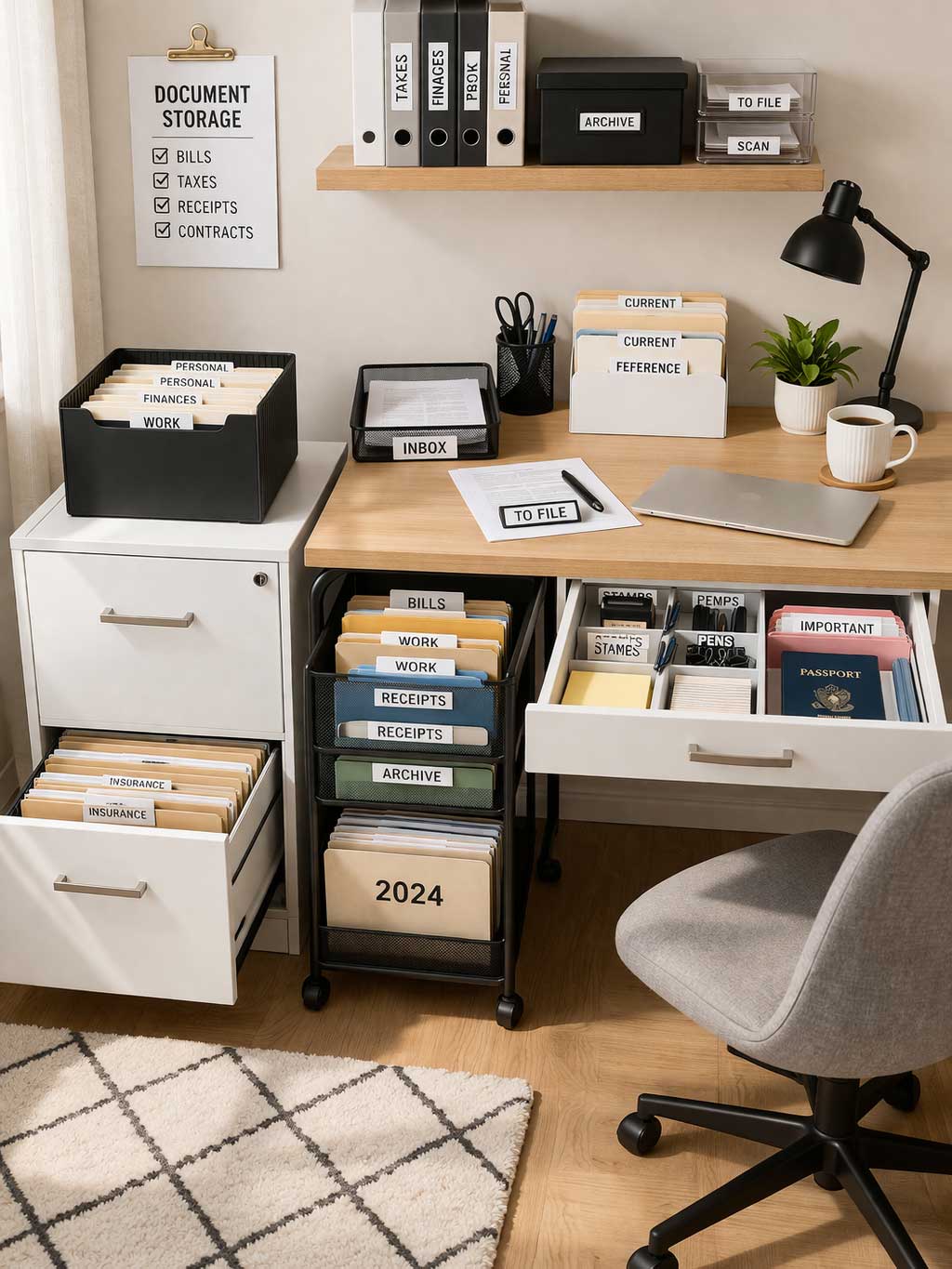
Current documents should stay closest to the desk. That might include papers related to ongoing projects, forms you are actively using, or household paperwork that still needs action. Everything else should be evaluated more realistically. Older tax records, completed work materials, reference documents, and archived files usually do not need to stay within immediate reach every day.
This distinction matters a lot in a small apartment office because your best storage spots are limited. When old paperwork takes up prime real estate, it becomes harder to keep the actual workspace functional. A smaller office works better when active papers stay accessible and older records move into less convenient but still organized storage.
Sort Paperwork by Category Before Choosing Storage
One of the biggest mistakes people make is trying to organize papers without sorting them first. Storage works much better when you know what categories you actually need to support. Bills, work documents, receipts, notebooks, warranties, printed references, and personal records usually need different handling, and they become much easier to manage when they are not all pushed into one giant stack.
Financial paperwork tends to need a more structured system than everyday notes. Work documents should stay separate from household records so the office area feels more focused and easier to navigate. Even within a small apartment setup, small paper categories are much easier to control than one mixed pile that keeps growing without clear boundaries.
This also helps you avoid overbuilding the storage system. When you sort papers clearly, you can see whether you really need a file cart, a drawer section, a small cabinet, or simply a better folder system. A smaller workspace benefits from that clarity because it lets you choose storage that actually matches the type and volume of papers you are keeping.
Use Hidden Storage to Keep Paper Clutter Off the Desk
A small apartment office usually feels better when paper storage is accessible but not always visible. Loose documents on top of the desk create visual noise quickly, even if they are neatly stacked. Hidden storage helps reduce that effect while still keeping important papers close enough to use easily.
A compact filing cabinet is often one of the strongest solutions because it gives active and semi-active documents a true home without asking the desktop to carry them. If you need a file-focused option that works in smaller layouts, browse Best Compact Filing Cabinets for Small Apartment Offices.
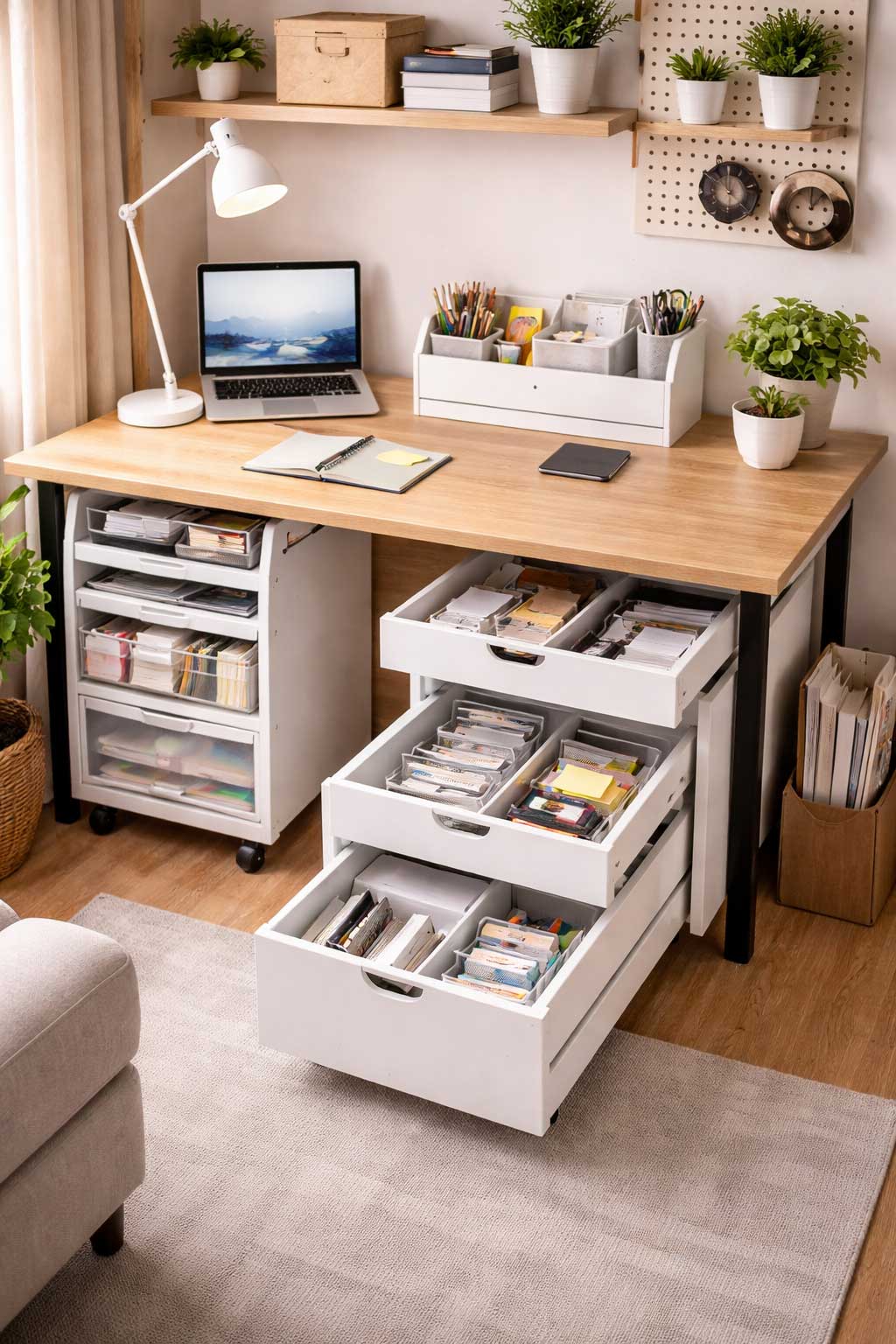
Drawers can also work well for smaller active paper categories, especially if you divide them intentionally. Bills in progress, current forms, and small working folders often do better in a shallow drawer than on the surface of the desk. Closed storage makes the workspace feel calmer and more controlled, which matters even more when the office sits in a bedroom or living room rather than a separate room.
Use the Space Beside the Desk for Paper Storage
The space beside a desk often has more paper-storage potential than people realize. Even a narrow strip of floor can sometimes support a slim file cart, compact filing cabinet, or small office cabinet that keeps papers close without crowding the actual work surface. In a small apartment, that kind of support storage can make a major difference.
A mobile file cart can be especially useful because it keeps active documents accessible while staying flexible. It can slide beside the desk, tuck into a corner, or shift as needed if the room layout changes. If you want a compact side-storage option, take a look at Best Mobile File Carts for Small Apartment Offices.
The key is choosing something proportional to the workspace. Side storage should help the office function better, not make it feel boxed in. A narrow file solution that supports paper categories usually works much better than trying to force all paperwork into the desk itself. In a small office, that extra support often protects the main work area from turning into a paper pile.
Keep Incoming Papers From Taking Over the Workspace
One of the easiest ways for a small office to get overwhelmed is by letting incoming papers pile up unchecked. Mail, receipts, printed documents, notes from meetings, and random forms can collect surprisingly fast, especially when there is no clear place for them to go right away. Before long, the desk becomes a temporary landing zone that never gets cleared.
A better system starts with one small intake zone for new papers. That might be a desktop tray, a slim vertical file, or one contained section of the desk where new items go before they are processed. If you need a better way to keep incoming paper controlled, check out Best Desk Organizers for Small Apartment Offices.
The important part is that the desktop should not become the long-term holding area. Incoming paper needs a short-term home and a routine for being processed before it spreads. In a small apartment office, even a small habit of sorting, filing, or discarding papers regularly can make the difference between a manageable workspace and one that always feels behind.
Use Vertical Storage for Light Paper Categories
Not all paperwork needs bulky floor storage. Lighter categories like notebooks, binders, reference folders, and frequently used papers can often live in vertical storage instead. In a compact office, this is a smart way to expand capacity without making the room feel heavier.
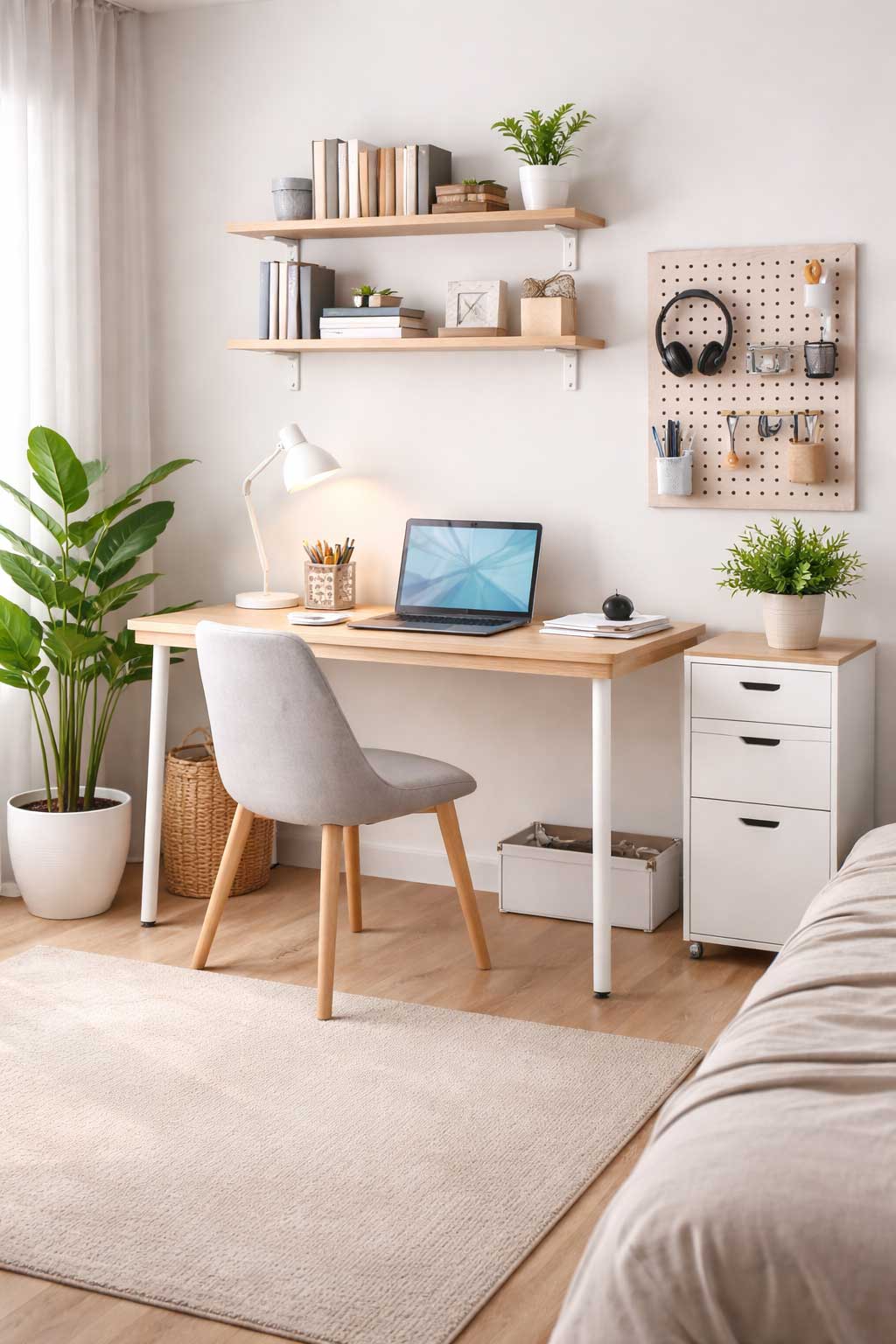
Floating shelves can hold binders, paper trays, folders, and notebooks while keeping those items off the desk itself. If you want wall-based paper support, see Best Floating Shelves for Small Apartment Offices. Desktop bookshelves or upright organizers can also create more structure without requiring a separate cabinet or file unit.
Vertical storage works best for lighter, more active categories rather than major archives. It keeps important materials easy to reach and helps the desk feel more complete without cluttering the surface. In a small apartment office, that kind of upward storage often feels much cleaner than trying to fit every paper type into one overcrowded drawer.
Build a Paper System That Is Easy to Maintain
The best paper-storage system is not the most elaborate one. It is the one you can actually keep using. In a small apartment office, complicated filing routines often fail because they take too much time, use too much space, or require too many decisions just to put one paper away. A simpler system usually works better.
Each paper category should have an obvious home. Current work documents, household forms, active bills, archived records, and new incoming papers should each have a place that makes sense. The easier it is to tell where something belongs, the easier it becomes to prevent clutter from building.
A small reset routine also helps. Filing a few papers, discarding junk mail, and clearing the desk surface regularly can prevent a major buildup before it starts. In a small apartment office, a paper system should lower stress, not create another chore that gets ignored. Consistency matters much more than complexity.
Common Mistakes That Make Paper Storage Harder
One common mistake is keeping too many loose papers on the desk. Even if the documents are important, the desktop is usually the most expensive storage space in a small office because it is also the main work surface. Letting papers stay there too long makes the whole setup harder to use.
Another mistake is mixing work, household, and financial documents together. When categories are not separated, filing becomes more confusing and retrieval becomes slower. People also often choose storage that is too large for the room, which can make the office feel heavier without actually improving the paper system very much.
Old papers using prime office space is another common issue. Finished records and archive materials do not need to stay in the most accessible storage spots. When they do, current papers have nowhere appropriate to go. In a small apartment office, good paper storage is really about matching access level to actual need.
Best Features to Look for in Small Office Paper Storage
When choosing paper storage for a small apartment office, compact size should be one of the first priorities. Paper storage needs to support organization without taking over the room. A smaller cabinet, slim cart, or narrow drawer system often works much better than a large traditional file unit.
Easy access also matters. If current papers are hard to reach, they are more likely to end up back on the desk. Clear category separation is just as important because paper storage becomes much easier to maintain when each type of document has a defined place. Closed storage can also be a major advantage since it reduces visual clutter and helps the office feel calmer.
Flexibility is useful too. Small apartment offices often need storage that can handle different kinds of papers, from folders and files to binders and notebooks. The best paper-storage pieces give you enough structure to stay organized without locking you into a system that is too rigid for everyday use.
Final Thoughts on Storing Paperwork in a Small Apartment Office
Paperwork does not need to overwhelm a small apartment office. The best systems keep active documents accessible, move archives into less prominent storage, and prevent the desk from becoming a permanent paper pile. That kind of structure makes the whole workspace feel lighter and easier to use.
A good paper system is usually built on a few simple ideas: sort papers by type, keep only active documents close, use hidden storage whenever possible, and give incoming papers a defined place before they spread. In a small apartment, those habits matter as much as the storage furniture itself.
The goal is not to create a giant filing setup in a small room. It is to make paperwork feel controlled, manageable, and less visually dominant. When the desk stays clearer and documents have obvious homes, the office becomes much easier to work from every day.
Our Top Paper Storage Picks for Small Apartment Offices
Paperwork is easiest to manage when storage keeps active documents close, archived records contained, and loose paper off the desk. The best small-office solutions usually stay compact, practical, and easy to maintain in a multi-use apartment setting.
Best overall choice:
Compact filing cabinet — A small filing cabinet gives important papers a dedicated home without taking over the office area.
👉 Check price on Amazon
Best flexible side-storage option:
Mobile file cart — A rolling file cart keeps current documents close to the desk while staying easy to reposition in a small room.
👉 Check price on Amazon
Best closed-storage upgrade:
Office storage cabinet — A compact cabinet helps keep paper categories contained and reduces visual clutter around the workspace.
👉 Check price on Amazon
Best incoming-paper solution:
Desktop paper organizer — A compact organizer helps control mail, notes, and active paperwork before they spread across the desk.
👉 Check price on Amazon
Workspaces with lighter paper-storage needs may also benefit from floating shelves or a desktop bookshelf, especially when the goal is to keep notebooks, folders, and reference materials easy to reach without adding bulky furniture.
FAQ
How do you store paperwork in a small office?
The best way to store paperwork in a small office is to separate active documents from archived ones, sort papers by category, use compact hidden storage, and keep loose documents off the desk whenever possible.
What is the best way to organize papers in a small apartment?
The best way to organize papers in a small apartment is to create simple categories, keep current papers close, move old records into less prominent storage, and use compact filing pieces that fit the workspace.
Where should important documents be stored in a home office?
Important documents should usually be stored in a dedicated file drawer, compact filing cabinet, or another closed storage area where they stay protected, easy to find, and separate from everyday paper clutter.
How do you keep paper clutter off a desk?
Keep paper clutter off a desk by giving incoming papers one intake zone, filing active documents regularly, and storing older or less-used papers in hidden storage instead of letting them stay on the work surface.