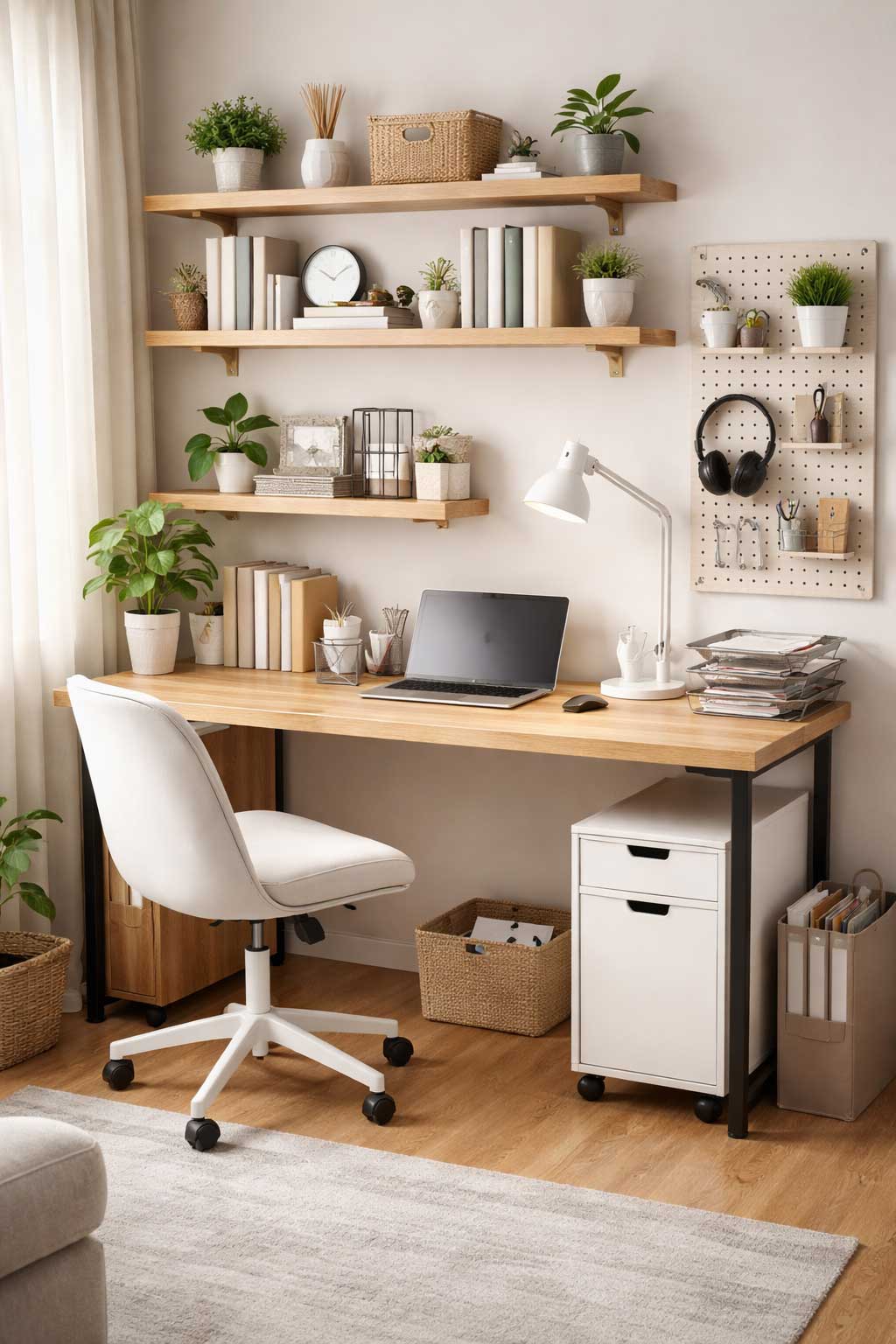
How to Set Up an Ergonomic Desk in a Small Apartment
Setting up an ergonomic desk in a small apartment can feel tricky when your workspace has to fit into a bedroom corner, living room wall, or other compact part of the home. Many apartment workspaces are designed around whatever desk happens to fit, not around posture, comfort, or long-term use. Over time, that can lead to a setup that feels cramped, awkward, and harder to work from for more than a short period.
The good news is that an ergonomic desk setup does not require a huge office or bulky furniture. In most small apartments, the best results come from making smart adjustments with the space you already have. A better chair position, improved screen height, more intentional lighting, and a few compact ergonomic tools can make a small desk much more comfortable without taking over the room.
For desk options that work in compact layouts, start with Best Office Desks for Small Apartments.
If you need ways to improve screen position, check out Best Laptop Stands for Small Apartment Offices.
For added desk height and utility, see Best Monitor Stands for Small Apartment Desks.
This guide is part of our Small Apartment Office Solutions collection.
Why Ergonomic Desk Setups Matter in Small Apartments
Small apartment workspaces often create posture problems because space limitations force people to prioritize fit over comfort. A desk may technically fit along a wall or in a corner, but that does not mean it supports healthy working positions. When the screen sits too low, the chair is not adjusted properly, or the keyboard is placed awkwardly, the body has to compensate. That can lead to neck tension, hunched shoulders, wrist discomfort, and a setup that feels tiring faster than it should.
This becomes even more noticeable when you work from the same spot every day. A temporary or improvised desk might feel manageable for a short session, but long work hours expose every weakness in the setup. Small apartment desks are especially vulnerable to this because they often have less surface area, fewer adjustment options, and more clutter competing for the same limited space.
The encouraging part is that ergonomic improvement does not always require replacing everything. Small changes can make a surprisingly large difference. Raising the screen, repositioning the chair, improving foot support, or clearing the desk surface can turn a cramped setup into one that feels much more natural to use.
Start with the Desk Height and Chair Relationship
Ergonomics begins with how your body fits at the desk. Before thinking about stands, accessories, or lighting, it helps to look at the basic relationship between the desk and the chair. If those two elements do not work together, the rest of the setup will always feel slightly off.
Ideally, your elbows should rest at a comfortable angle close to desk height when your shoulders are relaxed. If the chair is too low, your arms have to reach up. If the chair is too high, your wrists and shoulders can end up in an awkward position. A desk that physically fits the room still needs to fit your body if it is going to feel comfortable over time. If you need furniture options that work better in compact layouts, browse Best Office Desks for Small Apartments.
Chair height affects almost everything else in the setup. It influences where your arms land, how your feet sit on the floor, and how your back interacts with the chair. In a small apartment, it is easy to settle for whatever chair takes up the least space, but comfort matters too. If you want a more supportive seating option that still fits smaller rooms, take a look at Best Compact Office Chairs for Small Spaces.
Get the Screen to a Better Viewing Height
One of the biggest ergonomic issues in a small apartment workspace is screen position. Laptop users especially tend to work with screens that sit too low by default, which encourages the head to tilt downward and the shoulders to round forward. Over time, that posture can make the entire setup feel uncomfortable, even if the desk itself is otherwise decent.
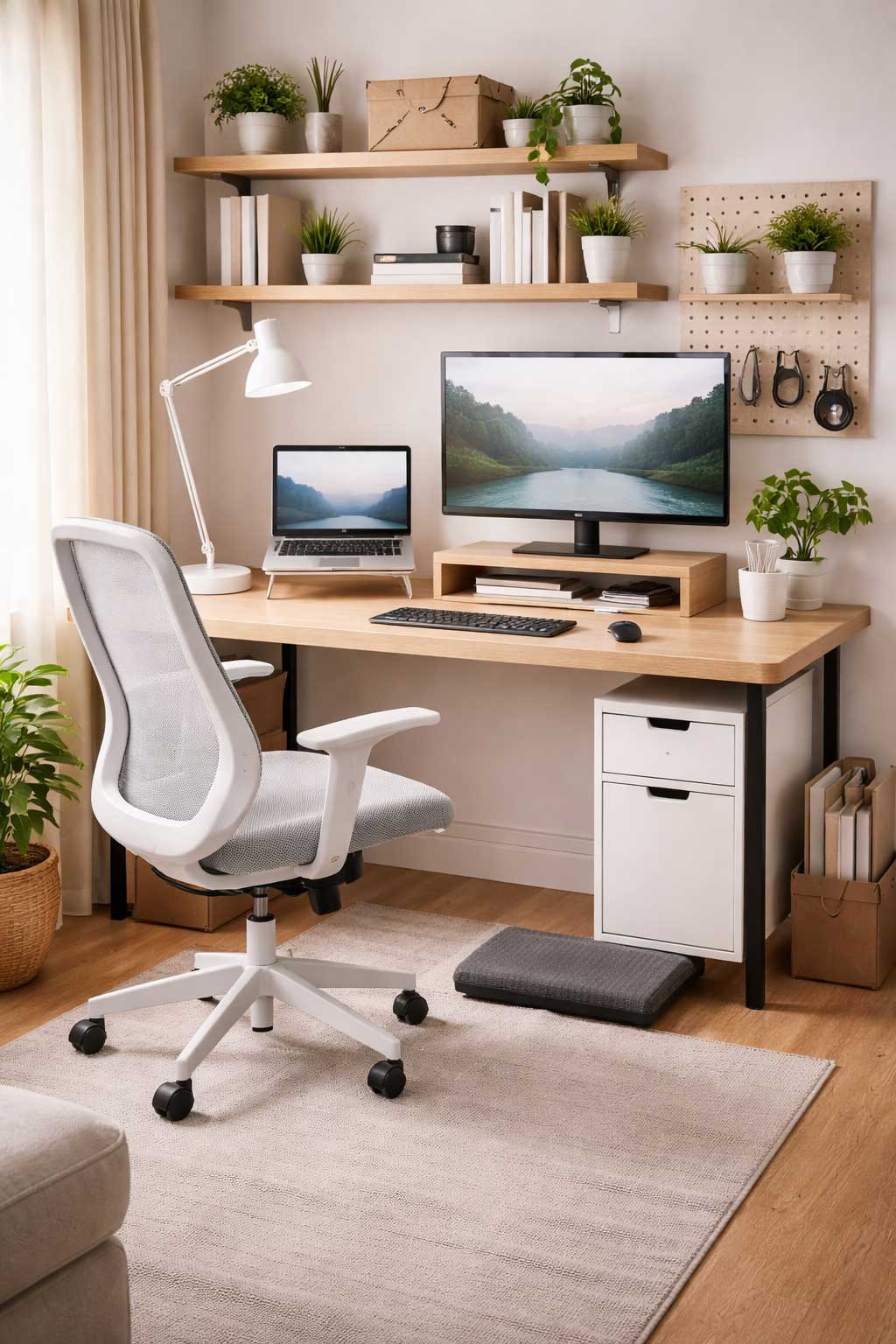
A better screen height helps the neck stay in a more natural position and usually makes the workspace feel easier to use. Laptop stands are one of the simplest ways to improve this because they raise the screen without requiring a larger desk. If you want compact tools for this adjustment, see Best Laptop Stands for Small Apartment Offices.
Monitor stands can also be helpful because they do more than just lift the screen. Many create storage underneath, which can improve both comfort and organization at the same time. For compact height-boosting options, check out Best Monitor Stands for Small Apartment Desks.
A better viewing angle can make a small desk feel more functional because it reduces strain without demanding a bigger footprint. In many cases, the desk feels better not because it got larger, but because the setup started working with the body instead of against it.
Improve Keyboard and Mouse Position Without Crowding the Desk
Good ergonomics is not just about where the screen sits. Keyboard and mouse placement matter just as much because they affect how the arms, wrists, and shoulders work throughout the day. In a small apartment setup, these tools often end up too far away, pushed to the side, or squeezed into whatever surface space is left after everything else is placed on the desk.
The best setup keeps input devices close enough that you are not constantly reaching forward. The more your arms have to stretch, the more tension builds in the shoulders and upper back. Compact layouts make this even more important because there is less room to waste. A smaller keyboard area that feels intentional is usually better than a larger but cluttered surface that forces awkward positioning.
Compact accessories can help here. A smaller mouse pad, a cleaner desktop, or a more efficient laptop stand setup can preserve enough room for the hands to work naturally without making the desk feel overloaded. The goal is to keep the work area comfortable and efficient, not to cram every possible accessory into a desk that cannot support it.
Support Better Sitting Posture in a Small Workspace
A small workspace still needs to support good sitting posture. That does not mean it has to look like a corporate office, but it does mean your body needs enough support to work comfortably for real stretches of time. In compact apartments, comfort often comes down to making a few smart choices rather than adding a lot of furniture.
A compact chair can still be supportive if it lets you sit at a workable height and encourages a steadier posture. Size matters in a small apartment, but support matters too. A chair that saves space but leaves you shifting constantly is not really helping. If you need a chair that balances support with a smaller footprint, browse Best Compact Office Chairs for Small Spaces.
Foot position is another part people often overlook. When the chair height and desk height are not a perfect match, feet can end up dangling or resting awkwardly. That can affect the entire seated posture, not just the legs. For setups that need a little more lower-body support, check out Best Footrests for Small Apartment Offices.
Use Lighting to Reduce Eye Strain and Improve Focus
Ergonomics also includes visual comfort. In a small apartment, the desk may end up in a dim corner, beside a window with uneven glare, or in a space where general room lighting is not enough for focused work. Poor lighting can lead to eye strain, headaches, and a setup that feels more tiring than it should.
A dedicated desk light can make a big difference because it gives the workspace its own source of focused illumination. This helps reduce strain and also makes the desk feel more intentional as a work zone. If you need lighting designed for compact work areas, take a look at Best Desk Lamps for Small Apartment Offices.
Placement matters too. Good desk lighting should support the screen and task area rather than create glare or harsh contrast. In a small apartment, even one well-placed lamp can improve both comfort and concentration. Better lighting does not just help you see more clearly. It helps the whole workspace feel easier to use.
Keep the Desk Organized So Ergonomic Gains Actually Last
A more ergonomic setup will not stay comfortable for long if clutter keeps pushing everything out of position. Loose supplies, chargers, papers, and random accessories can gradually force the hands farther out, shrink the usable workspace, and make the desk harder to sit at comfortably. In that sense, organization supports ergonomics directly.
A cleaner desk makes it easier to keep the keyboard, mouse, and screen in the right spots. It also reduces the tendency to angle the body around objects that should not be there in the first place. If the desk needs better daily structure, browse Best Desk Organizers for Small Apartment Offices.
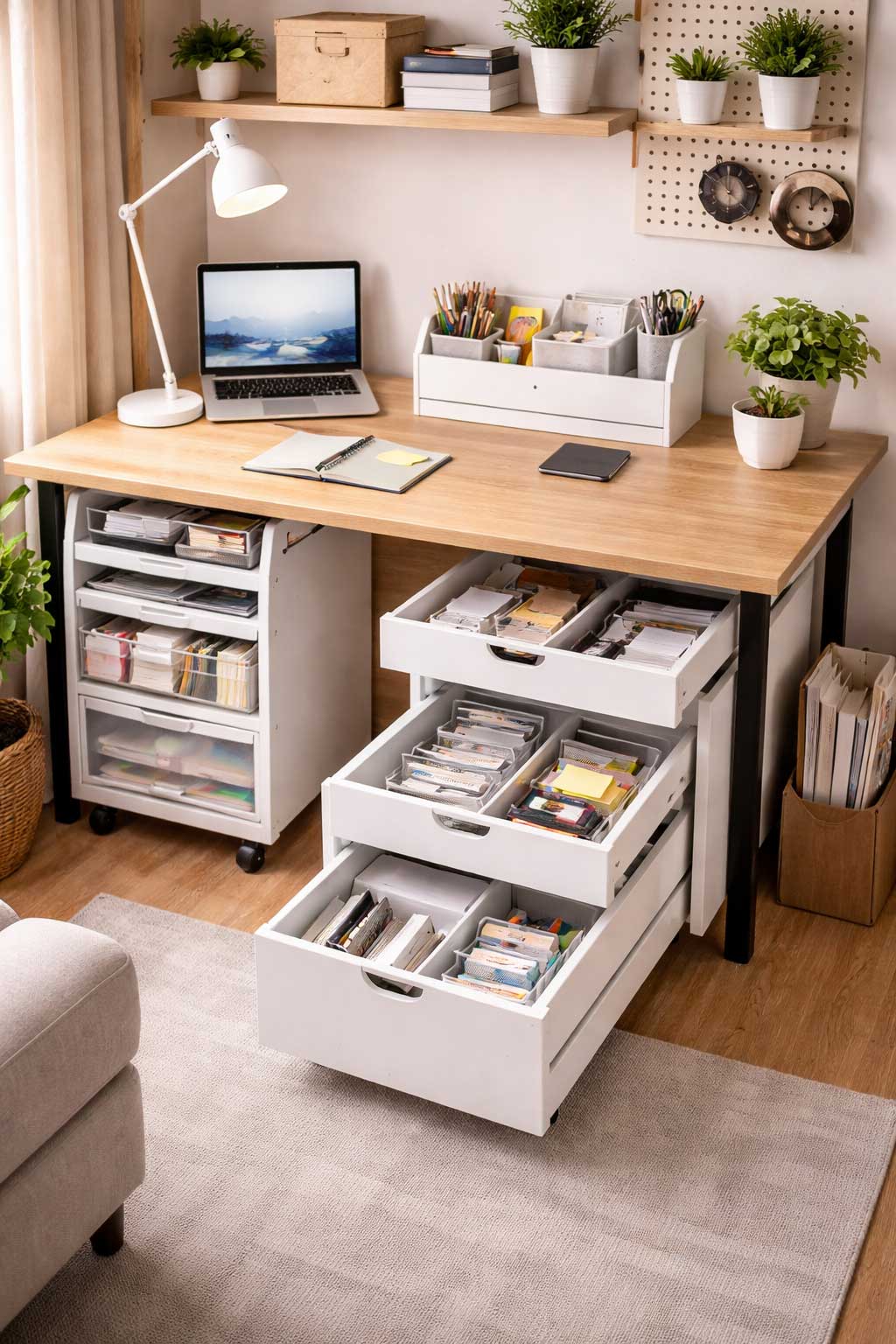
It also helps to move some items off the surface entirely. Under-desk drawers, compact cable management, and other small storage solutions can preserve the work area without making the setup feel bulkier. Ergonomic improvements last longer when the desk is easy to maintain and easy to reset at the end of the day.
Make the Setup Work in a Shared Apartment Space
Many small apartment desks sit in bedrooms, living rooms, or other shared spaces rather than dedicated offices. That means the ergonomic setup has to do more than feel comfortable. It also has to fit the room visually and practically. A setup that works well for the body but completely overwhelms the space will still be frustrating to live with.
This is where scale matters. Ergonomic add-ons should support comfort without making the desk feel heavy, messy, or intrusive. A compact stand, supportive chair, simple lamp, and clean storage system usually work better than a collection of oversized accessories that dominate the area. In shared spaces, the best ergonomic setup is often the one that feels intentional without drawing too much attention to itself.
That balance is especially useful in apartments because the desk is rarely isolated from the rest of life. A comfortable setup that blends into the room is easier to keep using consistently. It also makes it easier to mentally separate work time from the rest of the day once the workspace is reset and the room returns to normal use.
Common Mistakes That Make Small Ergonomic Setups Less Comfortable
One common mistake is letting the screen sit too low. This happens constantly with laptop setups and is one of the fastest ways to make a desk feel uncomfortable. Another mistake is choosing a chair based only on how small it looks rather than how well it actually supports daily use. A compact footprint matters, but not at the expense of basic comfort.
People also often ignore arm and wrist position. If the keyboard and mouse are too far away or angled awkwardly, the entire upper body ends up compensating. That can make even a visually tidy desk feel tiring. Overloading a small desk with too many accessories is another common issue. Too many add-ons can reduce the usable work area and make the setup harder to maintain.
The best small ergonomic desks usually avoid extremes. They are not overloaded, not overbuilt, and not relying on one miracle product. They work because the core pieces are positioned well and the layout supports real daily use.
Best Features to Look for in Ergonomic Desk Accessories for Small Apartments
When shopping for ergonomic accessories in a small apartment, compact size should be one of the first things you look for. Every piece needs to improve comfort without making the desk feel more crowded. Smaller, simpler upgrades usually work better than large solutions that take over the workspace.
Adjustability is also valuable. A stand, chair, or light that can adapt to your body and layout tends to be more useful than something fixed in one position. Lightweight pieces are another advantage because apartment workspaces often need flexibility. Accessories that are easy to move make it much easier to adjust the setup when needed.
Multi-use function is especially helpful in a compact home. A monitor stand that adds storage, a lamp that defines the work zone, or a laptop riser that improves screen height without consuming too much space can all give you more value per square inch. Clean styling matters too because the desk often remains visible from other parts of the apartment.
Final Thoughts on Setting Up an Ergonomic Desk in a Small Apartment
An ergonomic desk setup in a small apartment does not have to be complicated. In most cases, the best results come from paying attention to the basics: desk and chair relationship, screen height, supportive sitting posture, better lighting, and a layout that keeps clutter from interfering with comfort.
A small workspace can absolutely feel good to work from when it is set up intentionally. You do not need a separate office or oversized furniture. You need a setup that fits both your body and the room. That usually means a few thoughtful upgrades rather than a complete overhaul.
The goal is not to turn a compact apartment desk into a massive office station. It is to make the workspace support real daily comfort while still fitting naturally into the home. When the setup feels better physically, the whole workday usually gets easier too.
Our Top Ergonomic Desk Setup Picks for Small Apartments
A small apartment desk feels more comfortable when the setup supports posture, screen height, and daily workflow without adding too much bulk. The best ergonomic upgrades usually stay compact, useful, and easy to integrate into a shared living space.
Best overall upgrade:
Laptop stand — A compact laptop stand improves screen height and helps reduce neck strain without taking over the desk.
👉 Check price on Amazon
Best desk-height helper:
Monitor stand — A monitor stand raises the screen while also creating a little extra utility and structure on the desk.
👉 Check price on Amazon
Best seating support option:
Compact office chair — A supportive compact chair can improve posture and comfort without overwhelming a small apartment workspace.
👉 Check price on Amazon
Best lower-body comfort addition:
Footrest — A simple footrest helps support better seated posture when chair and desk heights do not line up perfectly.
👉 Check price on Amazon
Workspaces that need better visual comfort may also benefit from a dedicated desk lamp, especially when the desk sits in a darker corner or shared room.
FAQ
How do you make a small desk ergonomic?
You make a small desk more ergonomic by improving chair and desk alignment, raising the screen to a better height, keeping input devices close, and using compact accessories that support comfort without overcrowding the space.
What is the best desk setup for a small apartment?
The best desk setup for a small apartment is usually compact, comfortable, and easy to maintain, with good screen height, supportive seating, focused lighting, and minimal clutter.
How high should a laptop be on a desk?
A laptop should usually be high enough that the screen sits closer to eye level, which often means using a laptop stand or riser instead of placing it flat on the desk.
What ergonomic accessories are worth it for a small workspace?
The most worthwhile ergonomic accessories for a small workspace are usually a laptop stand, monitor stand, supportive chair, footrest, and a desk lamp that improves visual comfort without taking up too much space.