How to Layer Lighting in a Small Apartment
Lighting can change the entire feel of a small apartment faster than almost anything else. The right lighting makes a compact space feel warmer, more functional, and more visually balanced. The wrong lighting can make the apartment feel flat, dim, harsh, or smaller than it really is. That is why layered lighting matters so much. In a small home, one ceiling fixture is almost never enough to make a room feel complete.
A lot of apartments rely too heavily on a single overhead light. Technically, that may brighten the room, but it usually does very little to make the space feel comfortable. Overhead lighting on its own tends to flatten the room and leave certain corners too dark while making other areas feel too bright. The result is a space that feels functional at best and sterile at worst. Layered lighting solves that by spreading light more intentionally throughout the room.
The idea is simple. Instead of depending on one light source, you combine different types of lighting so the apartment can support different moods, tasks, and times of day. A living room may need soft ambient light at night, stronger light for reading, and accent lighting to keep the room from feeling visually dead. A bedroom may need a different mix. A kitchen may need another. Once those layers are working together, the apartment usually feels more expensive, more inviting, and much easier to live in.
This is also one of the smartest ways to improve a small space without major renovations. Layered lighting helps rooms feel deeper and more intentional, even when square footage is limited. That is why it pairs so naturally with How to Improve Lighting in a Small Apartment, How to Make a Dark Apartment Brighter, and How to Make a Small Apartment Feel Bigger. In a small apartment, good lighting is not just decoration. It is part of how the space functions.
Why one light source usually is not enough
The biggest problem with single-source lighting is that it asks one fixture to do too many jobs. A ceiling light may be expected to brighten the whole room, create atmosphere, support reading, make the space feel cozy, and keep dark corners from disappearing. Most of the time, it cannot do all of that well.
That is why apartments with only overhead lighting often feel unfinished at night. The room may technically be visible, but it does not feel balanced. Shadows gather in certain areas, surfaces reflect light unevenly, and the atmosphere feels more abrupt than welcoming. In small apartments, this becomes even more noticeable because the room is doing a lot of work. The same area may need to support relaxing, working, eating, and entertaining, sometimes all within a few feet of each other.
Layered lighting fixes that by dividing those jobs. One light source can help with general brightness, another can support a specific task, and another can soften the room or highlight a better visual rhythm. Once you stop expecting one bulb to do everything, the room becomes much easier to shape.
This is especially important in apartments where natural light is limited or inconsistent. When windows are small, blocked, north-facing, or unevenly placed, artificial lighting has to work harder to support the room. A layered approach makes that easier.
What layered lighting actually means
Layered lighting sounds complicated at first, but it is really just a practical way of thinking about different light sources. Most well-lit rooms use some version of three layers: ambient lighting, task lighting, and accent lighting. In a small apartment, you do not need a complicated designer setup to make this work. You just need to understand what each layer is doing.
Ambient lighting is the general light that helps the room feel overall illuminated. This is often your overhead fixture, but it can also include floor lamps or wall-mounted fixtures that contribute to general brightness.
Task lighting is more focused. It helps you do something specific, such as reading in bed, chopping vegetables, getting ready in the bathroom, or working at a desk. Task lighting is usually more directional and more practical.
Accent lighting adds depth and atmosphere. It is the layer that makes a room feel finished rather than merely bright. Accent lighting may come from a table lamp, a shelf light, a wall sconce, or a soft LED strip used carefully. It can highlight a corner, soften the edges of a room, or make the apartment feel more visually interesting at night.
Once you think in these layers, lighting decisions become much easier. You stop asking whether one lamp is “enough” and start asking what role that lamp plays in the room.
Small apartments benefit from lighting zones
One of the reasons layered lighting works so well in small apartments is that it helps create zones without using walls. In open layouts especially, lighting can signal different functions in subtle ways. A floor lamp near the sofa can make the living area feel more defined. A small lamp on a desk can separate the workspace from the rest of the room. Bedside lighting can make the sleeping area feel more settled and intentional.
This matters because small apartments often need one room to do the work of several rooms. Lighting can help create that separation without adding visual bulk. You are not building new rooms, but you are helping each part of the apartment feel like it has its own purpose.
That is one reason layered lighting often supports layout improvements too. It works well alongside How to Design a Small Living Room Layout and How to Arrange Furniture in a Small Apartment Living Room, because good lighting makes those arrangements feel clearer and more complete. The right lamp placement can reinforce the function of the furniture around it instead of leaving the room feeling like one flat wash of light.
In small-space living, even subtle distinctions matter. Lighting is one of the easiest ways to create them.
Start with the room’s main function
The best way to layer lighting is to begin with how the room is actually used. A bedroom does not need the same lighting mix as a kitchen, and a home office does not need the same lighting mix as a living room. That sounds obvious, but many apartments end up using the same lighting logic everywhere, which is why the space feels uneven at night.
A small living room usually needs ambient lighting for general comfort, task lighting for reading or hobbies, and softer lighting that helps the room wind down in the evening. A bedroom often needs a calmer overall feel, with bedside lighting that supports reading or nighttime routines without relying entirely on a ceiling fixture. A kitchen needs brighter functional support, but that does not mean it has to feel harsh. A desk area needs focused lighting that helps with work while still fitting the surrounding room visually.
This is why layering should always respond to use first and style second. A beautiful lamp that does not solve the room’s real lighting problem is not doing enough. A room becomes easier to light once you identify what it actually needs to support after dark.
Overhead lighting still matters, but it should not do everything
Layered lighting does not mean abandoning the ceiling fixture. In most apartments, overhead light still plays an important role. It usually acts as the starting point for general brightness, especially in rooms where you need to move around safely or clean efficiently. The problem comes when it is the only layer.
A ceiling fixture is strongest when it provides a solid base rather than the entire mood of the room. If the overhead light is too harsh, too dim, or badly positioned, the whole apartment can suffer for it. But even a decent overhead light tends to work better when other sources soften and support it.
That is why so many small apartments improve dramatically once a room adds just one or two additional light sources. The ceiling fixture can handle broad visibility, while table lamps, floor lamps, wall sconces, or smaller directional lights create warmth and balance. Instead of one strong blast of light, the room begins to feel more considered.
If your apartment already struggles with dimness or awkward overhead lighting, How to Make a Dark Apartment Brighter is a natural companion to this topic. Layering often solves brightness problems more elegantly than simply using one stronger bulb.
Living rooms usually need the most obvious layering
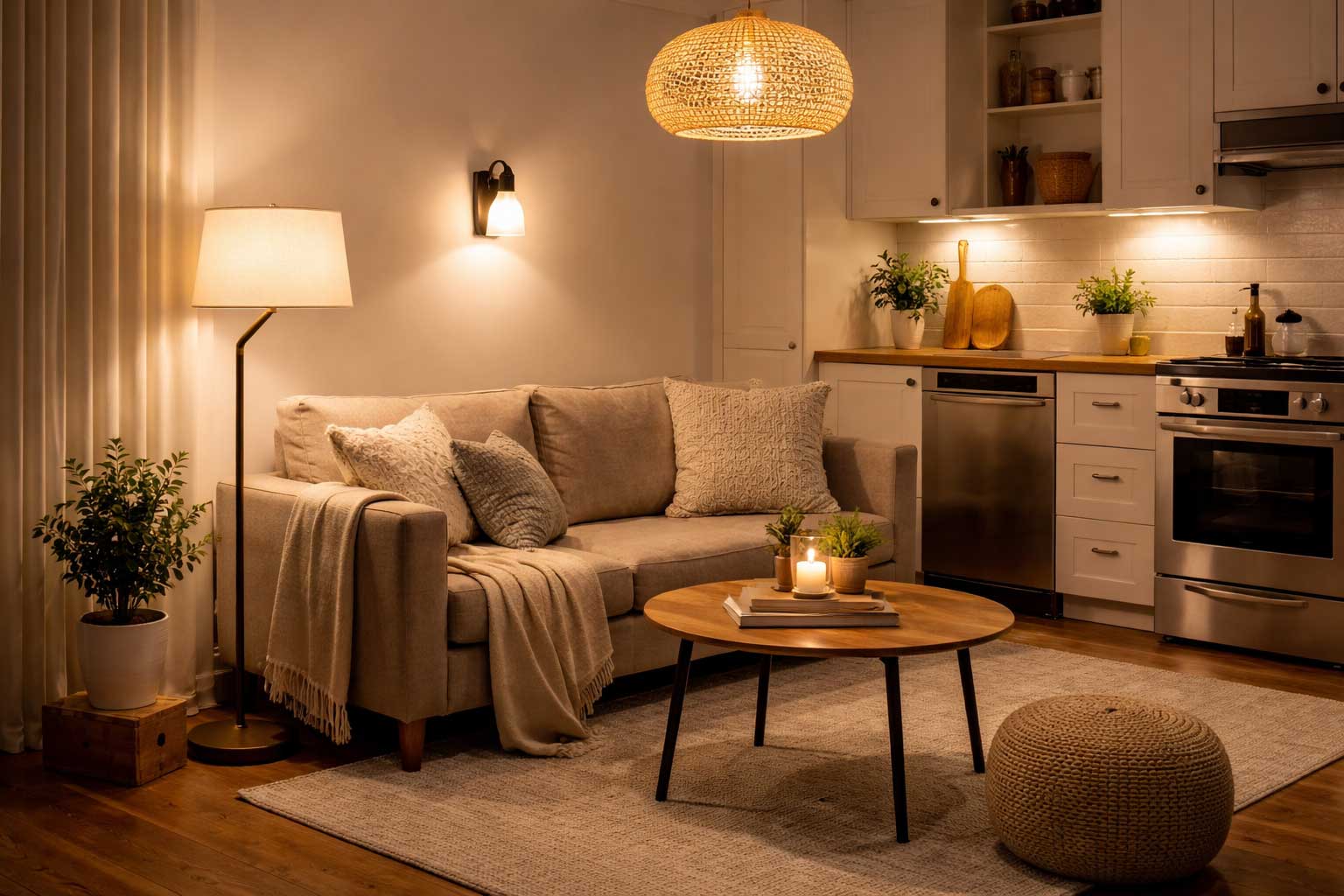
Living rooms are often where layered lighting makes the biggest visual difference. That is because living rooms typically serve multiple purposes and are used most heavily at night. The same room may be used for watching TV, reading, hosting, eating takeout, or just relaxing at the end of the day. One light source almost never supports all of that well.
A living room usually works best when the lighting includes one source for overall brightness, one source near seating for focused comfort, and another softer layer that keeps the room from feeling empty or imbalanced. That could mean a ceiling light, a floor lamp by the sofa, and a small table lamp or wall sconce in another part of the room. It does not need to be complicated, but it should feel balanced from more than one direction.
This is one reason Best Floor Lamps for Small Apartments, Best Table Lamps for Small Living Rooms, and Best Wall Sconces for Small Living Rooms all make strong internal companions for this guide. Each one supports a different lighting role, and together they help the room feel more complete.
The goal is not to fill the room with lamps. It is to make the lighting feel distributed. In a small living room, that sense of distribution makes the room feel more layered, less flat, and usually more spacious.
Bedrooms need softness and control
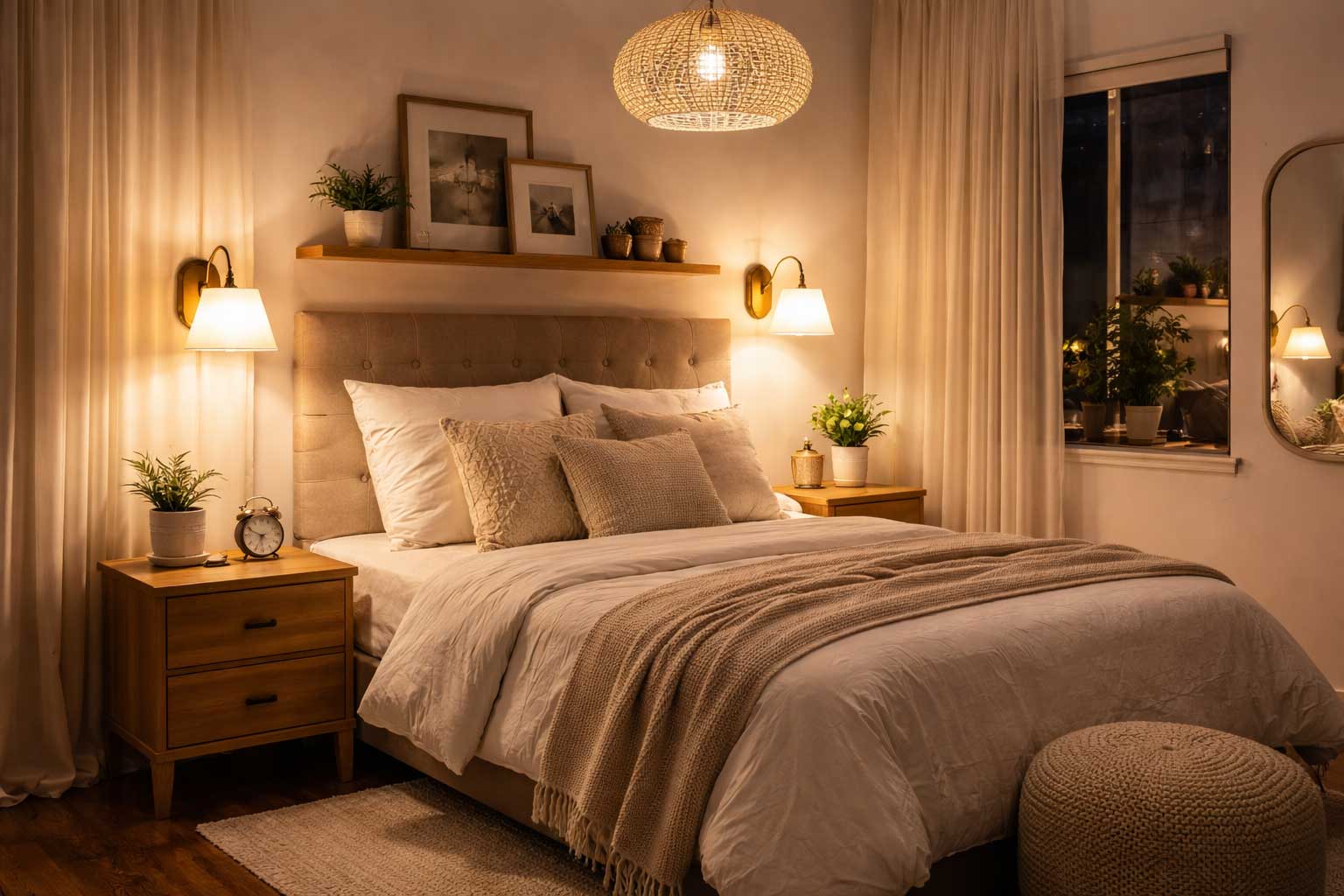
Bedrooms benefit from layered lighting in a slightly different way. In most small apartments, the bedroom should feel calmer than the rest of the home. That means the lighting should support both function and rest. A room that depends only on a strong overhead bulb tends to feel abrupt, especially at night. It may be fine when folding laundry or cleaning, but it does not create the kind of atmosphere most people actually want before bed.
Layered bedroom lighting usually works best when there is some kind of general light source and at least one softer, more localized light near the bed. Bedside lamps, plug-in sconces, or wall-mounted reading lights often do a much better job of supporting nighttime routines than a single ceiling light. They give the room more control, which matters in small spaces where you want light exactly where you need it and not everywhere at once.
This is why Best Bedside Lamps for Small Bedrooms, Best Wall-Mounted Bedroom Lamps, and Best Bedside Lighting for Small Bedrooms all fit naturally with this topic. They help move the bedroom away from flat overhead brightness and toward something that feels more layered and livable.
Good bedroom lighting should make the room feel settled. That often comes from softer layers, lower placement, and better control rather than from pure brightness.
Kitchens need function, but they still need balance
Kitchens are more practical than many other rooms, so it is easy to assume layered lighting matters less there. In reality, a small apartment kitchen often benefits a lot from layered lighting because task areas need visibility, while the room as a whole still needs warmth.
A ceiling fixture may cover basic brightness, but prep zones, counters, and sink areas often need more support than that. Under-cabinet lighting, compact task lighting, or thoughtful countertop lighting can make the kitchen easier to use without making it feel clinical. This is especially useful in apartments where the kitchen has shadows under cabinets or corners that stay dim at night.
At the same time, not every kitchen needs to feel brightly lit from every angle all evening. In open-plan apartments, softer kitchen lighting can help the room blend more comfortably with the living area at night instead of feeling like a separate bright zone. That balance is part of what makes layered lighting so useful.
This is where Best Under-Cabinet Lighting for Small Kitchens and Best Under-Cabinet LED Light Bars can support the topic well. They are practical lighting tools, but they also contribute to a more layered and polished overall feel.
Lighting placement affects how large the apartment feels
One of the most underrated benefits of layered lighting is that it can make a small apartment feel larger. That happens because multiple light sources create depth. Instead of all the brightness coming from one point, the eye moves through the room more naturally. Corners feel less forgotten, walls feel more active, and the space feels more dimensional.
That is especially true when light reaches both low and mid-level areas of the room. A floor lamp, a table lamp, or a wall-mounted light source can pull brightness outward and downward in a way that makes the apartment feel fuller and more open. Rooms often feel smaller when all the light comes from the ceiling because the lower half of the space stays visually flatter.
This is part of why layered lighting connects so well with How to Make a Small Apartment Feel Bigger. The apartment itself has not changed, but the perception of it has. Better light placement gives the room more shape, and shape usually makes a small room feel more intentional.
In compact spaces, perception matters. Lighting is one of the simplest ways to improve it.
Warmth, brightness, and mood should work together
Good layered lighting is not just about how many fixtures you have. It is also about how they feel together. A room can technically have several light sources and still feel off if the brightness levels clash or the overall mood feels inconsistent.
That is why it helps to think about lighting in terms of atmosphere as well as function. A living room may need a brighter option for daytime chores or reading, but it also benefits from lower, softer light in the evening. A bedroom may need decent visibility for getting dressed, but it should also feel comfortable at night. A home office corner may need more direct light than the rest of the room, but it should still make sense within the overall apartment.
The goal is to give yourself options. Layered lighting works best when you are not trapped into one lighting mood every night. You should be able to brighten the apartment when you need to and soften it when you do not. That flexibility is a big part of what makes a small space feel more premium and better designed.
The best small-apartment lighting is intentional, not excessive
It is possible to go too far. Layered lighting does not mean cramming every room with lamps. In a small apartment, too many fixtures can create visual clutter just as easily as too few can create flatness. The goal is to add the right layers, not endless layers.
A well-lit apartment usually feels balanced, not busy. Each light source should have a reason to exist. One may support reading. One may soften a corner. One may help define a zone. One may handle overall brightness. If a fixture does not improve function, balance, or comfort, it may not be necessary.
This is where restraint matters. Small spaces often look and feel better when each lighting choice is pulling real weight. A single well-placed floor lamp can do more for a room than several random light sources that are not really solving anything.
That is why the most successful lighting plans are often the simplest ones. They just happen to be more intentional.
Layered lighting should make the apartment easier to live in at night
That is really the standard to judge it by. When the sun goes down, does the apartment still feel comfortable? Can you read where you want to read, relax where you want to relax, and move through the space without relying on one harsh ceiling light? Does the room still feel warm and usable? If the answer is yes, the layering is working.
That is what makes this approach so valuable in a small apartment. It improves atmosphere, function, and visual balance all at once. It helps the apartment feel less temporary and more designed. It also gives each room more flexibility, which matters when the same compact square footage has to support so many parts of daily life.