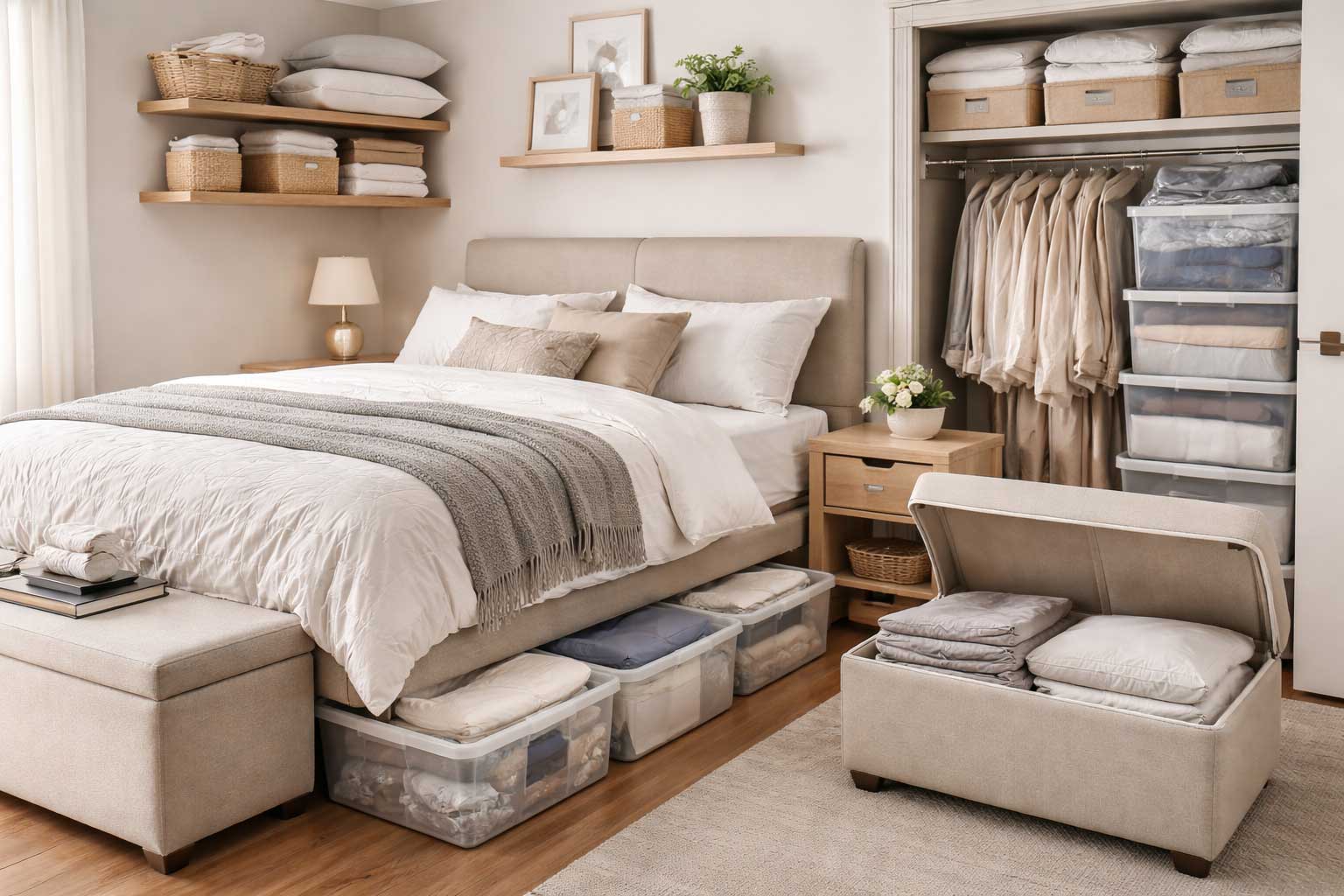

How to Add Storage to a Small Bedroom Without a Dresser
A small bedroom does not always have room for a full dresser, especially in apartments where the bed, walkway, nightstands, and other essentials already take up most of the floor space. In some layouts, a traditional dresser can make the room feel heavier, block movement, or leave very little flexibility for anything else. That can be frustrating if you still need a practical place to store clothing, accessories, linens, and other bedroom essentials.
The good news is that a dresser is not the only way to create storage in a small bedroom. In many apartments, the best alternatives come from using under-bed space, vertical storage, storage benches, nightstands, and other multi-functional pieces that fit the room more naturally. With the right setup, a small bedroom can hold more than it looks like it should without feeling crowded or overly furniture-heavy.
For hidden bedroom storage ideas, start with Best Bedroom Storage Benches for Small Spaces.
If you want wall-based storage that saves floor space, check out Best Floating Shelves for Bedrooms.
For storage that uses vertical space better, see Best Over-Bed Storage Solutions for Small Bedrooms.
This guide is part of our Small Apartment Bedroom Solutions collection.
Why a Dresser Does Not Always Work in a Small Bedroom
A traditional dresser can be useful, but in a small bedroom it is often one of the hardest furniture pieces to place well. Dressers usually need a wide section of wall, a decent amount of floor depth, and enough clearance in front to open drawers comfortably. In a compact apartment bedroom, that combination can eat up more space than the room can easily spare.
This becomes even more noticeable when the bed already dominates the layout. Once the bed, bedside access, closet space, and walking path are accounted for, a dresser can start feeling like one more heavy piece competing with the room instead of supporting it. In some bedrooms, the problem is not storage itself. It is the form the storage takes.
That is why smaller rooms often need more flexible options. Storage can still work very well without one large furniture piece as long as it is spread more intelligently through the room. In many cases, that approach actually makes the bedroom feel easier to use.
Start by Deciding What Actually Needs Bedroom Storage
The best dresser alternatives depend on what you are trying to store. Some bedrooms need room for folded daily clothing. Others need storage for accessories, pajamas, extra bedding, workout clothes, or seasonal items. The clearer those categories are, the easier it becomes to build a storage system that fits the room without overfilling it.
Everyday clothing should usually stay easiest to reach. If you are using the bedroom to store socks, T-shirts, undergarments, sleepwear, or daily basics, those items deserve the most convenient locations. Bulkier or less-used categories like spare blankets, off-season clothes, or guest linens can usually go into less prominent spaces.
This is also where it helps to separate the clothing problem from the general bedroom-storage problem. Accessories, extra linens, and folded clothing do not all need the same type of storage. Once those categories are clearer, the room becomes much easier to organize without defaulting to one big dresser.
Use Under-Bed Space for the Bulkiest Bedroom Storage
Under-bed storage is often the strongest dresser alternative in a small bedroom because it uses one of the room’s largest hidden areas without taking up additional floor space. In many apartments, the bed already occupies the biggest footprint in the room, so making that area work harder is one of the smartest ways to add storage.
This space works especially well for folded clothing, extra bedding, off-season pieces, shoes, or categories that do not need to be visible all the time. If you want containers designed specifically for this, browse Best Under-Bed Storage Containers (Low Profile & Stackable).
Storage beds can take this even further by building drawers or compartments directly into the bed frame itself. That kind of hidden capacity can replace a surprising amount of dresser storage in a smaller room. For built-in options, take a look at Best Bed Frames with Storage for Small Apartments.
The main advantage here is that the room does not get visually heavier. Instead of adding another bulky storage piece, you make better use of furniture that already has to be there.
Use Storage Benches and Multi-Use Furniture Instead of a Dresser
Furniture with hidden storage can often replace a lot of what a dresser would normally do without creating the same visual weight. A storage bench, for example, can hold folded clothing, spare pillows, extra blankets, or accessories while also functioning as seating or simply helping anchor the end of the bed.
This works especially well in small bedrooms because the piece does not feel like it exists only for storage. It has another purpose, which makes the room feel more balanced. If you want bedroom pieces that add hidden capacity without needing dresser-sized wall space, see Best Bedroom Storage Benches for Small Spaces.
Other multi-functional furniture can help too. Storage headboards, for example, can give you a place for books, chargers, smaller accessories, and bedtime essentials that might otherwise end up in drawers. For more layered options like that, check out Best Storage Headboards for Small Bedrooms.
Hidden storage usually feels lighter than another large cabinet because it blends more naturally into the room. In a compact bedroom, that visual difference matters a lot.
Use Vertical Storage to Replace Floor-Heavy Furniture
One of the best ways to add bedroom storage without a dresser is to move some of the storage load upward. Walls often have more potential than the floor does in a tight bedroom, especially once the bed is in place. Vertical storage helps the room hold more without sacrificing walking space.
Floating shelves can hold folded items, books, decor, baskets, or smaller daily essentials while keeping the room more open at ground level. If you want storage that uses wall space better, browse Best Floating Shelves for Bedrooms.
Over-bed storage is another strong option because it uses an area that is often underutilized. In a small bedroom, that kind of wall-based storage can add meaningful function without forcing another wide furniture piece into the layout. For ideas in that area, see Best Over-Bed Storage Solutions for Small Bedrooms.
The goal is not to cover every wall with storage. It is to use a few vertical zones strategically so the room feels more capable without feeling more crowded.
Make Nightstands and Bedside Storage Work Harder
Nightstands can do much more than hold a lamp and a phone charger. In a small bedroom without a dresser, bedside storage becomes even more valuable because it can absorb part of the everyday storage load without requiring a whole extra furniture zone.
Drawer nightstands are especially useful for smaller personal categories like socks, sleepwear, chargers, reading glasses, notebooks, skincare, or medications. They help contain the daily clutter that often ends up scattered across the room. If your bedside setup needs to do more, take a look at Best Slim Nightstands for Small Bedrooms.
Floating nightstands can also work well when floor space is especially tight. They keep the area around the bed looking lighter while still adding practical storage. For a cleaner wall-based option, check out Best Floating Nightstands for Small Bedrooms.
Bedside storage works best when it stays edited. It should support the everyday routine, not become a catch-all. In a small bedroom, keeping that area simple but functional helps the whole room feel more controlled.
Use Wardrobes, Shelving, or Closed Vertical Pieces When More Clothing Storage Is Needed
Some bedrooms simply need a stronger clothing-storage solution, especially if closet space is limited or almost nonexistent. In those cases, you may still need a substantial storage piece, but it does not have to be a dresser. Often, a narrower or taller piece works better than a wide drawer unit.
Compact wardrobes can be especially useful because they offer a mix of hanging and folded storage in a more vertical footprint. If the room needs that kind of hybrid solution, browse Best Compact Wardrobes for Apartments.
The key is scale. A narrow vertical piece often fits the room better than a wide low dresser because it uses less wall width and can preserve more movement around the bed. This kind of storage works best when it fits the room naturally instead of forcing the whole layout to revolve around it.
In a small apartment bedroom, extra storage should solve a problem without becoming the new problem. That is why vertical closed pieces often outperform wider traditional furniture.
Keep the Room Easy to Move Through and Easy to Reset
A bedroom without a dresser should feel lighter, not more improvised. That only happens when the storage supports the layout instead of crowding it. Walkways need to stay open, the bedside area should still feel comfortable, and the room should not feel like every corner has been turned into storage.
Every category also needs an obvious home. If clothing, accessories, linens, and daily clutter are being stored in too many random bins or scattered zones, the room may technically have storage but still feel hard to manage. This is where the whole system matters more than any individual piece.
A simpler room is usually easier to reset. If you want the bedroom to feel more spacious overall, revisit How to Make a Small Bedroom Look Bigger and How to Organize a Small Apartment Bedroom for ideas that support both layout and storage. In small apartments, storage only feels helpful when it also helps the room stay calm.
Make the Bedroom Feel Organized, Not Overfilled
Replacing a dresser should make the bedroom feel more efficient, not just shift clutter into different corners. That means the room still needs restraint. A few stronger storage pieces usually work much better than lots of small ones scattered around the room.
Hidden storage helps a lot here because it keeps the bedroom from feeling visually noisy. A storage bench, under-bed containers, a shelf with one or two baskets, and a hardworking nightstand can often create a much cleaner result than several open bins and miscellaneous storage hacks competing for attention.
Good storage should reduce clutter, not add to it. In a small bedroom, that often means prioritizing closed or low-profile storage and being selective about what stays visible. The more edited the room feels, the more successful the dresser-free setup usually is.
Common Mistakes That Make Bedroom Storage Harder Without a Dresser
One common mistake is relying on too many small bins without a real system. Bins can help, but if they are scattered everywhere and not grouped by category, they usually make the room feel more makeshift than organized. Another mistake is ignoring under-bed and wall space, which are often the strongest alternatives to a dresser in the first place.
Adding storage that crowds the walkway is another frequent problem. Even helpful furniture becomes a problem when it makes the room harder to move through. Keeping too many categories in plain sight can also make the bedroom feel busier than it is. Open storage needs editing. Otherwise it quickly starts looking like overflow.
The best dresser-free bedrooms usually work because the storage is intentional, not because the room contains more of it. A smarter system usually beats a larger pile of storage pieces every time.
Best Features to Look for in Dresser Alternatives for Small Bedrooms
When choosing dresser alternatives for a small bedroom, hidden storage capacity should be one of the first priorities. Storage that disappears into a bench, bed frame, or nightstand usually creates a calmer result than open or bulky furniture. Vertical value matters too, since taller or wall-based storage helps protect the limited floor space.
Multi-use function is another big advantage. Furniture that stores items while also serving as seating, bedside support, or headboard space often works especially well in apartments. Compact footprint matters just as much, because every added piece needs to justify the room it takes up.
Apartment-friendly design ties it all together. The best alternatives feel like they belong in the bedroom naturally instead of looking like a workaround. In a small space, that kind of balance is what keeps storage useful without making the room feel crowded.
Final Thoughts on Adding Storage to a Small Bedroom Without a Dresser
A small bedroom does not need a traditional dresser to be well organized. In many apartments, a dresser-free setup actually works better because it allows storage to spread more intelligently through the room instead of concentrating all the bulk in one place.
The best alternatives usually rely on under-bed storage, vertical shelving, storage benches, hardworking nightstands, and other multi-functional pieces that fit the layout more naturally. That combination can create plenty of storage without making the bedroom feel heavier or harder to move through.
The goal is not just to replace a dresser. It is to create a storage system that supports real daily life while keeping the room calmer and more open. In a small apartment bedroom, that often leads to a better result than a dresser ever could.
Our Top Small Bedroom Storage Picks Without a Dresser
A small bedroom works best without a dresser when storage is spread through the room in ways that feel lighter, more hidden, and more flexible. The most effective solutions usually use under-bed space, multi-functional furniture, and wall storage to build capacity without crowding the layout.
Best overall choice:
Under-bed storage containers — Low-profile under-bed storage can hold a surprising amount of folded clothing and extras without adding any new furniture bulk.
👉 Check price on Amazon
Best hidden-storage furniture piece:
Bedroom storage bench — A storage bench adds useful concealed storage while also working naturally at the end of the bed.
👉 Check price on Amazon
Best wall-based solution:
Floating bedroom shelves — Floating shelves help move storage upward so the room keeps more open floor space.
👉 Check price on Amazon
Best larger clothing-storage option:
Compact wardrobe — A compact wardrobe can add stronger folded and hanging storage when the room needs more than bins or under-bed space alone.
👉 Check price on Amazon
Bedrooms with especially limited closet space may also benefit from a storage bed or storage headboard, especially when the goal is to add capacity without introducing another bulky cabinet.
FAQ
How do you add storage to a bedroom without a dresser?
The best way to add storage to a bedroom without a dresser is to use under-bed containers, wall shelves, storage benches, nightstands, and other multi-functional furniture that spreads storage more efficiently through the room.
What can replace a dresser in a small bedroom?
A dresser can often be replaced by under-bed storage, a storage bench, floating shelves, a compact wardrobe, or a storage bed depending on what categories you need to store.
Is under-bed storage enough for clothing?
Under-bed storage can be enough for a lot of folded clothing, especially seasonal items, extras, or categories that do not need daily visibility, but some rooms may still need additional bedside or vertical storage too.
How do you store clothes in a small room without making it feel crowded?
Store clothes in a small room without making it feel crowded by using hidden storage, taking advantage of under-bed and wall space, choosing multi-use furniture, and avoiding bulky pieces that block the layout.