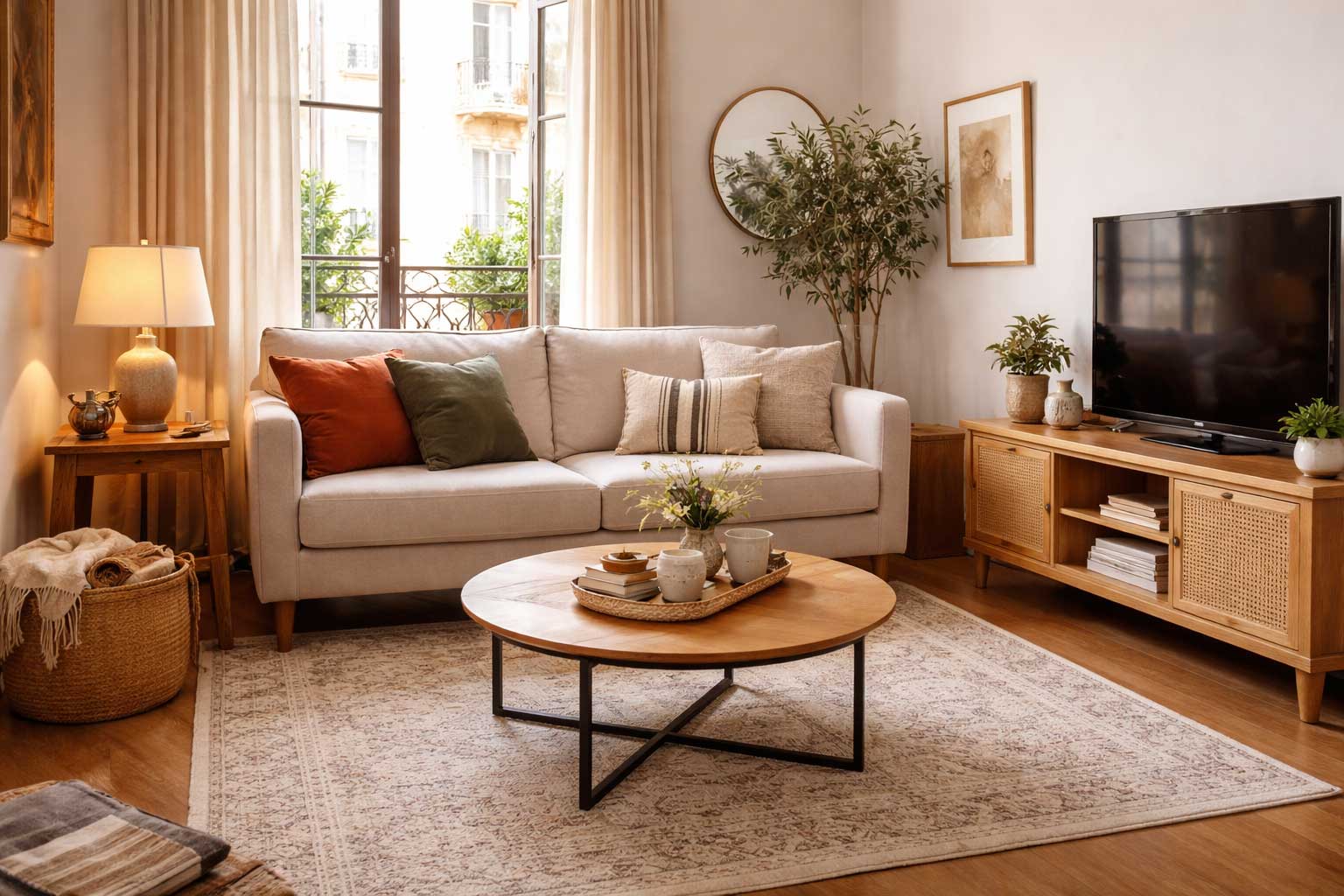
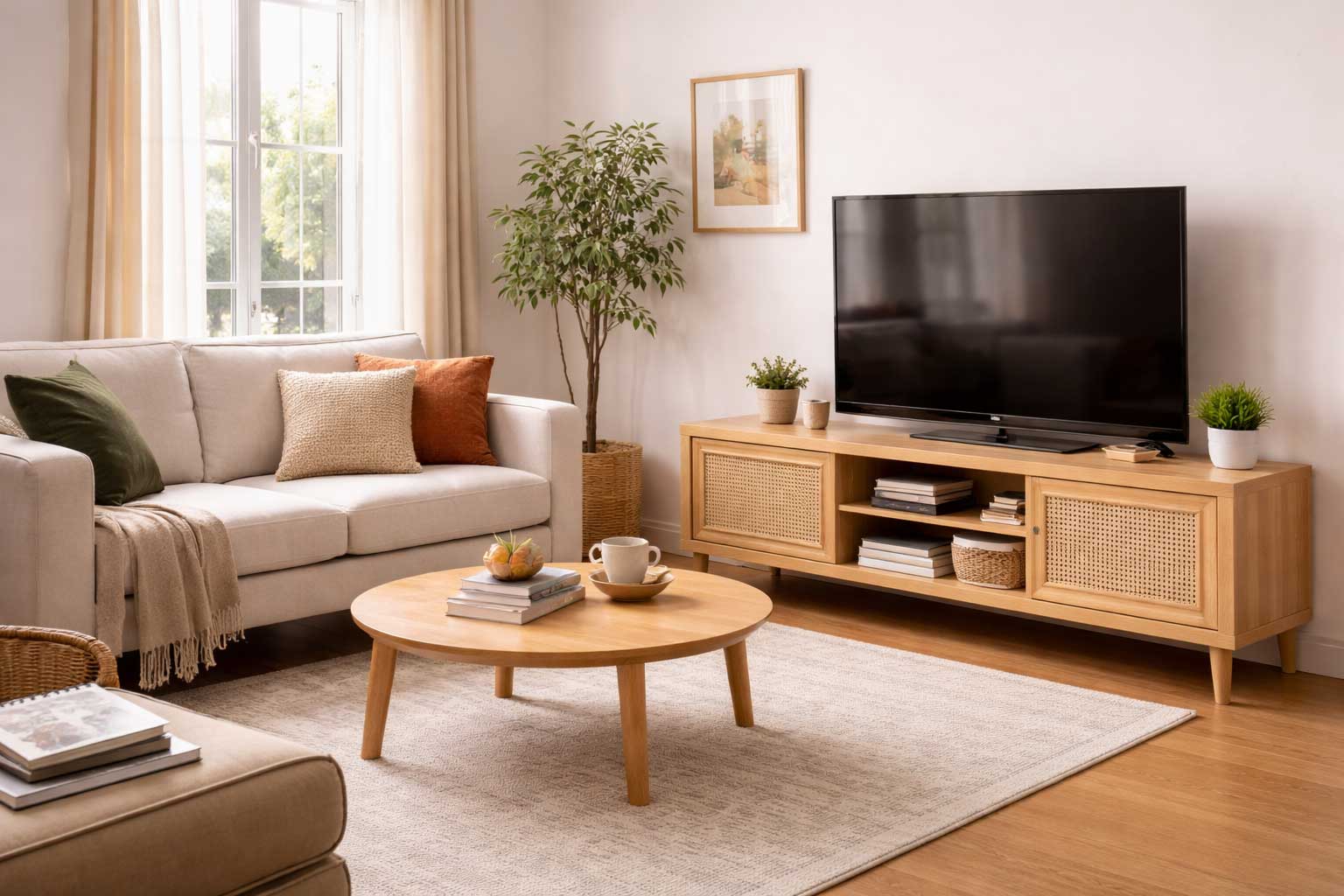
How to Choose a TV Stand for a Small Apartment
A TV stand can quietly shape an entire small apartment living room. Most people think of it as a practical furniture piece that simply holds the television, but in a compact space it does much more than that. It affects how wide the room feels, how cluttered the media area looks, how easily you move through the space, and whether the whole setup feels intentional or cramped. In a small apartment, that matters a lot because the TV wall is often one of the first things your eye notices when you walk into the room.
That is why choosing the right TV stand is not just about finding one that is the right width for your television. It is about choosing a piece that fits the scale of the room, supports your actual media needs, and does not visually overwhelm the rest of the living area. A stand that is too bulky can make the room feel tighter even if it technically fits. A stand that is too small or too flimsy can make the whole setup feel temporary and unbalanced. The best choice usually sits in the middle. It feels grounded enough to anchor the TV, but restrained enough to let the room breathe.
This decision also matters because the TV stand often ends up carrying more than people expect. It may need to hold streaming devices, remotes, speakers, books, baskets, game consoles, routers, or decorative items. In a small apartment, that means the stand is rarely just a stand. It becomes part media storage, part visual anchor, and part clutter-control system. Once you start thinking about it that way, it becomes much easier to choose the right one.
This topic fits naturally with How to Arrange Furniture in a Small Apartment Living Room, How to Design a Small Living Room Layout, and Best Slim TV Stands for Small Spaces because a TV stand is never really a standalone decision in a compact home. It only works well when it fits the room around it.
Why TV stand choice matters so much in a small apartment
In a larger living room, a TV stand can be a little too deep or a little too heavy and still feel manageable. In a small apartment, those same mistakes become obvious quickly. A bulky stand can eat into walkways, make the TV zone feel oversized, and visually load one side of the room too heavily. Because small living rooms often have limited wall space and tighter circulation paths, the wrong stand can affect the whole layout more than people expect.
The media wall is also one of the easiest places for clutter to build up. Remotes, cords, gaming accessories, routers, candles, decorative items, and random everyday objects all tend to gather there. If the stand is badly chosen, it can make that problem worse. Open shelves may expose more mess than the room can comfortably absorb. A piece with no real storage may force accessories out onto the floor, coffee table, or side tables. A stand with the wrong proportions may look clean for one day and crowded every day after that.
That is why the best TV stand is usually the one that quietly solves problems instead of creating new ones. It should support the TV, help contain media clutter, and fit the apartment’s scale without feeling like an oversized entertainment center dropped into a room that never asked for one.
This is also why the subject connects naturally with How to Choose Furniture for Small Apartments. In a small home, big furniture decisions are never just about one item. They change how the whole room works.
Start with the room, not the television
A lot of people shop for a TV stand by focusing almost entirely on the television size. That matters, of course, but it is only one part of the decision. In a small apartment, the room matters just as much. A stand may be technically right for the TV and still be wrong for the living room.
The better question is not just, “What fits my television?” It is, “What fits my television and still leaves the room feeling balanced?” A small apartment living room often has to accommodate a sofa, coffee table, lamps, side tables, storage, and a TV area all inside one compact footprint. That means the stand has to respond to the whole arrangement, not just the screen dimensions.
This is especially important in apartments where the living room shares space with a dining area, entry, or kitchen. In those layouts, the TV stand is often visible from multiple angles, which means its visual weight matters even more. A huge media piece may technically function well, but it can still make the apartment feel more crowded from every angle you see it.
That is one reason How to Design a Small Living Room Layout is such a strong supporting guide here. A TV stand works best when it belongs to the room’s layout instead of forcing the room to work around it.
Width matters, but depth often causes the real problem
When people measure for a TV stand, they usually focus first on width. That makes sense, but in a small apartment depth is often the dimension that creates the bigger issue. A stand that is too deep can push too far into the room, make the walkway feel tighter, and visually crowd the center of the living area even if the width looks perfectly reasonable on paper.
That is why slimmer stands are often so effective in compact spaces. They provide the support the media setup needs without stealing as much floor area. In many small apartments, a shallower profile makes a bigger difference than shaving off a few inches of width. The room simply feels easier to move through.
This is exactly where Best Slim TV Stands for Small Spaces becomes such a useful internal fit. A stand that stays visually and physically slimmer often helps the room feel cleaner without sacrificing all the function. In a tight apartment living room, that tradeoff is usually worth more than extra cabinet depth you may not even need.
A good small-space TV stand should support the setup without jutting into the room more than necessary. The more compact the apartment, the more that matters.
The best stand is the one that matches your real media setup
Not every apartment needs the same type of media furniture. Some people only need a place for the TV and one streaming device. Others need room for a game console, soundbar, router, remote storage, and a few everyday items. Some people want the stand to stay visually minimal. Others need it to carry real storage weight because the apartment has very little extra room elsewhere.
That is why it helps to define your actual media setup before choosing the stand. If your needs are simple, a lighter and cleaner piece may be more than enough. If you have several devices and accessories, you may need concealed storage or a better cable plan built into the furniture choice. The goal is not to overbuy for a setup you do not have, but it is also not to buy so minimally that the clutter immediately spills elsewhere.
This is one reason Best Media Consoles for Small Apartments fits the subject so well. In many homes, the right answer is not a basic stand with a flat top and nothing else. It is a more thoughtful console that still stays apartment-scaled while offering enough function for the way the room is really used.
In a compact space, furniture performs best when it fits your routine rather than just your screen size.
Open storage looks lighter, but closed storage often feels cleaner
One of the biggest decisions with TV stands is whether you want more open shelving or more concealed storage. In a small apartment, both have advantages, but they create very different results in the room.
Open shelving usually feels visually lighter. It can help a stand feel less bulky and less furniture-heavy, which is useful when you are trying to keep the room airy. But open shelving also exposes everything. Devices, wires, remotes, game cases, and miscellaneous media clutter become part of the room’s visible design whether you want them to or not. In a compact living room, that visual exposure can build up quickly.
Closed storage tends to feel cleaner because it hides the mess. If your media setup includes accessories that would otherwise collect visibly, concealed doors or drawers are often the better choice. The room usually looks calmer when everyday clutter has somewhere to disappear. That is especially true in open-concept apartments, where the living room is visible from the kitchen or entry.
This is why Best Hidden Media Storage for Small Apartments can be such a strong companion page for this article. In many small homes, hidden storage does more for the room than extra shelving ever could. It helps the apartment look more settled and less like the TV area is constantly mid-use.
Corner setups can be smarter than straight-wall setups
Not every apartment has a clean, obvious wall for the television. Sometimes the best TV placement ends up being in a corner, especially when the room is narrow, the wall space is broken up by windows, or the main living area needs a better traffic path. In those situations, a corner stand can actually be the more intelligent choice rather than a compromise.
A corner setup can free up wall space, ease the room’s flow, and make awkward layouts feel more resolved. It can also prevent the TV wall from dominating the room if a straight-on placement would take over one of the most important visual surfaces in the apartment. In the right layout, a corner stand feels more integrated and less demanding.
This is why Best Corner TV Stands for Small Apartments is such a relevant support page. Corner furniture is not always the answer, but when the room naturally wants that arrangement, it can solve several small-space problems at once. It is one of those decisions that looks more obvious after the fact than before it.
In an apartment, the smartest layout is not always the most traditional one. It is the one that leaves the room feeling easiest to live in.
Cable clutter can ruin even a good-looking TV stand
A TV stand can be the perfect size and still make the room feel messy if the cable situation is bad. Media areas collect more wires than people expect. Power cords, streaming devices, routers, soundbars, game systems, and chargers can quickly turn the space behind and around the stand into a visual mess. In a small apartment, that kind of clutter stands out even more because there is less distance between the media area and the rest of the room.
That is why TV stand choice should always be thought about together with cable control. A piece that helps conceal or at least organize the media setup will almost always perform better in a compact home than one that leaves all the wiring exposed. Even a small amount of visible cable chaos can make the entire room feel less intentional.
This is where your broader apartment organization strategy matters too. If the living room already struggles with clutter, the TV area should not become another zone that constantly looks half-finished. A clean media setup helps the whole room feel calmer.
Visual weight can make the stand feel bigger than it is
Just like with sofas and coffee tables, visual weight matters a lot with TV stands. A dark, boxy, overly heavy piece can make a small apartment living room feel denser than it really is. A stand with cleaner lines, a slightly lifted base, or a more restrained silhouette often feels much better in a compact room, even when the measurements are not dramatically different.
This does not mean every stand needs to be ultra-minimal. It just means the piece should feel proportionate to the rest of the room. If the sofa is already substantial and the coffee table has some visual presence, the TV stand may need to stay quieter. If the room is narrow, a lighter-feeling media piece often helps keep the space balanced instead of pulling too much attention to one wall.
This is one more reason the topic connects naturally with How to Make a Small Apartment Feel Bigger. A well-scaled TV stand can help the room feel more open simply by not overloading one side of it. In small apartments, furniture does not have to be tiny, but it usually needs to be a little more disciplined.
Wall-mounted solutions can work, but only if the room wants one
Some apartments benefit from moving the media setup off the floor more completely. A wall-mounted shelf or similar solution can make the room feel lighter because it reduces furniture bulk near the floor. In especially tight layouts, that may be the cleanest answer. But it is not always the right one. Some apartments still need hidden storage, and some people prefer a more grounded furniture anchor beneath the TV.
That is why wall-mounted media solutions work best when the room truly benefits from the visual openness and when your storage needs are relatively modest. If the setup is simple and the goal is to keep the room feeling as light as possible, a mounted approach can be very strong. If you need devices, concealment, or clutter control, a proper stand or console may still be the better answer.
This is where Best Wall-Mounted Media Shelves for Small Living Rooms can support the decision nicely. For the right apartment, that kind of setup can be elegant and practical. It just should be chosen because it fits the room, not because it sounds automatically more modern or more space-saving.
The right TV stand should make the room easier, not busier
At the end of the day, the best TV stand is the one that makes your living room easier to live in. It should support the television, fit the apartment’s scale, and help control media clutter without making the room feel heavier than it needs to. It should be sized for the room first, the screen second, and your actual media needs all the way through.
That usually means choosing with more restraint than impulse. A slimmer, better-scaled, better-organized stand will often outperform a larger one that looks more substantial online but makes the apartment feel tighter in real life. In a compact home, a TV stand should not just “work.” It should help the room stay calm, useful, and balanced.