
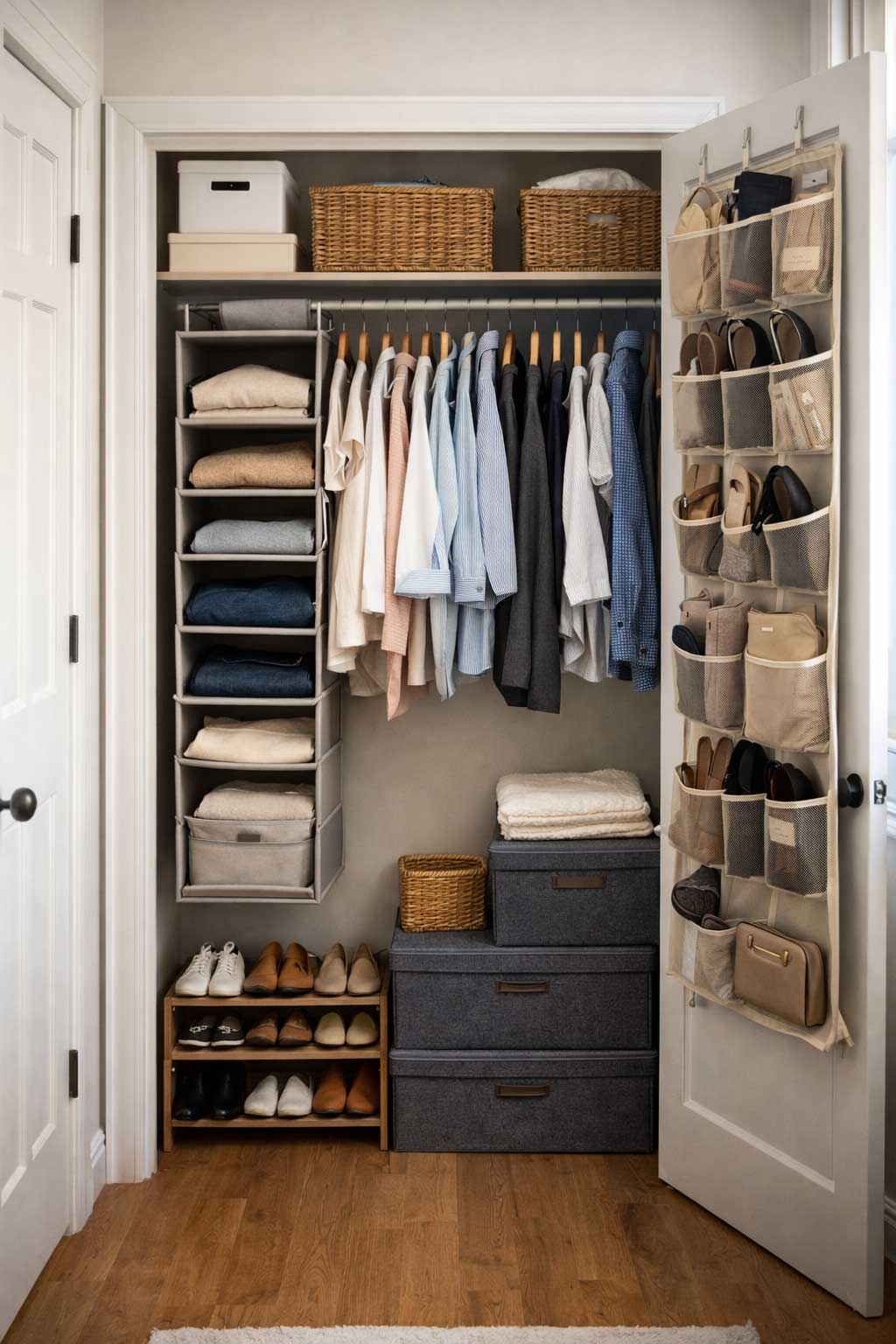
How to Organize a Small Closet Without Built-In Shelves
Small apartment closets often come with limited storage features. Many renters find themselves dealing with a single hanging rod, minimal shelving, and very little built-in organization. Without shelves or drawers, it can quickly become difficult to store clothing, shoes, accessories, and everyday essentials in a way that remains tidy and easy to access.
The good news is that even the simplest closet can become a highly functional storage space with the right organization strategies. By combining vertical storage, compact organizers, and smart layout techniques, it is possible to dramatically increase the usable storage capacity of a small closet.
This guide explains how to organize a small closet without built-in shelves using practical solutions that maximize available space while keeping clothing and accessories easy to find. These strategies work especially well for apartment closets, studio apartments, and other compact living environments.
Start by Decluttering the Closet
Before adding organizers or storage systems, the first step is to remove everything from the closet and evaluate what truly needs to be stored there. Small closets become overwhelming quickly when they are filled with clothing or items that are rarely used.
Sorting items into categories such as everyday clothing, seasonal items, and accessories can help determine what deserves prime closet space. Frequently worn clothing should remain within easy reach, while seasonal items can be stored elsewhere when not in use.
Many apartment dwellers also use solutions like Best Under-Bed Storage Containers (Low Profile & Stackable) to store off-season clothing or extra bedding. Moving these items out of the closet immediately creates more usable space.
Decluttering regularly helps maintain a more organized closet and prevents unnecessary buildup of items over time.
Add Adjustable Closet Organizer Systems
Closets without built-in shelving can benefit greatly from freestanding or expandable organizer systems. These systems typically include multiple hanging rods, adjustable shelves, and compartments that instantly increase storage capacity.
Instead of relying on a single rod, adjustable organizers allow clothing to be separated by category while adding additional shelving for folded items or accessories.
Many renters choose closet systems similar to those featured in Best Closet Organizers for Small Apartments because they provide flexible layouts that can adapt to different closet sizes.
These systems are especially useful in apartments where permanent shelving cannot be installed due to rental restrictions.
Use Hanging Closet Organizers
Hanging organizers are one of the easiest ways to add shelving to a closet that lacks built-in storage. These fabric organizers attach directly to the closet rod and create multiple vertical compartments for folded clothing.
They work particularly well for storing sweaters, jeans, and other items that do not require hanging space. By stacking clothing vertically, they reduce clutter on the closet floor and improve accessibility.
Hanging organizers can also be used to separate clothing categories, making it easier to find specific items quickly.
Many small apartment residents combine hanging organizers with other compact storage systems like Best Small Closet Storage Solutions for Apartments to create a fully organized closet layout.
Maximize Vertical Closet Space
Vertical space is one of the most underutilized areas in small closets. When shelves are not available, the upper portion of the closet often remains empty.
Adding stackable storage bins or small shelving units allows this area to be used more effectively.
Stackable bins are particularly useful because they can hold seasonal clothing, accessories, or small storage boxes while remaining easy to access. Many apartment dwellers rely on systems like Best Stackable Storage Bins for Small Spaces to create vertical storage layers inside closets.
Using the full height of the closet dramatically increases the amount of storage available without expanding the closet footprint.
Use Over-the-Door Storage
Closet doors provide valuable storage opportunities that are often overlooked. Over-the-door organizers add extra storage for shoes, accessories, bags, and small items without taking up interior closet space.
These organizers typically include multiple pockets or shelves that hang over the closet door, making them extremely easy to install and remove.
Many renters choose solutions like those featured in Best Over-the-Door Storage Solutions for Small Apartments because they require no drilling or permanent installation.
This type of storage works especially well for small accessories such as scarves, belts, hats, and lightweight shoes.
Store Shoes Efficiently
Shoes can quickly overwhelm a small closet if they are stored loosely on the floor. Without shelves, they tend to pile up and become difficult to organize.
Using vertical shoe organizers or stackable shoe racks can help keep footwear neatly arranged while preventing clutter from spreading throughout the closet.
Many small apartments benefit from dedicated systems like Best Shoe Storage Solutions for Small Apartments, which allow shoes to be stored vertically rather than scattered across the closet floor.
Keeping shoes organized also makes it easier to maintain clear floor space inside the closet.
Utilize Closet Corners
Closet corners are another area that frequently goes unused. Small corner shelving units or stackable bins can help transform these areas into valuable storage zones.
Corner storage is ideal for holding items that are not accessed every day, such as travel bags, seasonal clothing, or backup bedding.
When combined with larger storage systems such as those featured in Best Storage Solutions for Small Apartments, corner storage can help maximize every inch of available space.
Even narrow closet corners can support compact shelving or vertical storage bins.
Create Storage Zones
Organizing a closet into clearly defined zones can make it much easier to maintain over time. Instead of storing items randomly, grouping them by category improves efficiency and accessibility.
For example, clothing can be separated into sections such as workwear, casual clothing, outerwear, and accessories.
Storage bins can also be labeled to identify what is stored inside them. This approach prevents clutter from building up and makes it easier to maintain the system long-term.
Closet zoning works particularly well when paired with storage systems like Best Storage Solutions for Small Apartments with No Closet, which provide flexible organization options for compact spaces.
Add Storage on the Closet Floor
While the closet floor can become cluttered quickly, it can also serve as a valuable storage zone when used strategically.
Small drawer units, stackable bins, or compact shelving can create structured storage instead of loose piles of clothing or shoes.
For example, small rolling bins can hold accessories, workout clothing, or handbags while remaining easy to move.
Many renters combine floor storage with solutions like Best Corner Storage Solutions for Small Spaces to fully utilize the bottom area of the closet.
Maintaining an organized floor area ensures the closet remains functional and visually tidy.
Store Seasonal Items Elsewhere
Closets in small apartments should ideally hold only items that are currently in use. Storing seasonal clothing in the closet year-round can reduce valuable storage space.
Winter coats, heavy blankets, or holiday clothing can often be stored elsewhere during warmer months.
Many apartment residents use storage systems like Best Seasonal Storage Solutions for Small Apartments to store these items in under-bed containers, storage benches, or high shelves.
Rotating seasonal clothing helps keep the closet manageable and prevents overcrowding.
Maintain Your Closet Organization System
Even the best closet organization system requires occasional maintenance to remain effective. Taking a few minutes every week to return items to their designated areas can prevent clutter from building up again.
Simple habits such as folding clothing properly, returning shoes to racks, and keeping accessories in designated bins can make a big difference in maintaining a tidy closet.
Closet organization becomes much easier when the system is designed to support daily routines.
Final Thoughts on Organizing a Small Closet Without Built-In Shelves
Organizing a small closet without built-in shelves may seem challenging at first, but the right storage strategies can transform even the most basic closet into an efficient and organized space.
By combining hanging organizers, vertical storage bins, over-the-door organizers, and adjustable closet systems, renters can dramatically increase the storage capacity of compact closets.
Decluttering regularly and creating dedicated storage zones also helps maintain the system over time. When every item has a designated place, the closet becomes easier to manage and far more functional.
With thoughtful organization and the right storage tools, even a small apartment closet can provide enough space for clothing, accessories, and everyday essentials while remaining neat and easy to navigate.