How to Use Wall Space in a Small Living Room
Wall space is one of the most underused storage and design opportunities in a small living room. In many apartments, the floor fills up quickly with sofas, coffee tables, side tables, media furniture, and lamps, leaving very little room for anything extra. When all storage has to happen at ground level, the room can start to feel crowded fast. Using the walls more intentionally helps shift some of that function upward, which can make the entire space feel more open and better organized.
The good news is that wall space can do much more than hold art. In a small living room, walls can support shelving, media storage, lighting, and everyday organization without taking away precious walking space. With the right setup, vertical storage and wall-based pieces can add real function while still helping the room feel lighter, cleaner, and more spacious.
For shelf ideas that keep storage off the floor, start with Best Floating Shelves for Small Living Rooms.
If you need better TV-area storage, check out Best Wall-Mounted Media Shelves for Small Living Rooms.
For lighting that uses wall space effectively, see Best Wall Sconces for Small Living Rooms.
This guide is part of our Small Apartment Living Room Solutions collection.
Why Wall Space Matters More in a Small Living Room
Wall space matters more in a small living room because floor space disappears quickly. Once a sofa, coffee table, lighting, and TV setup are in place, there is often very little room left for extra storage furniture without making the layout feel tighter. In many apartments, that leads people to either live with clutter or try to squeeze in bulky storage pieces that make the room feel even smaller.
Vertical storage changes that equation. When walls carry some of the storage load, the room can stay more open at ground level. That helps protect walking paths, keeps the seating area from feeling boxed in, and makes the room look less crowded overall. In a compact living room, open floor area matters just as much visually as it does practically.
Using the walls also helps distribute function more evenly around the room. Instead of forcing every item into a console, side table, or bookshelf on the floor, some of that storage can move upward. That simple shift often makes a small apartment living room feel more balanced and more intentional.
Start by Identifying Which Walls Can Actually Work Harder
Not every wall needs storage, and in a small living room, trying to use every wall too aggressively can backfire. The goal is to figure out which walls actually have the best potential to add function without making the room feel busy. Usually, the strongest candidates are the walls already connected to the way the room is used.
The wall above the media area is often the easiest place to start. That zone already anchors one of the room’s main functions, so adding a shelf or wall-mounted storage there usually feels natural instead of forced. A sofa wall can also work well for a few lighter vertical elements, especially if the room needs more storage but does not have space for another wide furniture piece.
Narrow side walls and awkward corners are often overlooked too. In many apartments, those smaller stretches of wall can support a shelf, sconce, or slim vertical feature that adds function without disrupting the layout. The most effective wall-storage plan usually starts by choosing just a few useful zones and letting those do the work.
Use Floating Shelves for Storage That Feels Light
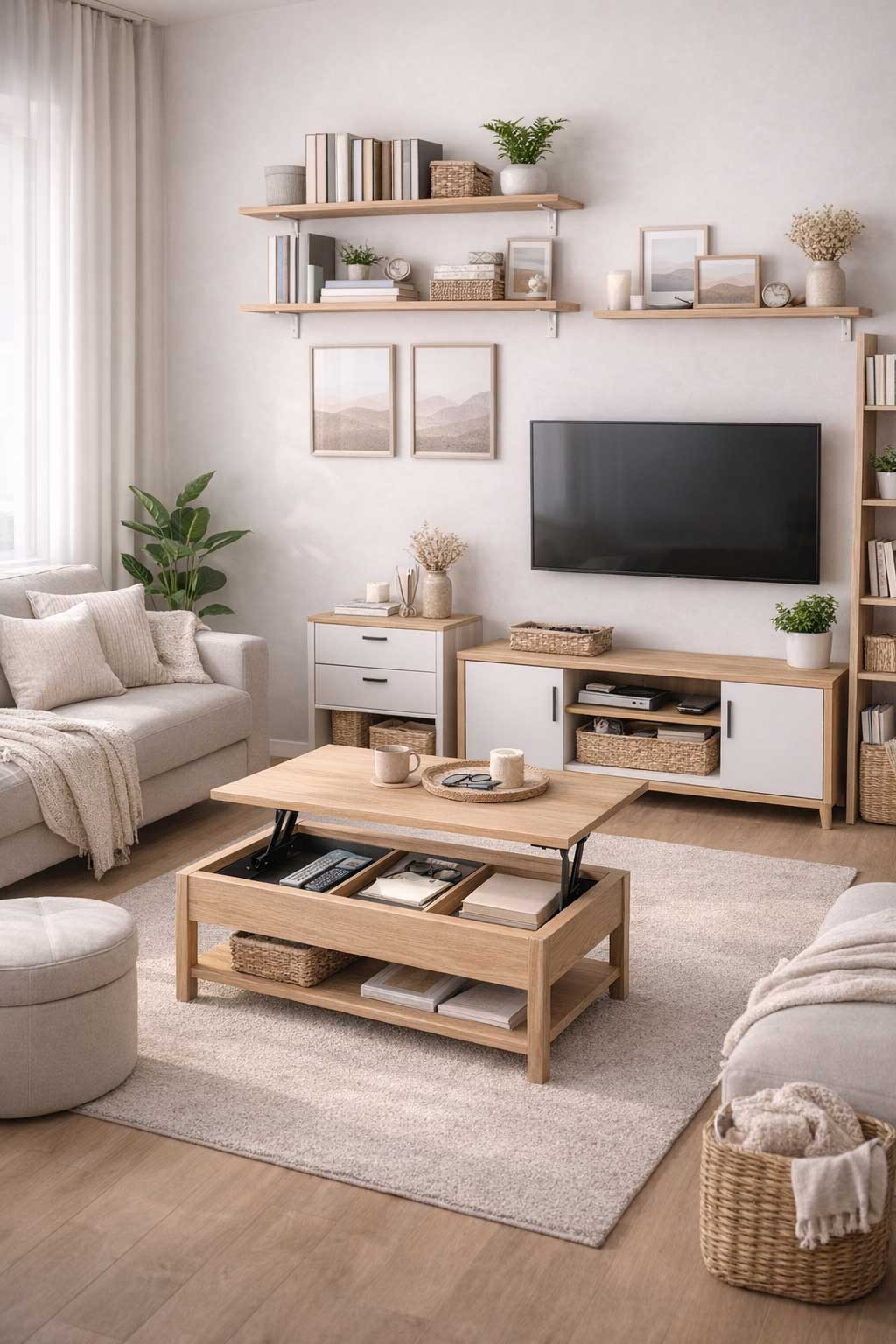
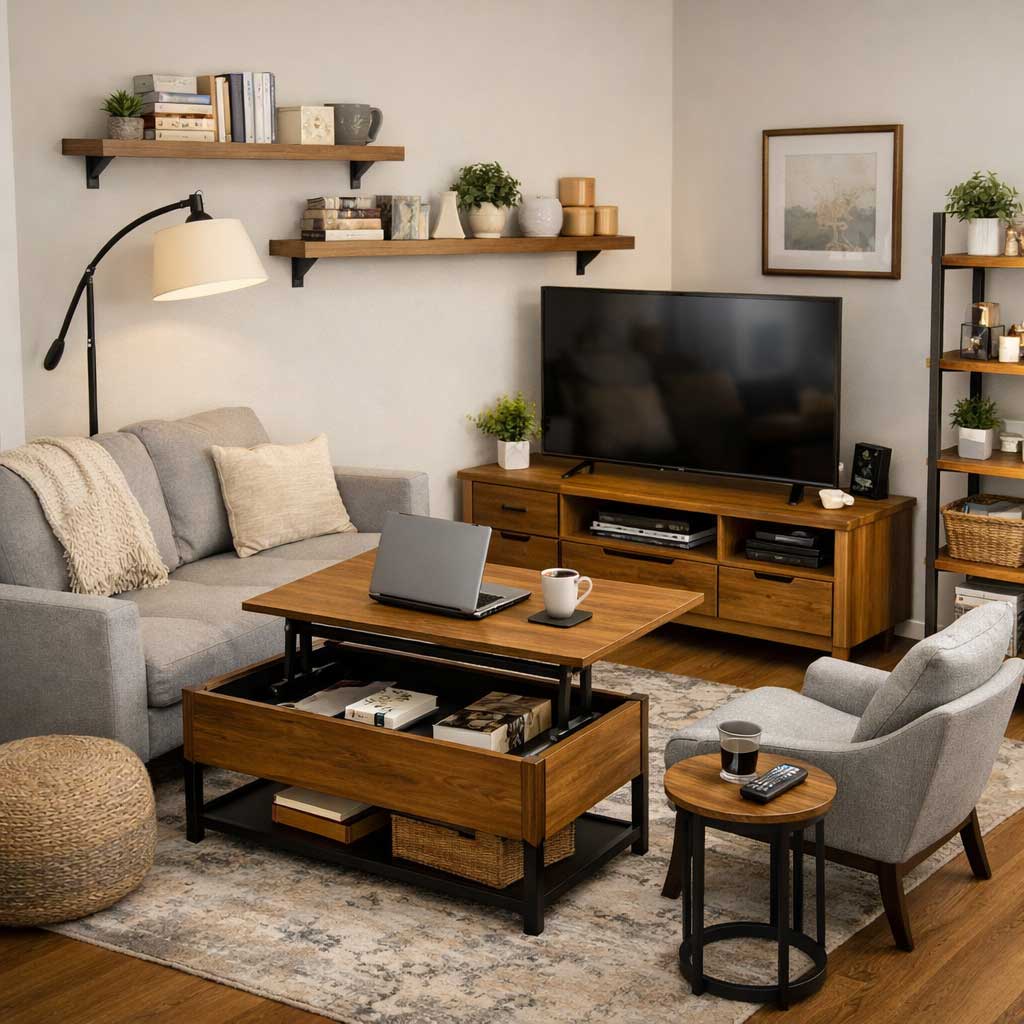
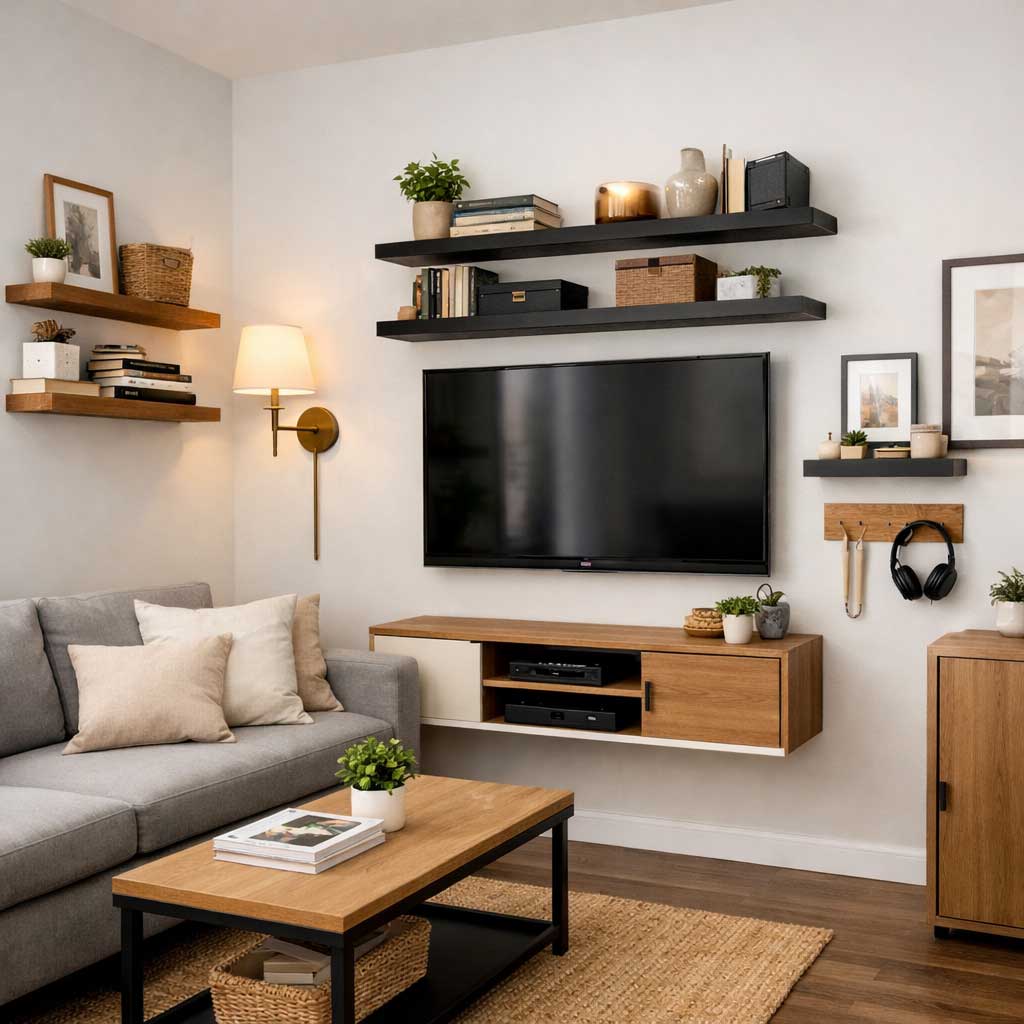
Floating shelves are one of the best ways to use wall space in a small living room because they add storage without the visual bulk of a larger furniture piece. They can hold books, framed art, small baskets, candles, or a few everyday items while keeping the floor clearer below. In a room where every inch matters, that lighter look makes a big difference.
They also work well because they can be scaled to the room. A couple of smaller shelves usually feel more natural in an apartment living room than one oversized shelving setup that dominates the wall. If you want compact shelf options that stay visually clean, browse Best Floating Shelves for Small Living Rooms.
The biggest mistake with floating shelves is trying to make them do too much. In a small room, a few well-placed shelves usually work better than a wall covered in storage. The styling also needs restraint. A shelf with a small number of books, baskets, or decorative pieces usually looks intentional. A shelf overloaded with random items tends to create the same clutter problem you were trying to solve.
Make the TV Wall More Functional
The TV wall is often the strongest place to add wall-based storage because it is already one of the main visual anchors in the room. In many small living rooms, that wall has unused potential above, beside, or around the media setup. When used carefully, it can support extra storage without taking more floor space away from the seating area.
Wall-mounted media shelves are especially useful because they help move devices, decor, or smaller items upward and off the console or floor. That can make the entertainment area feel less crowded and more intentional. If your TV zone needs more vertical support, take a look at Best Wall-Mounted Media Shelves for Small Living Rooms.
It also helps to keep the media area controlled rather than overloaded. A TV wall with too many shelves, accessories, and decorative items can quickly start feeling heavy. Cleaner media storage usually works better in a small apartment because it reduces visual noise around one of the room’s biggest focal points. The goal is to make the TV wall work harder while still keeping it calm.
Use Wall Lighting to Reduce Floor-Level Bulk
Lighting is another smart way to use wall space because it adds function without always requiring another piece of furniture on the floor. In a small living room, that matters a lot. Floor lamps and table lamps can be useful, but they also take up space around sofas, side tables, and walkways. Wall lighting can reduce some of that pressure.
Wall sconces are especially effective because they help free up surfaces and keep the seating area feeling more open. Plug-in versions are also practical for apartment living since they add flexibility without requiring the kind of major electrical changes many renters want to avoid. If you want lighting that uses wall space more intentionally, check out Best Wall Sconces for Small Living Rooms.
Wall lighting also helps the room feel more layered and designed rather than simply furnished. When the lighting comes off the wall instead of the floor, the room often feels lighter and less crowded around the seating area. In many small apartments, that kind of vertical lighting is one of the simplest ways to improve both function and visual openness at the same time.
Add Wall-Based Storage Without Making the Room Feel Busy
Using wall space well does not mean covering every available surface. In fact, too much wall storage can make a small living room feel more crowded, not less. The best setups usually rely on a few carefully chosen wall-based pieces rather than treating every empty stretch as a storage opportunity.
Open wall storage needs more editing than floor storage because it stays visible all the time. That means shelves should hold fewer, better-chosen items, and wall elements should feel connected to the room instead of randomly placed. Closed or concealed storage elsewhere in the room can help balance this by letting the walls stay lighter and less visually loaded.
It also helps when storage and decor work together. A shelf can hold both a framed piece and a small basket. A media wall can mix function with a cleaner visual layout. The room tends to feel calmer when these elements support each other instead of competing for attention. In a small apartment living room, wall storage should feel integrated, not like an afterthought added everywhere.
Use Vertical Space Near Seating More Intentionally
The wall near the sofa is often one of the most practical places to add light storage or support features. In many living rooms, this area can help reduce clutter that would otherwise collect on side tables, the coffee table, or the seating itself. A small shelf, sconce, or wall-based element can make this part of the room more useful without adding bulk around the floor.
This works especially well when the goal is to support comfort. A nearby shelf can hold a few everyday items, while wall lighting can free up table space and make the seating area feel more open. The important thing is to keep any wall-based additions close enough to be useful without making the area around the sofa feel cramped or overdesigned.
In a small apartment, vertical support near seating often works best when it stays simple. A little function goes a long way. One useful wall feature beside or above the sofa can reduce a surprising amount of surface clutter while helping the room feel more finished.
Make Wall Space Work for Both Storage and Style
Wall space works best when it supports both function and the overall look of the room. In a small living room, that balance matters because the walls are highly visible and often carry a lot of the room’s personality. If wall storage feels too purely practical, it can make the room look utilitarian. If it is too decorative without enough structure, it may not solve the real storage problem.
A good approach is to let framed art, shelving, lighting, and smaller wall-based pieces share the room in a way that feels cohesive. Repeating materials can help too. If the shelves, picture frames, and media accents all relate to each other, the room feels more intentional and less visually fragmented.
A cleaner wall plan also makes a small living room feel bigger. When the vertical elements feel connected and restrained, the eye moves around the room more easily. That makes the space feel calmer and more open even after storage has been added. In apartments, that kind of visual balance is often just as important as the storage itself.
Common Mistakes That Make Wall Storage Feel Heavy
One common mistake is installing too many shelves on a single wall. Even useful storage can start to feel heavy when the wall is packed too tightly. In a small living room, a little negative space goes a long way. Leaving some open wall area helps the room breathe.
Another mistake is choosing pieces that are too deep, too dark, or too visually heavy for the room. Thick shelves or bulky wall-mounted pieces can make a compact living room feel more closed in. Open shelves can also become a problem when they turn into visual clutter instead of edited storage.
Proportion matters too. Wall storage should relate to the size of the furniture below it. If the shelving feels oversized compared to the sofa, console, or TV area, the whole room can feel off balance. The best wall-based storage usually succeeds because it is scaled well and restrained enough to support the room instead of dominating it.
Best Features to Look for in Wall-Based Living Room Storage
When choosing wall-based storage for a small living room, slim depth should be one of the first priorities. Shallower pieces tend to feel lighter and less intrusive, especially in apartments where every visual inch matters. A shelf does not need to be deep to be useful.
Apartment-friendly installation options are also important, especially if you want flexibility or a lighter-touch setup. Lightweight visual design matters too. Shelves, sconces, and wall-mounted pieces should support the room without making it feel top-heavy or crowded.
Multi-use function is another strong advantage. The best wall-based pieces often combine storage, lighting, and display value in ways that help the room work harder without needing more floor furniture. Easy access and simple styling are also worth prioritizing. In a small living room, wall storage should feel natural to use and easy to keep looking clean.
Final Thoughts on Using Wall Space in a Small Living Room
Wall space can completely change how a small living room works when it is used selectively and scaled well. Instead of forcing all storage and function onto the floor, vertical elements help spread the room’s workload more evenly. That protects walking space, reduces visual crowding, and often makes the whole layout feel more open.
The best wall-space strategies usually stay simple. A few floating shelves, cleaner media storage, or well-placed wall lighting can do far more than an overbuilt storage plan that tries to use every inch. In a small apartment, restraint is often what makes wall-based storage work so well.
The goal is not to fill empty walls just because they are there. It is to use the right walls in the right way so the living room feels more functional without losing the comfort and openness that make it enjoyable to live in.
Our Top Wall-Space Picks for Small Living Rooms
Wall space helps a small living room feel more functional when it adds storage and support without taking away floor space. The best wall-based pieces usually stay slim, useful, and visually light enough to fit comfortably into an apartment layout.
Best overall choice:
Floating shelf — A floating shelf adds storage for books, decor, and light everyday items while keeping the floor more open.
👉 Check price on Amazon
Best TV-wall solution:
Wall-mounted media shelf — A media shelf helps lift electronics or accessories off the floor and makes the entertainment area feel cleaner.
👉 Check price on Amazon
Best lighting upgrade:
Wall sconce — A wall sconce adds useful lighting without taking up room beside the sofa or on a side table.
👉 Check price on Amazon
Best renter-friendly option:
Plug-in wall sconce — A plug-in wall light gives you wall-based lighting benefits with more apartment-friendly flexibility.
👉 Check price on Amazon
Living rooms that need more support around the seating area may also benefit from one or two well-placed floating shelves, especially when the goal is to reduce surface clutter without adding another floor piece.
FAQ
How do you use wall space in a small living room?
The best way to use wall space in a small living room is to add slim shelves, wall-mounted media storage, or wall lighting that provides function without taking away walking space.
What should go on a living room wall in a small apartment?
A living room wall in a small apartment can hold floating shelves, art, wall sconces, or media shelves as long as the setup stays scaled to the room and does not create visual clutter.
Are floating shelves good for small living rooms?
Yes, floating shelves are often a great fit for small living rooms because they add storage and display space without the bulk of a full floor-standing furniture piece.
How do you add storage without taking up floor space?
The easiest way to add storage without taking up floor space is to use wall-mounted shelves, media storage, or vertical lighting so more of the room’s function moves upward instead of outward.