How to Store Linens in a Small Apartment
Storing linens in a small apartment can get messy fast, especially when sheets, pillowcases, towels, extra blankets, and seasonal bedding all have to compete for limited closet and shelf space. In many apartments, there is no true linen closet, which means these soft goods end up split between bedroom shelves, bathroom cabinets, overstuffed closets, and random storage bins. Once that happens, it gets harder to find what you need and easier for the whole apartment to feel more cluttered than it really is.
The good news is that linen storage does not need a dedicated hallway closet to work well. The best systems usually come from separating linens by type, using hidden storage more intentionally, and making better use of under-bed space, closet shelves, and furniture that already exists in the apartment. With the right setup, even a small apartment can keep linens neat, accessible, and much easier to manage.
For bedding-related storage ideas, start with How to Store Extra Bedding in a Small Apartment.
If you need hidden furniture storage, check out Best Bedroom Storage Benches for Small Spaces.
For under-bed storage that works well for bulky linens, see Best Under-Bed Storage Containers (Low Profile & Stackable).
This guide is part of our Organization Storage collection.
Why Linen Storage Gets Hard So Quickly in a Small Apartment
Linens become difficult to manage in apartments because they take up more space than people expect. A few folded towels or sheet sets may not seem like much on their own, but once you add guest bedding, extra blankets, bath towels, pillowcases, and seasonal layers, the amount of soft-goods storage needed becomes surprisingly large. In a small apartment, that bulk starts competing with clothing, cleaning supplies, and everyday essentials almost immediately.
The lack of a true linen closet makes the problem worse. Without one dedicated storage zone, linens tend to spread into whatever empty spot is available. A towel shelf in the bathroom starts holding extra sheets. A bedroom closet shelf gets stuffed with blankets. A bench ends up half-organized with random soft goods. The more categories get mixed together, the harder the whole apartment becomes to manage.
That is why linen storage problems are rarely just about lack of space. They are usually about lack of category control. Once sheets, towels, bedding, and cleaning linens all start drifting into the same few areas, clutter builds much faster than it should.
Start by Separating Linens by Category and Frequency of Use
The first step is deciding what kinds of linens you actually need to store and how often you use them. Everyday towels, current sheet sets, backup pillowcases, guest bedding, seasonal blankets, and utility rags do not all deserve the same type of storage. In a small apartment, your best storage zones should go to the categories that support daily life most often.
Everyday towels and current bedding should be easiest to reach. These are the items you rotate often, wash often, and need without digging through multiple bins. Guest linens, seasonal layers, and backup extras can usually move into less prime storage without causing problems. If your bedroom categories are still mixed together, revisit How to Organize a Small Apartment Bedroom for a cleaner foundation.
This is also where it helps to separate bedding from bath linens and utility linens. Sheets and blankets should not be mixed with hand towels and cleaning cloths unless the apartment truly gives you no choice. The clearer the categories are, the easier it becomes to choose the right storage zone for each one.
Use Under-Bed Storage for Bulkier Linen Categories
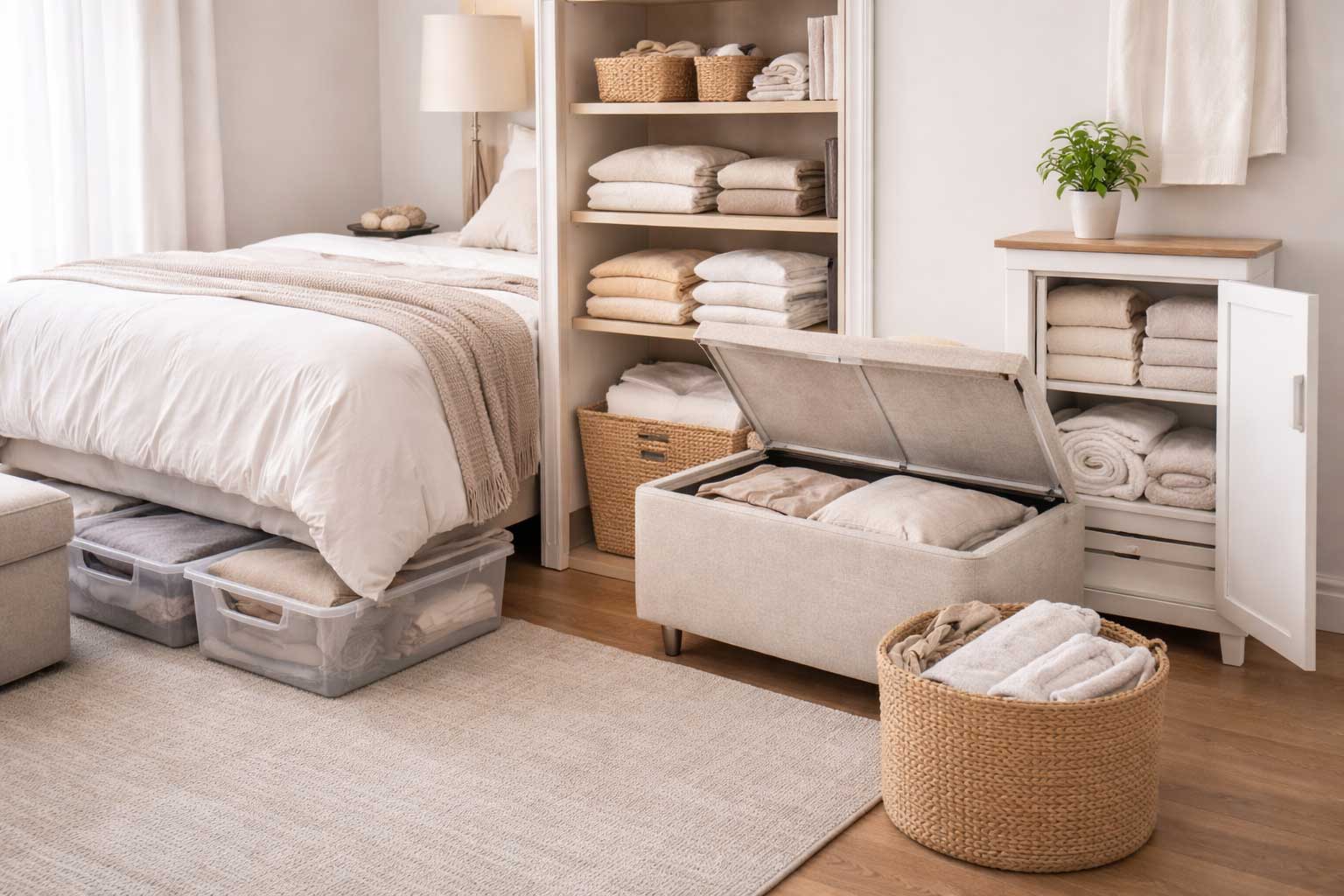
Under-bed storage is one of the best places to keep bulky linens because it uses hidden space that already exists in the apartment. In many bedrooms, the bed takes up the biggest footprint in the room, so turning that area into storage is often much more efficient than trying to squeeze another cabinet into the layout.
This space works especially well for extra sheets, blankets, spare pillowcases, guest bedding, and other soft goods that do not need to stay visible every day. Low-profile containers are especially helpful because they keep categories grouped while also helping the room look cleaner. If you want options built for this exact purpose, browse Best Under-Bed Storage Containers (Low Profile & Stackable).
Under-bed storage also works well because it can hold more than people expect. One of the most common mistakes in a small apartment is underusing the largest hidden area in the bedroom while overstuffing closets and shelves instead. When the bed starts absorbing some of that linen overflow, the rest of the apartment usually gets easier to manage.
Use Closet Shelves and Vertical Storage More Intentionally
Many apartments do have at least some linen-storage potential, but it often gets wasted because the shelves are not grouped well or the categories are too mixed. Upper closet shelves are usually the best place for less-frequently used linens, especially bulky backup items that do not need daily access.
This is where vertical storage works best when linens are contained by type. A shelf devoted only to towels will always function better than one holding towels, random bags, extra blankets, and miscellaneous overflow all together. If the apartment needs more vertical clothing-and-linen support overall, take a look at Best Compact Wardrobes for Apartments.
Wall-based storage can help too, especially in bedrooms where closet space is limited. Floating shelves or over-bed zones can support lighter linen categories without taking up more floor space. In a small apartment, vertical storage becomes much more useful once it is treated like real organized storage instead of just another place to set things.
Use Storage Benches and Multi-Use Furniture for Hidden Linen Storage
Soft goods usually store better in hidden furniture than in open bins or visible piles. Linens are bulky enough that even when they are folded neatly, they can still make a room feel visually crowded if they stay out in the open. Hidden storage solves that by giving them a place to go without forcing another closet or cabinet into the space.
Storage benches are one of the best examples because they can hold extra sheets, blankets, and backup towels while still functioning naturally as furniture. A bench at the end of the bed can absorb a lot of linen overflow without making the bedroom feel heavier. If you need a piece built for that role, see Best Bedroom Storage Benches for Small Spaces.
This kind of multi-use furniture usually works better than random extra bins because it feels integrated into the room. In a small apartment, storage is most effective when it disappears into the layout instead of announcing itself as more clutter to manage.
Keep Bathroom and Bedroom Linens in the Right Places
Not every linen category needs to live in the same part of the apartment. In fact, one of the easiest ways to make linen storage more functional is to keep the linens close to where they are actually used. Towels and washcloths usually make more sense near the bathroom, while bedding and pillowcases usually work better near the bedroom.
This kind of distributed storage often works much better than forcing every linen into one overloaded shelf or closet zone. If the bathroom needs stronger support for towel storage, revisit Best Towel Storage Solutions for Small Bathrooms and Best Bathroom Storage Cabinets for Small Bathrooms for options that keep those categories closer to where they are needed.
A distributed system does not mean linens should be scattered randomly. It just means the apartment works better when bath linens stay near the bath and bedding stays near the bed. In a small space, that kind of practical grouping often matters more than having one formal “linen closet.”
Rotate Seasonal and Guest Linens So Prime Storage Stays Clear
A small apartment usually cannot afford to keep every bulky linen category in prime storage all year. Thick winter blankets, flannel sheet sets, guest comforters, and extra layers often take up far more space than their daily usefulness justifies. That is why seasonal rotation matters so much.
The bedding and linens you need right now should stay easiest to reach. The rest can move into less convenient storage until the season changes or guests actually arrive. If your apartment already uses rotation strategies for other categories, revisit How to Store Seasonal Items in a Small Apartment for ideas that apply well to linens too.
Guest linens also need one defined home. If extra blankets, spare sheets, and guest towels are all stored in different corners of the apartment, the category becomes harder to manage and easier to overbuy. A seasonal and guest-linen system works best when it stays grouped and contained.
Make Linen Storage Easy to Reset After Laundry
The best linen-storage system is not the one that looks perfect once. It is the one that is easy to reset after laundry without a big reorganization project every time. That is where simple folding habits and obvious storage zones matter most.
Folded sets are much easier to store than loose mixed pieces. When sheets, pillowcases, towels, and blankets each have their own clear homes, putting them away becomes fast and predictable instead of annoying. Every category should have an obvious return spot, which is one reason simpler systems tend to last longer.
If the apartment still feels weighed down by too many soft-goods categories overall, How to Declutter a Small Apartment Fast can help trim the excess before storage becomes the problem again. In a small apartment, storage gets much easier once the reset routine becomes simple enough to actually keep doing.
Common Mistakes That Make Linen Storage Harder
One of the biggest mistakes is keeping too many backup sets in a small apartment. It can feel harmless to hang on to extra towels, extra sheets, and extra blankets “just in case,” but that overflow quickly consumes the best storage zones. Another common issue is mixing towels, bedding, and cleaning linens together, which makes everything harder to find and harder to put away.
Letting soft goods live in too many different spots is another problem. Once linens are spread across closets, shelves, baskets, bins, and cabinets without a system, the whole apartment starts feeling more chaotic. Ignoring hidden storage opportunities makes this even worse, especially when under-bed space or storage benches could be doing much more of the work.
The best linen-storage systems usually succeed because they are edited, grouped, and easy to maintain. They do not rely on stuffing soft goods into every empty shelf.
Best Features to Look for in Linen Storage for Small Apartments
When choosing linen storage for a small apartment, hidden storage capacity should be one of the first priorities. Bulky soft goods almost always feel better when they are stored out of sight. Easy access also matters, since linens should be simple to retrieve without unpacking half a closet.
Compact footprint is another major advantage. The best storage is often the kind that uses furniture or spaces already present in the room instead of requiring another bulky addition. Vertical storage value matters too, especially when the floor plan is already full.
Apartment-friendly flexibility is what ties everything together. The most useful linen-storage solutions are the ones that adapt to different categories, different seasons, and different room layouts without making the apartment feel more crowded.
Final Thoughts on Storing Linens in a Small Apartment
A small apartment can absolutely store linens well, but the system usually works best when it relies on category separation, hidden storage, and stronger use of vertical and under-bed space. The goal is not to find one magical closet replacement. It is to give each linen category a realistic home that fits how often it is actually used.
When towels, sheets, blankets, and seasonal linens stop competing for the same few shelves, the whole apartment becomes easier to manage. That is especially true when hidden storage does more of the work and prime storage stays reserved for the categories you actually use most often.
The result is not just better linen storage. It is a calmer apartment overall. In a small space, that kind of soft-goods control makes a big difference.
Our Top Linen Storage Picks for Small Apartments
Linens are easiest to manage when storage keeps soft goods grouped by type, hidden when possible, and easy to access without taking over the apartment. The most effective solutions usually stay compact, flexible, and well suited to small-space layouts.
Best overall choice:
Under-bed storage containers — Low-profile under-bed storage can hold bulky linens without adding more visible furniture or closet pressure.
👉 Check price on Amazon
Best hidden furniture option:
Bedroom storage bench — A storage bench gives blankets, sheets, and spare soft goods a concealed home that fits naturally into the bedroom.
👉 Check price on Amazon
Best bedding-support solution:
Extra bedding storage system — A better bedding-storage setup helps keep sheets and blankets grouped instead of mixed into random apartment zones.
👉 Check price on Amazon
Best bathroom-linen support:
Bathroom storage cabinet — A compact bathroom cabinet helps keep towels and bath linens near the bathroom instead of forcing every soft good into one crowded closet.
👉 Check price on Amazon
Apartments with especially tight closet space may also benefit from a wardrobe or added wall shelving, especially when the goal is to spread linen categories more intelligently without making the rooms feel cluttered.
FAQ
Where should linens be stored in a small apartment?
Linens are usually best stored in a mix of under-bed containers, closet shelves, storage benches, and room-specific storage zones that keep bedding near the bedroom and towels near the bathroom.
How do you store sheets and towels without a linen closet?
The best way to store sheets and towels without a linen closet is to separate them by category, use hidden storage like under-bed bins or benches, and let bathrooms and bedrooms each hold the linens most connected to that room.
What is the best way to organize linens in a small space?
The best way to organize linens in a small space is to group them by type and frequency of use, rotate seasonal extras out of prime storage, and use hidden or vertical storage to keep soft goods under control.
How many extra sheet and towel sets should you keep in a small apartment?
In a small apartment, it usually makes sense to keep only the extra sheet and towel sets you realistically use for rotation, guests, or seasonal needs rather than storing too many backups that crowd your limited space.