How to Store Blankets and Throws in a Small Living Room
Blankets and throws make a small living room feel warmer, softer, and more comfortable, but they can also create clutter fast when they do not have a proper place to go. In many apartments, extra throws end up draped over the sofa, folded on chairs, stacked in corners, or stuffed into baskets that start looking messy instead of helpful. When a small living room already has limited seating and floor space, even a few extra blankets can make the room feel more crowded than it really is.
The good news is that blankets and throws are easy to store well when you give them a system that fits the size of the room. The best solutions usually come from using hidden storage, choosing the right furniture, and keeping only a reasonable number of soft goods within reach. With the right setup, a small apartment living room can stay cozy and comfortable without looking overloaded.
For hidden blanket storage that still works as living room furniture, start with Best Living Room Storage Benches for Small Apartments.
If you want a coffee table that can help hold soft goods, check out Best Small Apartment Ottoman Coffee Tables.
For extra concealed storage in a compact layout, see Best Compact Accent Cabinets for Living Rooms.
This guide is part of our Small Apartment Living Room Solutions collection.
Why Blankets Create Clutter So Quickly in a Small Living Room
Blankets and throws add comfort quickly, but they also add visual weight faster than many other living room items. A folded throw on a sofa may look inviting, but once there are multiple blankets in different corners of the room, the space can start feeling heavier and less organized. Soft goods are bulky by nature, so even when they are technically tidy, they still take up visual space in a compact living room.
This becomes more obvious in apartments because the living room usually does not have a natural linen zone nearby. If there is no closet, cabinet, or hidden furniture storage within reach, blankets tend to stay out in the open by default. Over time, the sofa, chair, or coffee table becomes the place where soft goods collect.
That is why blankets can make a small living room look messier faster than people expect. The problem usually is not the blankets themselves. It is that they do not have a clear home. Once they are given one, the whole room tends to feel calmer without losing any of the comfort.
Start by Deciding How Many Blankets Actually Need to Stay in the Living Room
The first step in storing blankets well is deciding how many of them actually need to stay in the room. In many small apartments, too many soft goods stay nearby simply because there is nowhere else to put them. But not every throw, extra blanket, or seasonal layer needs to live in the living room all the time.
Usually, only the blankets used regularly for everyday lounging need the most convenient access. Extra guest throws, seasonal blankets, and decorative layers that are not used often can usually move elsewhere. That might mean a bedroom closet, under-bed storage, or another part of the apartment that is not already visually crowded.
It also helps to separate decorative throws from practical use blankets. A throw that stays folded neatly for styling purposes has different storage needs than the blanket you actually reach for during a movie or evening on the sofa. Once those categories are clearer, it becomes easier to keep the living room cozy without letting the soft goods take over the room.
Use Hidden Storage Furniture for the Cleanest Look
If the goal is to keep the living room looking calm and uncluttered, hidden storage is usually the best answer for blankets and throws. Soft goods are easy to tuck away, and furniture with built-in storage lets you do that without adding extra pieces just for organization.
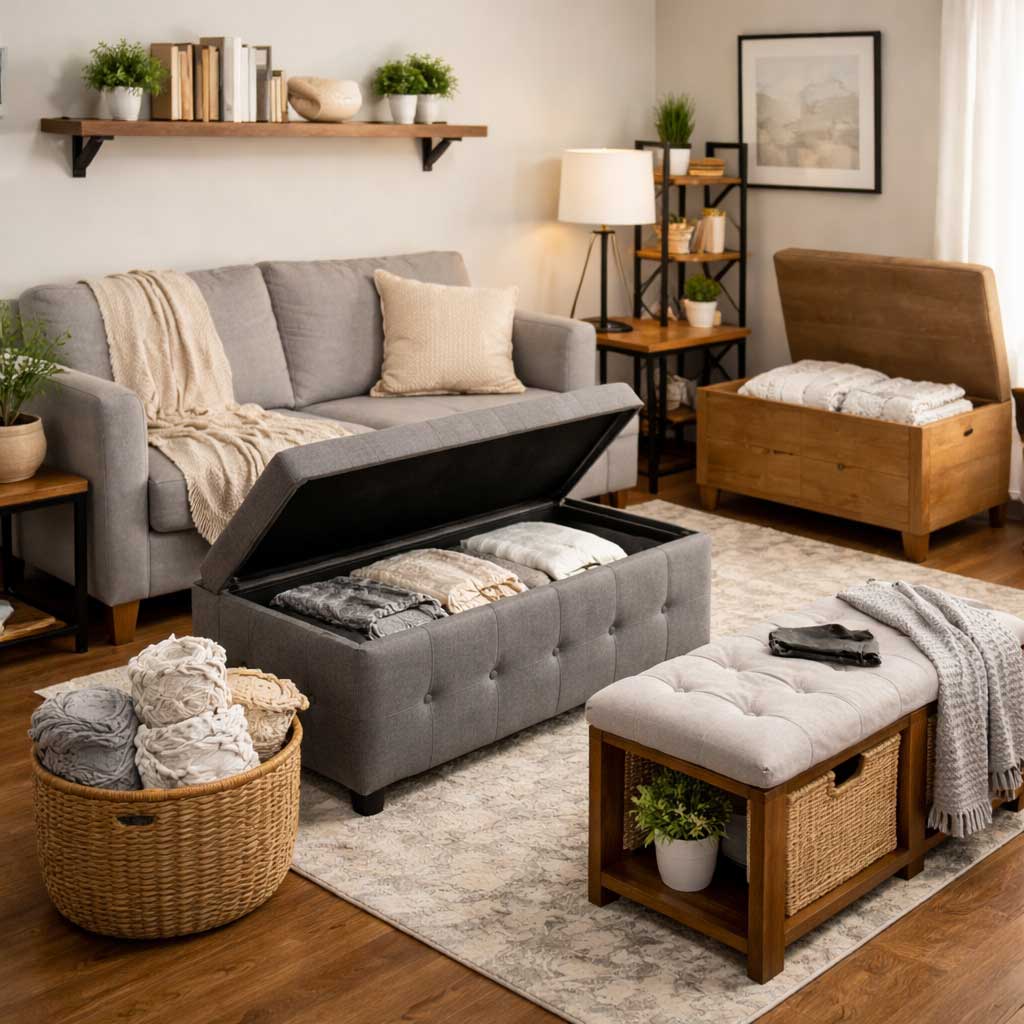
Storage benches work especially well because they hold bulky items neatly while still functioning as living room furniture. A bench can store extra throws, seasonal blankets, or even extra pillows while helping the room feel more useful overall. If you want a blanket-friendly option that keeps the room looking cleaner, browse Best Living Room Storage Benches for Small Apartments.
Ottoman coffee tables can help in a similar way. They give you a practical central surface while also offering a place to hide soft goods when they are not in use. For living rooms that need storage without more visual bulk, check out Best Small Apartment Ottoman Coffee Tables.
Closed storage usually feels calmer than open blanket overflow because it removes the soft goods from view completely. That makes a noticeable difference in a small apartment where even tidy items can make the room feel visually full.
Use Open Storage Carefully So It Still Looks Intentional
Open storage can work for blankets, but it needs more restraint than hidden storage. A single basket with one or two folded throws can look cozy and styled. Several blankets spilling out of baskets, draped over chairs, or piled on the arm of the sofa tend to make the room feel messier much faster.
That is why open storage works best when it stays edited. One basket, one visible folded throw, or one neatly styled layer often looks much better than trying to keep every blanket visible. The materials matter too. Open storage tends to look better when it matches the rest of the room and feels intentional rather than like a last-minute overflow solution.
In a small living room, loose soft goods should not take over the corners or seating area. Open blanket storage should support the room visually, not become one of the main things you notice when you walk in. The cleaner and simpler the setup, the more likely it is to stay attractive over time.
Store Blankets Near the Seating Area Without Crowding It
Blankets should usually stay close enough to the sofa or main chair that they are easy to grab, but that does not mean they should be spread across every seating surface. In a small apartment living room, the most comfortable setup is usually one where blankets are accessible without being the first thing you see in every corner of the room.
Storage near the sofa often works best because it supports real daily habits. A storage bench near the seating area, an ottoman with interior space, or another discreet nearby option makes it easy to keep blankets close without sacrificing visual order. The more natural the access feels, the more likely the room is to stay tidy.
The important part is protecting the seating zone from feeling weighed down. Blankets should make the room feel relaxed, not crowded. When soft goods are kept nearby but controlled, the room usually feels more comfortable and more usable at the same time.
Keep Decorative Throws from Becoming Everyday Clutter
Decorative throws can make a living room feel inviting, but they can also become clutter quickly when there are too many of them or when they are not being managed intentionally. A single throw folded across part of the sofa can look styled and relaxed. Several layered across every seat usually make the room feel heavier than it needs to.
The best decorative throw setup is usually one that still feels easy to manage. If it takes constant adjusting, folding, or rearranging just to keep the room from looking messy, there are probably too many layers at work. In a small apartment, comfort tends to look better when it stays edited.
A cleaner styling approach usually feels just as cozy. One soft throw on the sofa, maybe one extra nearby in hidden storage, and a room that still feels breathable often creates a better result than trying to show every blanket at once. The goal is warmth and softness, not visual overload.
Choose Storage That Preserves Floor Space
Blanket storage should not solve one problem by creating another. In a small living room, any storage piece needs to respect the limited floor plan. If a bin, bench, or cabinet blocks movement or crowds the seating area, it can make the room feel more cramped even if it helps contain the blankets.
That is why multi-use furniture usually works best. A storage ottoman, storage bench, or other piece that already belongs in the room tends to feel much lighter than adding separate furniture just to hold soft goods. Hidden storage within furniture is often the most efficient option because it gives you more function without asking for extra square footage.
Narrow or compact solutions also tend to feel better visually. A well-placed piece that holds blankets quietly is usually much more effective than a bulky storage addition that becomes another obstacle in the room. In apartments, the best blanket storage is almost always the kind that disappears into the layout.
Make the Living Room Feel Cozy Without Looking Overloaded
A cozy living room does not need to be full of visible blankets to feel warm and inviting. In fact, a small room often feels more comfortable when the softness is balanced with a little more visual breathing room. A few thoughtful layers usually create a better effect than a room where every surface has another throw, pillow, or basket.
Storage and decor should support each other. A blanket can add texture and comfort, but it should also fit the overall look of the room. When there are too many soft layers competing for attention, the space can start feeling crowded instead of restful.
A cleaner living room usually still feels just as comfortable. In many cases, it feels better. The room becomes easier to relax in because it looks more open, the seating feels less overloaded, and the soft goods you actually use are still right where you need them. In a small apartment, that balance is what keeps comfort from turning into clutter.
Common Mistakes That Make Blanket Storage Feel Messy
One of the most common mistakes is simply keeping too many blankets in the living room. Even if each one is useful at some point, a small space rarely benefits from storing every option within arm’s reach. Another mistake is letting throws stay draped everywhere, which quickly makes the room look less intentional and harder to reset.
Open storage can also become a problem when it is too full. One well-edited basket can look great. An overflowing bin of mixed blankets usually looks like clutter. Another common issue is adding extra furniture just to hold soft goods, even when the room would work better with one multi-use piece instead.
The best blanket storage setups usually succeed because they are restrained. They hold enough for comfort, but not so much that the room starts feeling visually crowded or overly styled.
Best Features to Look for in Small Living Room Blanket Storage
When choosing blanket storage for a small living room, hidden capacity is one of the most useful features. Blankets are soft and bulky, so they benefit a lot from storage that keeps them out of sight when they are not needed. Multi-use function matters too. A piece that stores blankets while also serving as a bench, table, or ottoman gives you more value in a compact room.
Compact scale is equally important. Blanket storage should fit naturally into the room instead of becoming the dominant feature. Easy access matters as well, because throws that are hard to reach often end up back on the sofa or chair anyway.
Apartment-friendly design is what ties it all together. The best blanket storage usually feels clean, simple, and integrated into the living room rather than like a separate storage project added afterward. In a small apartment, those details make a big difference.
Final Thoughts on Storing Blankets and Throws in a Small Living Room
The best blanket storage systems keep a living room cozy without letting soft goods take over the space. In most apartments, that means storing only the blankets you actually use regularly, giving them a defined home, and relying on hidden storage whenever possible.
Open storage can still work, but it needs editing and restraint. A few carefully placed soft layers usually feel much better than a room where throws are scattered across every seat and corner. Hidden furniture storage, right-sized pieces, and a more intentional setup usually create the cleanest result.
A small living room does not have to choose between comfort and order. With the right blanket storage, it can absolutely feel warm, relaxed, and easy to live in without looking overloaded.
Our Top Blanket Storage Picks for Small Living Rooms
Blankets are easiest to manage when storage keeps them close to the seating area without leaving them visible all the time. The best living room solutions usually stay compact, multi-functional, and easy to blend into the layout.
Best overall choice:
Storage bench — A storage bench keeps extra blankets hidden while adding useful function to the living room.
👉 Check price on Amazon
Best coffee-table option:
Ottoman coffee table — An ottoman coffee table can hold soft goods while still working as a central surface in the room.
👉 Check price on Amazon
Best concealed storage upgrade:
Compact accent cabinet — A small accent cabinet can hold blankets and other living room overflow while helping the room look calmer.
👉 Check price on Amazon
Best styled open-storage option:
Small blanket basket — A simple basket can work well for one or two edited throws when you want the room to feel cozy without looking overfilled.
👉 Check price on Amazon
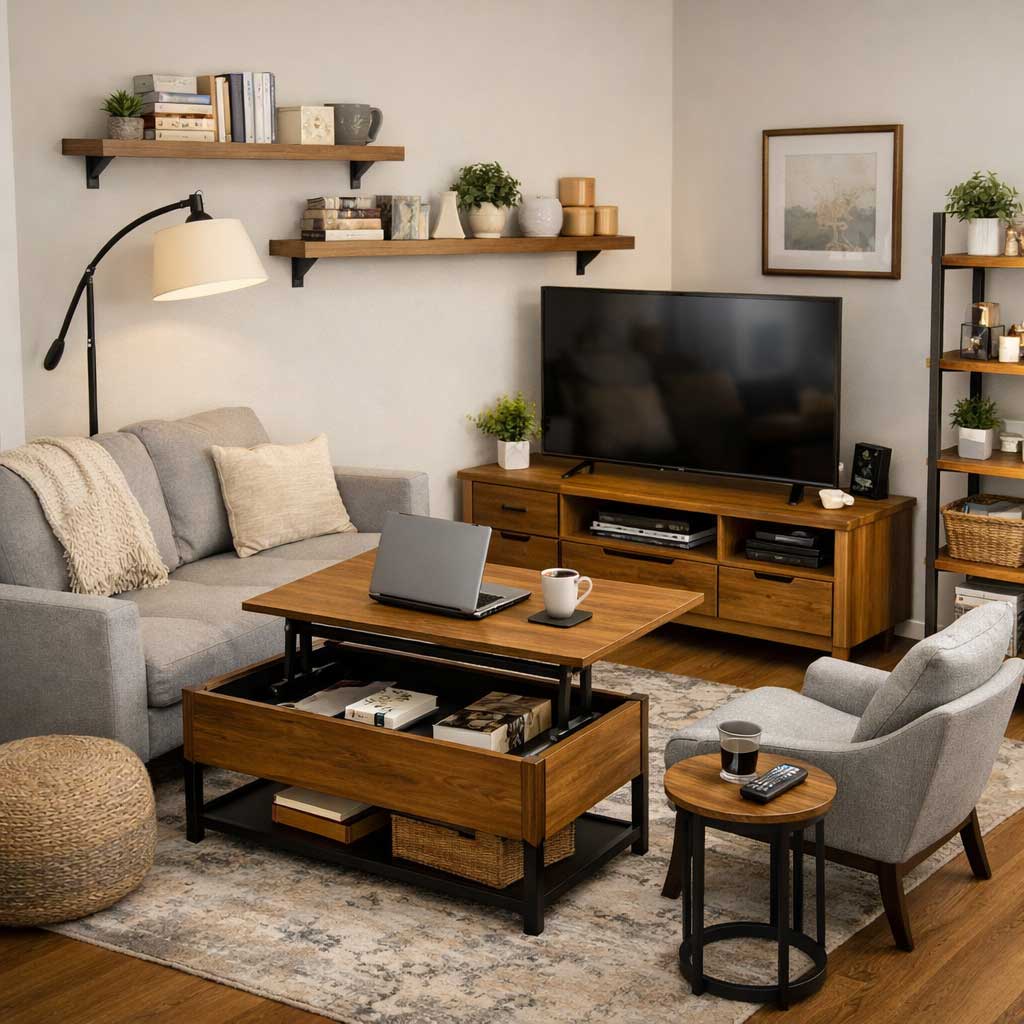
Living rooms that need a little more hidden support may also benefit from a lift-top coffee table or another multi-use storage piece, especially when the goal is to keep soft goods nearby without crowding the seating area.
FAQ
Where should blankets be stored in a small living room?
Blankets are usually best stored in hidden furniture like storage benches, ottomans, or compact cabinets placed near the main seating area so they stay accessible without creating clutter.
How many throws should you keep in a living room?
In a small living room, it usually makes sense to keep only one or two everyday throws nearby, plus perhaps one decorative layer if it still feels easy to manage.
What is the best blanket storage for a small apartment?
The best blanket storage for a small apartment is usually multi-functional furniture with hidden storage, such as a storage bench or ottoman coffee table, because it adds function without taking up extra space.
How do you keep blankets accessible without making the room look cluttered?
The best way to keep blankets accessible without clutter is to store them near the seating area in hidden furniture or a single edited open-storage solution rather than leaving multiple throws visible around the room.