How to Share a Small Apartment Bathroom Without the Clutter
Sharing a small apartment bathroom can get messy fast when two or more people are trying to use the same sink, storage space, and daily essentials area. Toiletries pile up, towels overlap, and the counter starts filling with products that have no clear home. Even if the bathroom itself is not especially tiny, it can still feel crowded when multiple people are using it without a simple organization system.
The good news is that sharing a small bathroom does not have to mean constant clutter. With the right setup, it is possible to give each person their own storage zone, reduce overlap around the sink, and keep shared essentials organized without making the room feel overloaded. A few smart adjustments can make the space easier to use, easier to clean, and far less frustrating on a daily basis.
For better countertop control in a shared bathroom, start with Best Bathroom Counter Organizers for Small Spaces.
If you need better storage for personal care items, check out Best Space-Saving Toiletry Organizers for Small Bathrooms.
For under-sink organization that helps separate shared and personal products, see Best Bathroom Vanity Organizers for Small Spaces.
This guide is part of our Small Apartment Bathroom Solutions collection.
Why Shared Small Bathrooms Get Cluttered So Quickly
Shared bathrooms become cluttered faster because multiple people are trying to store and use their essentials in the same limited space. A sink that feels manageable for one person can quickly become overwhelmed when two or three sets of products start competing for the same counter, drawer, or cabinet. Toothbrushes, skincare, hair products, razors, and soap all add up quickly when there is no clear plan for where each item belongs.
The problem is not just the number of products. It is also the overlap in daily routines. In a shared apartment bathroom, people are often using the same areas at the same times, especially in the morning and evening. That means even small amounts of clutter become more noticeable because they slow everyone down and make the room feel harder to use.
Shared bathrooms also get messy when nothing is assigned to one person or one purpose. When every shelf is treated as communal space, items start drifting into random spots and no one is fully responsible for keeping things organized. That is why a small shared bathroom needs more than storage. It needs structure.
Start by Separating Shared Items from Personal Items
The first step in organizing a shared bathroom is deciding what should stay communal and what should be stored by person. Shared items are usually things like hand soap, extra toilet paper, cleaning supplies, or a few basic toiletries that everyone uses. Personal items include skincare, makeup, razors, toothbrushes, grooming tools, and any daily products that belong to one specific person.
This distinction matters because shared bathrooms feel much more chaotic when personal products are scattered everywhere. If each person leaves their own collection of items around the sink or stuffed into the same drawer, the room quickly loses any sense of order. A better approach is to create one easy-to-reach area for true shared essentials and keep personal products separated from that zone.
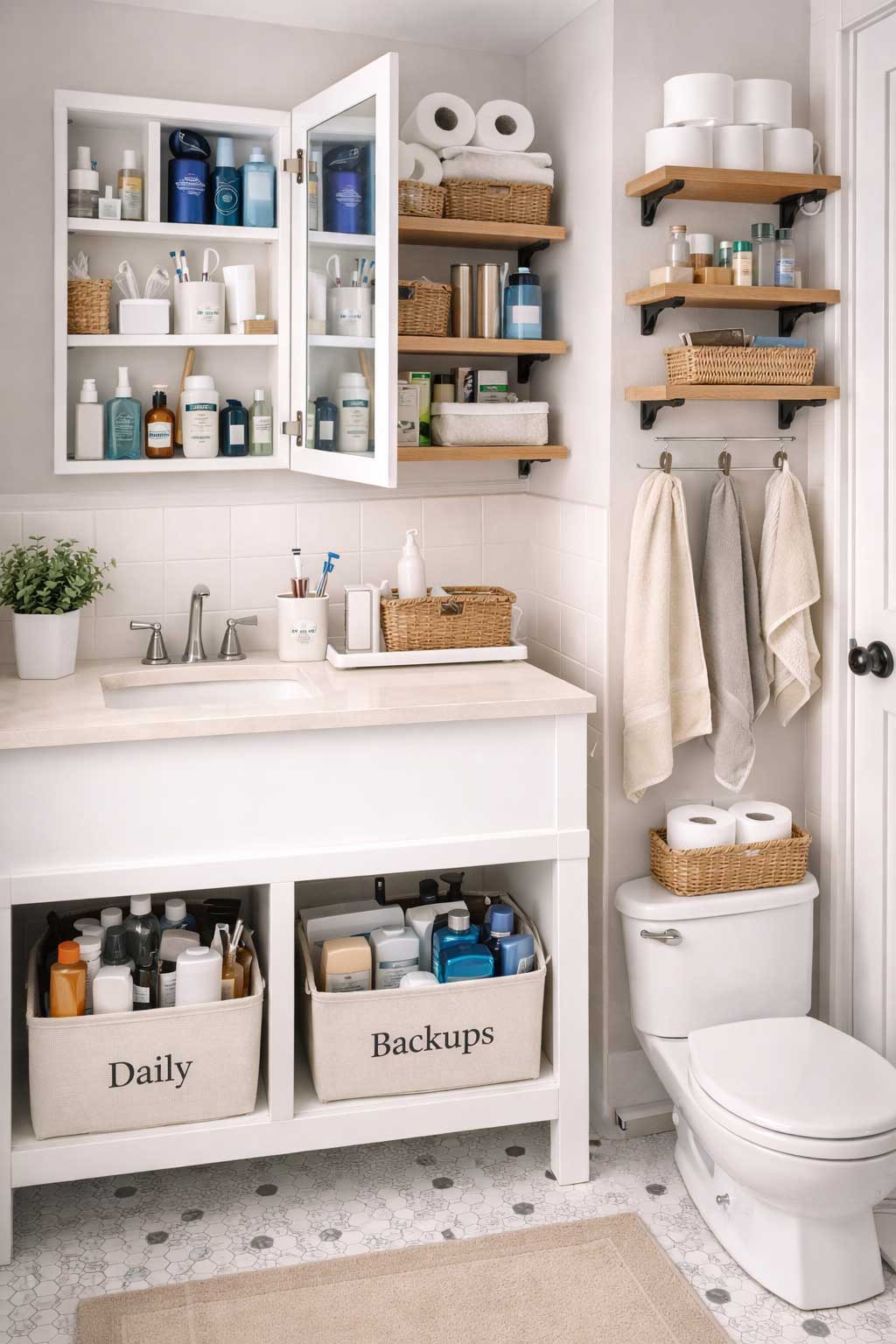
It also helps to keep backup supplies out of prime daily-use areas. Refill soap, unopened toothpaste, extra paper goods, and spare toiletries do not need to sit in the same space as items used every morning. When you limit the most convenient storage zones to current essentials, the bathroom becomes much easier to share without constant clutter.
Create Individual Bathroom Zones for Each Person
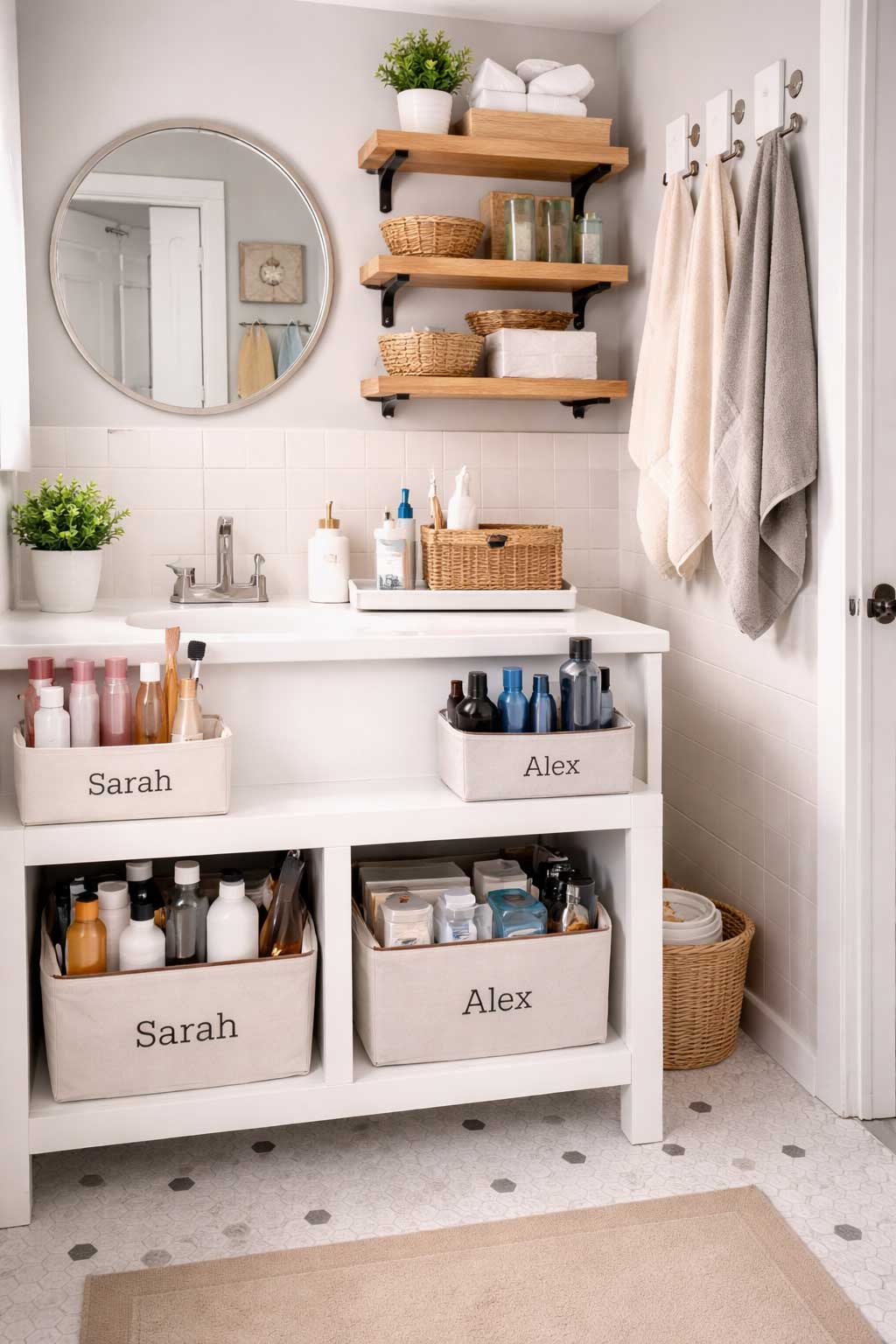
One of the best ways to make a shared bathroom work is to give each person a clearly defined storage zone. That could be a shelf, a basket, part of a cabinet, a drawer, or even a portable toiletry bin that can be moved in and out as needed. The exact setup matters less than the fact that each person knows where their things belong.
A bathroom with personal zones tends to stay cleaner because there is less confusion and less overlap. When someone has their own shelf or section under the sink, they are less likely to spread products across the counter or leave items in random corners. If your under-sink setup needs more structure, take a look at Best Bathroom Vanity Organizers for Small Spaces.
Zones also help keep the space manageable. Instead of letting one person’s products slowly take over an entire area, each person works within the storage space they have been given. This makes it easier to see when something is overflowing and easier to reset the bathroom when things start getting messy. In a small apartment bathroom, boundaries are often what make the space feel usable.
Keep the Sink Area as Clear as Possible
The sink area is usually the first place a shared bathroom starts to feel cluttered. It is where people brush their teeth, wash their face, set down small products, and leave things they think they will need again later. When multiple people use the same sink area, even a few loose items can make the whole bathroom feel crowded.
The best solution is to limit what stays out on the counter. Keep only the absolute essentials nearby and move everything else into a shelf, cabinet, drawer, or portable organizer. If the sink area needs better structure, browse Best Bathroom Counter Organizers for Small Spaces.
Small daily-use items also need containment. Toothbrushes, cups, hand soap, and a few frequently used products should have a defined place so they are not drifting around the sink edge. For compact everyday sink storage, see Best Toothbrush Holders and Bathroom Cup Organizers for Small Spaces.
A shared bathroom also benefits from a quick end-of-day reset. That does not need to be complicated. It can be as simple as putting personal items back into the right zone and wiping the sink area clear. The easier that reset is, the more likely the space will stay clean long term.
Use Vertical Storage to Reduce Overlap
Shared bathrooms usually need more storage, but that does not mean they need more storage pieces sitting on the floor. In a small space, vertical storage is usually the smarter answer because it creates capacity without making the room feel tighter.
Wall shelves can give shared supplies or personal items a dedicated place above eye level or near the sink without using counter space. This is especially helpful when drawers and cabinet space are limited. If you want renter-friendly vertical storage ideas, check out Best Wall-Mounted Bathroom Shelves for Apartments.
Hooks are another simple way to reduce overlap. They keep towels, robes, and grab-and-go items off the sink, off the door frame, and off the shower rod. For easy hanging solutions, read Best Bathroom Hooks for Small Spaces.
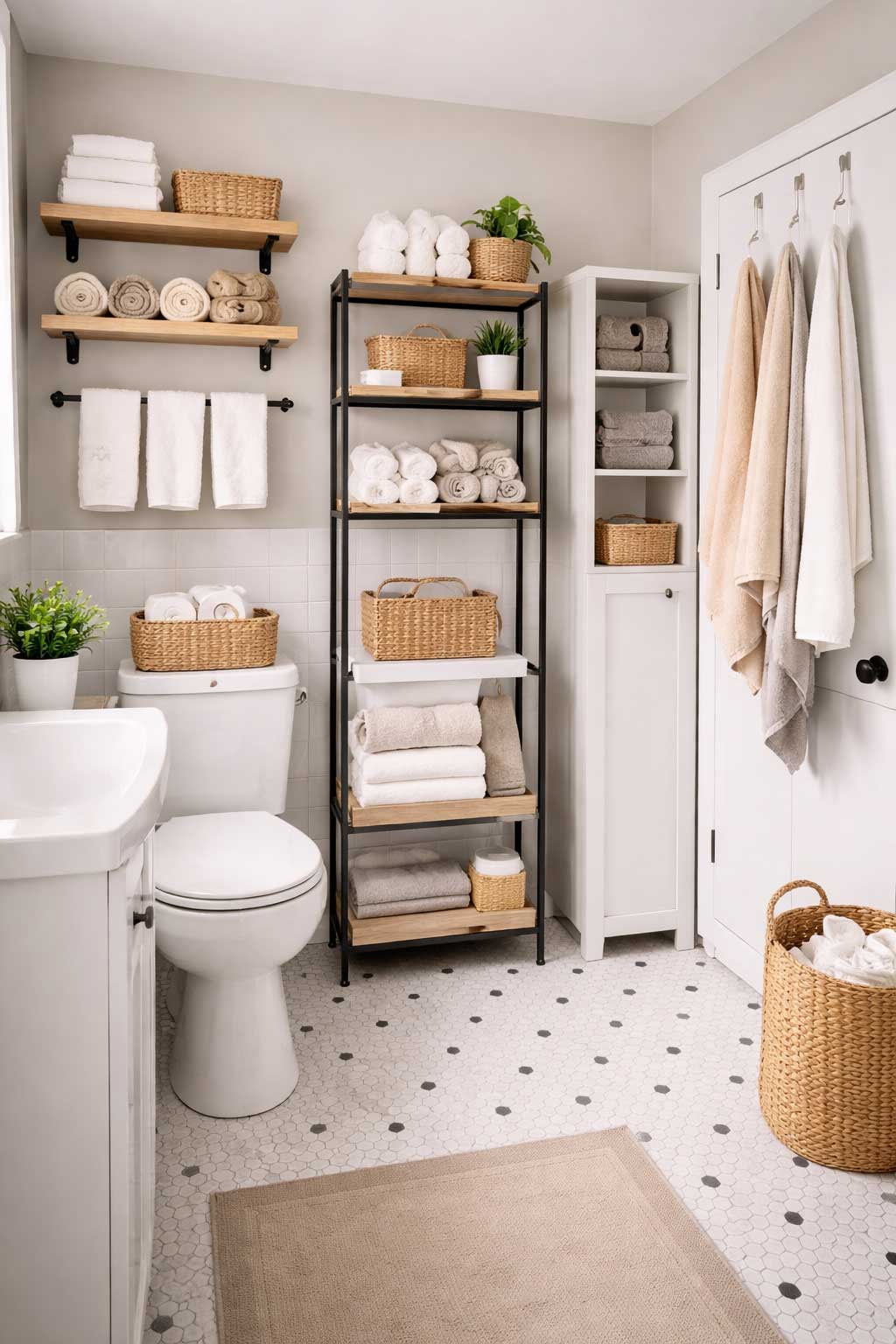
The area above the toilet is also valuable in a shared bathroom because it can hold overflow items that do not need to stay at the sink. That might include extra toilet paper, backup toiletries, or folded towels. Using vertical space well helps separate storage categories so every item does not end up competing for the same few surfaces.
Make Towels Easier to Identify and Store
Towels are one of the biggest sources of confusion in a shared bathroom. Without a clear system, people forget which towel is theirs, damp towels end up mixed with clean ones, and extra linens pile up in awkward places. A better towel setup can make the entire bathroom feel more organized.
The simplest solution is to give each person a dedicated hook, towel bar position, or shelf spot. That makes it easier to identify which towel belongs to whom and keeps used towels from spreading around the room. It also helps to store backup towels separately from the daily ones so the clean folded supply is not mixed with damp towels in active use.
Keeping towel storage simple is usually the best approach. A few assigned spots and a clear place for extras can prevent a lot of unnecessary clutter. In a small bathroom, anything that reduces confusion usually improves cleanliness too.
Use Compact Storage for Grooming and Toiletries
Grooming products and toiletries multiply quickly in a shared bathroom, especially when each person has their own routine. Makeup, skincare, shaving supplies, hair tools, and small hygiene products can take over the room if they are not grouped and contained properly.
Compact storage works best because it gives each category of items a home without wasting space. Small caddies, bins, drawer organizers, or containers that can be tucked into a shelf or cabinet tend to be much easier to manage than loose products spread around the bathroom. For better personal-item storage, see Best Space-Saving Toiletry Organizers for Small Bathrooms.
Grouping similar products together also makes the room more functional. When one person’s skincare stays together, another person’s grooming items stay together, and shared basics are stored separately, the bathroom feels much more intentional. This also makes cleanup easier because everyone can return their items to one obvious place instead of searching for room around the sink.
Set Up a Bathroom System That Is Easy to Maintain
A shared bathroom only stays organized if the setup is easy to maintain. If the system is too complicated, too crowded, or too fussy, people stop following it. That is why simple storage zones usually work better than elaborate organizing systems in a small apartment bathroom.
The best bathroom systems make cleanup quick and obvious. Shared items should be easy to restock, personal items should have clear homes, and clutter should be easy to spot before it spreads. If one shelf or one bin always seems to overflow, that is usually a sign the setup needs a small adjustment rather than more stuff piled into the same spot.
It also helps to make maintenance part of the system itself. Replacing soap before it runs out, putting grooming items away after use, and keeping the sink area mostly clear can prevent the kind of buildup that makes the bathroom feel chaotic. In a shared space, consistency matters more than perfection.
Common Mistakes That Make Shared Bathrooms More Cluttered
One of the most common mistakes is letting everyone use the same storage spot for everything. When multiple people share one drawer, one bin, or one shelf without any separation, the bathroom becomes harder to navigate and much harder to keep organized. Clear boundaries work better than fully shared storage.
Another mistake is keeping too many personal products out at once. Even if the items are used often, leaving them all on the counter or sink edge makes the room look busy and reduces usable space. Small bathrooms usually work better when only the essentials are visible.
It is also easy to store clean and used items too close together. Damp towels next to folded clean ones, or grooming tools mixed with unopened backup products, make the room feel less organized and less sanitary. Finally, many people choose organizers that are too large for the space. In a shared bathroom, compact storage almost always works better than oversized trays and bulky containers.
Best Features to Look for in Shared Bathroom Organizers
When choosing organizers for a shared bathroom, compact size should be one of the first things you look for. The best organizers help define zones without taking over the room. A tray, bin, or drawer insert should create order, not consume all the available space.
Easy-to-clean materials are also important because shared bathrooms see frequent use. Smooth plastic, coated metal, and other simple surfaces are usually easier to wipe down than anything too textured or absorbent. In a multi-user bathroom, low-maintenance storage is always an advantage.
Clear separation is another essential feature. Organizers that make it obvious which items belong together help reduce overlap and make the room easier to manage. Vertical design is also valuable, especially when counter space is limited. Finally, look for storage that can serve multiple users without becoming confusing. Flexibility matters in a shared apartment bathroom because routines and needs can change over time.
Final Thoughts on Sharing a Small Apartment Bathroom Without the Clutter
Sharing a small apartment bathroom does not have to mean accepting constant mess. In most cases, clutter builds because there is no clear system for where shared items go, where personal products belong, and how the most-used areas should stay organized.
The best shared bathrooms work because storage is assigned, counters stay controlled, and each person has a manageable zone for their own things. When you separate personal items from shared essentials, use vertical storage well, and keep the sink area as clear as possible, the room becomes much easier to share.
A small bathroom may never feel huge, but it can still feel functional, calm, and organized. The goal is not to remove every item from sight. It is to make sure the space supports everyone who uses it without turning into a daily source of frustration.
Our Top Organization Picks for Shared Small Apartment Bathrooms
A shared bathroom works best when organizers reduce overlap, define personal zones, and keep the sink area from becoming a catch-all surface. The most effective storage pieces are usually compact, easy to maintain, and practical for everyday routines.
Best overall choice:
Countertop bathroom organizer — A compact organizer helps contain shared essentials and prevents daily-use items from spreading across the sink area.
👉 Check price on Amazon
Best personal-item solution:
Space-saving toiletry organizer — A small toiletry organizer helps each person keep grooming and hygiene products grouped together in one manageable place.
👉 Check price on Amazon
Best under-sink upgrade:
Bathroom vanity organizer — A structured under-sink organizer makes it easier to divide storage by person and reduce product overlap.
👉 Check price on Amazon
Best vertical storage addition:
Wall-mounted bathroom shelf — A simple wall shelf adds storage without taking up floor space and helps move overflow items away from the sink.
👉 Check price on Amazon
Shared bathrooms that need better towel separation may also benefit from hooks or a towel rack, especially when the goal is to keep damp towels from mixing with clean folded items.
FAQ
How do two people share a small bathroom?
Two people can share a small bathroom more easily by separating shared items from personal items, assigning each person a storage zone, and keeping the sink area limited to essential daily-use products.
How do you organize a shared bathroom?
The best way to organize a shared bathroom is to create clear storage zones, use compact organizers for personal items, store shared essentials in one central area, and make sure towels and toiletries do not overlap unnecessarily.
What should stay on the bathroom counter in a shared bathroom?
Only the most-used essentials should stay on the bathroom counter in a shared bathroom, such as hand soap, toothbrush storage, or one small organizer for daily items. Everything else should be stored elsewhere.
How do you keep a shared bathroom from getting messy?
A shared bathroom stays cleaner when each person has a defined place for their items, towels are easy to identify, the sink area is reset regularly, and storage remains simple enough for everyone to maintain.