How to Set Up a Small Living Room for TV Watching and Everyday Use
Setting up a small living room for TV watching sounds simple until the room also has to handle everyday life. In many apartments, the living room is not just a place to watch shows or movies. It is also where you relax, read, snack, host guests, and move through the home on a daily basis. When the TV setup takes over too much of the room, the space can start to feel cramped, awkward, or less comfortable for normal everyday use.
The good news is that a small living room can work well for both TV watching and daily living when the layout is planned carefully. The key is to balance seating, sight-lines, walking space, and media storage without letting any one feature dominate the room. With the right furniture choices and a more intentional setup, even a compact apartment living room can feel comfortable, functional, and easy to use all day.
For TV-area furniture ideas, start with Best Media Consoles for Small Apartments.
If you need a layout-friendly TV solution, check out Best Corner TV Stands for Small Apartments.
For seating that fits compact living rooms, see Best Apartment-Size Sofas Under 80 Inches.
This guide is part of our Small Apartment Living Room Solutions collection.
Why Small Living Rooms Need a More Intentional TV Layout
TV watching can easily dominate a small living room because the screen naturally becomes one of the room’s biggest focal points. Once the TV is in place, the sofa, side tables, lighting, and media storage often start revolving around it. In a larger room, that is not always a big problem. In a small apartment living room, though, one oversized or poorly placed element can shape the entire space in a way that makes everyday use less comfortable.
The challenge is that small layouts offer less flexibility. There are fewer walls that work for a TV, fewer places to put seating, and less room to correct a layout mistake with extra furniture or spacing. That is why even a basic decision like where the TV goes can affect whether the room feels easy to move through or constantly awkward.
Everyday comfort matters just as much as screen position. A living room should still feel like a place to relax, talk, and live in when the TV is off. The best small living room layouts do not just create a good viewing angle. They create a room that functions well all day.
Start by Choosing the Best Wall or Corner for the TV
The TV location shapes the rest of the room more than people usually expect. Once the screen is placed, the seating arrangement, traffic flow, and storage choices often follow. That is why the best place for the TV is not always the most obvious blank wall. It is the spot that supports both comfortable viewing and a practical room layout.
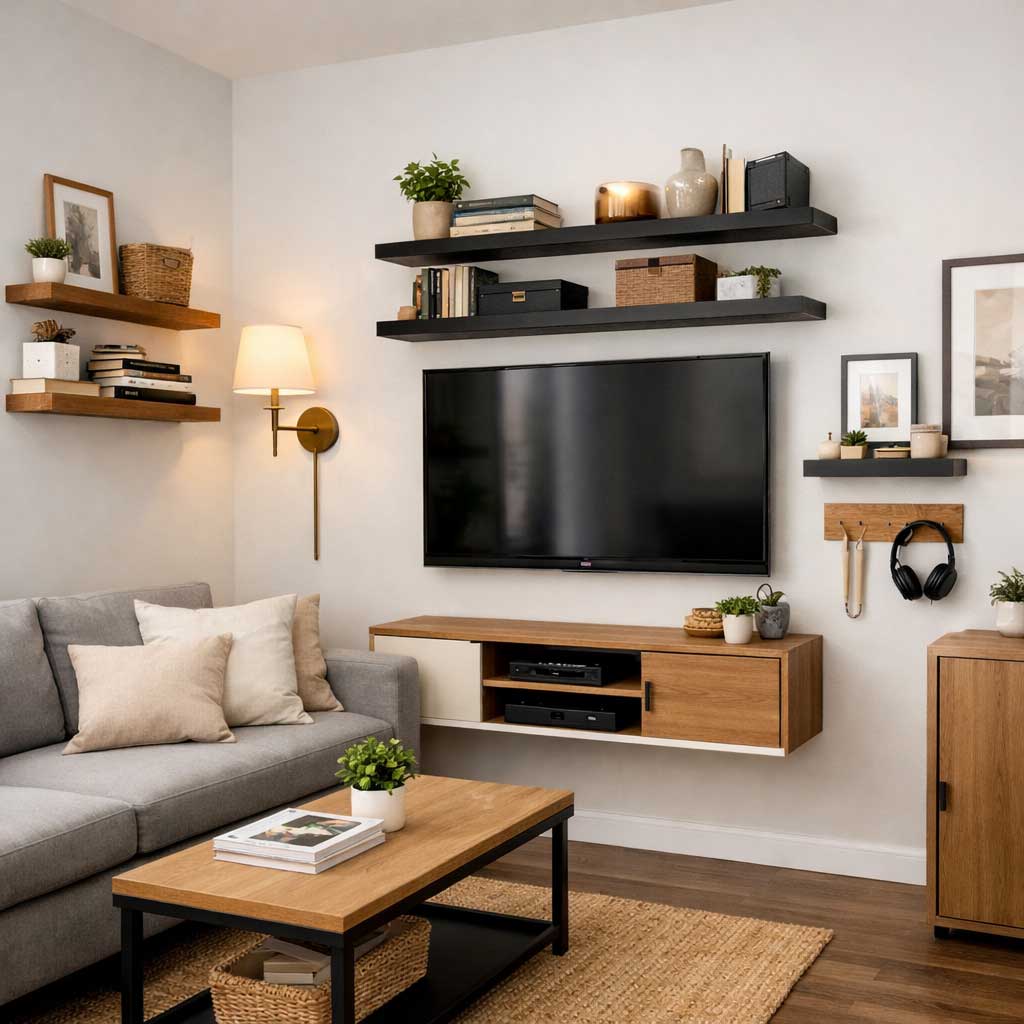
The ideal TV position usually allows the main seat to face the screen naturally without forcing the sofa into an awkward angle or blocking the room’s main walkway. In some apartments, a corner placement works surprisingly well because it frees up a longer wall for seating or storage. If you need layout-friendly TV furniture for tighter setups, browse Best Corner TV Stands for Small Apartments.
The media wall should also stay proportional to the room. A huge console or oversized TV area can make the entire living room feel like it exists only for the screen. If you want a more balanced setup, take a look at Best Media Consoles for Small Apartments. The goal is to let the TV feel integrated into the room rather than letting it take over everything around it.
Choose Seating That Supports TV Watching Without Overcrowding the Room
The right seating can make a small living room feel comfortable for screen time without making it feel cramped the rest of the day. In compact apartments, scale matters a lot. Oversized sectionals and deep bulky sofas may sound cozy, but they often eat up too much floor space and leave the room feeling tighter than it needs to.
Apartment-size sofas usually work better because they create a more natural relationship between the seating area and the screen without overwhelming the room. If you need seating that fits smaller layouts more comfortably, check out Best Apartment-Size Sofas Under 80 Inches.
The main seat should face the TV in a way that feels relaxed rather than forced. Extra seating, if you need it, usually works best when it stays flexible. A compact accent chair or a small loveseat can add comfort without creating the visual heaviness of another large sofa. In a small living room, the best seating setup is usually the one that feels comfortable for watching TV but still leaves the room usable when no one is watching anything.
Keep the TV Area Functional for Everyday Living Too
A good living room setup has to work when the TV is off, not just when it is on. That means the media area should support daily life rather than dominate it. If the room only feels comfortable while watching something, the layout probably needs more balance.
Media storage is a big part of this. Remotes, devices, speakers, chargers, and small electronics can create clutter quickly if they stay visible all the time. Hidden or controlled storage helps the room feel calmer and more useful for everyday living. If your setup needs more concealed media support, see Best Hidden Media Storage for Small Apartments.
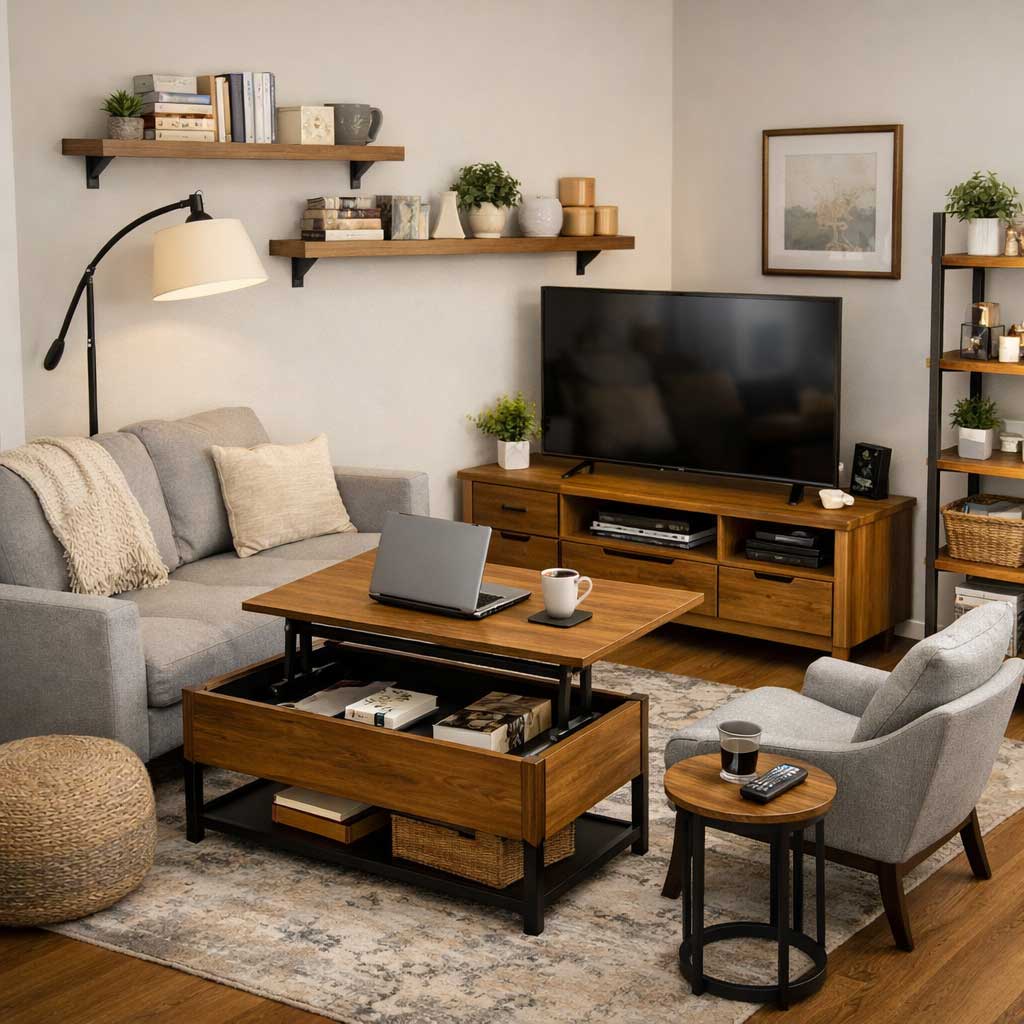
The room also still needs practical surface space. A place to set a drink, a phone, a book, or a laptop matters even when the TV is the main focal point. That is why a small living room works best when the TV area is treated as part of a broader everyday-use setup rather than as a standalone entertainment zone. The more flexible the room feels, the more comfortable it usually feels overall.
Use the Right Coffee Table and Side Tables for a Multi-Use Setup
Coffee tables and side tables do a lot of hidden work in a small living room. They support TV watching, daily lounging, casual meals, laptops, books, and countless small routines that happen in the room throughout the day. When these tables are chosen well, the whole room feels easier to use. When they are too large or poorly placed, they can make the room feel blocked and crowded.
A coffee table should fit the seating area without swallowing too much floor space. In many smaller rooms, lift-top or compact storage tables work especially well because they provide surface space and a little hidden function at the same time. If you want a table that supports both screen time and daily use, browse Best Lift-Top Coffee Tables for Small Living Rooms.
Side tables matter just as much. A small C-shaped table or compact nesting table can make a sofa setup much more livable without needing the room to support bulky furniture. For smaller living-room-friendly options, take a look at Best C-Shaped Side Tables for Small Apartments. In apartments, the best tables are usually the ones that work hard quietly and fit around the seating instead of interrupting it.
Use Lighting That Supports Both Screen Time and Everyday Living
Lighting has a huge effect on whether a small living room feels comfortable for TV watching and normal daily use. One overhead light is rarely enough to make the room feel balanced. In fact, a single bright light can make evening viewing harsher while still leaving parts of the room feeling flat or underused.
Layered lighting usually works better. A combination of soft lamps and targeted light sources helps the room feel more relaxing during screen time while still staying functional when the TV is off. Floor lamps and table lamps are especially useful in apartment living rooms because they can shape the mood of the room without requiring major changes to the layout. If you need lighting that works well in compact seating areas, see Best Arc Floor Lamps for Small Living Rooms.
Lighting should also support the room’s atmosphere, not just its visibility. A small living room feels better when the light makes the space feel calmer and more intentional. That matters for TV watching, but it also matters for reading, relaxing, or having guests over. The best lighting plan helps the room feel good to be in no matter what time of day it is.
Protect Walking Space and Everyday Flow
A TV-friendly living room still has to be easy to move through. In small apartments, the living room is often part of a larger path through the home, connecting to the entryway, kitchen, or dining space. If the TV setup crowds that path, the room quickly starts feeling more frustrating to use, even if the viewing angle is technically fine.
Furniture placement should support movement first, then comfort, then extras. The sofa should not block a key path. The coffee table should not force people to squeeze by awkwardly. The media setup should fit the room rather than stretch too far into it. In small living rooms, good flow often makes the room feel bigger without adding any actual square footage.
Wall-based storage and narrower pieces can help preserve more open floor area. The better the walking space feels, the more likely the room is to feel comfortable for both TV watching and everyday living. A layout that looks fine on paper but feels cramped in motion is usually not the right one for a small apartment.
Make the Room Feel Cozy Without Making It Feel Heavy
Comfort matters in a TV room, but too much furniture or too many accessories can make a small living room feel visually heavy. The goal is to create coziness without layering the space so much that it starts feeling crowded. In apartments, that balance is especially important because the living room often has to feel open and restful at the same time.
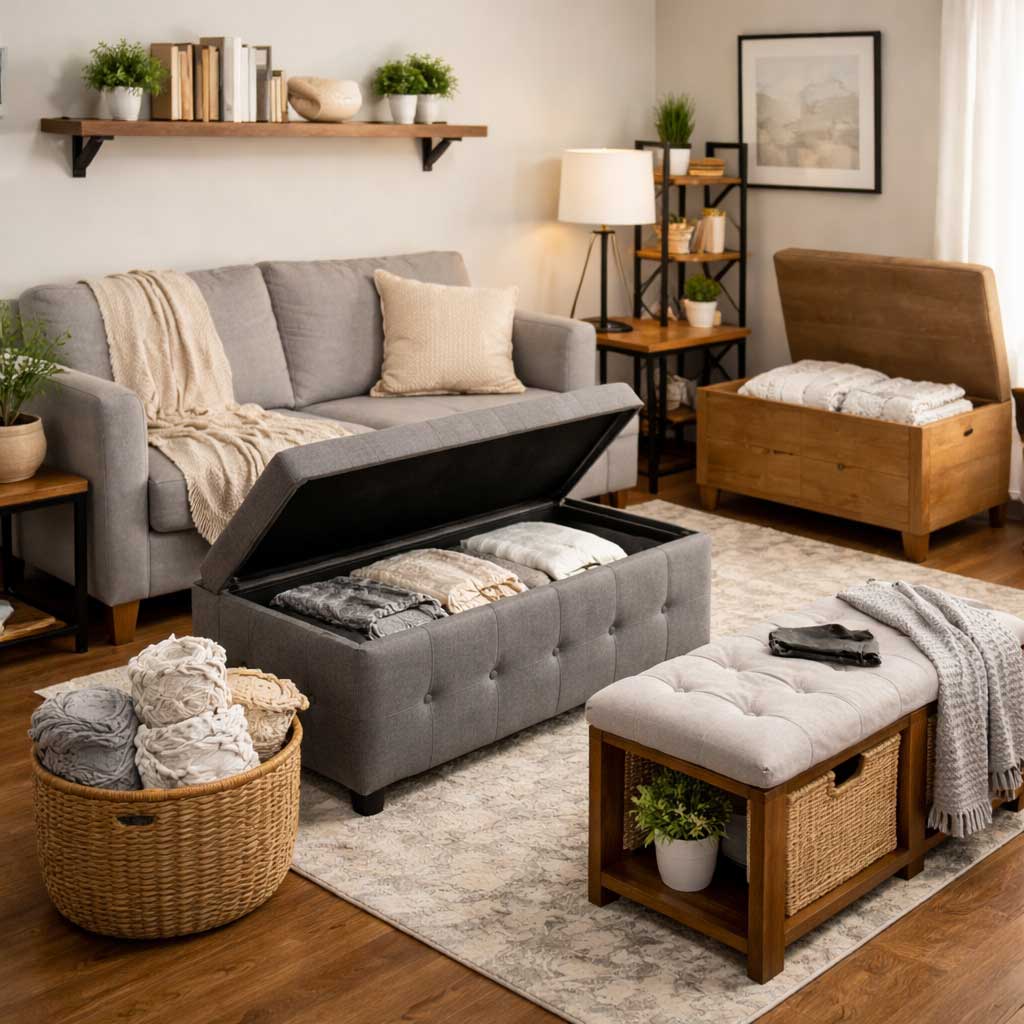
Soft elements like pillows, throws, and area rugs can help make the space feel inviting, but they work best when they stay edited. A few intentional pieces often feel warmer than a room packed with every comfort item at once. Storage can help here too by giving blankets and soft goods a place to go when they are not being used.
A cleaner setup usually feels better for both TV watching and daily use. The room stays more comfortable when every item supports the way you actually live rather than simply filling the space. In a small living room, coziness usually comes from thoughtful choices, not maximum quantity.
Common Mistakes That Make a TV-Friendly Living Room Harder to Use
One common mistake is choosing a TV stand or sofa that is too large for the room. Even one oversized piece can throw off the whole layout and make the room feel tighter than it should. Another problem is letting the TV area dominate every decision, which can turn the living room into a one-purpose space instead of a comfortable everyday room.
People also often forget about everyday surface needs. A room may have a sofa and TV lined up correctly, but if there is nowhere practical to place a drink, phone, or remote, the setup will still feel less usable. Blocking walking paths is another major issue. A room does not work well just because it points at the screen. It has to be easy to live in too.
The best TV-friendly living rooms avoid extremes. They do not overbuild around the TV, and they do not treat viewing as the only purpose of the room. They balance comfort, function, and movement more carefully.
Best Features to Look for in Small Living Room TV Setups
When choosing pieces for a small living room TV setup, compact scale should be one of the first priorities. Furniture should fit the room without overwhelming it. Comfortable viewing angles matter, but so does the ability to move through the room naturally and use it for more than one thing.
Hidden or controlled media storage is another major advantage because it reduces the clutter that tends to collect around electronics. Flexible furniture is helpful too. A table that adds storage, a seat that fits the room well, or lighting that supports both relaxation and function can make the whole setup feel more complete.
Apartment-friendly design matters throughout. The best TV setups usually feel like part of the living room, not like a separate entertainment station dropped into it. In a small apartment, that kind of balance is what keeps the room feeling useful all day instead of only when the TV is on.
Final Thoughts on Setting Up a Small Living Room for TV Watching and Everyday Use
A small living room works best when TV watching is part of the room’s function, not the whole identity of the room. The most successful layouts balance screen comfort, seating, walking flow, and everyday practicality without letting one element overpower the others.
The best setups usually rely on right-sized seating, controlled media storage, thoughtful table placement, and enough open space for the room to stay comfortable beyond entertainment. That balance matters more in an apartment because the living room often has to do several jobs at once.
When the layout supports both screen time and normal daily life, the room feels much easier to use. That is the real goal: a living room that is comfortable for watching TV, but still feels like a place you actually want to live in the rest of the day too.
Our Top Living Room TV Setup Picks for Small Apartments
A small living room feels better for both TV watching and daily use when furniture supports comfort, storage, and layout without taking over the room. The best pieces usually stay compact, practical, and easy to live with in an apartment setting.
Best overall choice:
Apartment-size sofa — A compact sofa gives you comfortable viewing without overwhelming the room or crowding the layout.
👉 Check price on Amazon
Best TV-area furniture:
Media console — A right-sized media console helps keep electronics, remotes, and accessories contained while supporting the TV area cleanly.
👉 Check price on Amazon
Best layout-friendly option:
Corner TV stand — A corner stand can help free up wall space and improve flow in a smaller or more awkward living room layout.
👉 Check price on Amazon
Best support table:
Lift-top coffee table — A lift-top table adds surface flexibility and hidden storage, making the room more useful for both TV time and everyday living.
👉 Check price on Amazon
Living rooms that need a little more flexibility may also benefit from a compact side table or accent chair, especially when the goal is to make the room comfortable without crowding it.
FAQ
How do you arrange a small living room around a TV?
The best way to arrange a small living room around a TV is to choose a natural viewing wall, keep the main seat facing the screen comfortably, and protect walking space so the room still functions well every day.
What is the best sofa setup for a small TV room?
The best sofa setup for a small TV room is usually a compact sofa or loveseat that faces the screen naturally without overwhelming the room or blocking important walkways.
How far should a couch be from a TV in a small living room?
The ideal distance depends on the TV size, but in a small living room the couch should be far enough away for comfortable viewing while still allowing the room to function without feeling too tight.
How do you make a small living room work for both TV and daily use?
A small living room works for both TV and daily use when the seating, media storage, tables, and layout are balanced so the room stays comfortable, easy to move through, and practical even when the TV is off.