How to Organize Toiletries in a Small Bathroom
Toiletries are some of the hardest bathroom items to keep organized because they are small, numerous, and used at different times throughout the day. In a small apartment bathroom, products like toothpaste, skincare, hair items, razors, cotton swabs, deodorant, and backup supplies can quickly spread across the sink, drawers, shower ledges, and cabinets. Even when the bathroom itself is clean, too many loose toiletries can make the whole space feel cluttered and harder to use.
The good news is that organizing toiletries in a small bathroom does not require a major renovation or a lot of extra square footage. The key is to group similar items, keep only daily essentials in prime areas, and use compact storage solutions like vanity organizers, sink trays, bins, shelves, and drawer inserts that fit the scale of the room. With the right system, a small bathroom can feel much calmer, more functional, and much easier to maintain.
For compact product storage ideas, start with Best Space-Saving Toiletry Organizers for Small Bathrooms.
If you need better under-sink organization, check out Best Bathroom Vanity Organizers for Small Spaces.
For sink-area control, see Best Bathroom Counter Organizers for Small Spaces.
This guide is part of our Small Apartment Bathroom Solutions collection.
Why Toiletries Create Clutter So Quickly in a Small Bathroom
Toiletries cause clutter faster than many other bathroom items because there are so many different categories of them, and most are small enough to get scattered easily. A few bottles, tubes, jars, razors, and grooming tools may not seem like much on their own, but together they can take over a bathroom quickly. In a compact apartment bathroom, that buildup becomes noticeable much faster because there are fewer drawers, fewer cabinets, and less empty surface area to absorb the overflow.
The problem often gets worse because daily-use products and backup items end up mixed together. Open toothpaste, extra toothpaste, current skincare, backup skincare, and travel-size products all get stored in the same drawer or cabinet, which makes the bathroom feel fuller than it really is. When small items are not grouped clearly, it becomes harder to find what you need and easier to leave products out in the open.
Loose toiletries also make the room look messier than it actually is. Even a clean sink can feel cluttered when a handful of products are spread across the counter with no defined home. That is why organizing toiletries is not just about adding storage. It is about creating clear categories and keeping the most-used products in the most practical places.
Start by Sorting Toiletries by Category and Frequency of Use
The first step in organizing toiletries is not buying containers. It is figuring out what you actually have and how often you use it. This matters because a bathroom full of mixed products cannot be organized well until you separate daily-use items from occasional-use items and backup supplies.
Start by sorting toiletries into broad categories like dental care, skincare, hair care, shaving, body care, cosmetics, and backup products. Then separate those groups again by how often you use them. Daily essentials should stay easiest to access, while less frequently used items can go into less convenient spaces. This makes it much easier to decide what belongs near the sink, what belongs under the vanity, and what should move elsewhere.
This is also the best time to get rid of expired products, nearly empty bottles you are not using, duplicates you forgot about, or travel-size items that no longer need prime storage space. Small bathrooms work best when the products inside them are edited down to what actually supports your routine. The fewer unnecessary toiletries you keep in active storage, the easier the rest of the bathroom becomes to organize.
Keep Daily Toiletries Close to the Sink Without Overcrowding It
The sink area is usually the most convenient spot for daily toiletries, but it is also the fastest place for clutter to build. The best approach is to keep the counter limited to the few products you actually use every morning and evening, then contain those products so they do not spread out across the vanity.
A small tray, compact organizer, or contained sink setup works much better than leaving individual items loose. When soap, toothpaste, toothbrushes, and a few daily-use products all have a defined place, the sink immediately feels cleaner and easier to wipe down. If you need better structure for this area, read Best Bathroom Counter Organizers for Small Spaces.
Small essentials also need to stay contained. Toothbrushes and cups should not drift around the counter, and soap should not be taking up more space than necessary. For more compact everyday setups, take a look at Best Soap Dispensers and Sink Caddies for Small Bathrooms.
The goal is to make the sink area functional without turning it into general storage. In a small bathroom, the counter should support your routine, not hold every toiletry you own. That single shift can make the entire room feel noticeably calmer.
Use Vanity and Under-Sink Storage More Efficiently
Many small bathrooms already have some usable storage under the sink, but it often goes to waste because toiletries are piled together without any real structure. Bottles get mixed with small loose items, daily products disappear behind backups, and half the cabinet becomes hard to use because there is no separation between categories.
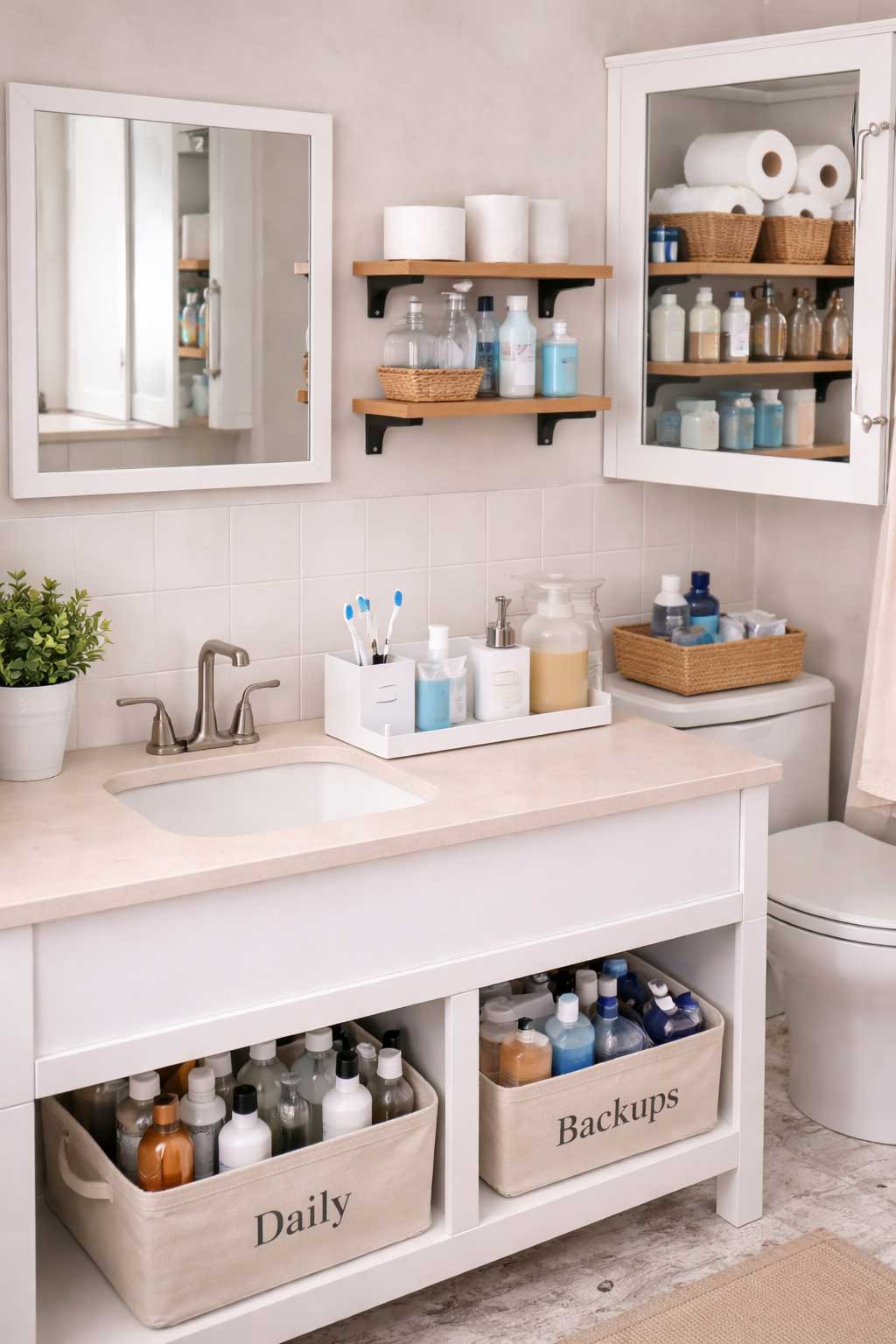
A better approach is to divide this area into zones. Keep similar products together and use bins, trays, or stacked organizers to stop categories from blending into each other. If you want better structure under the vanity, browse Best Bathroom Vanity Organizers for Small Spaces.
It also helps to think in terms of access. Items you use every day or every week should stay in the most convenient part of the cabinet, while backup products or occasional-use toiletries can move farther back or higher up. Taller bottles should not be swallowing small items, and loose products should not be floating around uncontained.
When under-sink storage is organized well, it takes a huge amount of pressure off the sink and counter area. Instead of forcing all your products into the most visible part of the bathroom, you create a system where toiletries are easy to find, easy to return, and much less likely to turn into clutter.
Move Overflow Toiletries to Vertical Storage
When the sink and vanity are already doing as much as they can, vertical storage is often the easiest way to expand toiletry capacity without making the bathroom feel more crowded. In a small apartment bathroom, walls, mirror space, and the area above the toilet are often the best places to store overflow items.
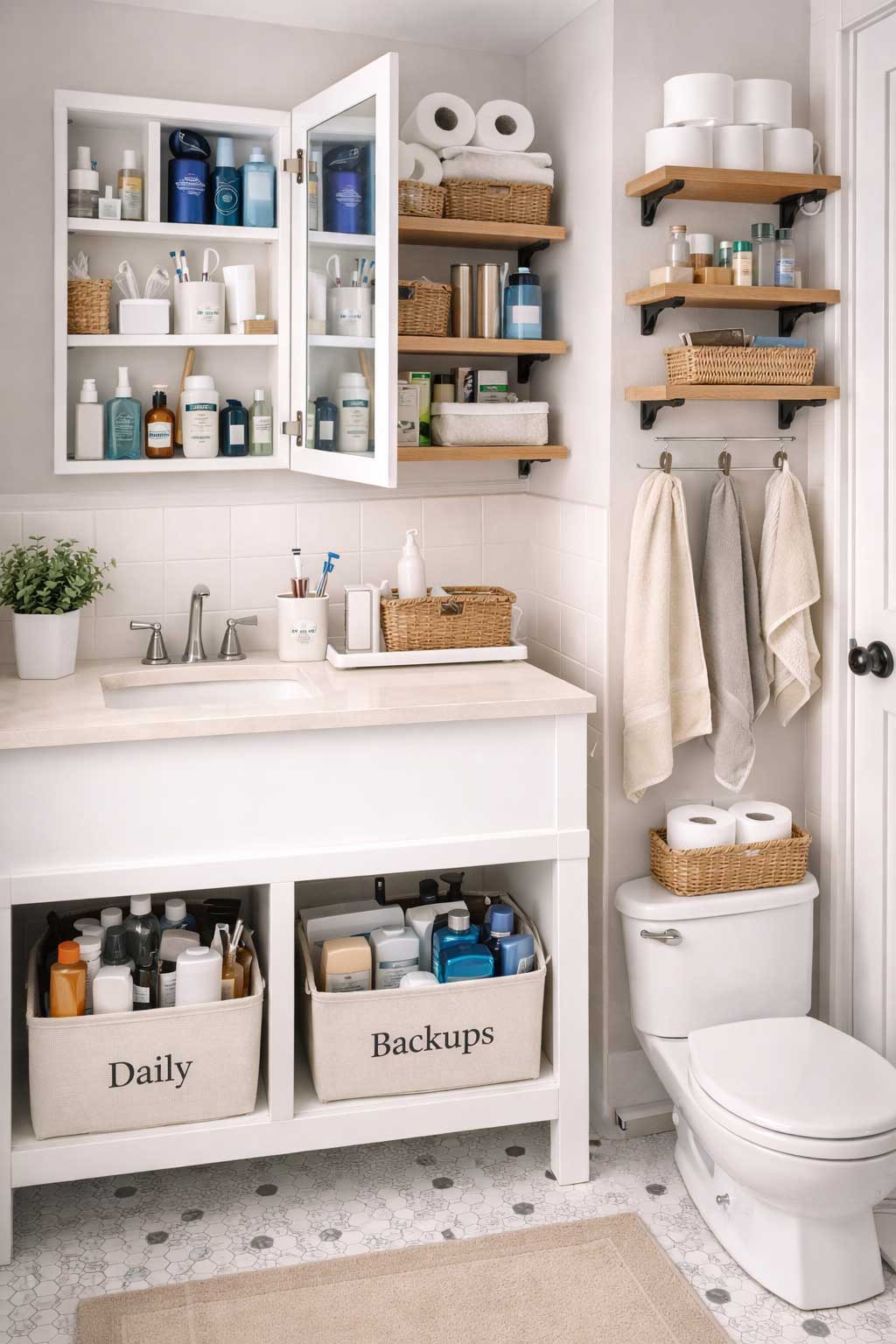
Wall shelves can hold backup toiletries, less-used products, and neatly grouped bins without taking up floor space. This is especially useful when the vanity is small or the bathroom has very limited cabinet storage. If you want renter-friendly storage ideas for vertical areas, check out Best Wall-Mounted Bathroom Shelves for Apartments.
A mirror cabinet can also make a big difference because it combines a feature you already need with concealed storage for smaller personal care items. For hidden vertical storage, see Best Bathroom Mirror Cabinets for Small Spaces.
The space above the toilet is another strong option for overflow toiletries, especially products that do not need to stay within arm’s reach of the sink every day. Moving extra storage upward helps keep counters clearer and makes the room feel more balanced instead of overloaded.
Use the Shower Area Wisely for Bath and Hair Products
Shower products deserve their own zone instead of spilling into the rest of the bathroom. Shampoo, conditioner, body wash, razors, face wash, and other bath-related items often create clutter outside the shower simply because there is no well-defined place for them inside it.
The best solution is to keep only shower-specific products in the shower and give them a contained storage setup. This keeps the tub edge, shower floor, and nearby sink area from becoming overflow space for bottles and grooming items. If you want more organized shower storage, take a look at Best Shower Caddies for Small Apartments.
It also helps to be selective. If a bottle is rarely used in the shower, it probably does not need to stay there full time. Keeping only the products you actually reach for during bathing helps the shower feel cleaner and keeps excess toiletries from spreading to other parts of the bathroom.
A dedicated shower zone also improves the rest of the room. When bath and hair products stay where they belong, the sink and vanity can focus on other categories of toiletries instead of becoming catch-all storage for everything.
Store Backup Toiletries Away from Prime Daily-Use Areas
One of the biggest toiletry-storage mistakes is letting backup items compete with the products you use every day. Extra toothpaste, refill soap, unopened shampoo, spare razors, and bulk-bought toiletries do not need to live in the most convenient storage spots. When they do, they crowd out the products you actually need and make the bathroom feel fuller than it needs to be.
Backup toiletries should usually go into higher shelves, farther corners of the vanity, less convenient cabinets, or a vertical overflow zone. The point is not to hide them forever. It is to keep them accessible without letting them take over prime real estate. In a small bathroom, the best storage spots should always be reserved for active-use items.
This also helps prevent overstocking the room. When backups are stored separately, it becomes easier to see how much you actually have and avoid stuffing every shelf with duplicates. A small bathroom works better when it is stocked intentionally rather than packed with every extra product you own.
Make Toiletries Easier to Maintain in a Shared Bathroom
Toiletries become even more difficult to manage when more than one person uses the same bathroom. Shared spaces tend to get messy quickly when personal products overlap, sink storage becomes communal by default, and no one is sure which items belong where.
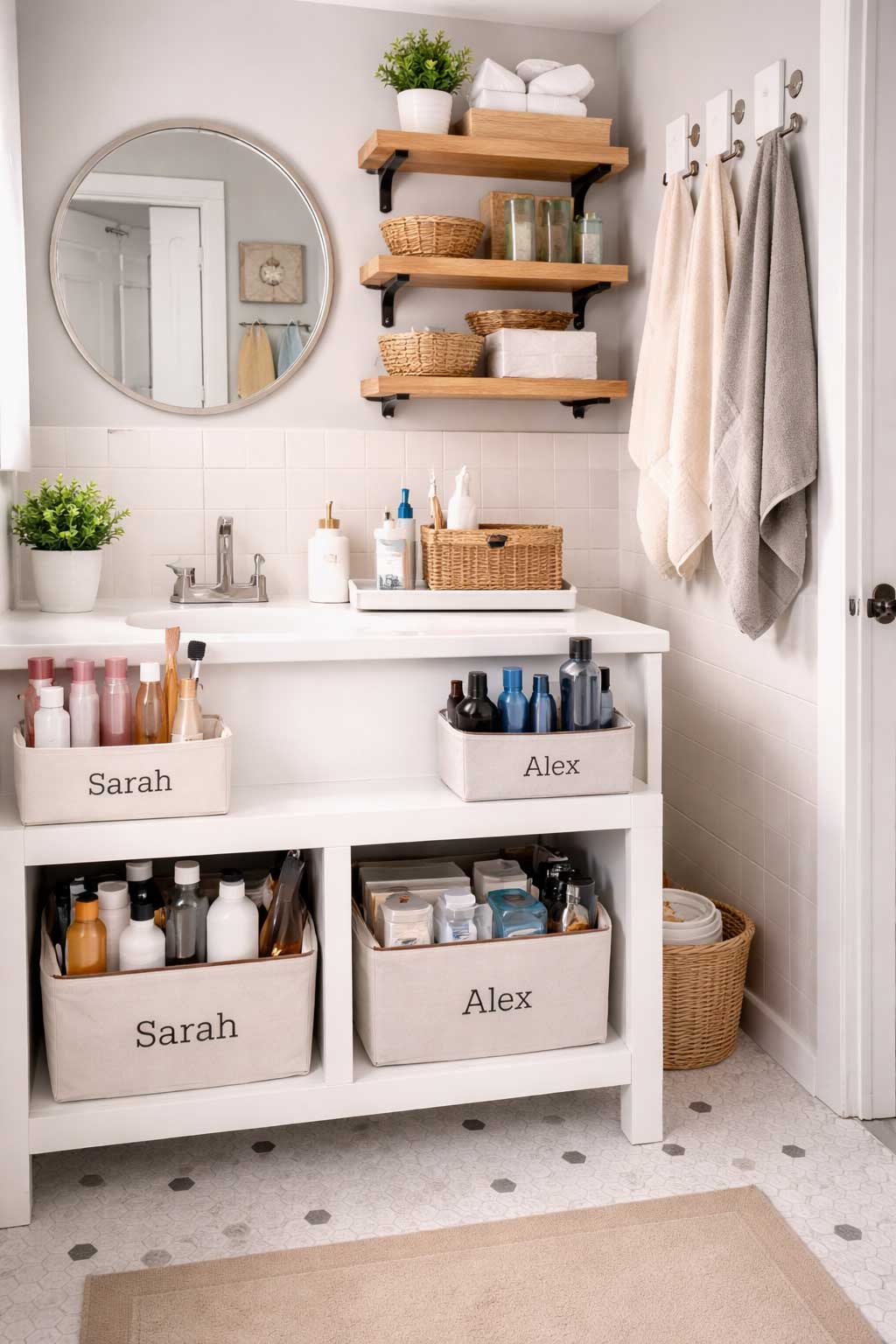
The easiest fix is to give each person a defined toiletry zone. That might be a separate bin under the sink, a drawer section, a portable caddy, or a dedicated shelf. Grouping one person’s products together makes the bathroom easier to use and much easier to reset. For better shared-item organization, see Best Space-Saving Toiletry Organizers for Small Bathrooms.
It also helps to keep shared essentials clearly separate from personal care products. Hand soap, shared cotton swabs, or household bathroom basics can stay in one central area, while personal skincare, grooming tools, and routines should live in assigned spots. In a shared apartment bathroom, simple separation usually matters more than having a lot of storage.
Common Mistakes That Make Toiletry Storage Harder
One common mistake is keeping too many products out at once. Even useful items can make a bathroom feel crowded when they all stay visible on the sink, vanity, or toilet area. A better setup limits visible toiletries to the true daily essentials and stores everything else in organized zones.
Another mistake is using one large bin for everything instead of dividing products into smaller categories. Large containers may look tidy at first, but they often become catch-all clutter zones that make it harder to find what you need. Smaller categories almost always work better in a compact bathroom.
People also tend to store daily-use and backup items together, which creates unnecessary crowding in the most-used parts of the room. Finally, many bathrooms ignore vertical space. When walls, mirrors, and the toilet area are left unused, too much pressure falls on the sink and vanity, and clutter builds much faster.
Best Features to Look for in Toiletry Organizers for Small Bathrooms
When choosing toiletry organizers for a small bathroom, compact size should be one of the first priorities. A good organizer should create order without overwhelming the space. In a compact apartment bathroom, scale matters just as much as storage capacity.
Easy-to-clean materials are also important because toiletries can spill, leak, or leave residue over time. Smooth, wipeable surfaces tend to work better than anything too textured or absorbent. Organizers should also make category separation obvious. The more clearly products are grouped, the easier the system becomes to maintain.
Stackable or vertical designs can be especially helpful because they create more usable storage without spreading products across too much surface area. Flexible organizers are also valuable since bathrooms often hold a mix of bottles, tubes, jars, razors, and grooming tools that do not all fit the same type of container. The best toiletry organizers make that mix easier to manage without adding visual clutter.
Final Thoughts on Organizing Toiletries in a Small Bathroom
Organizing toiletries in a small bathroom does not require more square footage as much as it requires a better system. When products are sorted by category, daily essentials stay close to the sink, and backup items move out of prime storage zones, the room becomes much easier to manage.
The best toiletry setups are usually simple. They rely on clear groupings, compact organizers, and storage zones that match how often products are actually used. That approach keeps the bathroom from feeling overloaded and makes it easier to stay tidy without constant effort.
A small bathroom may never have unlimited storage, but it can still feel clean, efficient, and calm when toiletries have obvious homes. The goal is not to hide every product. It is to keep each item where it makes the most sense so your bathroom supports your routine instead of getting in the way.
Our Top Toiletry Organization Picks for Small Bathrooms
Toiletries are easier to manage when storage keeps categories separated, daily essentials accessible, and backup items out of the way. The best organizers for a small bathroom usually stay compact, easy to clean, and practical for everyday routines.
Best overall choice:
Space-saving toiletry organizer — A compact organizer helps keep personal care products grouped together without taking over the sink or vanity.
👉 Check price on Amazon
Best under-sink upgrade:
Bathroom vanity organizer — A structured under-sink organizer makes it easier to separate bottles, grooming items, and backup toiletries.
👉 Check price on Amazon
Best sink-area solution:
Countertop bathroom organizer — A small counter organizer helps contain daily-use items so the sink area stays cleaner and easier to use.
👉 Check price on Amazon
Best vertical storage addition:
Wall-mounted bathroom shelf — A simple wall shelf helps move overflow toiletries off the counter and into a more efficient storage zone.
👉 Check price on Amazon
Bathrooms with especially limited cabinet space may also benefit from a mirror cabinet or shower caddy, especially when the goal is to keep different categories of products from spreading into every part of the room.
FAQ
How do you organize toiletries in a small bathroom?
The best way to organize toiletries in a small bathroom is to sort them by category and frequency of use, keep daily essentials near the sink, store backups separately, and use compact organizers for each type of product.
Where should toiletries be stored in a bathroom?
Toiletries should usually be stored near the sink if they are used daily, under the vanity if they need hidden storage, in the shower if they are bath-related, and on shelves or vertical storage if they are overflow or backup items.
What should stay on a bathroom counter?
Only the most-used essentials should stay on a bathroom counter, such as hand soap, toothbrush storage, and a few compact daily-use products. Everything else should be stored elsewhere to reduce clutter.
How do you store backup toiletries in a small bathroom?
Backup toiletries are usually best stored away from prime daily-use areas, such as on higher shelves, in less convenient cabinet space, or in vertical overflow storage so they do not crowd the sink or vanity.