How to Make a Small Living Room More Functional for Guests
A small living room can feel hard to manage when guests come over, especially if the space already has to balance everyday seating, storage, TV watching, and normal apartment traffic flow. In many apartments, there is not enough room for extra furniture to stay out all the time, but the room still needs to feel comfortable when friends or family stop by. Without a better setup, a small living room can start to feel tight, awkward, or less welcoming than it should.
The good news is that a small living room does not need to be large to work well for guests. The key is to make the space more flexible instead of simply trying to add more furniture. With the right seating choices, tables, layout adjustments, and storage strategy, a compact apartment living room can feel more open, more social, and much easier to use when other people are in it.
For seating that fits smaller layouts, start with Best Apartment-Size Sofas Under 80 Inches.
If you need flexible extra seating, check out Best Accent Chairs for Small Living Rooms.
For tables that help guests feel more comfortable, see Best C-Shaped Side Tables for Small Apartments.
This guide is part of our Small Apartment Living Room Solutions collection.
Why Small Living Rooms Often Feel Harder to Use with Guests
A small living room can feel perfectly fine for everyday life and still become awkward the moment other people walk in. That usually happens because daily routines do not always need the same kind of layout that social time does. When you live alone or with one other person, the room may work well enough for watching TV, relaxing, or using a laptop. Once guests arrive, though, the same setup may reveal all its weak points at once.
Conversation is one of the biggest issues. Many small living rooms are arranged mainly around the TV, which means the seating may not naturally support talking, eye contact, or a relaxed group setup. If every seat points in one direction and there is nowhere flexible to shift, the room can feel less social than it should.
Walking space matters more too. A room that feels passable for daily use can suddenly feel cramped when multiple people are moving through it, sitting down, standing up, and reaching for drinks or personal items. That is why a guest-friendly small living room usually needs more intentional planning than a room designed only for everyday routines.
Start by Thinking About How Guests Actually Use the Room
The best guest-friendly living rooms are based on how people really use the space, not just how the room looks in photos. Most guests do not need a huge setup. They usually need a comfortable place to sit, a little surface space nearby, and a room that feels easy to move through and talk in. When you focus on those needs, the layout becomes much easier to improve.
It helps to think beyond TV watching. Even if the living room is centered around entertainment most of the time, guests often want the room to support conversation, casual drinks, snacks, and a more relaxed group feel. That means the room should not work only when everyone is facing the screen.
It is also worth noticing what stands out once guests arrive. Everyday clutter that you may ignore when alone suddenly becomes much more visible when someone else is in the room. That is why a guest-friendly layout is not just about extra seating. It is also about making the room feel calmer, more usable, and less dominated by the little things that collect there during normal daily life.
Use Flexible Seating Instead of Overfilling the Room
One of the biggest mistakes in a small living room is trying to keep permanent seating for every possible guest scenario. That usually makes the room feel crowded all the time just to solve an occasional problem. A better approach is to use seating that works well for everyday life but can also flex when other people come over.
A right-sized sofa is usually the starting point. In many apartments, an apartment-size sofa works better than a larger sectional because it gives the room more breathing room while still offering comfortable primary seating. If you want options that fit tighter layouts better, browse Best Apartment-Size Sofas Under 80 Inches.
Accent chairs can help too because they add a seat without creating the same visual weight as another sofa-sized piece. They also tend to be easier to move slightly when you want the room to feel more conversational. For flexible, guest-friendly options, take a look at Best Accent Chairs for Small Living Rooms.
Occasional seating can come from smaller pieces as well. Ottomans, stools, or moveable seats often work better than trying to keep the room full of permanent furniture. In a compact living room, flexibility usually feels much better than maximum seating count.
Make the Layout Better for Conversation
A guest-friendly living room should not feel like a waiting room where everyone is lined up facing one direction. It should feel natural for talking. In a small space, that often comes down to subtle adjustments rather than a complete redesign.
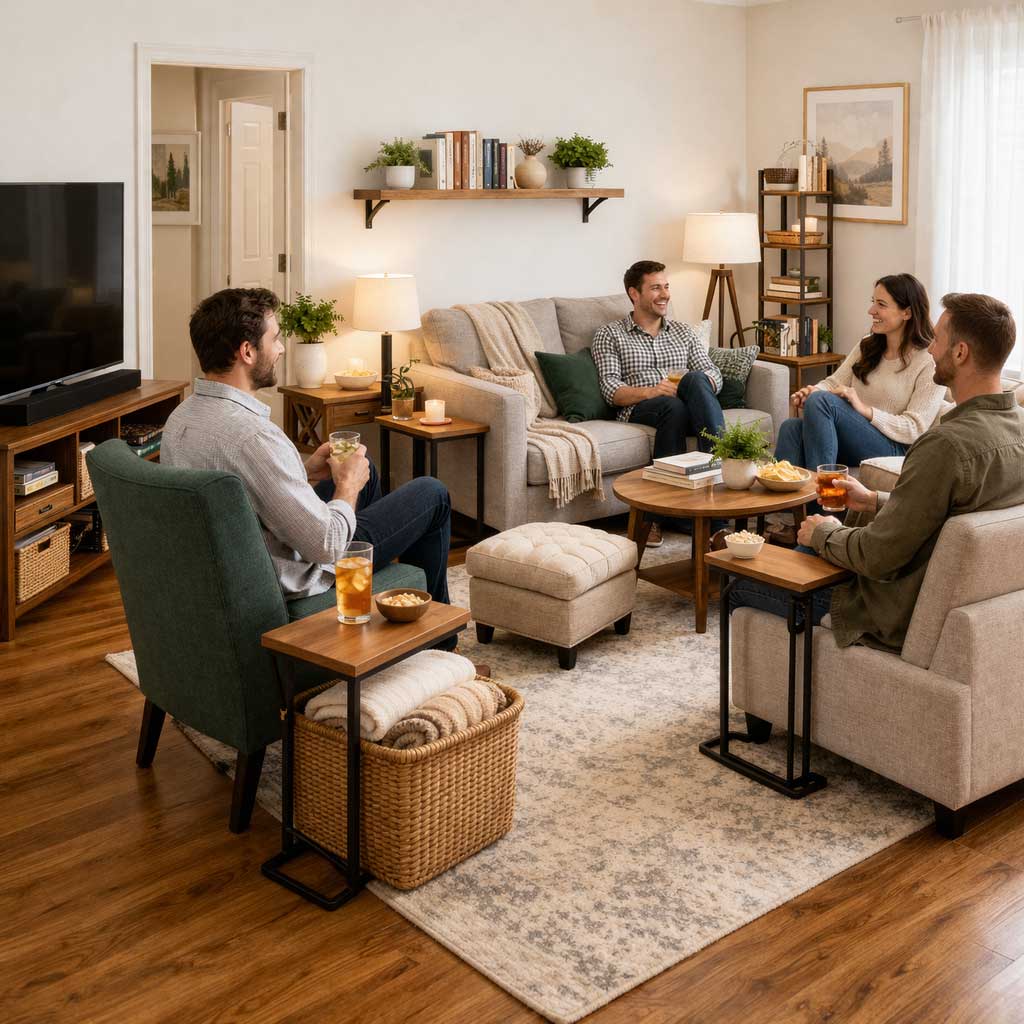
The main seating area should still work with the TV, but it should also allow people to face each other easily enough to hold a conversation. Even a slight angle in a chair or a better coffee table position can make the room feel more social. The goal is not to remove the TV from the equation. It is to keep it from being the only thing the room is set up for.
Coffee tables matter here too. A table that supports the seating group without becoming a barrier usually works best. Round or softer-shaped tables often help small rooms feel easier to move around and easier to gather around. If you want options that support a more flexible seating group, check out Best Round Coffee Tables for Small Living Rooms.
A room that feels good for conversation almost always feels more functional for guests. In a small apartment, even minor layout shifts can make that happen.
Give Guests Easy Surface Space Without Cluttering the Room
One of the simplest ways to make a living room more guest-friendly is to make sure people have somewhere easy to put a drink, phone, plate, or small personal item. Guests do not usually need a large table beside every seat, but they do need the room to feel usable. Without enough surface support, even a nice-looking room can feel inconvenient.
Small side tables often solve this problem better than larger permanent furniture. A compact C-shaped table, for example, can slide close to the sofa when needed and stay out of the way when it is not. If you need flexible table support for guest use, see Best C-Shaped Side Tables for Small Apartments.
Nesting tables can also work well because they give you more flexibility without requiring a big permanent footprint. The room feels lighter most of the time, but you still have extra usable surfaces when guests are over. In a small living room, that kind of flexible support is usually much better than trying to keep the room filled with tables all the time.
Keep the Room Open Enough to Move Through Comfortably
Guests notice flow immediately, even if they do not think about it consciously. A room can have enough seating and decent furniture, but if people have to squeeze between the coffee table and sofa or carefully step around extra pieces, the whole space will feel less comfortable. In a small apartment, that is one of the fastest ways for a room to feel less welcoming.
Clear walkways around the main seating area matter a lot. The room should be easy to enter, easy to cross, and easy to sit down in without awkward maneuvering. Furniture that crowds entry paths or blocks the most natural route through the room usually makes the space feel tighter than it really is.
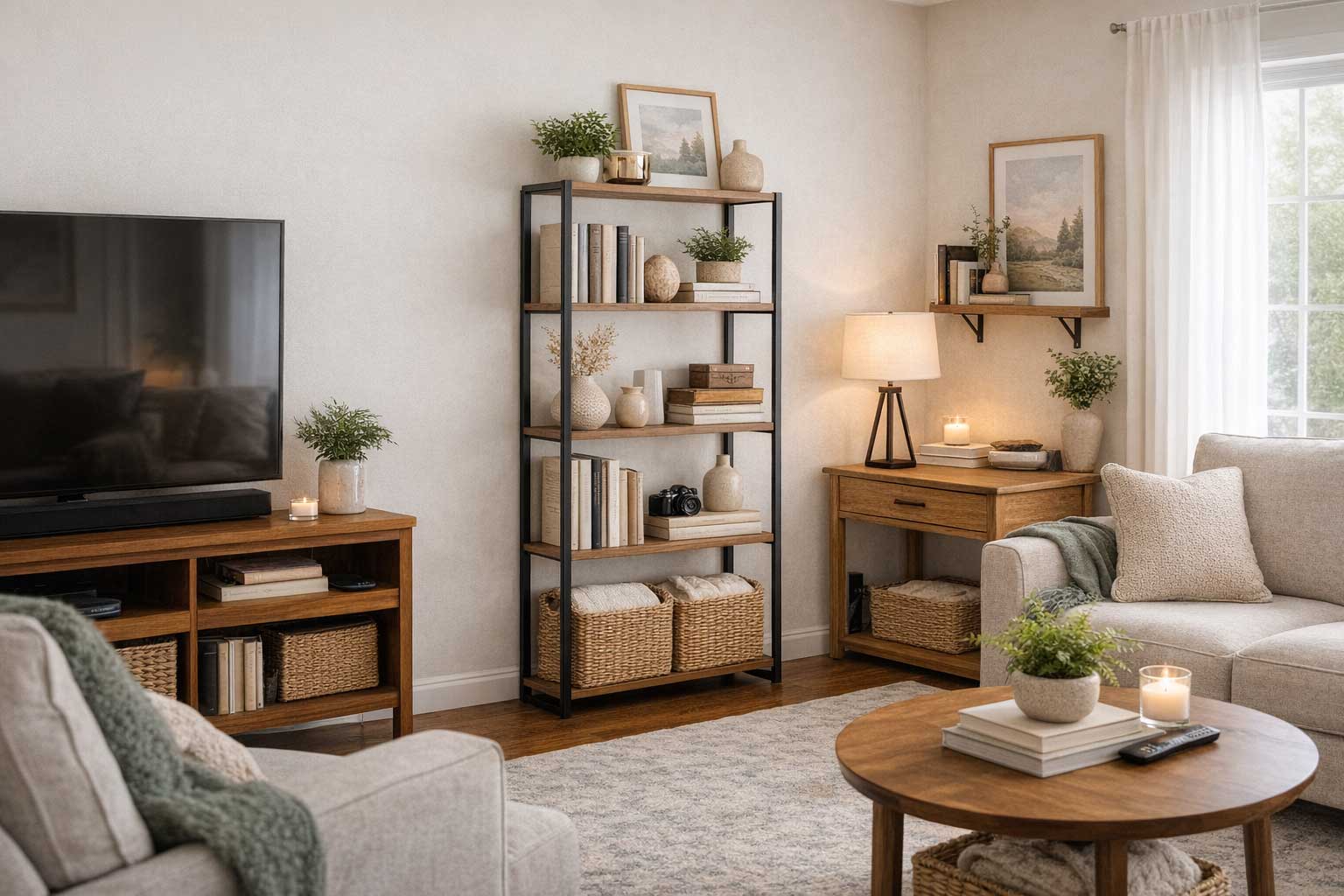
Open floor area helps too. A small living room feels more welcoming when at least some of the floor remains visually open. Wall-based storage and narrower pieces often help with this because they provide function without pushing farther into the room. The more comfortably people can move through the space, the easier the room feels to gather in.
Use Hidden Storage to Reduce Pre-Guest Clutter Fast
In many apartments, the main thing stopping a living room from feeling guest-ready is not the furniture. It is the everyday clutter. Remotes, chargers, blankets, mail, random personal items, and small living room overflow can make the room feel messier and less welcoming even when the seating and layout are basically fine.
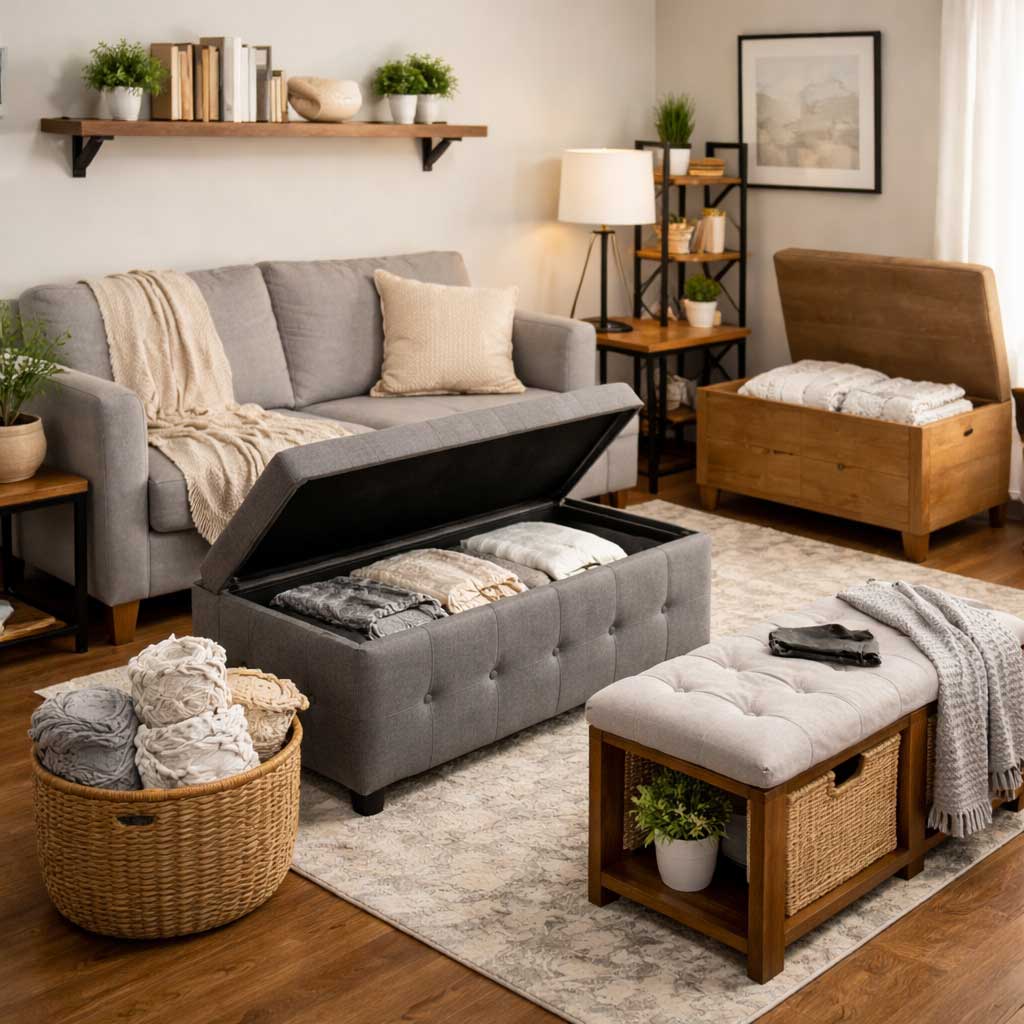
That is why hidden storage is so useful. It allows the room to transition quickly from daily life to guest-ready without requiring a full cleaning project every time someone comes over. Storage benches are especially helpful because they can hide blankets, extra soft goods, and everyday overflow while still functioning as useful furniture. If you need faster cleanup support, browse Best Living Room Storage Benches for Small Apartments.
Compact cabinets can do a similar job for less attractive categories like papers, cords, or miscellaneous living room items. The real value is speed. A room that can be reset quickly almost always feels more functional for guests. In a small apartment, that same hidden storage also makes everyday life easier.
Use Lighting to Make the Room Feel More Comfortable and Social
Lighting changes how a room feels just as much as layout does. A small living room with harsh overhead lighting can feel stiff and flat, while softer layered lighting usually feels more comfortable and more inviting when people are over. That matters because guests respond to atmosphere even before they notice the furniture details.
Lamps are especially useful here because they create a more relaxed feel without requiring major changes to the room. A floor lamp or table lamp can soften the space and make it feel more intentionally arranged for conversation and comfort. If you want options that help create a warmer guest-ready feel, take a look at Best Table Lamps for Small Living Rooms.
Lighting should support both visibility and mood. The room still needs to function, but it should not feel clinical or overly bright. In a small living room, better lighting often makes the space feel more social, more polished, and more welcoming with very little effort.
Make the Room Feel Welcoming Without Overdecorating It
A welcoming room does not need a lot of extra décor. In fact, too many small decorative items often make a compact space feel busier and less usable. A guest-friendly small living room usually feels best when it is comfortable, edited, and intentional rather than heavily styled.
A few comfort details usually go farther than many scattered ones. A soft throw, a clean coffee table, a comfortable cushion, or one or two well-placed lamps can make the room feel warm without crowding it. The same is true for decorative accents. Fewer, better-chosen pieces usually feel more relaxed than lots of little items competing for attention.
A cleaner setup also tends to feel more inviting because it makes the room easier to understand at a glance. Guests can see where to sit, where to set something down, and how to move through the room without visual clutter getting in the way. In a small apartment, simplicity often feels more welcoming than abundance.
Common Mistakes That Make a Small Living Room Less Functional for Guests
One common mistake is keeping too much furniture in the room all the time. It may feel like extra seats or tables will help, but if they crowd the layout, they often make the room less comfortable for everyone. Another issue is letting the TV layout control everything. A room that only works for watching the screen often feels less social and less flexible when guests are present.
Not having enough surface space is another frequent problem. Guests need somewhere to place simple things, and when the room does not offer that, the setup feels less functional quickly. Letting everyday clutter stay visible is another issue. Even a well-furnished living room will feel less guest-friendly if chargers, blankets, papers, and random daily overflow are sitting out everywhere.
The best guest-ready small living rooms usually avoid extremes. They do not overfill the room, and they do not rely on one oversized piece to do everything. They stay flexible, clear, and comfortable.
Best Features to Look for in Guest-Friendly Small Living Room Furniture
When choosing furniture for a guest-friendly small living room, compact scale should be one of the first priorities. Every piece should fit the room naturally instead of dominating it. Flexible seating value matters too. A chair, stool, or ottoman that can support occasional guests without permanently crowding the room is often more useful than a larger fixed piece.
Easy-to-move furniture is another advantage because small rooms often need slight adjustments when more people are present. Hidden storage support is also valuable since quick cleanup helps the room feel much more guest-ready. Everyday comfort matters just as much as guest function, because the best living room furniture still has to work for normal life the rest of the time.
In a small apartment, the most useful guest-friendly furniture usually earns its place in more than one way. It helps the room feel more social when needed, but it still makes sense when no guests are there.
Final Thoughts on Making a Small Living Room More Functional for Guests
A small living room does not need to be oversized to feel good for guests. It just needs to be more intentional. When the room stays flexible, offers enough seating support, protects walking space, and controls everyday clutter, it becomes much easier to use when other people are in it.
The best guest-friendly living rooms usually rely on a few smart ideas rather than a lot of extra furniture. Right-sized seating, better side-table support, hidden storage, and a more conversational layout often make the biggest difference. Those same upgrades usually improve the room for everyday life too.
That is really the goal. A room that works better for guests should also feel better to live in the rest of the week. In a small apartment, good function usually comes from flexibility, not excess.
Our Top Guest-Friendly Living Room Picks for Small Apartments
A small living room feels more functional for guests when furniture supports conversation, comfort, and everyday flexibility without crowding the room. The best pieces usually stay compact, useful, and easy to live with all the time.
Best overall choice:
Apartment-size sofa — A right-sized sofa creates comfortable primary seating without overwhelming the room.
👉 Check price on Amazon
Best extra seating option:
Accent chair — An accent chair adds guest-friendly seating while keeping the room more flexible than a larger bulky piece.
👉 Check price on Amazon
Best support table:
C-shaped side table — A compact side table helps guests feel more comfortable by giving them a nearby place for drinks or small items.
👉 Check price on Amazon
Best clutter-control upgrade:
Storage bench — A storage bench makes it easier to clear daily clutter fast so the room feels more guest-ready.
👉 Check price on Amazon
Living rooms that need more occasional seating may also benefit from an ottoman or a small movable stool, especially when the goal is to add flexibility without overfilling the space.
FAQ
How do you make a small living room better for guests?
The best way to make a small living room better for guests is to use flexible seating, keep the layout open for conversation and movement, add enough surface space, and reduce visible clutter.
What seating works best for guests in a small apartment?
Seating that usually works best for guests in a small apartment includes a right-sized sofa, one or two compact accent chairs, and flexible options like ottomans or stools when needed.
How do you add extra guest seating without crowding a room?
You can add extra guest seating without crowding a room by using flexible pieces such as accent chairs, ottomans, or stools that support occasional use without permanently overfilling the layout.
How do you make a small living room feel more welcoming?
A small living room feels more welcoming when it has comfortable seating, softer layered lighting, enough surface space for guests, and a cleaner setup that does not feel visually cluttered.