How to Fit a Home Office Into a Small Apartment Without a Separate Room
Creating a home office in a small apartment can feel difficult when you do not have a spare bedroom, a dedicated office, or even an obvious corner to work with. Many apartment residents have to fit a desk setup into a living room, bedroom, dining area, or unused wall space while still keeping the home comfortable and functional. Without a plan, a work area can quickly make the entire apartment feel more crowded, cluttered, and harder to separate from everyday life.
The good news is that you do not need a separate room to create a productive home office. In most small apartments, the best setups come from using underused space more intentionally, choosing compact furniture, and building a work zone that feels integrated instead of forced. With the right layout, even a small apartment can support a practical workspace without taking over the rest of the home.
For desk ideas that fit compact layouts, start with Best Office Desks for Small Apartments.
If you need a wall-based setup, check out Best Wall-Mounted Desks for Small Spaces.
For storage that supports small work areas, see Best Storage Solutions for Small Home Offices.
This guide is part of our Small Apartment Office Solutions collection.
Why Small Apartments Struggle to Fit a Home Office
Small apartments often struggle to fit a home office because nearly every room already has an important job to do. The living room needs to function as a place to relax, the bedroom needs to feel restful, and the dining area may already be pulling double duty for meals, storage, or everyday tasks. When work enters the picture, it can feel like there is nowhere left to put it without disrupting the balance of the home.
The challenge is not always just square footage. It is also about flow. A desk placed in the wrong spot can interrupt walking paths, make a room feel visually crowded, or create the sense that work is taking over the apartment. Even a relatively small desk can feel intrusive if it is fighting the layout instead of working with it.
That is why fitting a home office into a small apartment is really about strategic placement and realistic scale. The best setups do not try to recreate a full corporate office at home. They carve out a focused, functional zone that supports work while still respecting the way the apartment needs to function the rest of the day.
Start by Identifying Space That Is Already Underused
The easiest way to fit a home office into a small apartment is to stop looking for a separate room and start looking for underused space. In many apartments, there are areas that are not doing much right now but could support a compact workstation with the right furniture. That might be a blank wall, a quiet corner, a narrow stretch beside a sofa, or an unused section of a bedroom.
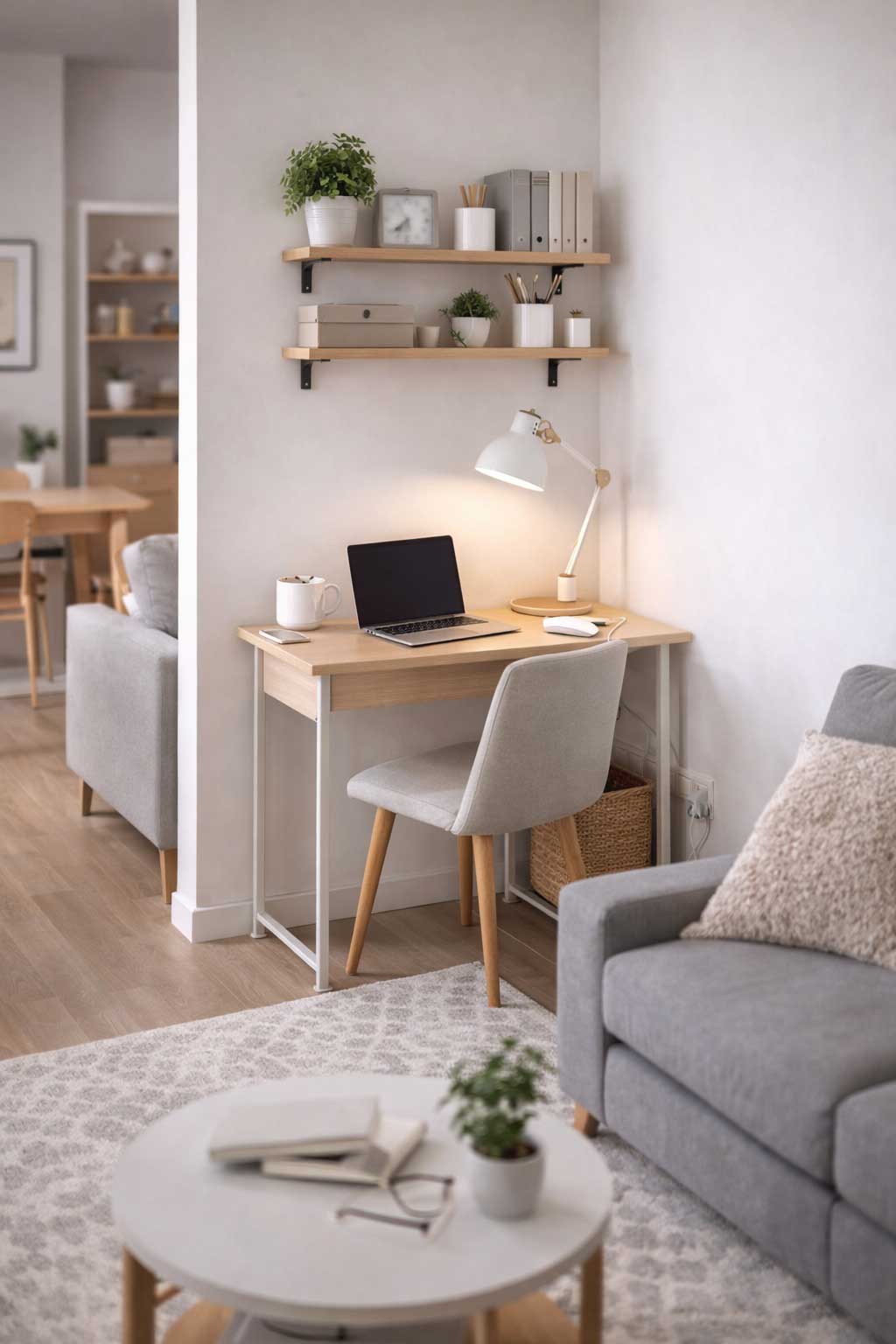
Living room corners often work better than people expect because they allow the workspace to sit slightly outside the main traffic flow. A small desk tucked beside a media console, sofa, or bookshelf can feel surprisingly natural when it matches the scale of the room. Bedrooms can also work if the setup stays visually controlled and does not dominate the sleeping area.
Dining spaces, entry niches, or awkward in-between areas may also have potential. The goal is not to force a work area into the apartment wherever it physically fits. The goal is to find a spot that already feels secondary enough to become a work zone without hurting the rest of the space. In a small apartment, those overlooked areas are often where the best home office setups begin.
Choose a Desk That Matches the Space Instead of Overpowering It
The desk has the biggest impact on whether a small apartment office feels practical or overwhelming. A desk that is too deep, too wide, or too visually heavy can make the entire room feel tighter, even if the rest of the setup is fairly simple. In compact spaces, success usually comes from choosing a desk that fits the room rather than trying to build the room around the desk.
Wall-mounted and foldable desks work especially well when floor space is limited because they reduce visual weight and can keep the setup more flexible. If you want compact desk options, browse Best Wall-Mounted Desks for Small Spaces. Narrow desks can also work well because many people do not actually need a huge workstation. A laptop, notebook, task light, and a few essentials often fit comfortably on a slimmer surface.
It is also worth thinking about whether the desk can serve more than one purpose. In a small apartment, a piece that functions as both a work surface and part of the room’s furniture plan often makes more sense than a bulky standalone office desk. For more compact desk ideas, take a look at Best Office Desks for Small Apartments. The best choice is usually the one that supports your work without making the room feel like it has lost an entire section of living space.
Use Vertical Storage to Support the Work Area
Once the desk is in place, vertical storage usually becomes the best way to make the work area more functional without expanding its footprint. Small apartments rarely have the luxury of wide office setups with multiple cabinets, large shelving units, or sprawling side storage. That is why upward storage tends to work better than adding more pieces on the floor.
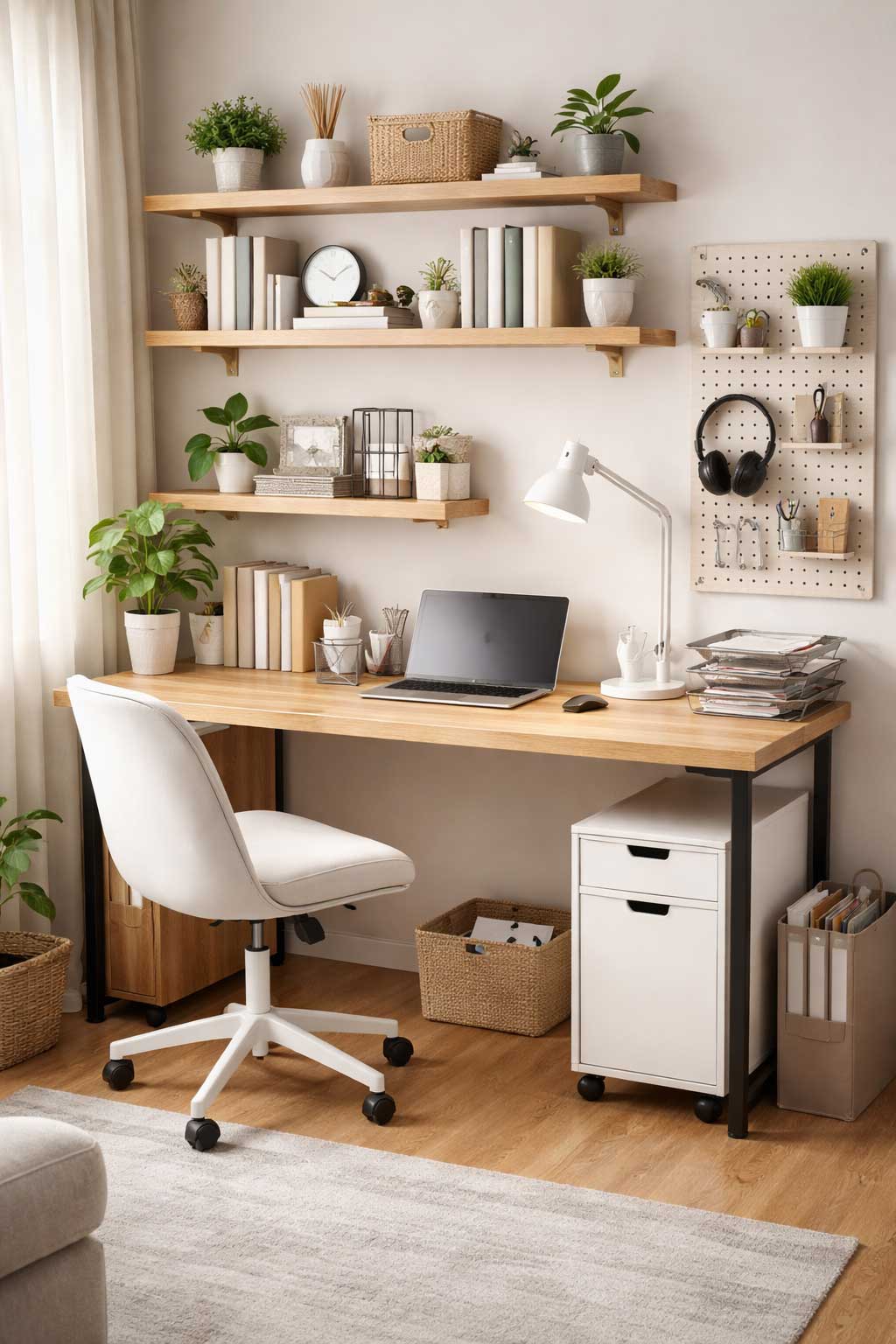
Floating shelves can keep books, office tools, and light decor off the desk while making the workspace feel more complete. If you need simple wall-based storage, see Best Floating Shelves for Small Apartment Offices. Pegboards and desktop shelves can also help because they give frequently used supplies a home without forcing everything onto the work surface.
Vertical storage matters for more than just organization. It also helps define the work zone. In an apartment without a separate office, having a few shelves or a structured wall area above the desk can make the workspace feel more intentional. That visual structure goes a long way in helping a small desk feel like a real office rather than a temporary setup squeezed into a corner.
Make the Office Area Blend Into the Room
A home office in a small apartment usually works better when it blends into the room instead of trying to stand apart from it too aggressively. That does not mean it should disappear completely, but it should feel like part of the apartment rather than a bulky addition that interrupts the overall look of the space.
One of the best ways to do this is by matching the desk and chair to the style and scale of the room. A compact desk with a cleaner profile tends to feel more natural in a living room or bedroom than a large, industrial-looking workstation. Keeping office supplies contained also makes a major difference. When papers, cords, and accessories stay organized, the desk becomes much easier to live with visually. For better small-space office organization, check out Best Desk Organizers for Small Apartment Offices.
Visual clutter matters a lot in small apartments. Even a functional office setup can feel messy if the area around it is overloaded with loose supplies, tangled cords, or random tools left out in the open. The more contained the workspace is, the more likely it is to feel calm, integrated, and manageable on a daily basis.
Use Lighting and Layout to Separate Work from Living Space
Even without a separate room, lighting and layout can help create a sense of separation between work life and home life. This matters because one of the hardest parts of working from a small apartment is feeling like work is always present. A few thoughtful layout choices can help the workspace feel more defined without needing walls or dividers.
A dedicated task light can make a desk feel like its own zone, especially if the rest of the room uses softer ambient lighting. The contrast helps signal that the desk has a purpose. If you want options for this kind of focused lighting, browse Best Task Lights for Small Apartment Offices.
Furniture placement can help too. Sometimes the desk works better when it faces a wall, sits behind a sofa, or occupies a defined corner rather than floating in the middle of a shared room. These subtle layout choices help the workspace feel intentional and can make it easier to mentally shift into work mode. In a small apartment, even minor adjustments in orientation and lighting can improve focus and make the office feel less intrusive.
Prioritize Comfort Without Adding Bulk
A small apartment office still needs to be comfortable, especially if you are spending hours there most days. The challenge is finding ways to improve comfort without adding bulky furniture that overwhelms the room. In many cases, the best ergonomic upgrades are the ones that stay compact and focused.
A streamlined office chair can still provide good support without dominating the setup. The same goes for small ergonomic additions like laptop stands or footrests. These kinds of upgrades can noticeably improve posture and daily comfort while keeping the footprint manageable. If you want support-focused additions for a compact desk, see Best Laptop Stands for Small Apartment Offices.
Comfort should match the scale of the workspace. Oversized chairs, large filing cabinets, or bulky accessories can quickly eat up the limited flexibility a small apartment office needs. A smarter approach is to choose one or two upgrades that directly improve how the setup feels to use. In a compact work zone, thoughtful comfort usually works better than trying to recreate a large traditional office.
Keep Work Supplies Close Without Letting Them Spread Everywhere
Office supplies are often what make a small home workspace feel messy, not the desk itself. Papers, cords, chargers, notebooks, pens, headphones, and mail can spread outward quickly if they do not have obvious homes. In a small apartment, that kind of spillover makes the office feel bigger than it is and makes the rest of the room feel less usable.
The best setup keeps daily supplies close without letting them expand into shared living space. Small storage pieces, contained desktop organizers, and compact filing solutions can make a major difference here. If you need better control over small work tools and accessories, take a look at Best Office Supply Organizers for Small Apartment Desks.
It also helps to hide the least attractive parts of the setup when possible. Cables, paperwork, and extra supplies do not need to stay visible all the time. The easier it is to reset the workspace at the end of the day, the easier it becomes to keep work from visually taking over the apartment. That reset matters a lot when the office shares space with everyday living.
Common Mistakes That Make Small Apartment Offices Harder to Use
One of the biggest mistakes is choosing a desk that is too large for the room. It may seem helpful to have extra work surface, but in a small apartment, an oversized desk often causes more problems than it solves. It interrupts flow, reduces flexibility, and makes the space feel more crowded all the time.
Another common mistake is letting office supplies spread beyond the work zone. Once chargers, notebooks, and paperwork start landing on dining tables, side tables, or the sofa area, the office begins to take over the apartment. This makes it harder to relax and harder to maintain a sense of separation between work and personal life.
People also often ignore vertical storage opportunities or build a setup that is difficult to maintain. If the workspace is too fussy, too cluttered, or too dependent on constant rearranging, it is much harder to keep functional long term. A small apartment office usually works best when it is simple, intentional, and easy to reset.
Best Features to Look for in Small Apartment Office Furniture
When shopping for office furniture for a small apartment, compact size should be one of the first priorities. Every piece needs to justify its footprint. Furniture that feels right in a larger house can easily overwhelm a studio, one-bedroom, or compact apartment layout.
Multi-use function is another major advantage. A desk that blends into the room, storage that doubles as decor, or accessories that improve organization without adding extra bulk tend to work especially well. Vertical support also matters because good small-space office furniture usually works with shelves, wall storage, or contained add-ons instead of depending on a wide footprint.
Clean design is important too. In an apartment where the office is visible from other parts of the home, simpler furniture usually feels easier to live with. Good cable management helps as well because fewer visible cords make the workspace feel calmer and more intentional. The best small apartment office furniture supports productivity while still respecting the room it lives in.
Final Thoughts on Fitting a Home Office Into a Small Apartment Without a Separate Room
A separate room is helpful, but it is not required to create a productive home office. In most small apartments, a successful workspace comes from choosing the right location, keeping the footprint manageable, and building a setup that fits naturally into the way the home already functions.
The best apartment offices usually rely on underused space, compact furniture, vertical storage, and simple organization. They do not try to do too much. Instead, they focus on creating a work zone that feels intentional, comfortable, and easy to maintain without overwhelming the room around it.
A small apartment can absolutely support a strong home office setup when the furniture, layout, and storage all work together. The goal is not to force in a full office. It is to create a workspace that helps you get things done while still letting the apartment feel like home.
Our Top Home Office Picks for Small Apartments Without a Separate Room
A small apartment office works best when the setup stays compact, intentional, and easy to blend into the surrounding space. The most effective pieces usually support productivity without making the room feel heavy or overcrowded.
Best overall choice:
Compact office desk — A smaller desk gives you a defined work zone without taking over the rest of the room.
👉 Check price on Amazon
Best wall-based option:
Wall-mounted desk — A wall-mounted desk helps create a workspace while keeping the footprint lighter and more flexible.
👉 Check price on Amazon
Best storage support piece:
Floating office shelf — A simple shelf helps move office supplies off the desk and makes the work area feel more complete.
👉 Check price on Amazon
Best daily organization upgrade:
Office supply organizer — A compact organizer helps keep chargers, pens, notebooks, and accessories from spreading into the rest of the apartment.
👉 Check price on Amazon
Workspaces that need a little more comfort may also benefit from a supportive compact office chair or a laptop stand, especially when the goal is to stay productive without adding too much bulk.
FAQ
How do you fit a home office into a small apartment?
The best way to fit a home office into a small apartment is to use underused space, choose a compact desk, add vertical storage, and create a contained work zone that fits the room instead of overpowering it.
Where should a desk go if you do not have an office?
A desk can often go in a living room corner, along an empty wall, beside a sofa, in a bedroom nook, or in part of a dining area as long as it does not disrupt flow too much.
How do you make a workspace feel separate in a small apartment?
A workspace can feel more separate through furniture placement, task lighting, contained storage, and a defined layout that makes the desk area feel intentional even without walls.
What type of desk is best for a small apartment?
The best desk for a small apartment is usually compact, visually light, and scaled to the room. Wall-mounted, foldable, and narrow desks often work especially well.