How to Create Hidden Storage in a Small Apartment
Hidden storage can make a small apartment feel dramatically more functional because it helps everyday clutter disappear without requiring more visible furniture. In many apartments, the challenge is not just fitting everything into the space. It is finding places for daily-use items, extra linens, office supplies, media accessories, cleaning products, and household overflow without making every room look busier. When too much storage stays out in the open, even a well-organized apartment can still feel crowded.
The good news is that hidden storage is often easier to create than people think. The best solutions usually come from choosing furniture that works harder, using under-bed and under-seat space more intentionally, and finding overlooked storage zones that blend naturally into the apartment. With the right setup, a small home can hold much more while still feeling calmer, cleaner, and easier to live in.
For overall storage ideas, start with Best Storage Solutions for Small Apartments.
If you want furniture with concealed storage, check out Best Multi-Functional Furniture for Small Apartments.
For hidden storage that uses the biggest zone in the bedroom, see Best Under-Bed Storage Containers (Low Profile & Stackable).
This guide is part of our Organization Storage collection.
Why Hidden Storage Matters So Much in a Small Apartment
Visible storage can still make an apartment feel cluttered even when everything is technically organized. Open shelves, stacked baskets, exposed bins, and furniture topped with everyday items all create visual noise. In a larger home, that may be easier to absorb. In a small apartment, those same storage choices can make every room feel busier much faster.
That is why hidden storage matters so much. It does not just hold more stuff. It also reduces how much of that stuff you have to look at every day. When extra blankets, chargers, office supplies, cleaning products, and daily overflow disappear behind a lid, inside a drawer, or under a bed, the whole apartment feels calmer.
Small apartments need storage that does not always show. The more your storage can blend into furniture or overlooked zones, the more functional the home becomes without looking overfilled. Hidden storage is often what makes a compact apartment feel intentional instead of constantly on the edge of clutter.
Start by Identifying What Types of Items Need to Be Hidden
The best hidden-storage plan depends on what kind of clutter the apartment is actually trying to control. Some items need fast daily access, while others are backups, seasonal supplies, or occasional-use categories that can live in less convenient spaces. If everything is treated the same way, the storage plan usually ends up inefficient.
Daily-use clutter is often the first category to solve. Remote controls, chargers, extra blankets, mail, notebooks, cleaning wipes, and other everyday items tend to spread across the apartment unless they have obvious hidden homes. Backup supplies and seasonal items usually need a different approach because they can be tucked deeper into the apartment without disrupting daily routines.
This is also why categories matter so much. Hidden storage works best when the contents are clear and purposeful. A bin or bench full of mixed random items will always feel harder to use than one with a clear job. In a small apartment, concealed storage becomes much more effective once you stop thinking about it as generic hiding space and start treating it like organized room-by-room support.
Use Furniture That Already Has Hidden Storage Built In
One of the easiest ways to create hidden storage is to choose furniture that already does the job. This works especially well in small apartments because every piece usually needs to justify its footprint. A furniture piece that adds storage without looking like extra storage is often much more valuable than bringing in separate bins or organizers.
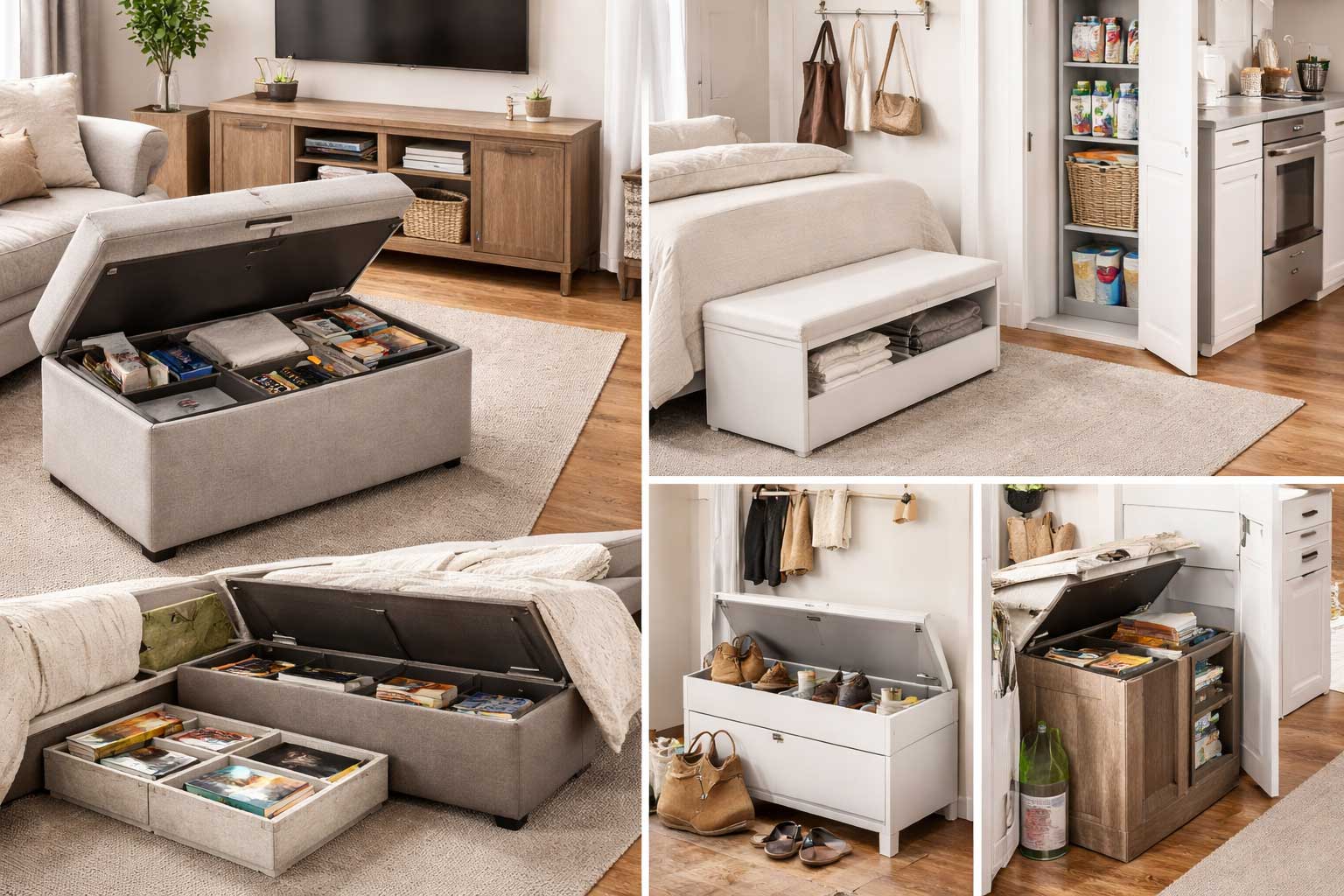
Storage ottomans are one of the best examples because they can hide daily overflow while still functioning as seating, footrests, or accent pieces. If you want a compact concealed-storage option, browse Best Storage Ottomans for Small Apartments. Benches work similarly, especially in bedrooms or entry zones where they can hold soft goods, accessories, or general household overflow without drawing attention to it.
This is where multi-functional furniture usually outperforms more obvious storage solutions. It helps the apartment hold more, but it does not make the apartment look like it is trying to hold more. In a small home, that visual difference matters just as much as the actual storage capacity.
Use Under-Bed Space as One of the Best Hidden Storage Zones
Under-bed storage is one of the most effective hidden-storage zones in any small apartment because it uses a large footprint that already exists. In many bedrooms, the bed takes up the biggest section of the room, so putting that space to work is one of the smartest ways to add storage without adding more furniture.
This area works especially well for bulky or backup categories like extra bedding, off-season clothing, spare linens, or less-used household supplies. If you need ideas for making that zone more useful, revisit How to Add Storage to a Small Bedroom Without a Dresser and How to Store Extra Bedding in a Small Apartment.
The biggest advantage of under-bed storage is that it solves a lot of capacity problems without increasing visual clutter at all. That is why it often helps more than closet storage alone. In a small apartment, the less your storage interrupts the room, the better the whole home tends to feel.
Use Wall and Vertical Storage in Ways That Still Feel Hidden
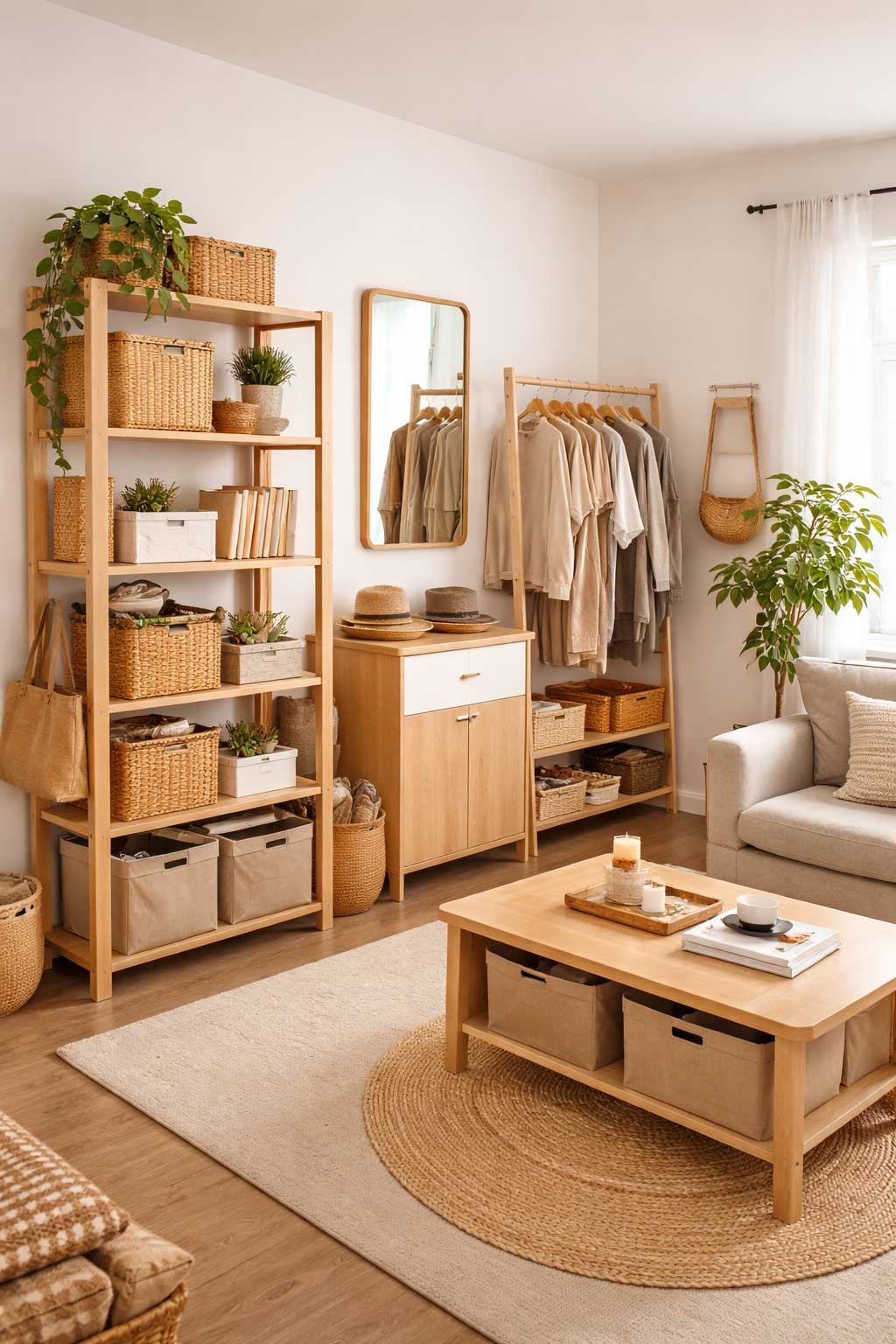
Vertical storage does not have to mean putting everything on open display. In fact, some of the best hidden-storage systems use height in a more controlled way through closed cabinets, baskets on shelves, and taller pieces that conceal more than they reveal. This is especially useful in apartments where floor space is already limited.
Closed vertical pieces usually work better than wide open storage when the goal is reducing visible clutter. A narrow cabinet, a wardrobe with doors, or a tall shelving unit with concealed sections can add a lot of capacity without making the room feel busier. In many apartments, vertical storage becomes much more effective once it stops functioning like display storage and starts functioning like real containment.
This approach is especially useful in bedrooms, bathrooms, and awkward corners where wider furniture would crowd the layout. Hidden vertical storage protects the floor plan while still giving the apartment more support. In a small space, that is often a better move than adding several low pieces that make the room feel chopped up.
Create Hidden Storage in the Living Room Without Making It Feel Heavy
The living room is one of the most important places to create hidden storage because it is also one of the most visible rooms in the apartment. Even a small amount of exposed clutter in this space can affect how the whole home feels. That is why concealed living room storage usually has an outsized impact.
Media furniture is a strong starting point. Electronics, remotes, chargers, gaming accessories, and small entertainment extras usually feel much better when they are stored behind doors or inside concealed compartments. If your TV area needs better support, check out Best Hidden Media Storage for Small Apartments.
Coffee tables can also do a lot more than people expect. A lift-top table or concealed-compartment table can hide daily clutter without asking for another piece of furniture. For options that support both storage and function, see Best Lift-Top Coffee Tables for Small Living Rooms. In a small apartment, living room storage works best when it hides what needs to disappear while still letting the room feel warm and usable.
Use Kitchen and Bathroom Storage That Keeps Everyday Supplies Out of Sight
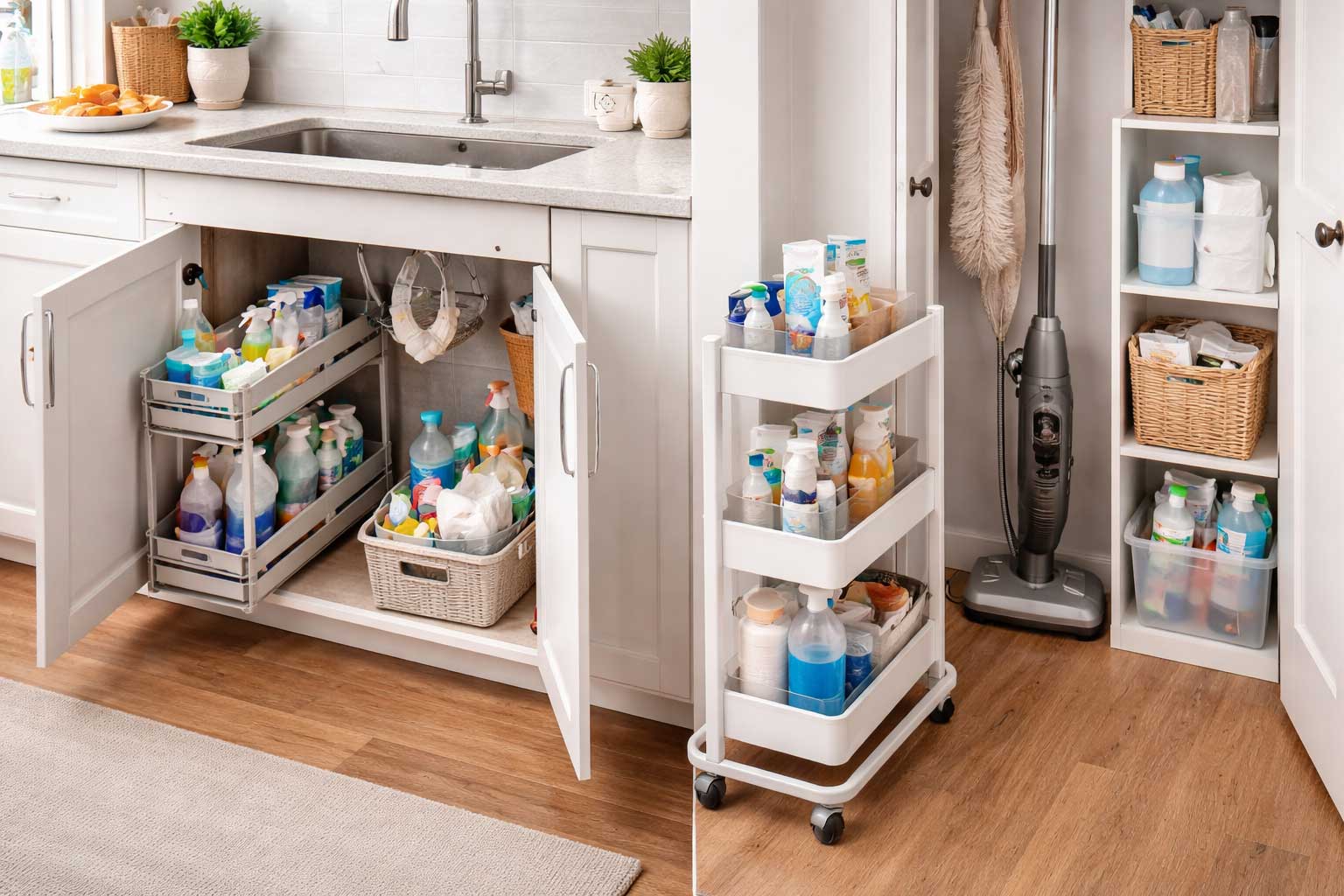
Kitchens and bathrooms often feel more cluttered than they really are because so many practical items stay out in the open. Sponges, sprays, toiletries, paper goods, cleaning products, and other daily-use supplies can quickly make these smaller functional rooms feel busier than they need to.
Under-sink zones are one of the best places to solve that problem. When those cabinets are organized better, they can absorb a surprising amount of daily clutter without making the room feel less functional. If that area needs more support, revisit Best Under-Sink Storage Solutions for Small Spaces.
The same idea applies to bathroom and kitchen storage more broadly. Cabinets and concealed zones usually work better than open overflow when the goal is making a small apartment feel calmer. If your utility categories are still spreading too visibly, How to Store Cleaning Supplies in a Small Apartment pairs well with this kind of room-by-room hidden-storage strategy.
Make Hidden Storage Easy to Access So It Actually Gets Used
Hidden storage only works if it is easy enough to use in real life. If it is too awkward to reach, too deep to sort through, or too annoying to reset, it will eventually stop being useful and start becoming a black hole for clutter. That is why convenience matters almost as much as concealment.
Everyday items still need fast enough access that using the storage feels natural. A storage bench that opens easily, a coffee table compartment that does not require rearranging half the room, or under-bed bins that slide out smoothly all support better habits. The best concealed storage feels like part of daily life, not like a workaround.
This is especially important for soft goods and household overflow. If your apartment needs better hidden storage for things like linens, bedding, or seasonal extras, How to Store Linens in a Small Apartment is a good reminder that hidden storage works best when the categories inside it are simple enough to maintain. In a small apartment, practicality is what keeps concealed storage from becoming forgotten storage.
Common Mistakes That Make Hidden Storage Less Effective
One common mistake is choosing hidden storage that is too small to matter. A tiny compartment may look useful, but if it does not hold enough of the category it is meant to control, the clutter will still spill back into view. Another problem is hiding too many unrelated categories in one spot, which usually makes the storage harder to use instead of more efficient.
Adding bulky storage furniture that hurts the layout is another frequent mistake. Hidden storage should make the apartment feel calmer, not more crowded. If a large bench, cabinet, or table creates awkward movement, it may solve one problem while creating another. Forgetting to use the space under, inside, and above existing furniture is another missed opportunity, since those are often the most natural concealed zones in the home.
The best hidden-storage setups usually work because they are realistic. They match the size of the category, fit the room properly, and make resetting the space easier instead of more complicated.
Best Features to Look for in Hidden Storage for Small Apartments
When choosing hidden-storage solutions for a small apartment, concealed capacity should be one of the first things you look for. A piece needs to hide enough of a category to actually change the room, not just tuck away one or two items. Multi-use function is also extremely valuable because every furniture piece in a small home should ideally earn its place in more than one way.
Compact footprint matters too. Hidden storage is most useful when it adds capacity without expanding too far into the room. Easy access is equally important, since concealed storage should still be practical enough to support everyday life. If it is frustrating to open, lift, pull out, or sort through, it will not be used consistently.
Apartment-friendly design ties everything together. The best hidden storage usually blends into the room naturally and supports the layout without making the apartment feel heavier. In a small home, that balance is what turns storage from a necessity into an actual upgrade.
Final Thoughts on Creating Hidden Storage in a Small Apartment
The best hidden-storage systems use underused zones, furniture with built-in storage, and room-by-room concealment to reduce visible clutter without making the apartment feel overfilled. That is what makes them so powerful in small spaces. They do not just help you store more. They help the home feel calmer while it stores more.
Under-bed areas, benches, ottomans, concealed tables, cabinets, and under-sink zones often make the biggest difference because they work with the apartment you already have instead of demanding a total rethink of the layout. Once these areas start carrying more of the storage load, the visible parts of the home feel much easier to manage.
That is the real value of hidden storage in a small apartment. It gives everyday life a place to go without forcing every room to show it.
Our Top Hidden Storage Picks for Small Apartments
Hidden storage works best when furniture and overlooked zones quietly absorb everyday clutter without making the apartment feel more crowded. The most effective options usually stay compact, multi-functional, and easy to use in daily life.
Best overall choice:
Multi-functional storage furniture — Furniture with built-in storage adds concealed capacity without requiring extra visible organizers.
👉 Check price on Amazon
Best soft-goods solution:
Under-bed storage containers — Under-bed containers hide bulky backup items without taking up any additional floor space.
👉 Check price on Amazon
Best living room option:
Storage ottoman — A storage ottoman helps conceal everyday overflow while still functioning as useful furniture.
👉 Check price on Amazon
Best media-area upgrade:
Hidden media storage — Concealed media furniture helps the living room feel cleaner by hiding cords, devices, and entertainment clutter.
👉 Check price on Amazon
Apartments that still feel visually busy may also benefit from a storage bench or lift-top coffee table, especially when the goal is to make daily clutter disappear more naturally.
FAQ
How do you create hidden storage in a small apartment?
The best way to create hidden storage in a small apartment is to use furniture with built-in compartments, under-bed storage, concealed cabinets, and room-specific hidden zones that keep clutter out of sight.
What furniture works best for hidden storage?
Furniture that usually works best for hidden storage includes storage ottomans, storage benches, lift-top coffee tables, storage beds, and other multi-functional pieces that add capacity without adding visible clutter.
Where can you hide clutter in a small apartment?
Clutter can often be hidden in under-bed zones, inside storage furniture, behind cabinet doors, under sinks, and in tall closed storage pieces that blend into the room more naturally.
How do you add storage without making a room look crowded?
Add storage without making a room look crowded by choosing concealed or multi-use pieces, using underused spaces like under the bed, and favoring hidden room-by-room storage instead of adding more visible bins and shelves.