How to Choose Renter-Friendly Storage for a Small Apartment
Choosing storage for a small apartment can feel harder when you are renting. You may need better ways to organize clothing, kitchen supplies, bathroom items, office gear, and everyday clutter, but you also may not want to drill into walls, install permanent shelving, or buy furniture that only works in one exact layout. In many apartments, the challenge is not just finding more storage. It is finding storage that adds function without creating damage, wasting money, or making the space harder to move out of later.
The good news is that renter-friendly storage can still be highly effective in a small apartment. The best options usually come from choosing movable, multi-functional, and low-commitment solutions that work with the apartment instead of trying to permanently change it. With the right approach, you can add meaningful storage, reduce clutter, and make the space feel much more functional without risking your deposit or overcomplicating the setup.
For versatile small-space ideas, start with Best Storage Solutions for Small Apartments.
If you want hidden options that do not rely on permanent installs, check out How to Create Hidden Storage in a Small Apartment.
For wall-adjacent storage that does not take over the room, see Best Wall-Mounted Storage Solutions for Small Apartments.
This guide is part of our Organization Storage collection.
Why Renter-Friendly Storage Matters in a Small Apartment
Renter-friendly storage matters because small apartments usually need more organization, but renters often have fewer ways to change the space permanently. You may not be able to build in shelves, install heavy wall systems, or make layout changes that only make sense if you own the place. That means the storage needs to solve the problem without creating a new problem when it is time to move, patch holes, or get your deposit back.
This is especially important in smaller apartments because the rooms are already working hard. A bedroom may need to hold clothing and office overflow. A living room may need to handle media storage, extra blankets, and everyday clutter. A kitchen may need more organization than the cabinets actually provide. If the storage solution is too fixed, too bulky, or too dependent on one exact layout, it may feel less useful over time instead of more.
The best renter-friendly storage should work now and still make sense later. It should improve the apartment you have today, but it should also be flexible enough to move with you, shift with the layout, or adapt if your needs change. In rental living, that kind of flexibility is part of what makes storage worth buying in the first place.
Start by Thinking About What Problems the Storage Needs to Solve
The best storage choice starts with a clear problem, not just a nice-looking organizer online. A small apartment usually has multiple pressure points, and each one needs a different kind of solution. Clothing storage, bathroom overflow, kitchen clutter, entryway mess, and office supplies all behave differently. If you treat them like one generic storage issue, you usually end up buying something that only sort of helps.
Daily-use clutter should be easiest to reach. Backup items, seasonal supplies, and less-used extras can usually go into deeper or less convenient storage. That sounds obvious, but it makes a huge difference in a small apartment because your best storage space is limited. If you are still trying to get a handle on the apartment overall, revisit How to Organize a Small Apartment and How to Declutter a Small Apartment Fast before buying more pieces.
A better storage decision usually comes from knowing exactly what category you are trying to control. The clearer the priority is, the easier it becomes to choose something that actually improves the space instead of adding one more object you now have to work around.
Choose Storage That Does Not Require Permanent Installation
One of the smartest things renters can do is choose storage that works without depending on major changes to the apartment. Freestanding pieces, over-the-door options, stackable units, and low-damage solutions usually give renters much more flexibility than anything that requires heavy mounting or permanent installation.
Freestanding storage is often the best choice because it can move with the apartment. A shelf unit, cabinet, or narrow storage piece can be repositioned as needed, used in a different room later, or taken with you to the next place without much hassle. Over-the-door options can also help solve very specific problems without asking the apartment to change for them. If that kind of solution would help, browse Best Over-the-Door Storage Solutions for Small Apartments.
This does not mean wall-based storage is always off-limits. It just means the best renter-friendly storage usually does not depend on major modifications to be useful. In a small apartment, flexibility is often more valuable than permanence.
Use Multi-Functional Furniture That Adds Storage Without Extra Bulk
Renter-friendly storage often works best when it is built into furniture you already want in the room. This is especially useful in small apartments because every extra piece has a visual and physical cost. A furniture item that also stores things is usually more efficient than adding a separate organizer beside it.
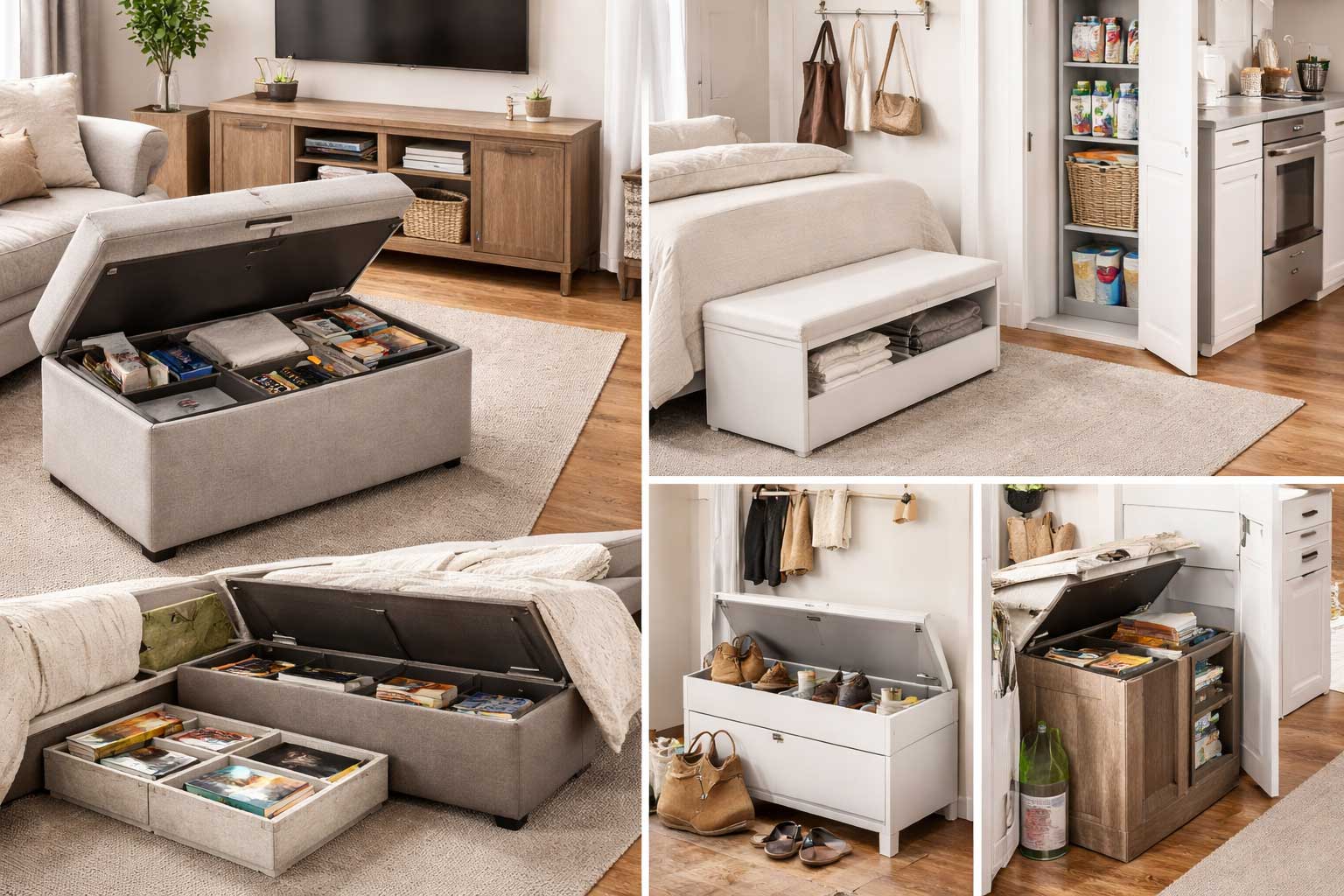
Storage ottomans, benches, and storage tables are good examples because they create hidden room for blankets, office supplies, accessories, or everyday clutter without asking the room to hold a second furniture piece just for storage. If you want furniture that does more than one job, check out Best Multi-Functional Furniture for Small Apartments.
This type of storage usually feels better than more open bins because it reduces visible clutter at the same time it adds capacity. In a rental, that matters a lot. You want the apartment to feel more functional, but you also want it to feel calmer and easier to live in. Multi-use furniture often gets you both.
Choose Storage That Can Move with the Apartment Layout
A big renter advantage is flexibility, and your storage should support that instead of fighting it. Good renter-friendly storage should still work if the furniture arrangement changes, if you move to a different apartment, or if one room starts doing a different job later. That is why movable and adaptable pieces often outperform anything too specific.
Rolling carts can work especially well because they are easy to shift between rooms or reposition when needed. Stackable bins are another strong example because they can be separated, regrouped, or moved into closets, bedrooms, bathrooms, or entryways depending on the layout. If you need smaller flexible pieces like that, see Best Stackable Storage Bins for Small Spaces.
This is also why it helps to think beyond the current apartment. A great renter-friendly storage piece should not only fit the exact corner you have today. It should still be useful if your next kitchen is narrower, your next bathroom has less built-in storage, or your next bedroom has a different wall layout. In rental living, portability is part of the value.
Use Vertical Space Without Damaging the Apartment
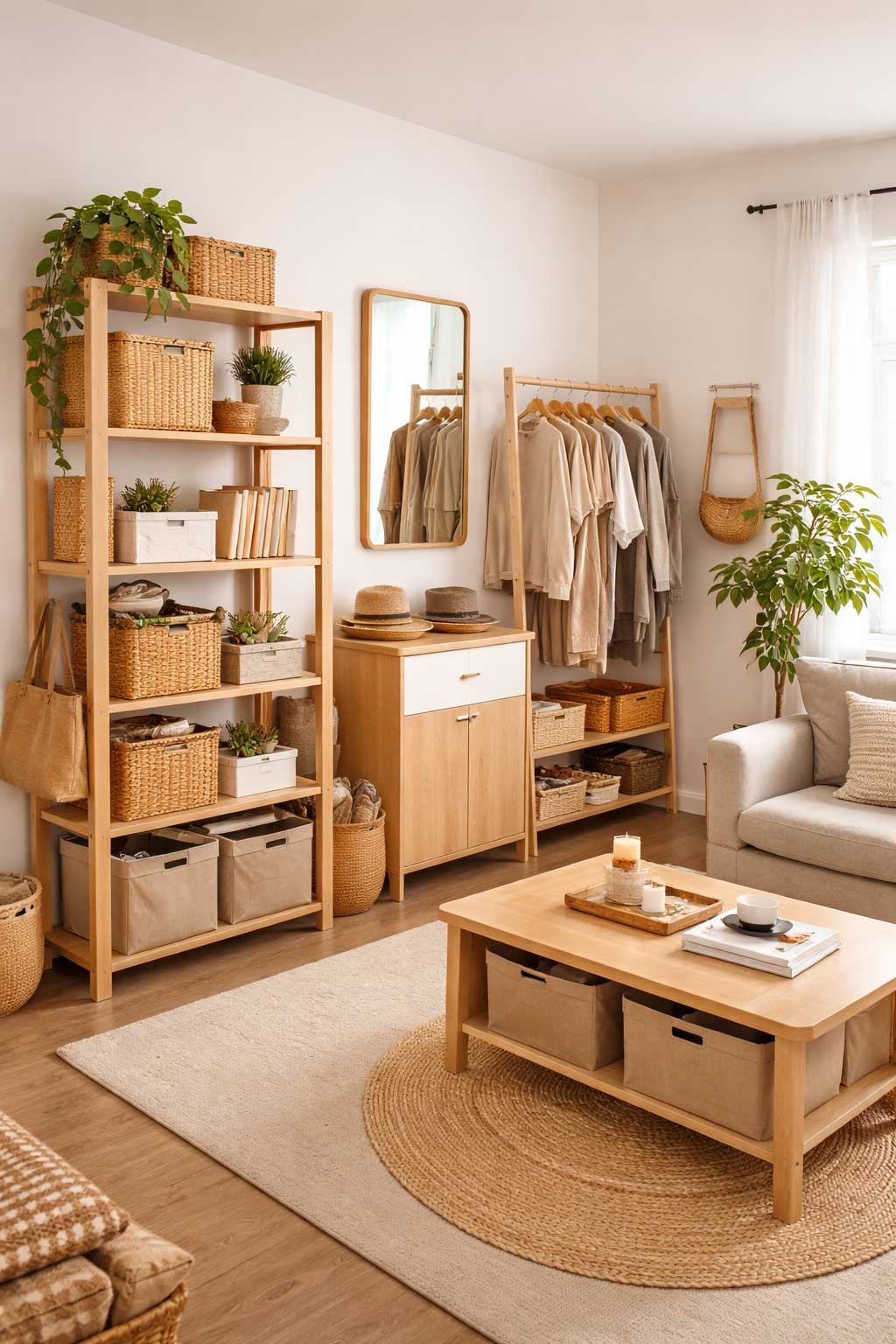
Vertical space is important in small apartments, but renters usually need safer ways to use it. That often means leaning into over-the-door pieces, freestanding tall units, wardrobes, and other solutions that build upward without depending on risky wall work or heavy permanent installs.
Over-the-door storage is one of the easiest ways to add capacity fast because it uses space that is already there and often underused. Tall freestanding pieces also work well because they create more storage without taking up much additional floor width. If your apartment needs stronger vertical support, revisit Best Compact Wardrobes for Apartments for closed vertical options that store a lot without requiring a built-in closet system.
The most important part is visual balance. Vertical storage should help the room feel more open, not heavier. In a small apartment, one taller controlled piece is often better than several shorter open ones that make the room feel more cluttered.
Choose Storage That Looks Good Enough to Stay Out
Not all renter-friendly storage can be hidden away in a utility closet, because many apartments do not have one. That means some storage will stay visible, and when it does, it needs to look controlled enough that it supports the room instead of turning into more clutter.
Open storage works better when it stays edited. Matching bins, cleaner lines, and storage pieces that fit the room visually usually feel much better than a mix of random plastic containers and temporary-looking solutions. This matters even more in apartments where the living room, dining area, or bedroom may already be doing multiple jobs at once.
If visible storage is starting to make the apartment feel smaller, revisit How to Make a Small Apartment Feel Bigger for layout and styling ideas that pair well with cleaner-looking storage. In a rental, storage often has to live in plain sight, so choosing pieces that are visually manageable is part of making the apartment feel better overall.
Use Room-by-Room Storage Instead of Looking for One Big Fix
Small apartments usually work better when storage is solved room by room instead of trying to force one giant piece to solve everything. Kitchens, bathrooms, bedrooms, and entryways all have different pressure points, and renter-friendly storage usually works best when it responds to those realities.
A bathroom may need narrow rolling or vertical storage. A bedroom may benefit more from under-bed storage or multi-functional furniture. An entryway may need a simple compact drop zone. A kitchen may need cart-based support or better cabinet organization. If one of those areas is especially under pressure, revisit How to Create Storage in a Small Apartment with No Closet and Best Entryway Storage Solutions for Small Apartments for ideas that work well without permanent changes.
Small improvements in each room often produce a much better result than one oversized piece that overwhelms the layout. In a rental, that kind of distributed storage is usually more practical, easier to move, and easier to adjust as the apartment changes.
Avoid Storage That Solves One Problem but Creates Another
Not all storage helps just because it technically adds capacity. Some pieces solve one issue while making the layout tighter, the room busier, or the apartment harder to move through. This is one of the most common mistakes renters make when trying to fix small-space clutter quickly.
Bulky pieces can make a small apartment feel more crowded even if they store a lot. Flimsy temporary storage can also become a problem because it breaks down, looks messy fast, or creates new visual clutter. The best storage should improve the room without becoming something else you now have to work around.
That is why it helps to evaluate storage by what it costs the room, not just what it holds. If a piece blocks movement, visually dominates the area, or only works in one exact arrangement, it may not be as renter-friendly as it first seemed. In a small apartment, good storage should feel like relief, not compromise.
Common Mistakes When Choosing Renter-Friendly Storage
One common mistake is buying storage before defining the actual problem. It is easy to buy an organizer that looks useful, only to realize it does not really match the category you needed to control. Another issue is choosing pieces that only work in one exact layout, which makes them less adaptable if the room changes or if you move.
Relying too much on visible open storage is another problem. Even when it is organized, too much exposed storage can make a small apartment feel busier and smaller. Ignoring mobility, assembly, and move-out practicality is also a mistake. A renter-friendly piece should not be such a hassle to disassemble or relocate that it becomes a burden later.
The best renter-friendly storage usually succeeds because it is practical in several ways at once. It solves the current problem, fits the apartment well, and still makes sense if life shifts.
Best Features to Look for in Renter-Friendly Storage
When choosing renter-friendly storage, a no-drill or low-damage setup should usually be near the top of the list. That keeps the apartment easier to maintain and reduces the chances of buying something that creates more move-out stress later. Compact footprint matters too, especially in smaller rooms where every extra inch counts.
Easy movement and reusability are also big advantages. The best storage usually works in more than one room and more than one layout. Multi-use function is equally important because small apartments tend to benefit most from pieces that store something while also acting as furniture or supporting the room in another way.
Apartment-friendly visual design matters more than people expect too. If the storage has to stay visible, it should help the room feel calmer rather than more crowded. In a rental, practicality and visual balance usually need to work together.
Final Thoughts on Choosing Renter-Friendly Storage for a Small Apartment
The best renter-friendly storage is flexible, movable, practical, and able to improve organization without permanent changes. That is what makes it so useful in a small apartment. It solves real storage pressure while still respecting the reality of rental living.
The strongest solutions usually come from choosing pieces that work harder, move more easily, and fit the room more naturally. Freestanding storage, hidden furniture storage, over-the-door options, and adaptable vertical pieces often go much farther than heavy permanent ideas that are harder to justify in a rental.
The goal is not just to fit more into the apartment. It is to make the apartment function better now without creating problems later. Good renter-friendly storage does exactly that.
Our Top Renter-Friendly Storage Picks for Small Apartments
Renter-friendly storage works best when it adds organization without requiring permanent changes, bulky built-ins, or one-layout-only solutions. The most useful pieces usually stay flexible, compact, and easy to move from one apartment to the next.
Best overall choice:
Freestanding storage solution — A good freestanding piece adds function without relying on wall installation or permanent modification.
👉 Check price on Amazon
Best no-drill option:
Over-the-door storage — Over-the-door storage adds fast capacity for renters without putting holes in walls.
👉 Check price on Amazon
Best furniture-based solution:
Multi-functional storage furniture — Furniture with built-in storage helps control clutter without adding separate utility pieces.
👉 Check price on Amazon
Best move-friendly option:
Stackable storage bins — Stackable bins adapt easily to changing layouts and can move with you from room to room or apartment to apartment.
👉 Check price on Amazon
Apartments that still feel short on storage may also benefit from a compact wardrobe or a storage cart, especially when the goal is to add capacity without locking the setup into one exact room plan.
FAQ
What storage is best for renters in a small apartment?
The best storage for renters in a small apartment is usually freestanding, movable, multi-functional, and low-damage, so it can improve the space without requiring permanent changes.
How do you add storage without damaging apartment walls?
Add storage without damaging apartment walls by using freestanding shelves, over-the-door organizers, carts, wardrobes, and furniture with built-in storage instead of relying on heavy wall-mounted systems.
What furniture works best for renter-friendly storage?
Furniture that usually works best for renter-friendly storage includes storage ottomans, storage benches, multi-functional tables, wardrobes, and other pieces that add hidden capacity without needing installation.
How do you make apartment storage work if you plan to move?
Make apartment storage work if you plan to move by choosing pieces that can adapt to different layouts, disassemble easily if needed, and still make sense in another apartment rather than only fitting one exact space.