How to Choose a Coffee Table for a Small Living Room
A coffee table can make a small living room feel more complete, more functional, and more balanced, but it can also make the space feel crowded very quickly if the size or shape is off. In a compact apartment, the coffee table is not just a decorative finishing piece. It affects how easily you move through the room, how usable the seating area feels, and whether the living room feels open or overfilled.
That is why choosing the right coffee table matters more than many people expect. In a larger room, a table can be a little too big or a little too heavy and still feel manageable. In a small living room, even a modest sizing mistake can throw off the whole layout. A table that is too wide can make the walkway feel cramped. A table that is too tall can feel awkward next to a low sofa. A piece that is too bulky can make the center of the room feel blocked before you even add anything on top of it.
The best coffee table for a small apartment is usually not the biggest one you can squeeze between the sofa and media console. It is the one that supports how you actually use the room while still leaving enough breathing room for the apartment to feel comfortable. Some people need a table mainly for drinks and a remote. Others use it for laptops, books, takeout, or extra storage. The right choice depends on what the table really needs to do and how much space the room can honestly spare.
This topic fits naturally with How to Arrange Furniture in a Small Apartment Living Room, How to Choose a Sofa for a Small Apartment Living Room, and Best Lift-Top Coffee Tables for Small Living Rooms because a coffee table is never really a standalone choice in a small space. It only works well when it fits the rest of the room.
Why coffee table choice matters so much in a small living room
In a compact apartment, the coffee table sits in one of the most important parts of the room: the center. That means it affects both the look and the function of the space at the same time. When the size is right, it helps anchor the seating area and gives the room a natural focal point. When the size is wrong, it interrupts movement and makes the entire layout feel tighter.
A lot of people think of a coffee table as optional styling, but in a small living room it is often more important than that. It may be where you set drinks, hold remotes, rest a laptop, eat dinner, or keep the few daily items you actually need within reach of the sofa. At the same time, because it sits in the middle of the room, it cannot be too visually heavy or too demanding. That tension is exactly what makes the choice so important.
Coffee tables also influence how spacious the room feels. If the piece is too bulky, it can visually crowd the floor area and make the living room seem smaller. If it is well scaled and well placed, it can actually make the room feel more polished and intentional. In a small apartment, those perception shifts matter a lot. A room does not need to be empty to feel open, but the furniture in the center of it has to respect the layout.
That is one reason this topic connects so naturally with How to Make a Small Apartment Feel Bigger. A coffee table is one of those pieces that can quietly help a room feel balanced or quietly make it feel tighter.
Start with how you actually use the table
Before choosing a shape or style, it helps to ask what the coffee table really needs to do in your apartment. A lot of people buy based on appearance first and only later realize the table does not suit how they live. In a small apartment, that usually becomes obvious very fast because every piece has to work harder.
If your living room is mostly for relaxing with a drink and watching TV, the table may only need a modest surface. If you eat in the living room often, work on a laptop there, or need a little extra storage, the table may need more function. If the room is extremely tight, you may value a smaller footprint over a broad tabletop. If you have no good place for remotes, coasters, chargers, or blankets, a more functional design may make more sense than a simple open table.
That is why the right coffee table depends so much on your real routine. Someone who uses the sofa as a secondary work zone may appreciate a more flexible design. Someone who mainly wants the room to feel open may do better with something visually lighter. A family with more daily clutter may need hidden storage. A single person in a studio may want the smallest piece that still feels practical.
In a compact apartment, it is usually best to buy for everyday life first. The coffee table should support the way the room is actually used, not just the way it looks in a styled product photo.
Size is about clearance, not just surface area
One of the biggest coffee-table mistakes in small living rooms is focusing only on how much tabletop you want instead of how much clearance the room needs. In a compact space, the table is successful only if people can still move around it comfortably. That means walkways matter just as much as the top surface.
A coffee table that looks reasonable in isolation can still feel too big once the sofa, rug, media stand, and surrounding furniture are all in place. In many small apartments, the problem is not that the table is ugly or impractical. It is that it steals too much of the room’s center circulation. That makes the entire layout feel more cramped, even if the table itself is attractive.
This is why it helps to picture the living room in motion, not just at rest. Can you sit down and get up without constantly squeezing around the edges? Can you walk through the room without brushing against the table? Does the space still feel open when the sofa, table, and media wall are all viewed together? Those questions matter far more than simply asking whether the table “fits.”
A smaller coffee table often works better in an apartment than people initially expect. That is not because small spaces require tiny furniture everywhere, but because the room needs open floor area just as much as it needs useful surfaces.
Shape can completely change how the room feels
Shape plays a huge role in whether a coffee table feels easy or awkward in a small living room. Two tables with similar overall size can perform very differently depending on whether they are round, rectangular, oval, or square.
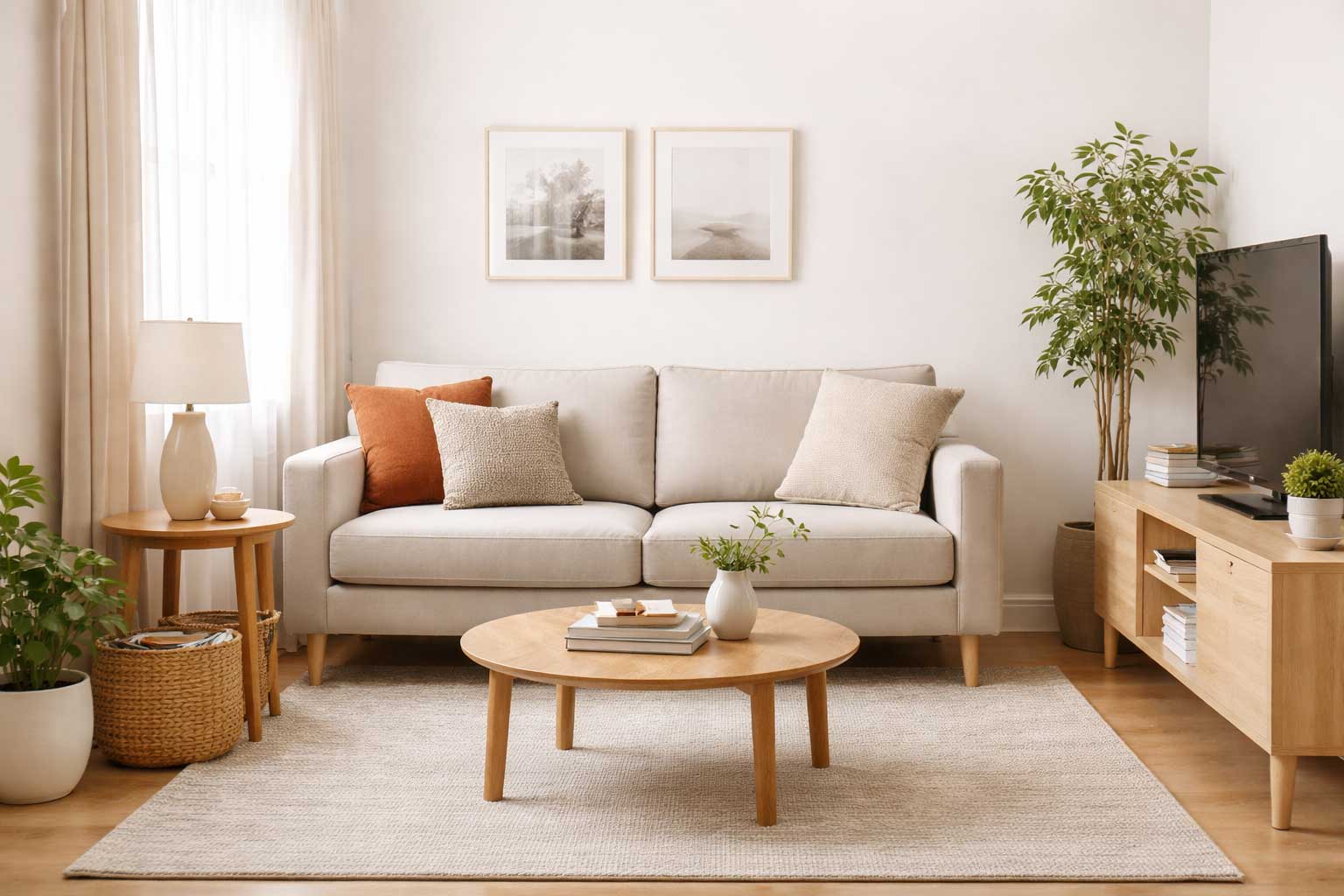
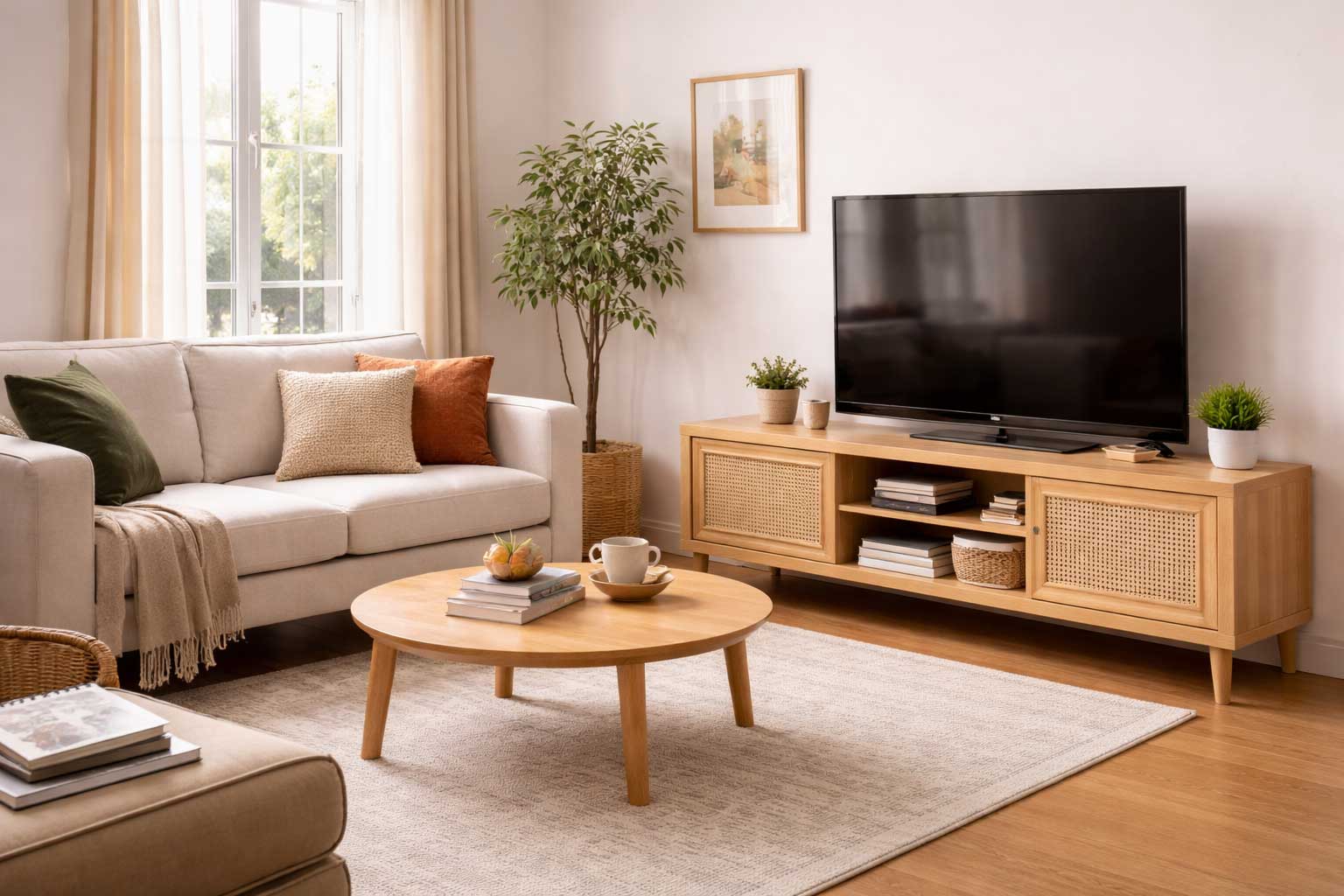
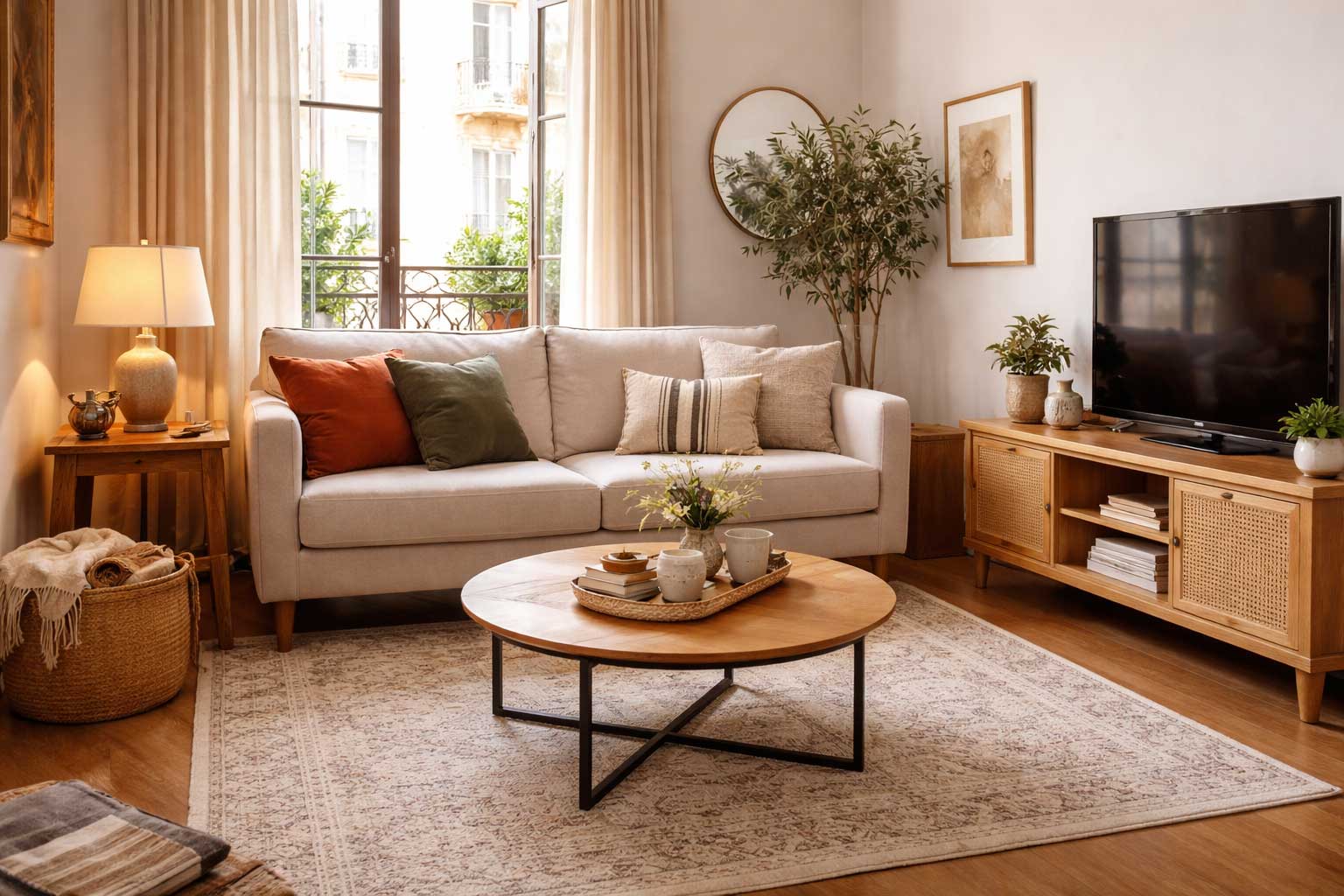
Round coffee tables often work especially well in compact apartments because they soften the room and make movement easier. Without sharp corners, they tend to feel less intrusive in tight layouts and often help the center of the room feel more fluid. That makes them a strong option when the sofa area is compact or when the walkway runs close to the table.
Rectangular tables can work well too, especially when the sofa is longer and the room itself is fairly linear. The key is usually keeping the proportions modest and avoiding pieces that are too deep or too visually dense. A slim rectangular table often performs better than a big blocky one.
Oval tables can be a strong middle ground because they offer some of the usable length of a rectangle with a softer shape closer to a round table. In especially tight spaces, that can be a smart compromise. Square tables tend to work best when the seating arrangement is more balanced or when the room is not especially narrow. In many apartments, though, square shapes can feel a little heavier in the middle of the room unless the layout clearly supports them.
The best shape is the one that works with your traffic flow, not just with your decorating style.
Visual weight matters just as much as dimensions
A coffee table does not have to be physically large to make the room feel crowded. Sometimes the issue is visual weight. A table with a thick top, heavy base, chunky legs, or dark bulky materials can make a small living room feel denser than it really is, even if the measurements are technically fine.
That is why visually lighter tables often perform so well in apartments. A design with more open space underneath, slimmer legs, or a cleaner silhouette usually helps the room feel airier. This is especially true when the sofa already takes up a lot of visual space. If both the sofa and the coffee table feel dense and heavy, the center of the room can start to feel too packed.
This does not mean every coffee table has to be delicate or minimal. It just means the piece should feel proportionate to the rest of the room. If your sofa is already visually soft and substantial, the coffee table may need a little less bulk, not more. In small apartments, balance matters more than statement-making.
That is another reason the topic overlaps so naturally with How to Choose a Sofa for a Small Apartment Living Room. The coffee table only really works when it matches the scale and feel of the seating area around it.
Storage can help, but only if it is worth the extra bulk
Storage coffee tables are popular for good reason. In small apartments, any piece that can hide clutter seems appealing. Sometimes that is absolutely the right move. If your living room lacks storage for remotes, chargers, blankets, or everyday items, a coffee table with storage can be genuinely helpful. But storage also tends to add visual and physical bulk, and that tradeoff needs to be judged honestly.
A storage coffee table is worth it when the room truly needs what it offers and when the table can still fit the layout comfortably. If the living room has very few other storage options, hidden space inside the table may be a great solution. If the apartment already has enough storage nearby, then a bulky lift-top or trunk-style table may be adding more heaviness than value.
This is exactly where Best Lift-Top Coffee Tables for Small Living Rooms and Best Small Apartment Coffee Tables with Storage become relevant. Those pieces can be great in the right apartment, especially when you need function from the center of the room. But they are strongest when the added utility is solving a real problem, not just checking a feature box.
In small spaces, any furniture feature should earn the room it takes.
Round tables often solve more small-space problems than people expect
If a living room feels tight, a round coffee table is often one of the easiest solutions to consider. It is not right for every layout, but it solves several small-space issues at once. It usually feels easier to move around, softens the center of the room, and can help a space feel less boxy when the rest of the furniture already has a lot of straight lines.
That is why Best Round Coffee Tables for Small Living Rooms can be such a strong support topic for this article. In many apartments, a round table helps create exactly the kind of balance the room needs. If the sofa is rectangular, the rug is rectangular, the media console is rectangular, and the walls are obviously angular, the right round table can bring relief to the middle of the room without demanding too much space.
This is especially helpful when the room has narrow walkways or when the coffee table sits close to the main traffic path. The softer profile often feels much easier in daily life. People tend to focus on how a table looks when no one is moving around it, but in an apartment, ease of movement is one of the most important parts of the choice.
The coffee table should work with the rest of the living room, not just fill the middle
One of the easiest mistakes is shopping as though the coffee table’s job is simply to occupy the center of the room. In reality, its job is to support the room without taking it over. A good coffee table should connect the seating area, offer the right amount of function, and still leave the room feeling comfortable and navigable.
That is why the best coffee tables in small apartments often look a little more restrained than people first imagine. A table that leaves enough open space around it usually feels better long term than one that fills the gap perfectly on paper but makes the room feel crowded once real life starts happening around it. A living room still needs floor visibility. It still needs room for people to move. It still needs the coffee table to feel like part of the room, not like a block dropped into the middle of it.
This is where How to Arrange Furniture in a Small Apartment Living Room becomes especially relevant. A coffee table only works as well as the layout around it. When the spacing between the sofa, table, and surrounding pieces feels right, the whole room becomes easier to use. When that spacing is off, no styling fix really solves the problem.
A small living room does not always need a traditional coffee table
Sometimes the smartest answer is not a standard coffee table at all. In especially tight apartments, the room may function better with something lighter, smaller, or more flexible. That might mean nesting tables, a smaller round accent-style table, an ottoman that doubles as a surface, or another solution that does not dominate the center of the room.
That is not settling. It is often just smarter space planning. If the living room is small enough that a full coffee table would constantly interfere with movement, then a more flexible solution may be the better choice. The goal is not to force a traditional setup into every apartment. The goal is to make the room work.
This is part of why small-space furniture decisions usually reward flexibility. The apartment does not care what a “normal” living room is supposed to have. It only cares whether the layout feels good to live in.
The right coffee table should make the room feel easier
At the end of the day, the best coffee table is the one that makes your living room more usable without making it feel more crowded. It should fit the room’s scale, support your daily routine, and leave enough open space that the apartment still feels comfortable. It should work with the sofa, not compete with it. It should look intentional, not oversized. And it should solve a real need, whether that need is surface space, storage, flexibility, or simply visual balance.
That usually means choosing with a little more discipline than impulse. A smaller, better-shaped, better-proportioned table will often outperform a larger one that seems more impressive but makes the room harder to live in. In a small apartment, the best furniture is usually the furniture that leaves the room better than it found it.