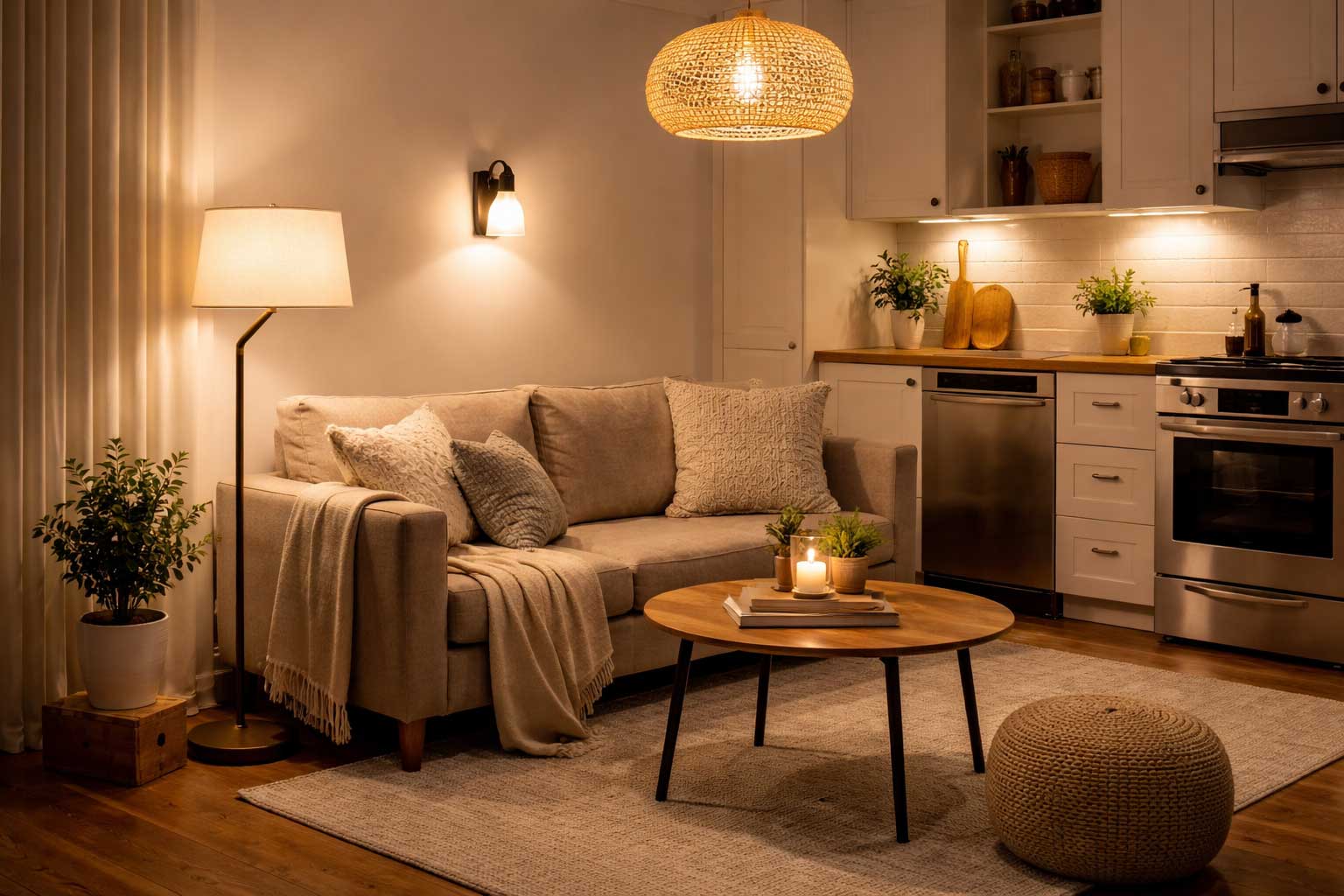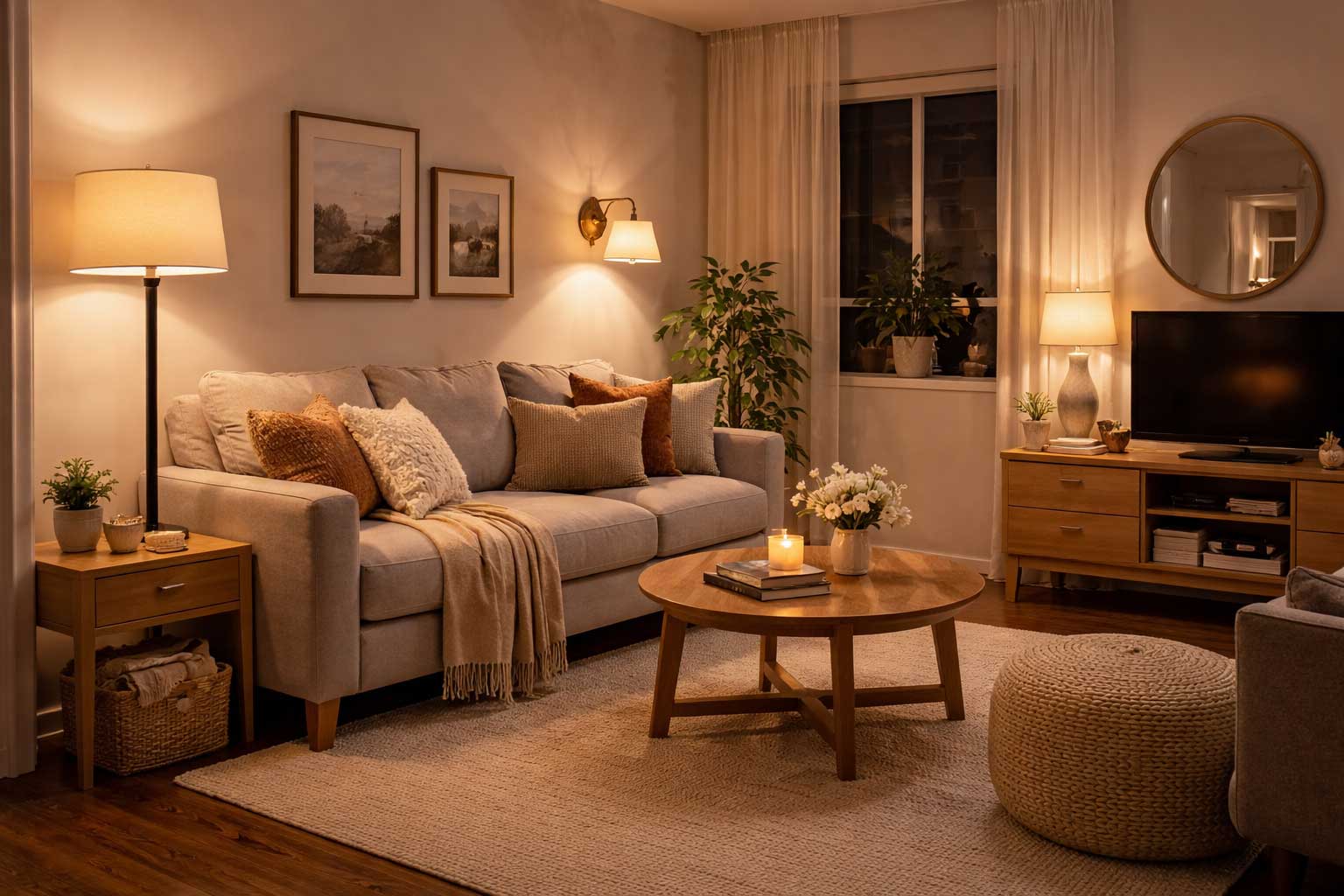
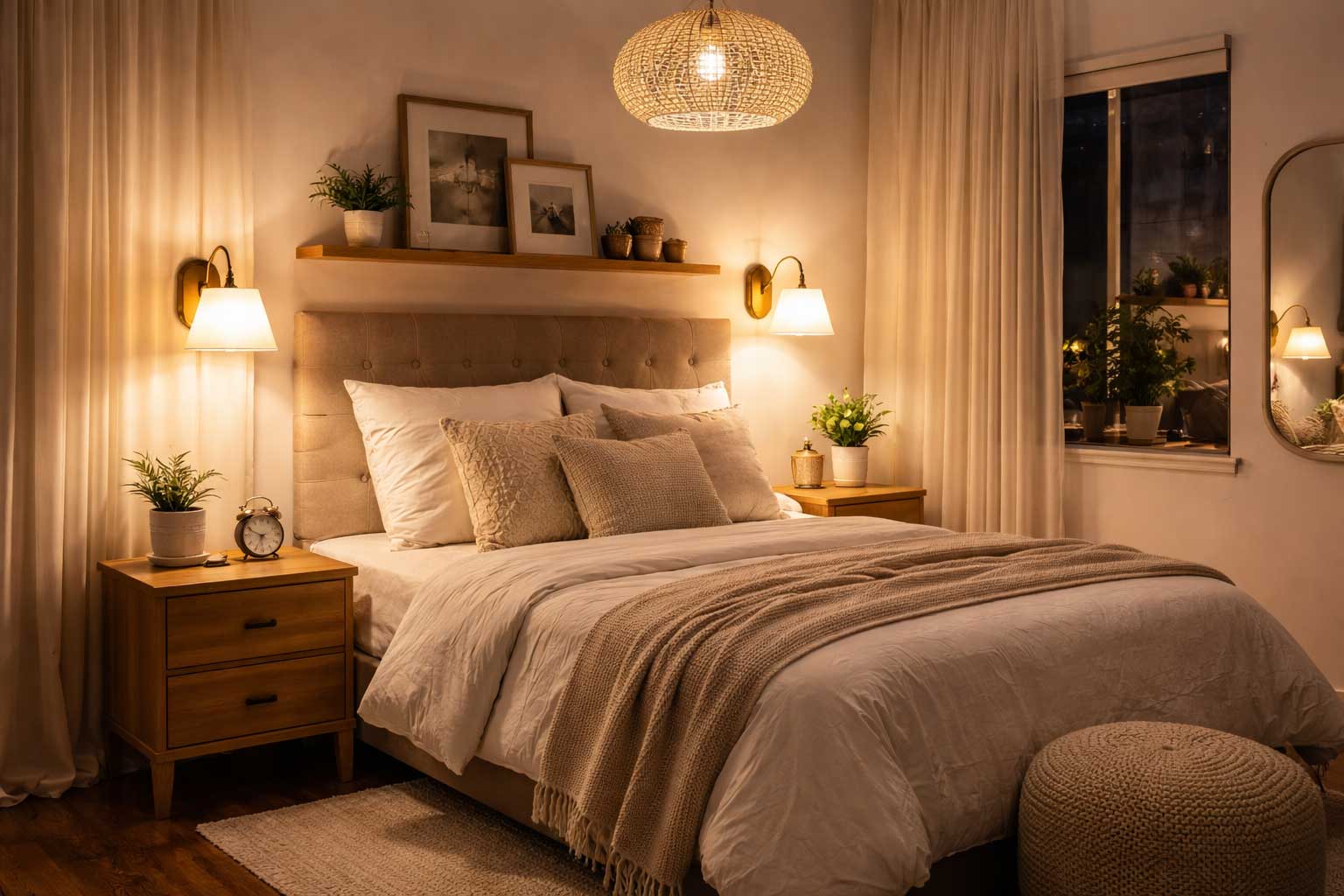
How to Choose Bedroom Lighting for a Small Space
Bedroom lighting has a much bigger impact on a small apartment than people often expect. In a larger home, lighting mistakes can hide a little more easily because there is more space, more separation, and usually more natural light to soften the room. In a small apartment bedroom, bad lighting becomes obvious quickly. A harsh overhead light can make the room feel flat and cramped. A room that is too dim can feel smaller, darker, and less comfortable. Lighting that is too bulky or poorly placed can also waste valuable space around the bed, dresser, or nightstand.
That is why choosing bedroom lighting for a small space is not just about picking a lamp you like. It is about deciding how the room needs to feel and function on a daily basis. A bedroom in a small apartment usually has to do more than sleep. It may also need to support reading, getting dressed, winding down at night, charging devices, working occasionally, or simply making the room feel calmer after the rest of the apartment has gone dark. Good lighting helps that happen. Poor lighting makes the room feel less useful and less relaxing at the same time.
The best bedroom lighting setup usually comes from a combination of comfort, scale, and purpose. You want the room to feel warm and restful, but you also need it to be practical. You want enough light for daily routines, but not so much harshness that the room loses its softness. You want fixtures that work with a compact layout rather than crowding it. Once those pieces come together, a small bedroom usually feels better almost immediately.
This topic fits naturally with How to Layer Lighting in a Small Apartment, How to Improve Lighting in a Small Apartment, and How to Make a Dark Apartment Brighter because bedroom lighting works best when it is treated as part of the apartment’s overall lighting strategy rather than as one isolated purchase. In a small home, the rooms may be compact, but the lighting decisions still shape how the whole place feels.
Why bedroom lighting matters more in a small space
A small bedroom has less room to absorb design mistakes. That includes lighting mistakes. If the light is too harsh, there are fewer places for the eye to rest. If the fixtures are too bulky, they compete more obviously with the bed and other furniture. If the room is too dark, it can start feeling compressed instead of cozy. Because the footprint is tighter, every lighting decision has more influence over mood, function, and visual balance.
This is especially true at night, when lighting becomes the main thing defining the room. During the day, windows, wall color, and furniture placement do some of that work. After dark, the room becomes whatever the lighting says it is. One central ceiling fixture often is not enough to make a small bedroom feel calm and complete. It may help you see, but it does not necessarily help the room feel restful.
That is why small bedrooms benefit so much from lighting that has more than one job in mind. You may need one source that provides general visibility and another that supports reading or winding down before bed. You may need light near the bed without sacrificing tabletop space. You may need the room to feel brighter overall without filling it with large lamps. Once you start thinking about the room that way, the lighting choices become much more practical.
Good bedroom lighting also influences how spacious the room feels. When light is placed thoughtfully, the room often feels more dimensional and more intentional. That connects naturally with How to Make a Small Bedroom Look Bigger, because lighting is one of the easiest ways to improve how a compact room is perceived without changing the square footage at all.
Start with how you actually use your bedroom
The best way to choose bedroom lighting is to start with real use instead of aesthetics alone. Some people mostly use the bedroom for sleeping and getting dressed. Others read in bed every night. Some use their bedroom as a secondary workspace or a place to watch TV. Others want the room to feel especially soft and dim by evening because it is their only true place to unwind.
Those habits matter because they affect what kind of lighting the room needs. A person who reads every night needs better bedside support than someone who rarely spends time in bed before sleep. A person who gets ready in the bedroom early in the morning may need stronger general lighting than someone who uses the bathroom for most of that routine. Someone with limited natural light may need the room to feel brighter overall, while someone with good daylight may care more about evening atmosphere.
This is one reason bedroom lighting should be chosen around function first and style second. A beautiful fixture that does not support what you actually do in the room is not solving enough of the problem. In a small space, every piece has to earn its place. Lighting is no different.
Thinking about daily use also helps prevent overbuying. A small bedroom usually does not need every possible type of fixture. It needs the right combination for the way the room is really lived in.
Overhead light should not be the whole plan
Most small bedrooms have some kind of overhead light, but relying on it alone is where many rooms start to feel unfinished. A ceiling fixture is helpful for general visibility, but it is rarely enough to make a bedroom feel balanced. On its own, overhead light often creates exactly the wrong mood for a space that is supposed to feel restful. It brightens the room, but it does not soften it.
That is why the best small-bedroom lighting plans usually treat overhead light as a base layer rather than the entire solution. You may need it for cleaning, organizing, or getting dressed, but you should not have to use it every time you want light in the room. A bedroom feels much more comfortable when you can choose softer light near the bed or in another corner of the room instead of always switching on the brightest option.
This is where How to Layer Lighting in a Small Apartment becomes especially useful. The bedroom usually benefits from the same basic idea: one general layer for overall brightness and one or two more focused layers for comfort and routine. Even a simple setup can feel far more refined when the overhead light is no longer doing all the work.
In a small bedroom, flexibility matters. You want the room to be bright when it needs to be bright and calm when it needs to be calm. Overhead light alone rarely gives you that range.
Bedside lighting often matters more than the ceiling fixture
If there is one place where small-bedroom lighting choices really show their value, it is beside the bed. Bedside lighting has an outsized impact because it supports some of the room’s most repeated habits. Reading, winding down, checking your phone, getting up during the night, and creating a softer evening atmosphere all tend to happen from the bed area. If that lighting is awkward or missing, the room feels less comfortable right away.
In a larger bedroom, you may have more freedom to add large table lamps or decorative lighting pieces. In a small apartment bedroom, bedside lighting often has to be smarter. It may need to save space, reach in from the wall, fit onto a narrow nightstand, or offer enough light without visually crowding the area. That is why Best Bedside Lamps for Small Bedrooms, Best Bedside Lighting for Small Bedrooms, and Best Wall-Mounted Bedroom Lamps are such strong companion pages for this topic. They all solve slightly different versions of the same problem: how to give the bed area useful light without overwhelming a compact room.
Good bedside lighting should feel easy. It should be positioned where you actually need it, not where it happened to fit. It should also match the scale of the room. In small bedrooms, the most successful bedside lighting often looks more controlled and intentional than oversized.
Wall-mounted lighting can be a major advantage in compact bedrooms
One of the best options for a small bedroom is often wall-mounted lighting. That is because wall-mounted fixtures free up surface space and floor space at the same time. In a room where nightstands are narrow or nonexistent, that advantage matters a lot.
Wall-mounted lights help in two key ways. First, they move the light source into a more efficient position. Instead of placing a lamp base on an already crowded nightstand, you shift the fixture upward and out of the way. Second, they help the room feel more intentional, especially when the bed area needs a cleaner, more built-in look.
This can be especially useful in bedrooms where the bed is close to the wall, where the nightstands are slim, or where the room already has a lot of furniture competing for a limited footprint. In those situations, a wall-mounted option can do the same job as a bedside lamp while taking up much less room visually and physically.
That is why Best Wall-Mounted Bedroom Lamps and Best Wall-Mounted Reading Lamps for Bedrooms are so relevant for small-space bedrooms. They can provide focused light exactly where it is needed without asking the room for extra tabletop space it may not have. In compact bedrooms, that kind of efficiency often makes a big difference in how open the room feels.
Scale matters just as much as brightness
A lighting fixture can technically fit in a bedroom and still be the wrong size for it. That is why scale matters so much in a small space. Large lamps, wide shades, chunky bases, or oversized sconces can visually crowd the room even if they are attractive on their own. In a bigger bedroom, that may not be a problem. In a small apartment bedroom, oversized lighting can make the whole room feel tighter.
This is especially important around the bed, where nightstands, charging cables, books, and other essentials already compete for attention. A slimmer lamp or cleaner wall fixture often works better than something bulky and highly decorative. The goal is for the light to support the room, not dominate it.
That does not mean everything has to be tiny. Lighting still needs enough presence to feel intentional and enough output to be useful. But in a small bedroom, proportion is everything. A moderately scaled fixture that fits the room well will almost always feel better than one that seems to belong in a much larger space.
This same principle applies to overhead lighting too. A ceiling fixture that hangs too low or looks too heavy can make the room feel shorter and more crowded. The best lighting choices usually feel appropriately sized for the room’s actual width, ceiling height, and furniture footprint.
Softness is important, but the room still needs enough light to function
A lot of people hear “bedroom lighting” and immediately think the room should be soft, dim, and cozy at all times. That atmosphere matters, but it is only part of the picture. A bedroom still needs to work. You need to be able to get dressed, clean, find things, and move around without the room feeling murky or underlit.
That balance is where good lighting choices really matter. You want a room that can feel restful at night without becoming impractical. The easiest way to do that is not by choosing one middle-of-the-road fixture and hoping it handles both moods. It is by giving the room more than one layer of light. One source can help with general brightness, while another creates softness. One can be for reading or bedtime routines, while another supports everyday visibility when you need more of it.
This is why bedrooms benefit so much from lighting control. You are not just choosing fixtures. You are choosing options. A room that offers only one lighting mood often feels less comfortable than a room that can shift with the time of day. In a small bedroom, that flexibility makes the space feel more refined and more thoughtfully designed.
Lighting placement can make the room feel larger or tighter
Where you put the light matters almost as much as what light you choose. In small bedrooms, placement has a strong influence on how open the room feels. Light that sits too low in the wrong spot, crowds a surface, or creates uneven shadows can make the room feel more compressed. Light that is distributed more thoughtfully can make the room feel more dimensional and more inviting.
This is one reason bedrooms often benefit from lighting that reaches more than one part of the room. If all the light comes from the center ceiling fixture, the room can feel flat. If there is also a light source near the bed or another corner, the room tends to feel more balanced. The eye moves more naturally through the space, and the room feels less like one tight box.
Thoughtful placement is also important around mirrors, dressers, and reading areas. If the room has a dresser that doubles as a getting-ready zone, that area may need better support than the ceiling light alone can provide. If the bed is tucked into a darker corner, that area may need a more intentional light source so it does not disappear visually at night.
This is another place where How to Make a Small Bedroom Look Bigger and How to Organize a Small Apartment Bedroom can support the discussion. Lighting placement works best when it supports the room’s layout instead of fighting it.
Match the lighting style to the mood you want from the room
Bedroom lighting should not just be practical. It should also fit the emotional tone you want the room to have. In a small apartment, the bedroom often becomes the most personal space you have. It should feel different from the kitchen, the living room, or the work area. Lighting helps create that difference.
A bedroom that is supposed to feel soft and calm usually benefits from fixtures that cast a gentler light and look visually quieter in the room. A bedroom with a more modern or minimal style may look best with cleaner lines and simpler forms. A warmer, more layered room may benefit from lighting that adds texture or a slightly softer visual presence. The exact style can vary, but the underlying question stays the same: does this lighting help the room feel the way I want it to feel at night?
That matters because a small room feels more unified when the fixtures support the mood instead of working against it. A bedroom does not need aggressive, highly functional lighting language everywhere. It needs lighting that respects the purpose of the room.
In small spaces, mood and function have to work together. The room cannot afford pieces that are purely decorative, but it also benefits from more than plain utility.
Bedroom lighting should work with the furniture, not just around it
Lighting choices make more sense when they respond to the furniture layout already in place. In a small apartment bedroom, that usually means paying close attention to the bed, the nightstands, the dresser, and any area that serves more than one function.
If the bed is centered with room for two nightstands, a balanced bedside setup may work well. If the bed is tucked close to one wall, a wall-mounted light on one side may be more practical than trying to force symmetry. If the room has very slim nightstands, smaller-scale lighting or mounted options will often perform better than full-size lamps. If the dresser takes up the main visual weight in the room, the lighting may need to stay quieter nearby so that area does not become too busy.
This is why lighting should never be chosen in isolation. It always lives in relationship to the furniture around it. In a small room, that relationship is even more noticeable. A good light in the wrong location can still feel wrong if it does not respect the way the furniture is arranged.
That practical overlap is part of why How to Organize a Small Apartment Bedroom remains a strong related guide here. Lighting works best when it supports the room’s furniture logic rather than acting like a separate decorative layer added afterward.
The best bedroom lighting is comfortable to live with every night
That may sound obvious, but it is the standard that matters most. Good lighting is not just something that looks good for one styled moment. It should feel good to live with. In a small apartment bedroom, that means it should be easy to use, easy on the eyes, appropriate for the room’s scale, and helpful in the routines that happen there most often.
You should not have to think too hard about it every night. The light should be where you need it. The room should feel soft when you want softness and bright enough when you need visibility. The fixtures should support the room rather than crowd it. That is what makes lighting successful in a small bedroom.